Discovering Homeopathy
 71
71

Discovering Homeopathy
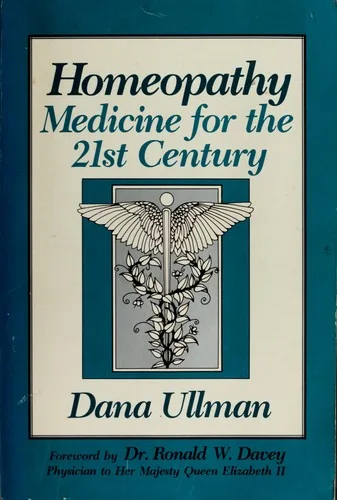
Dana Ullman's Discovering Homeopathy arrives as a considered defense and exposition of a practice that continues to polarize the medical establishment. Ullman, a recognized proponent, lays out the foundational tenets of homeopathy with commendable clarity, particularly Hahnemann’s principle of ‘like cures like’ and the paradoxical efficacy attributed to extreme dilutions. The book’s strength lies in its accessible presentation of complex ideas, moving beyond mere description to engage with the philosophical underpinnings of vitalism that inform the practice. However, the work struggles to bridge the gap with empirical skepticism, largely presenting anecdotal evidence and theoretical arguments without fully addressing the robust scientific critiques regarding the physical plausibility of potentized remedies. A particularly illustrative section details the application of homeopathy to chronic ailments, a subject where the book’s persuasive tone is most pronounced. While informative for adherents, it may leave skeptics unconvinced by its reliance on established homeopathic doctrine. The book serves as a thorough introduction for those already inclined towards or curious about homeopathic philosophy.
📝 Description
71
Dana Ullman's 1991 book explains homeopathy's core tenets and philosophical underpinnings.
Dana Ullman's "Discovering Homeopathy" presents homeopathic medicine, a system originating with German physician Samuel Hahnemann in the late 18th century. The book clarifies homeopathy's central principles, such as the law of similars, where "like cures like," and the use of highly diluted substances to encourage the body's natural healing. Ullman frames homeopathy as more than just a medical practice; it is a distinct philosophy of health and sickness.
This work is intended for those seeking different approaches to health, especially those interested in complementary and alternative medicine. It speaks to homeopathy practitioners and students, as well as general readers curious about its history, theories, and effectiveness. The book offers a perspective for individuals looking beyond conventional Western medicine.
It traces homeopathy's origins to Hahnemann's experiments in the 1790s, placing it within medical history. The book addresses the criticisms and debates that have accompanied the practice, noting its differences from mainstream scientific views. Ullman aims to demonstrate homeopathy's therapeutic value and philosophical consistency despite these discussions.
Homeopathy, as presented in this book, aligns with esoteric traditions that emphasize the energetic or spiritual dimensions of health. The concept of the "vital force" resonates with vitalistic philosophies found in various spiritual and healing systems, suggesting an animating principle beyond purely physical mechanisms. The use of highly diluted substances, "potentization," also touches on ideas of subtle energies and vibrational medicine, common in esoteric thought. This approach views illness not just as a material imbalance but as a disturbance in a person's vital or energetic constitution, requiring remedies that can interact with this deeper level.
💡 Why Read This Book?
• Understand the core principles of homeopathy, including Hahnemann's "law of similars" and the concept of potentization, allowing you to grasp its unique approach to healing. • Gain insight into the historical development of homeopathy from its late 18th-century origins, providing context for its place within alternative medicine. • Explore the homeopathic concept of the "vital force," offering a different perspective on health beyond purely materialist explanations.
⭐ Reader Reviews
Honest opinions from readers who have explored this book.
❓ Frequently Asked Questions
When was Discovering Homeopathy first published?
Discovering Homeopathy by Dana Ullman was first published in 1993, providing a comprehensive introduction to homeopathic medicine.
Who developed the principles of homeopathy discussed in the book?
The book discusses the principles of homeopathy developed by German physician Samuel Hahnemann, who began formulating his ideas in the late 18th century.
What is the 'law of similars' in homeopathy?
The 'law of similars,' a central tenet explained in Discovering Homeopathy, posits that a substance causing symptoms in a healthy person can, in highly diluted form, cure similar symptoms in an ill person.
What does 'potentization' mean in the context of this book?
Potentization refers to the homeopathic process of diluting and vigorously shaking (succussing) a substance, which is believed to increase its medicinal power, as detailed in the book.
Does the book cover scientific evidence for homeopathy?
Yes, Discovering Homeopathy covers the scientific evidence that proponents believe supports homeopathy's effectiveness for various conditions, alongside its history and philosophy.
What kind of conditions does the book discuss homeopathy for?
The book discusses the effectiveness and limits of homeopathy in treating conditions such as infectious diseases, allergies, chronic illnesses, psychological issues, and dental problems.
🔮 Key Themes & Symbolism
The Law of Similars
The foundational principle of homeopathy, "like cures like," is thoroughly explored. This section elucidates how a substance that produces symptoms in a healthy individual is used in diluted form to treat similar symptoms in a sick person. It contrasts this with the allopathic principle of "like cures like" and looks at the historical experiments by Samuel Hahnemann in the 1790s that led to this discovery. The esoteric angle lies in viewing this not merely as a chemical interaction but as a principle of energetic resonance and vital force stimulation.
Potentization and Dilution
This theme tackles the controversial process of potentization, where remedies are serially diluted and succussed (vigorously shaken). The book explains how this process is believed to enhance the remedy's energetic properties, making it more effective while reducing potential toxicity. It addresses the scientific skepticism surrounding high dilutions, presenting the homeopathic argument that the process imprints an energetic signature rather than relying on the presence of original molecules, touching upon concepts akin to imprinting or memory in matter.
The Vital Force
Discovering Homeopathy emphasizes the concept of the 'vital force' or 'life energy,' central to many esoteric traditions. This vitalistic view posits that illness arises from a disturbance in this animating principle, and remedies work by stimulating the body's inherent ability to heal itself. The book presents the vital force as the underlying reason for symptoms and the target of homeopathic intervention, offering a holistic perspective that integrates mind, body, and spirit, distinct from purely materialistic medical models.
Individualized Treatment
A core tenet is the highly individualized nature of homeopathic prescribing. Unlike conventional medicine, which often treats diseases based on labels, homeopathy focuses on the unique totality of symptoms presented by each patient. This section highlights how practitioners select remedies based on specific physical, mental, and emotional characteristics, aiming for a holistic cure. This approach aligns with esoteric philosophies that emphasize the uniqueness of the individual soul or energetic blueprint.
💬 Memorable Quotes
Direct passages from the work, attributed to the author.
“The core of homeopathy lies in the principle that a substance causing symptoms in a healthy person can cure similar symptoms in an ill person.”
— This concisely captures Hahnemann's 'law of similars,' the fundamental concept that distinguishes homeopathy from other medical systems and forms the basis for remedy selection.
“Potentization involves serial dilution and succussion to enhance a remedy's energetic power.”
— This highlights the unique preparation method of homeopathic remedies, suggesting an energetic or informational transfer rather than a material one, a key point of contention and interest.
“Each patient's symptom picture is unique, requiring a personalized remedy choice.”
— This emphasizes the individualistic approach in homeopathy, where treatment is tailored to the specific manifestation of illness in each person, reflecting a holistic view of the patient.
“Homeopathy aims to stimulate the body's inherent healing capabilities.”
— This interpretation underscores the therapeutic goal of homeopathy as working *with* the body's own mechanisms for recovery, rather than imposing an external force or chemical intervention.
💡 Key Ideas
Editorial paraphrase of the work's core concepts — not direct quotes.
Illness is seen as a disturbance of the vital force, which the body naturally strives to correct.
This paraphrases the vitalistic philosophy underpinning homeopathy, framing disease as an imbalance in the body's inherent life energy and healing as the restoration of that balance.
🌙 Esoteric Significance
Tradition
Homeopathy aligns closely with vitalistic traditions within Western esotericism, particularly those influenced by figures like Paracelsus and the concept of a 'vital force' or 'anima mundi.' It shares common ground with Theosophy and certain branches of naturopathy that emphasize energetic healing and the interconnectedness of mind, body, and spirit. Unlike Hermeticism's focus on correspondence or Kabbalah's structural symbolism, homeopathy's esoteric nature lies in its proposed mechanism of action – energetic imprinting and stimulation of the life force – and its holistic view of the individual as an energetic being.
Symbolism
While not overtly symbolic in the way of alchemical texts, the core concepts of homeopathy carry symbolic weight. The 'vital force' itself symbolizes the animating principle of life, the spark of consciousness or spirit that animates matter. The 'law of similars' can be seen as a symbolic representation of cosmic harmony and resonance – that which is like attracts or affects like. The extreme dilutions, paradoxically leading to greater potency, symbolize the idea that true power or essence can be found in subtle, non-material forms, transcending gross physical substance.
Modern Relevance
Contemporary thinkers and practitioners in holistic health, energy medicine, and integrative oncology often draw upon homeopathic principles. The emphasis on individualized treatment and the stimulation of innate healing mechanisms appeals to modern concepts of psychoneuroimmunology and personalized medicine. While scientific validation remains debated, figures like Dr. Andrew Weil have acknowledged the place of homeopathy within a broader spectrum of healing modalities. Its holistic philosophy continues to inform alternative health movements and inspire practitioners seeking to address the root causes of imbalance rather than just symptoms.
👥 Who Should Read This Book
• Individuals exploring complementary and alternative medicine (CAM) seeking a foundational understanding of homeopathic principles and its historical context. • Practitioners and students of natural healing modalities interested in the vitalistic philosophy and specific methodologies of homeopathy. • Skeptics and researchers curious about the scientific and philosophical arguments surrounding homeopathy, wanting to understand its appeal and theoretical basis.
📜 Historical Context
When Dana Ullman's Discovering Homeopathy was first published in 1993, homeopathy occupied a curious space in Western medicine. Developed by Samuel Hahnemann around 1796, it stood in stark contrast to the increasingly mechanistic and chemical-based approaches of allopathic medicine, which was then solidifying its scientific foundations. Hahnemann's vitalistic philosophy and reliance on highly diluted substances challenged the prevailing scientific paradigms. The late 20th century saw a resurgence of interest in complementary and alternative medicine (CAM), partly as a reaction against the perceived impersonal nature of modern healthcare. Ullman's work entered this milieu, aiming to articulate homeopathy's coherence and efficacy. It sought to counter the criticisms that had led to its marginalization, particularly from figures like James Randi, who actively debunked homeopathic claims, and scientific bodies that questioned its plausibility based on established physics and chemistry.
📔 Journal Prompts
The principle of 'like cures like' and its resonance with natural phenomena.
Your understanding of the 'vital force' before and after exploring homeopathic concepts.
The practice of potentization and its implications for the nature of matter and energy.
Individualized symptom pictures and their relation to personal well-being.
Comparing the homeopathic approach to health with conventional medical paradigms.
🗂️ Glossary
Samuel Hahnemann
The German physician and chemist who founded homeopathy in the late 18th century, developing its core principles and methods based on extensive experimentation.
Law of Similars
The fundamental homeopathic principle stating that a substance capable of producing symptoms in a healthy person can cure similar symptoms in a sick person when administered in a highly diluted form.
Potentization
The process of preparing homeopathic remedies through serial dilution and succussion (vigorous shaking), believed to increase the remedy's energetic potency.
Vital Force
A concept central to homeopathy and some vitalistic philosophies, referring to an animating, intrinsic energy or life principle that governs health and well-being.
Allopathy
A term used in homeopathy to describe the conventional medical system that treats diseases with remedies that produce effects different from or opposite to those produced by the disease.
Succussion
The vigorous shaking or striking of a diluted medicinal substance during the process of potentization in homeopathy.
Totality of Symptoms
The complete set of physical, mental, and emotional symptoms experienced by a patient, which homeopaths use to select the most appropriate remedy.