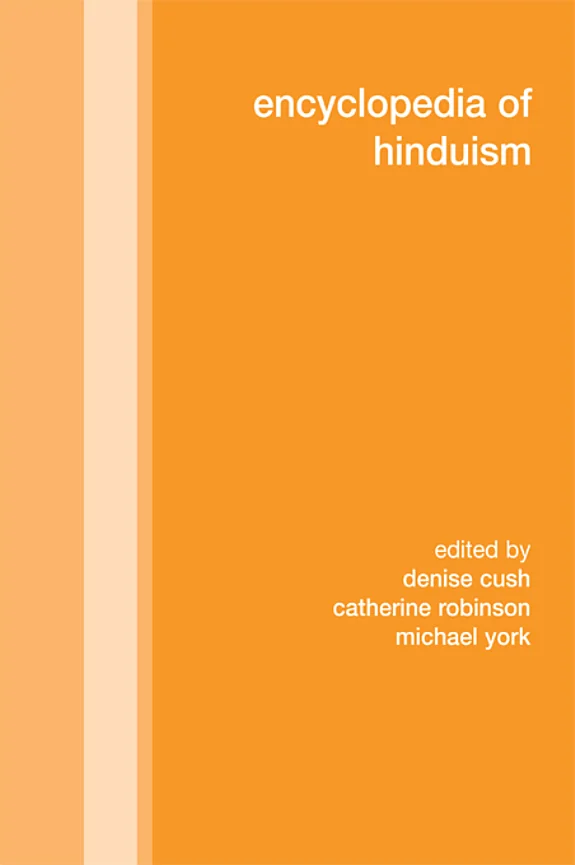
Encyclopedia of Hinduism
 75
75

Encyclopedia of Hinduism
Denise Cush, Catherine A. Robinson, and Michael York’s *Encyclopedia of Hinduism* presents a broad, accessible overview that effectively balances classical tenets with modern lived experience. Its strength lies in the inclusion of ethnographic data, a departure from more text-centric predecessors, offering insights into how Hinduism functions beyond scripture. For instance, the treatment of festivals and local deities provides a grounded perspective. However, the sheer breadth means that some topics, particularly intricate philosophical debates or regional variations, are necessarily condensed. A particular passage on the concept of *Puja* (worship) illustrates this well, providing a functional definition but lacking the depth for a dedicated practitioner seeking nuanced ritualistic understanding.
This volume serves as a solid, informative starting point for understanding a complex religious landscape.
📝 Description
75
Published in 2008, this encyclopedia details Hinduism's diverse traditions, practices, and philosophies.
This reference work covers Hinduism broadly, including its traditions, practices, and philosophies. It goes beyond historical or textual study to include ethnographic and contemporary information, showing how the faith is practiced now. It is useful for scholars, students of religion, and anyone wanting a current understanding of Hinduism. Its wide reach suits both newcomers and experienced researchers seeking details on rituals, deities, or social structures.
The encyclopedia was created in the early 21st century. It differs from older books by including recent scholarship and anthropological research. Unlike many 20th-century texts that focused on scripture or old Vedic traditions, this work recognizes that Hinduism changes and is active in today's world.
While not strictly an esoteric text itself, this encyclopedia provides a necessary framework for understanding the deeper currents within Hinduism. It grounds the reader in the historical and social realities that inform more specialized studies of yogic practices, tantric traditions, or mystical philosophies. By detailing core concepts like dharma and karma alongside the pantheon and textual sources, it allows for a more informed appreciation of the varied paths individuals take in their spiritual pursuits within Hinduism.
💡 Why Read This Book?
• Gain a grounded understanding of contemporary Hindu practices, informed by ethnographic research, which moves beyond purely textual analyses of traditions dating back to the Vedic period. • Grasp the core philosophical concepts like *dharma* and *karma*, learning how they are interpreted and enacted across diverse regional and social contexts. • Discover the significance of specific deities and their associated festivals, such as the widespread celebrations of Diwali, offering a tangible connection to the faith's vibrant cultural expressions.
⭐ Reader Reviews
Honest opinions from readers who have explored this book.
❓ Frequently Asked Questions
What differentiates this encyclopedia from older works on Hinduism?
Unlike earlier encyclopedias that often focused exclusively on textual and historical aspects, this 2008 work by Cush, Robinson, and York incorporates significant ethnographic and contemporary material, reflecting Hinduism as it is practiced today.
Does the book cover the major deities of Hinduism?
Yes, the encyclopedia provides detailed entries on the principal deities within the Hindu pantheon, explaining their iconography, mythology, and significance in worship across different traditions.
Is the concept of karma explained in this encyclopedia?
The book explores core Hindu concepts, including karma, dharma, and moksha, offering explanations that consider both their philosophical underpinnings and their practical implications for adherents.
What historical period does the encyclopedia focus on?
While providing historical context, the encyclopedia's primary focus is on presenting a comprehensive view of Hinduism, with a notable emphasis on contemporary practices and ethnographic observations from the late 20th and early 21st centuries.
Who are the authors of the Encyclopedia of Hinduism?
The encyclopedia was authored by Denise Cush, Catherine A. Robinson, and Michael York, first published in 2008, drawing on their expertise in religious studies and ethnography.
Can this book help someone understand Hindu festivals?
Absolutely. The encyclopedia includes information on various Hindu festivals and rituals, detailing their origins and their role in the social and religious lives of communities.
🔮 Key Themes & Symbolism
The Living Tradition
This encyclopedia moves beyond static scriptural analysis to capture Hinduism as a dynamic, evolving faith. It highlights the integration of ethnographic data, showing how ancient rituals and beliefs manifest in modern social structures and daily life. The work explores the significance of local deities and regional variations, demonstrating that Hinduism is not a monolithic entity but a vibrant constellation of traditions practiced across the subcontinent and diaspora. This approach provides a crucial counterpoint to purely historical accounts, offering a view of religious practice informed by anthropological observation and contemporary scholarship.
Core Philosophical Frameworks
Central to understanding Hinduism are the concepts of dharma (righteous conduct, duty), karma (action and consequence), samsara (cycle of birth, death, and rebirth), and moksha (liberation). This encyclopedia meticulously details these foundational ideas, tracing their development through key texts like the Vedas and Upanishads. It also examines how these principles are interpreted and applied by various schools of thought and within different societal contexts, providing clarity on their pervasive influence on Hindu worldview and ethical systems.
Deities and Iconography
The Hindu pantheon is vast and complex, featuring numerous gods and goddesses who embody different cosmic forces and human aspirations. The encyclopedia offers extensive entries on major deities such as Brahma, Vishnu, Shiva, and Devi, alongside their various avatars and manifestations. It explains their symbolic representations, mythological narratives, and their roles in worship and devotional practices (*bhakti*). Understanding this rich iconography is key to appreciating the devotional and aesthetic dimensions of Hindu religious life.
Ritual and Practice
Beyond theology and philosophy, Hinduism is deeply embedded in ritual and practice. The encyclopedia covers essential elements like *puja* (worship), pilgrimage, and the observance of numerous festivals, such as Diwali and Holi. It explores the significance of sacred spaces, temples, and the role of gurus and spiritual preceptors. This focus on the practical application of faith offers readers tangible insights into how Hindus connect with the divine and maintain their religious identity.
💬 Memorable Quotes
Direct passages from the work, attributed to the author.
“The encyclopedia includes ethnographic and contemporary material in contrast to the exclusively textual and historical approach of earlier works.”
— This statement from the original blurb is crucial. It signals a departure from purely academic, historical analyses of Hinduism, emphasizing the inclusion of how the faith is lived and practiced by people today, making it more relevant to contemporary understanding.
“Karma is understood as the law of cause and effect, where actions in this life, and past lives, shape future experiences and determine one's position in the cycle of rebirth (samsara).”
— This interpretation clarifies the complex doctrine of karma. It emphasizes its role as a fundamental principle governing existence within the cyclical framework of samsara, linking actions directly to consequences across lifetimes.
“Moksha represents the ultimate goal of liberation from samsara, the cycle of birth, death, and rebirth, achieved through various spiritual paths.”
— This definition points to moksha as the transcendent aim within Hinduism – freedom from the endless cycle of existence. It acknowledges that multiple paths can lead to this final release, suggesting diversity within Hindu soteriology.
“The encyclopedia covers the pantheon of Hindu deities, including their myths, iconography, and worship practices.”
— This statement indicates the book's thoroughness regarding Hindu theology and devotion. It promises detailed explanations of the gods and goddesses, their visual representations, and how they are venerated, which is key to understanding Hindu religious expression.
💡 Key Ideas
Editorial paraphrase of the work's core concepts — not direct quotes.
Dharma signifies the underlying order of the universe, the intrinsic nature of reality, and the principles that sustain society and individual life.
This paraphrased concept highlights the complex nature of dharma, a core part of Hindu thought. It's not just 'duty' but a comprehensive principle encompassing cosmic order, natural law, and ethical conduct essential for both societal harmony and personal well-being.
🌙 Esoteric Significance
Tradition
While Hinduism itself is a vast spiritual tradition, this encyclopedia's value within esoteric circles lies in its comprehensive mapping of concepts often explored in Western esotericism, such as karma, reincarnation, and yogic practices. It provides a foundational, scholarly grounding for figures and ideas that have been adapted or referenced in traditions like Theosophy and various New Age movements. By offering detailed explanations of Hindu cosmology and deities, it serves as a vital reference for understanding the Eastern roots that have influenced Western esoteric thought.
Symbolism
Key symbols such as the Om (Aum) mantra, representing the fundamental sound of creation and consciousness, and the Swastika, an ancient symbol of auspiciousness and well-being (distinct from its 20th-century appropriation), are explained within their profound Hindu contexts. The encyclopedia also details the rich iconography of deities, where specific attributes like Shiva's trident (*trishula*) or Vishnu's conch (*shankha*) carry deep cosmological and philosophical meanings related to divine power and cosmic order.
Modern Relevance
Contemporary practitioners of yoga and meditation often draw directly or indirectly from the philosophical and practical teachings outlined in Hindu scriptures, which this encyclopedia elucidates. Thinkers and groups exploring concepts of consciousness, cyclical time, and spiritual liberation find in Hinduism a rich source of ideas. The work's emphasis on ethnographic detail also appeals to modern scholars and practitioners interested in the social and cultural dimensions of spirituality, bridging the gap between ancient wisdom and present-day application.
👥 Who Should Read This Book
• Students of comparative religion: Gain a structured overview of Hindu beliefs, practices, and history, providing essential context for understanding its place among world faiths. • Practitioners of yoga and meditation: Deepen your understanding of the philosophical and spiritual underpinnings of your practice, exploring concepts like *karma* and *dharma* beyond the physical postures. • Researchers of Eastern philosophies: Access a comprehensive reference detailing key deities, scriptures, and schools of thought within Hinduism, aiding in the study of its diverse traditions.
📜 Historical Context
Published in 2008, *Encyclopedia of Hinduism* emerged during a period of renewed global interest in Eastern religions, often fueled by increased migration and media exposure. This era saw academic religious studies grappling with post-colonial critiques and a growing emphasis on lived religion over purely doctrinal or historical accounts. Earlier scholarship, such as that found in some mid-20th century works, often adhered to a comparative method that prioritized Western philosophical frameworks or focused heavily on Vedic or Upanishadic origins. The work by Cush, Robinson, and York distinguished itself by actively integrating anthropological fieldwork and contemporary sociological data, reflecting a broader academic trend toward understanding religious phenomena in their lived context. This approach provided a more nuanced counterpoint to traditional Indological studies, which had sometimes overlooked the vibrant, evolving nature of Hinduism in practice. The book thus arrived as a valuable resource for scholars and students seeking a more holistic and up-to-date perspective.
📔 Journal Prompts
The concept of Dharma: How do the principles of dharma as described in the encyclopedia relate to your personal ethical framework?
Exploring Samsara: Reflect on the cyclical nature of existence as presented in the context of samsara and its implications for personal growth.
Deities and Archetypes: Consider the symbolic meaning of a specific Hindu deity, such as Shiva or Devi, as an archetype in your own life.
The role of Puja: How might the principles of devotional practice (*puja*) be integrated into your daily routine, even without a formal altar?
Karma's Influence: Analyze a past decision through the lens of karma, considering the actions taken and their potential consequences as explained in the text.
🗂️ Glossary
Dharma
A foundational concept in Hinduism, encompassing righteousness, duty, cosmic law, and the intrinsic nature of reality. It guides ethical conduct and societal order.
Karma
The principle of cause and effect governing actions and their consequences. It dictates one's journey through the cycle of rebirth (samsara).
Samsara
The continuous cycle of birth, death, and rebirth (reincarnation) that sentient beings undergo, driven by karma and desire.
Moksha
Liberation or release from the cycle of samsara. It is the ultimate spiritual goal in Hinduism, leading to a state of eternal peace and union.
Puja
A ritualistic act of worship or prayer directed towards a deity or an object of reverence, often involving offerings and chanting.
Vedas
The oldest and most authoritative scriptures of Hinduism, considered to be revealed knowledge, forming the basis of much of Hindu philosophy and ritual.
Upanishads
A collection of philosophical texts forming the theoretical basis of Hinduism, exploring concepts like Brahman (ultimate reality) and Atman (the self).
This book appears in 1 collection
🔮 Readers Also Liked
Browse all →









From the “Hinduism” Collection
View all →









More Free Occult Philosophy Books
View all →