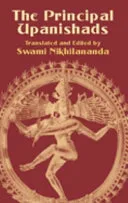
The Principal Upanishads
 75
75

The Principal Upanishads
Swami Nikhilananda's rendition of the Principal Upanishads offers a commendable entry point into texts that have shaped millennia of philosophical discourse. The translation prioritizes lucidity, a crucial factor when dealing with material that can easily become opaque. A notable strength lies in the comprehensive glossary, which attempts to untangle the complex Sanskrit terminology, a vital aid for readers unfamiliar with the linguistic nuances. However, the introduction, while informative, could benefit from a more critical engagement with the historical reception and diverse interpretations of these scriptures beyond the Vedanta school. The exploration of the concept of *neti neti* (not this, not this) in the *Brihadaranyaka Upanishad*, for instance, is handled with the requisite philosophical rigor, highlighting the Upanishads' unique apophatic approach to understanding the Absolute. It remains a solid academic and spiritual resource, though perhaps less suited for the absolute novice seeking a purely devotional text.
📝 Description
75
Swami Nikhilananda's 1975 translation presents the principal Upanishads, core texts of Vedanta.
This volume contains the principal Upanishads, texts central to Vedanta philosophy and Indian metaphysical thought. Swami Nikhilananda's translation aims for clarity, making these complex dialogues understandable for a wider audience. The Upanishads explore fundamental questions about the nature of reality, consciousness, and the self, forming the bedrock of Hindu spiritual and intellectual traditions.
Composed between approximately 800 BCE and 200 BCE, the Upanishads mark a transition from ritualistic practices to philosophical inquiry in ancient India. They emerged during a period of significant intellectual activity, alongside Buddhism and Jainism. Transmitted orally for centuries, these texts profoundly influenced later thinkers, including Adi Shankara in the 8th century CE, and have had global reach.
The work is suitable for students of comparative religion, philosophy, and spiritual traditions. It is particularly useful for those interested in the origins of Eastern thought and concepts such as Brahman and Atman. Researchers in Indian philosophy and those studying the history of consciousness will also find value here.
The Upanishads represent a pivotal shift in Vedic thought, moving from external ritual to internal contemplation. They articulate a sophisticated nondualistic philosophy, positing the identity of the individual consciousness (Atman) with the ultimate reality (Brahman). This core insight, often realized through yogic practices and philosophical inquiry, forms the basis for later traditions like Advaita Vedanta, which seek liberation (moksha) from the cycle of existence through direct realization of this unity.
💡 Why Read This Book?
• Gain direct insight into the philosophical underpinnings of Vedanta, understanding the concept of Brahman as presented in the original texts, rather than secondary interpretations. • Explore the notion of Atman and its relationship to the ultimate reality, a central tenet discussed across multiple Upanishads like the *Chandogya*. • Utilize the extensive glossary to demystify Sanskrit terms such as *moksha* and *samsara*, enhancing comprehension of the cyclical nature of existence as described in the work.
⭐ Reader Reviews
Honest opinions from readers who have explored this book.
❓ Frequently Asked Questions
What is the primary philosophical school associated with the Upanishads?
The Upanishads are the foundational texts for Vedanta philosophy. This school of thought, significantly elaborated by figures like Adi Shankara in the 8th century CE, centers on the teachings about Brahman (ultimate reality) and Atman (the self).
When were the Upanishads composed?
The composition of the Upanishads spans a considerable period, generally dated between 800 BCE and 200 BCE. They represent a transition in Vedic thought from ritual to philosophical inquiry.
What does the term 'Upanishad' mean?
The Sanskrit word 'Upanishad' is often translated as 'sitting near' or 'lying beside', implying knowledge transmitted from a guru to a disciple. It signifies esoteric teachings received in close proximity to the teacher.
Does Swami Nikhilananda's translation include all Upanishads?
No, this volume specifically comprises the 'principal' Upanishads, considered the most significant and influential for the development of Vedanta philosophy, rather than the entire corpus of over 200 known Upanishads.
What is the concept of 'Atman' as discussed in the Upanishads?
Atman refers to the innermost self or soul. A core teaching of the Upanishads is the identity of Atman with Brahman, the universal consciousness, suggesting that the individual essence is ultimately one with the Absolute.
How does the glossary aid in understanding the text?
The glossary provides definitions and multiple meanings for Sanskrit terms encountered in the Upanishads. This is crucial for grasping concepts like *karma*, *samsara*, and *moksha*, which are central to the philosophical discourse.
🔮 Key Themes & Symbolism
The Identity of Self and Absolute
This theme posits the profound unity between the individual soul (Atman) and the ultimate reality (Brahman). The Upanishads explore this through various analogies and negations, asserting that the perceived separateness is illusory. Realizing this identity is presented as the path to liberation. Texts like the *Mahavakya* 'Tat Tvam Asi' (That Thou Art) encapsulate this non-dualistic perspective, challenging conventional notions of individuality and the cosmos.
The Nature of Reality (Brahman)
Brahman is depicted as the singular, unchanging, infinite, and all-pervading consciousness that underlies all existence. It is the source, sustenance, and ultimate destination of everything. The Upanishads describe Brahman as beyond all attributes, form, and conceptualization, often using apophatic language ('neti neti' - not this, not this) to indicate its ineffable nature. Understanding Brahman is key to comprehending the Upanishadic worldview.
The Cycle of Existence (Samsara)
The Upanishads discuss samsara as the continuous cycle of birth, death, and rebirth, driven by karma (actions and their consequences). This cycle is seen as a state of bondage, characterized by suffering and ignorance. The goal of spiritual practice is to break free from samsara and attain moksha, liberation from this endless repetition of existence, by realizing the truth of Atman's identity with Brahman.
Paths to Liberation (Moksha)
The texts outline various approaches to achieving moksha, primarily through knowledge (jnana), meditation (dhyana), and virtuous action (karma yoga). Self-inquiry, contemplation, and the guidance of a qualified guru are emphasized as crucial. The ultimate aim is to transcend ignorance and illusion, leading to the realization of one's true nature and eternal freedom from the limitations of worldly existence.
💬 Memorable Quotes
Direct passages from the work, attributed to the author.
“Tat Tvam Asi.”
— This concise statement, 'That Thou Art', is one of the most significant Mahavakyas (Great Sayings) from the Upanishads. It directly asserts the identity between the individual self (Tvam) and the ultimate reality (Tat), forming the central to Advaita Vedanta's non-dualistic philosophy.
“Brahman is Consciousness.”
— This interpretation highlights the Upanishadic understanding of Brahman not as a material substance or a personal deity with human-like qualities, but as pure, unadulterated consciousness itself, the fundamental ground of all being.
“The knower of Brahman attains the highest.”
— This signifies that the ultimate spiritual goal is the direct realization of Brahman. Such knowledge is not mere intellectual assent but a transformative understanding that leads to liberation from the cycle of suffering and rebirth.
“One should not teach the Upanishads to one who has not followed the prescribed path.”
— This reflects the tradition's emphasis on discipline and readiness for profound spiritual knowledge. It suggests that the teachings require a prepared mind and ethical foundation for proper reception and integration.
💡 Key Ideas
Editorial paraphrase of the work's core concepts — not direct quotes.
He who is in the fire, he who is in the heart, he who is in the sky, he is the one.
This passage illustrates the omnipresence of the Divine or ultimate reality, showing it to be immanent in diverse forms and locations—from elemental fire to the individual's inner being and the vastness of the cosmos.
🌙 Esoteric Significance
Tradition
The Upanishads are foundational to the Indic esoteric traditions, particularly Vedanta, and profoundly influenced later schools like Yoga. They represent a move towards internal contemplation and direct realization of the Absolute (Brahman), diverging from purely external ritualism. Their emphasis on the identity of the individual soul (Atman) with the universal consciousness places them firmly within non-dualistic mystical streams that seek to transcend perceived separation.
Symbolism
Key symbols include *Om* (AUM), representing the primordial sound and the totality of existence, encompassing the waking, dreaming, and deep sleep states, and the transcended state. The *lotus* often symbolizes purity and spiritual unfolding from the mud of material existence. The concept of the *chariot* in the Katha Upanishad serves as a complex metaphor for the human being, with the body as the chariot, the intellect as the driver, and the senses as the horses, illustrating the need for control and wisdom.
Modern Relevance
Contemporary thinkers and spiritual practitioners across various disciplines, including comparative philosophy, consciousness studies, and integral psychology, draw heavily from Upanishadic concepts. Figures like Swami Vivekananda, who introduced Vedanta to the West in the late 19th century, and modern interpreters of Advaita Vedanta continue to engage with these texts. Practices like meditation and mindfulness, popularized globally, echo the introspective techniques advocated in the Upanishads.
👥 Who Should Read This Book
• Students of comparative religion and Eastern philosophy seeking to understand the bedrock texts of Hindu thought and their influence on global spirituality. • Individuals interested in metaphysics and cosmology who wish to explore ancient Indian perspectives on the nature of reality, consciousness, and the self. • Scholars of Indian history and intellectual traditions looking for primary source material on the development of philosophical inquiry from the Vedic period onwards.
📜 Historical Context
The Principal Upanishads emerged from the later Vedic period in India, roughly between 800 BCE and 200 BCE. This era marked a significant intellectual shift, moving away from the ritualistic hymns of the Rigveda towards profound philosophical speculation. These texts represent the culmination of centuries of contemplative thought, seeking to understand the nature of reality, the self, and the cosmos. They arose during a dynamic period of Indian history, which also saw the flourishing of Buddhism and Jainism, offering alternative philosophical and spiritual paths. The Upanishads' emphasis on introspection and the concept of Brahman as ultimate reality provided the intellectual framework for the development of Vedanta, a major school of Hindu philosophy. Thinkers like Adi Shankara, in the 8th century CE, would later systemize and expound upon Upanishadic doctrines, cementing their place in Indian intellectual history.
📔 Journal Prompts
The concept of Brahman as described in the *Maitri Upanishad*.
Reflections on the 'neti neti' method for understanding the Absolute.
The role of the guru in transmitting Upanishadic knowledge.
Contemplating the implications of Atman being identical to Brahman.
Analyzing the relationship between karma and samsara as presented in the texts.
🗂️ Glossary
Brahman
The ultimate, unchanging reality that is the source, support, and ground of all existence. It is considered infinite, eternal, and beyond all attributes and conceptualization.
Atman
The individual soul, the inner self, or the essence of a living being. A central teaching is the identity of Atman with Brahman.
Moksha
Liberation or release from the cycle of birth, death, and rebirth (samsara). It signifies the attainment of ultimate spiritual freedom and union with Brahman.
Samsara
The continuous cycle of birth, death, and reincarnation, driven by karma. It is often described as a state of suffering and illusion from which liberation is sought.
Karma
The law of cause and effect, where actions (karma) lead to consequences in this life or future lives. It determines one's destiny within the cycle of samsara.
Jnana
Knowledge, particularly spiritual or self-knowledge. Jnana Yoga is the path of liberation through wisdom and understanding of the true nature of reality.
Om (AUM)
A sacred syllable and mantra representing the primordial sound of the universe and the totality of consciousness. It symbolizes Brahman and is used in meditation.