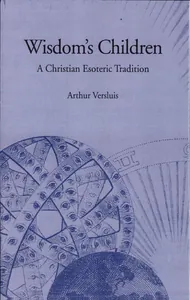
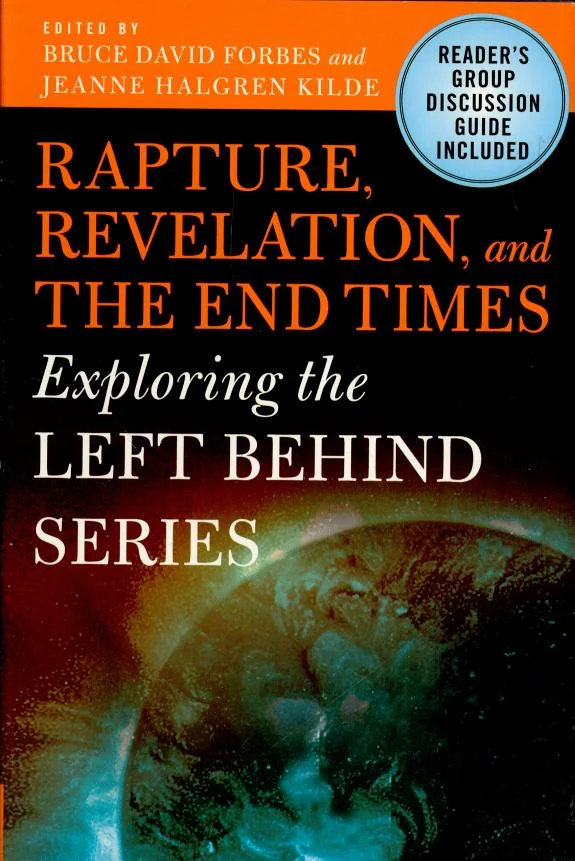
Rapture, Revelation, and the End Times
 75
75

Rapture, Revelation, and the End Times
Forbes and Kilde’s 2004 analysis of the "Left Behind" phenomenon is a sober counterpoint to the evangelical fervor it tapped into. The work’s strength lies in its clear-eyed deconstruction of how specific theological tenets, like dispensational premillennialism, are translated into accessible, albeit simplified, narrative arcs. The authors effectively dissect the series' appeal by tracing its roots in fundamentalist eschatology. A limitation, however, is that the book's focus remains squarely on the series itself, occasionally sacrificing broader comparisons to other apocalyptic literature or movements. The section detailing the interpretation of Revelation 7:9-17 as depicting the saved during the Tribulation is particularly illuminating in demonstrating how theological specifics drive plot. Rapture, Revelation, and the End Times offers a crucial academic perspective on a significant cultural artifact.
📝 Description
75
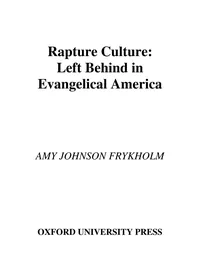
Published in 2004, Rapture, Revelation, and the End Times offers an academic look at the 'Left Behind' series.
Bruce David Forbes and Jeanne Halgren Kilde wrote Rapture, Revelation, and the End Times in 2004. This book examines the "Left Behind" evangelical Christian fiction series and its cultural reach. The authors take an objective stance, breaking down the series' stories, theological foundations, and the biblical readings that drive its popularity. Their goal is to grasp why this specific kind of apocalyptic fiction resonates with so many people.
The book is aimed at those interested in the sociology of religion, modern Christian groups, and how popular culture intersects with theology or literature. Academics in religious studies, literature, and American culture will find it useful. It also speaks to anyone curious about the end-times beliefs behind the "Left Behind" novels and their large following.
While not strictly esoteric, this book analyzes a specific strain of Christian eschatology that has generated significant popular interest. It examines how interpretations of biblical prophecy, particularly those concerning the Rapture and Tribulation, are translated into popular fiction. The work positions itself as an analytical response to a cultural moment where end-times speculation, often rooted in specific theological traditions, became a prominent feature of evangelical discourse.
💡 Why Read This Book?
• Understand the specific dispensationalist theology driving the "Left Behind" narrative, learning how concepts like the Rapture are interpreted and applied within the fiction. • Gain insight into the cultural impact of apocalyptic Christian fiction, examining how the "Left Behind" series, beginning in 1995, shaped discourse and belief. • Analyze the literary techniques used to translate complex eschatological ideas into a widely accessible format, appreciating the craft behind its broad appeal.
⭐ Reader Reviews
Honest opinions from readers who have explored this book.
❓ Frequently Asked Questions
When was Rapture, Revelation, and the End Times originally published?
The book was first published on June 12, 2004, by Bruce David Forbes and Jeanne Halgren Kilde. This places its analysis during the peak popularity of the "Left Behind" series.
What is dispensational premillennialism as discussed in the book?
Dispensational premillennialism is a theological system that views biblical history as divided into distinct eras or 'dispensations.' It posits that Christ's second coming will occur after a period of tribulation, with a pre-tribulation Rapture of believers.
Does the book analyze the 'Left Behind' characters in depth?
While the book examines the narrative and theological functions of the "Left Behind" series, its primary focus is on the broader themes and cultural significance rather than deep character analysis.
Is this book written from an evangelical perspective?
No, Rapture, Revelation, and the End Times is written from an academic and objective standpoint, analyzing the phenomenon rather than promoting its theological underpinnings.
What is the significance of Revelation 7:9-17 in the context of the book?
The book uses interpretations of Revelation 7:9-17 to illustrate how specific biblical passages are selectively applied to construct the narrative of salvation and judgment within the "Left Behind" series.
Who are Bruce David Forbes and Jeanne Halgren Kilde?
They are the authors who brought an academic perspective to the examination of the "Left Behind" series, analyzing its religious and cultural impact.
🔮 Key Themes & Symbolism
Dispensationalist Eschatology
The work meticulously breaks down the core tenets of dispensational premillennialism, a theological framework that forms the bedrock of the "Left Behind" series. It highlights how this system interprets biblical prophecy, particularly regarding the timeline of end-times events such as the Rapture and the Tribulation. The authors show how these specific theological interpretations are translated into the fictional world, providing a narrative structure that appeals to a particular audience seeking concrete answers about the future.
Apocalyptic Fiction as Cultural Mirror
Forbes and Kilde position the "Left Behind" series not merely as fiction, but as a significant cultural artifact reflecting anxieties and hopes within certain segments of American society. They explore how this genre of apocalyptic literature functions to articulate deeply held beliefs about salvation, judgment, and the divine plan. The book examines the series' impact beyond its readership, influencing broader conversations about faith and the end of days.
Biblical Interpretation and Narrative
A central focus is the selective and often literalistic interpretation of biblical texts, especially those found in the Book of Revelation, that underpins the "Left Behind" narrative. The authors analyze how specific verses are employed to construct plot points and character motivations. This examination sheds light on the hermeneutical strategies used to create a sense of prophetic authenticity and urgency, making complex theological concepts accessible to a mass audience.
The Appeal of the 'Left Behind' Series
The book probes the reasons behind the immense popularity of the "Left Behind" series, moving beyond simple sales figures. It investigates the psychological and spiritual needs that such narratives fulfill for their readers, offering a sense of order, meaning, and a clear moral framework in the face of perceived global chaos. The authors consider how the series provides comfort and a sense of belonging within a community of shared belief.
💬 Memorable Quotes
Direct passages from the work, attributed to the author.
“The interpretation of Revelation 7:9-17 is key to understanding the series' portrayal of the saved.”
— This idea emphasizes how specific biblical passages are foundational to the plot and theological claims of the "Left Behind" novels, illustrating the authors' focus on textual exegesis within the fiction.
“Apocalyptic fiction can serve as a cultural barometer for societal anxieties.”
— This interpretation suggests that the book views the "Left Behind" series not just as entertainment, but as a reflection of underlying fears and hopes prevalent in society regarding the future and divine intervention.
“The series translates complex eschatology into accessible narrative.”
— This concept points to the authors' analysis of how the book's authors made intricate theological doctrines understandable and engaging for a broad, popular audience through storytelling.
💡 Key Ideas
Editorial paraphrase of the work's core concepts — not direct quotes.
The "Left Behind" series is a narrative manifestation of dispensational premillennialism.
This paraphrased concept highlights the book's central argument: that the popular fiction series is not an isolated phenomenon but a direct literary expression of a specific, influential theological system.
Objective analysis is crucial for understanding religious phenomena.
This paraphrased concept underscores the book's methodological approach, advocating for a critical, academic perspective when examining religious movements and their cultural products, rather than devotional engagement.
🌙 Esoteric Significance
Tradition
While not directly tied to a singular esoteric lineage like Hermeticism or Gnosticism, this work engages with the popularization of specific Christian eschatological beliefs. These beliefs, particularly dispensational premillennialism, have a complex history within Protestantism, often overlapping with millenarian and chiliastic traditions. The book's value lies in its objective examination of how these religious doctrines are translated into mass-market fiction, a process that can be seen as a form of contemporary folk esotericism, making complex theological ideas accessible and actionable for a broad audience.
Symbolism
The book dissects the symbolic language derived from biblical prophecy, particularly the Book of Revelation. Key symbols include the 'Rapture' itself, representing a divine intervention and separation of the faithful, and the 'Tribulation,' a period of intense suffering and divine judgment. The authors analyze how these potent symbols are literalized within the narrative, serving as narrative drivers and reinforcing specific theological interpretations that shape the reader's understanding of cosmic conflict and salvation.
Modern Relevance
Contemporary scholars of religion, media studies, and popular culture continue to draw upon the analytical framework established in Rapture, Revelation, and the End Times. Its examination of how religious narratives are constructed and consumed remains relevant for understanding modern media's role in shaping belief systems. Thinkers analyzing the intersection of faith and media, or the sociology of American evangelicalism, find the book's objective approach to popular religious texts a valuable resource for contemporary analysis.
👥 Who Should Read This Book
• Students of contemporary American religion and evangelical subcultures, seeking to understand the appeal and theological underpinnings of popular apocalyptic fiction. • Literary critics and cultural analysts interested in how religious ideas are translated into accessible narratives and their societal impact. • Readers curious about the specific doctrines of dispensational premillennialism and their manifestation in the highly successful "Left Behind" series.
📜 Historical Context
Published in 2004, Rapture, Revelation, and the End Times emerged within a cultural landscape deeply influenced by the burgeoning popularity of the "Left Behind" series, which began its run in 1995. This period, the early 2000s, was marked by heightened public interest in millennialism and apocalyptic thought, often fueled by geopolitical events and anxieties. The book positioned itself as an academic counterpoint to both the fervent evangelical reception and more sensationalist media coverage. It engaged with the field of religious studies by applying sociological and literary analysis to a phenomenon previously confined to theological or devotional discourse. While not explicitly engaging with specific academic rivals in its text, it implicitly challenged the uncritical acceptance of such narratives by offering a scholarly dissection. Its reception was primarily within academic circles and among readers seeking a more analytical understanding of the series' impact.
📔 Journal Prompts
The concept of the Rapture as depicted in the "Left Behind" series.
The narrative function of specific interpretations of Revelation 7:9-17.
The role of apocalyptic fiction in reflecting societal anxieties.
The process of translating complex eschatology into popular narrative.
The objective analytical approach to religious phenomena.
🗂️ Glossary
Dispensational Premillennialism
A theological system dividing biblical history into distinct eras ('dispensations') and believing Christ will return after a period of tribulation, with believers raptured before it.
Eschatology
The branch of theology concerned with the final destiny of the soul and of humankind, particularly concerning end-times events and the afterlife.
Rapture
In certain Christian eschatologies, the belief that believers will be divinely caught up to meet Christ in the air before or during a period of tribulation.
Tribulation
A period of intense suffering and divine judgment prophesied to occur before the Second Coming of Christ, central to many apocalyptic narratives.
Hermeneutics
The theory and methodology of interpretation, especially the interpretation of biblical texts, focusing on principles of understanding.
Millennialism
A belief held by some religious groups that a golden age or paradise is coming on Earth, often linked to the Second Coming of Christ.
Apocalyptic Literature
Literary works that typically deal with the end of the world, divine judgment, and often offer visions of a transformed future or cosmic struggle.
This book appears in 1 collection
🔮 Readers Also Liked
Browse all →







From the “Apocalyptic Literature” Collection
View all →





More Free Sacred Texts & Gnosticism Books
View all →