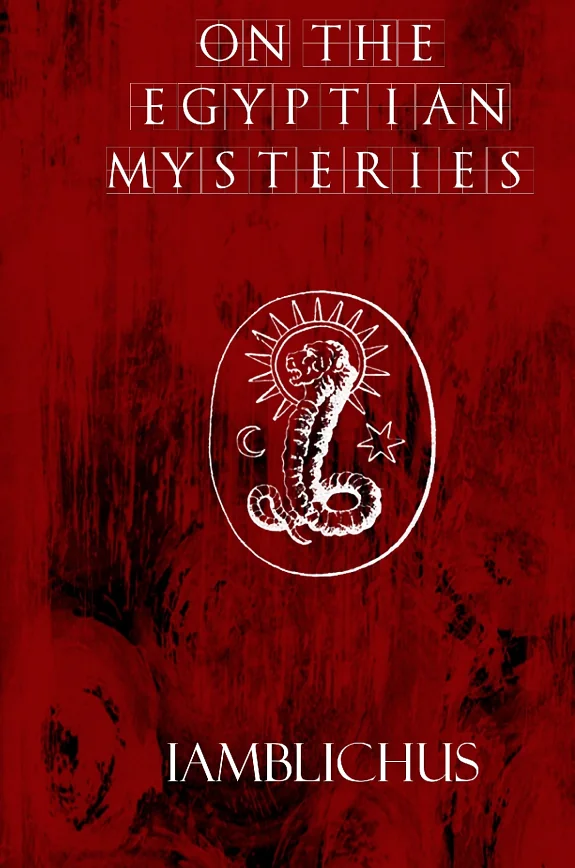
On the Egyptian Mysteries
 73
73

On the Egyptian Mysteries
Iamblichus's "On the Egyptian Mysteries" offers a dense, yet crucial, perspective on theurgic practices within Neoplatonism. Its strength lies in its systematic defense of ritual as a genuine pathway to divine communion, a stark contrast to more purely intellectual approaches. The work meticulously details the hierarchy of divine powers and the specific roles of various rites, providing a detailed blueprint for understanding ancient spiritual technology. A notable limitation, however, is the text's inherent reliance on a highly specific philosophical framework that can be inaccessible to those unfamiliar with Neoplatonic metaphysics. For instance, the detailed classifications of divine entities and their correspondences with ritual acts, while central to Iamblichus's argument, require considerable background knowledge to fully appreciate.
Ultimately, "On the Egyptian Mysteries" remains a vital primary source for anyone serious about the practical, ecstatic dimensions of ancient philosophy.
📝 Description
73
Iamblichus wrote "On the Egyptian Mysteries" around 300 CE to defend Egyptian religious practices.
Iamblichus's work, known also as "Theurgia," addresses a letter from Porphyry to the Egyptian priest Anebo. It defends ancient Egyptian and Chaldean religious practices, asserting their divine origins. The text argues that humans can achieve divine ascent through participation in these rituals.
This treatise is important for students of ancient philosophy, comparative religion, and Western esotericism. It directly addresses those involved in theurgic arts and interested in the philosophical basis of ritual. Readers seeking to grasp the late antique view of a divinely accessible world through specific practices will find it valuable.
This text is a central document in Neoplatonic philosophy, particularly its later, more mystical developments. It represents a significant engagement with traditional religion and magic, moving beyond the more purely philosophical focus of earlier Neoplatonists like Plotinus. Iamblichus, a student of Porphyry, here champions the idea that ritual acts, especially those from Egyptian and Chaldean traditions, are not mere symbols but effective means of interacting with the divine and achieving spiritual transformation.
💡 Why Read This Book?
• Learn about the Neoplatonic concept of theurgy, understanding how Iamblichus believed ritual could directly engage divine powers, as detailed in his defense of Egyptian practices. • Grasp the philosophical context of the early 4th century CE, a period of intense religious syncretism and the rise of Neoplatonic schools like Iamblichus's own. • Discover specific ancient ritualistic correspondences, exploring how Iamblichus connects different divine hierarchies to particular rites and invocations central to Egyptian and Chaldean traditions.
⭐ Reader Reviews
Honest opinions from readers who have explored this book.
❓ Frequently Asked Questions
What is the primary purpose of Iamblichus's "On the Egyptian Mysteries"?
The book's main purpose is to defend the efficacy of Egyptian and Chaldean religious rituals and theurgy as a means for human beings to connect with the divine, responding to philosophical critiques.
Who was Iamblichus and when did he write this?
Iamblichus was a prominent Syrian Neoplatonist philosopher who lived from approximately 245 to 325 CE. He authored "On the Egyptian Mysteries" during the early 4th century.
What philosophical school does "On the Egyptian Mysteries" belong to?
The work is a cornerstone of Neoplatonic philosophy, a school that sought to synthesize the teachings of Plato with other mystical and religious traditions.
What does 'theurgy' mean in the context of this book?
Theurgy, as presented by Iamblichus, refers to divine work or ritual actions performed by humans to invoke divine aid, facilitate spiritual ascent, and achieve union with the gods.
Is this book a primary source for understanding ancient Egyptian religion?
While it discusses Egyptian practices, it is primarily a philosophical interpretation through a Neoplatonic lens, rather than a direct ethnographic account of ancient Egyptian religion itself.
What is the significance of Porphyry's letter mentioned in the book?
The book is structured as a response to a letter from Porphyry, a key Neoplatonist, to the Egyptian priest Anebo, questioning the validity and nature of traditional religious practices.
🔮 Key Themes & Symbolism
Theurgy and Divine Ascent
The core of "On the Egyptian Mysteries" is the concept of theurgy – divine work. Iamblichus argues that specific rituals, prayers, and invocations are not mere symbolic acts but effective means to engage with the divine realm. He posits a hierarchy of celestial beings and explains how these practices allow the human soul to purify itself and ascend, moving closer to the gods through participation in sacred rites. This active engagement with the divine, rather than passive contemplation, is central to his philosophy.
Hierarchy of Divine Beings
Iamblichus presents a detailed cosmology where the universe is populated by various classes of divine entities, ranging from the supreme, ineffable God to lesser spirits and daemons. The text meticulously categorizes these beings and their correspondences with different aspects of creation and ritual. Understanding this hierarchy is crucial for theurgists, as it informs the proper invocation and appeasement of specific divine powers through correctly performed rituals.
Critique of Materialism and Skepticism
The work directly confronts philosophical skepticism and materialistic views that dismiss the efficacy of traditional religion and ritual. Iamblichus defends the ancient rites of Egypt and Chaldea against Porphyry's criticisms, asserting their divine origin and power. He argues that true knowledge of the divine is not solely attainable through intellectual reasoning but requires experiential engagement through theurgic practices, which bypass the limitations of purely rational understanding.
Theurgy vs. Philosophy
While rooted in Neoplatonic philosophy, "On the Egyptian Mysteries" emphasizes the practical, salvific power of theurgy over purely theoretical contemplation. Iamblichus suggests that while philosophy can lead one towards the divine, it is theurgic ritual that provides the direct, tangible connection and purification necessary for ultimate spiritual ascent. This distinction highlights a key development within Neoplatonism, prioritizing ecstatic experience and ritual efficacy.
💬 Memorable Quotes
Direct passages from the work, attributed to the author.
“Rituals are chains that bind the gods to us.”
— This interpretation conveys Iamblichus's view that carefully constructed and performed rituals possess a binding power, compelling divine attention and intervention in the human realm.
“The soul, being divine in nature, can ascend to the gods through purification.”
— This captures the Neoplatonic idea that the human soul has a divine origin and can achieve its ultimate state by cleansing itself through various practices, including theurgy.
“The visible world is a reflection of the invisible, and rituals allow us to interact with the latter.”
— This interpretation emphasizes the Neoplatonic principle of correspondence between the material and spiritual realms, and the role of ritual as a bridge between them.
💡 Key Ideas
Editorial paraphrase of the work's core concepts — not direct quotes.
The gods are ineffable, and it is through the invocation of their names that we approach them.
This paraphrased concept highlights Iamblichus's belief in the power of divine names and the active role of invocation in bridging the gap between humanity and the transcendent divine.
We must not reject the traditional rites; they are the gifts of the gods themselves.
This paraphrased sentiment underscores Iamblichus's defense of ancient religious practices, positioning them not as human inventions but as divinely ordained pathways.
🌙 Esoteric Significance
Tradition
This work is a central to the Neoplatonic tradition, specifically its later, more theurgic development. Iamblichus built upon the philosophical foundations laid by Plotinus but significantly expanded the role of ritual and ecstatic experience in achieving union with the divine. It represents a departure from purely intellectualist approaches, integrating practical magic and ceremony as essential components of spiritual philosophy, profoundly influencing subsequent Western esoteric movements.
Symbolism
The text frequently employs symbols drawn from Egyptian and Chaldean traditions. For instance, the concept of the 'divine names' is crucial, believed to hold inherent power to invoke specific deities. The 'hierarchy of being' itself functions symbolically, mapping divine emanations onto cosmic and ritualistic structures. Furthermore, the symbolic correspondence between celestial bodies, earthly elements, and specific ritual acts is a recurring motif, forming the basis for theurgic efficacy.
Modern Relevance
Contemporary practitioners of Western Esotericism, particularly within Hermetic and magical orders, frequently engage with Iamblichus's ideas on theurgy. Thinkers and groups influenced by Neoplatonism continue to explore his detailed cosmology and ritual frameworks. His emphasis on the active participation of the practitioner in spiritual ascent remains a powerful model for those seeking direct experience of the divine, influencing modern approaches to ritual magic and spiritual development.
👥 Who Should Read This Book
• Students of ancient philosophy seeking to understand the development of Neoplatonism beyond Plotinus, particularly its engagement with religious practice. • Practitioners of Western Esotericism interested in the historical and philosophical roots of theurgy and ritual magic. • Scholars of comparative religion exploring the intellectual justifications for ritual efficacy in late antiquity and its relationship with Hellenistic philosophy.
📜 Historical Context
Written around the turn of the 4th century CE, Iamblichus's "On the Egyptian Mysteries" emerged from the fertile intellectual soil of late antiquity. Neoplatonism, heavily influenced by Plotinus and Porphyry, was grappling with the relationship between Greek philosophy and existing religious traditions. Porphyry, in his letter to Anebo, had expressed doubts about the efficacy of traditional rituals, particularly Egyptian ones. Iamblichus, a student of Porphyry, took up the challenge, founding his own school in Apamea and developing a more ritualistic and theurgic branch of Neoplatonism. His work directly countered the more philosophical focus of Plotinus and engaged with contemporary pagan, Christian, and Gnostic currents. The text's robust defense of traditional rites was significant in a period where Christianity was rising in prominence and pagan institutions faced increasing pressure, though it didn't prevent the eventual decline of these traditions.
📔 Journal Prompts
The soul's purification through theurgy: what rituals might facilitate this today?
Iamblichus's hierarchy of divine beings: how does this structure inform your understanding of the cosmos?
Reflecting on the 'divine names': what power do specific appellations hold in spiritual practice?
The tension between philosophical contemplation and theurgic action: where does your own path lie?
Considering the efficacy of ancient rites: what enduring principles can be extracted for modern practice?
🗂️ Glossary
Theurgy
Divine work; a system of rituals, prayers, and invocations believed to facilitate communion with the divine and promote spiritual purification and ascent.
Neoplatonism
A philosophical school originating with Plotinus, interpreting Plato's philosophy through a mystical and metaphysical lens, emphasizing emanation from a supreme 'One'.
Chaldean Oracles
A collection of mystical and theurgic texts originating from Hellenistic Mesopotamia, highly influential on later Neoplatonists like Iamblichus.
Hierarchy of Being
The Neoplatonic concept of a structured universe emanating from a divine source, with various levels of existence from the ultimate God down to matter.
Invocations
The act of calling upon a divine being or spirit, often through specific prayers, words, or rituals, to solicit divine presence or aid.
Daemons
In ancient Greek thought, spirits or divine beings that mediate between gods and humans; Iamblichus categorizes them within the divine hierarchy.
Anebo
An Egyptian priest to whom Porphyry addressed his letter questioning traditional religious practices, prompting Iamblichus's detailed response.
This book appears in 1 collection
🔮 Readers Also Liked
Browse all →






From the “Egyptian Mysteries” Collection
View all →



![The Kybalion [A Study Of The Hermetic Philosophy Of Ancient Egypt And Greece].pdf (PDFy mirror)](/img/thumb/the-kybalion-a-study-of-the-hermetic-philosophy-of-ancient-egypt-and-greece-pdf-pdfy-mirror.webp)

More Free Sacred Texts & Gnosticism Books
View all →