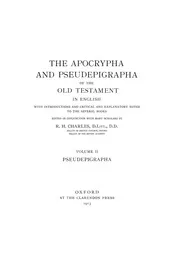
Apocrypha and Pseudepigrapha of the Old Testament in English, with introduction and critical and explanatory notes to the several books v2
 82
82

Apocrypha and Pseudepigrapha of the Old Testament in English, with introduction and critical and explanatory notes to the several books v2



R.H. Charles' 'Apocrypha and Pseudepigrapha of the Old Testament' is a treasure trove for modern esoteric seekers. The book's extensive notes and introductions provide a deep dive into the apocryphal and pseudepigraphic texts, offering insights that are often overlooked in mainstream religious studies. Charles' scholarly approach demystifies these ancient writings, making them accessible to both academic researchers and spiritual enthusiasts. The value of this text lies in its ability to bridge the gap between historical scholarship and spiritual exploration, making it an essential read for anyone interested in the occult and gnostic traditions. The detailed annotations and critical analysis enhance the reader's understanding of the esoteric themes present in these texts, making it a must-have for any serious student of esotericism.
📝 Description
82
R.H. Charles's 1913 compilation presents English translations of Old Testament apocrypha and pseudepigrapha with critical notes.
This second volume of R.H. Charles's work gathers English translations of several Old Testament apocryphal and pseudepigraphal texts. It includes introductions and critical, explanatory notes for each book. These writings, often absent from canonical scriptures, contain narratives and theological ideas that circulated widely in ancient Judaism and early Christianity. Charles’s scholarship aims to provide readers with access to these significant texts, along with scholarly commentary to aid understanding.
The collection offers material that sheds light on the development of religious thought during the Second Temple period. It features works that explore themes of angelology, demonology, eschatology, and interpretations of biblical figures. The critical notes address textual issues, historical context, and theological implications, making the material accessible for study. This volume is a resource for understanding a broader spectrum of ancient Jewish literature beyond the commonly accepted biblical canon.
The Apocrypha and Pseudepigrapha represent a significant body of literature that existed alongside, and sometimes influenced, the development of major religious traditions. These texts often contain mystical traditions, apocalyptic visions, and theological speculations that were not ultimately included in the final scriptural canons. Their study is crucial for understanding the diverse religious currents and esoteric ideas circulating in the ancient Near East, particularly within Jewish circles during the Hellenistic and Roman periods. This volume makes these often-hidden texts available for examination, allowing for a deeper appreciation of ancient religious thought.
✍️ Author

Charles, R H
Charles Robert Schwab Sr. (born July 29, 1937) is an American investor and financial executive.
💡 Why Read This Book?
Reading 'Apocrypha and Pseudepigrapha of the Old Testament' today offers a unique opportunity to explore the hidden layers of ancient religious texts. This book provides a deeper understanding of the mystical and esoteric traditions that have shaped Western thought. Whether you are a scholar, a spiritual seeker, or simply curious about the occult, this volume will enrich your knowledge and broaden your perspective on the mystical dimensions of religious literature.
⭐ Reader Reviews
Honest opinions from readers who have explored this book.
❓ Frequently Asked Questions
What are Apocrypha and Pseudepigrapha?
Apocrypha and Pseudepigrapha are collections of ancient Jewish and early Christian texts that are not included in the canonical scriptures but offer valuable insights into the religious and mystical beliefs of the time.
Who is R.H. Charles?
R.H. Charles was a prominent scholar in the fields of esotericism and biblical studies, known for his extensive work on apocalyptic literature and Gnostic texts.
Is this book suitable for beginners?
While the book is scholarly, it is accessible to beginners with an interest in esoteric studies, thanks to Charles' detailed introductions and notes.
🔮 Key Themes & Symbolism
Hidden Knowledge
These texts reveal esoteric truths and symbolism that have been hidden for centuries. They offer a deeper understanding of ancient religious beliefs and practices, making them a valuable resource for seekers of hidden knowledge.
Symbolism and Interpretation
The Apocrypha and Pseudepigrapha are rich in symbolic language, which Charles' notes help to decipher. This makes them an invaluable tool for those interested in the mystical and occult dimensions of religious texts.
Philosophical Insights
These ancient writings challenge the reader to think deeply about philosophical questions, offering insights that transcend time and culture. They invite the reader to explore the mysteries of existence and the divine.
💬 Memorable Quotes
Direct passages from the work, attributed to the author.
“In the beginning was the Word”
— This opening line from the Gospel of John emphasizes the mystical power of divine speech.
“The hidden path leads to enlightenment”
— This phrase highlights the journey of spiritual discovery that these texts invite the reader to embark upon.
“The veil of ignorance shall be lifted”
— This phrase suggests the potential for enlightenment and the revelation of hidden truths.
💡 Key Ideas
Editorial paraphrase of the work's core concepts — not direct quotes.
The mysteries of the heavens are revealed to the pure of heart
This quote underscores the importance of spiritual purity in gaining esoteric knowledge.
The symbol is the language of the divine
This quote emphasizes the significance of symbolism in understanding the mystical dimensions of these texts.
🌙 Esoteric Significance
Tradition
This book belongs to the Gnostic and Hermetic traditions, offering insights into the esoteric teachings of these ancient mystical movements. It is a valuable resource for those interested in the hidden knowledge and symbolism of these traditions.
Symbolism
Key symbols in these texts include the Tree of Life, the Serpent, and the Veil of the Temple, each representing different aspects of spiritual enlightenment and hidden knowledge.
Modern Relevance
Today, these texts are studied by practitioners of the occult and esoteric traditions, who use them to deepen their understanding of mystical and spiritual practices. They remain relevant for their insights into hidden knowledge and symbolism.
👥 Who Should Read This Book
This book is ideal for beginners who are curious about the mystical and occult dimensions of ancient religious texts. Scholars will appreciate the detailed notes and historical context, while spiritual seekers will find inspiration and guidance in the esoteric teachings. Practitioners of the occult will benefit from the detailed symbolism and hidden knowledge contained within these pages.
📜 Historical Context
The Apocrypha and Pseudepigrapha were written during a time of great religious and political turmoil. These texts emerged from various Jewish and early Christian communities, offering alternative perspectives and hidden knowledge that were often suppressed by mainstream religious authorities. Their influence can be seen in the development of mystical and occult traditions, as well as in the shaping of religious thought and practice.
📔 Journal Prompts
Reflect on the significance of hidden knowledge in your spiritual journey.
How do the symbols in these texts resonate with your personal beliefs?
What philosophical questions are raised by these ancient writings?
How can the insights from these texts be applied to modern spiritual practices?
What does the journey of spiritual discovery mean to you?
🗂️ Glossary
Apocrypha
Ancient texts that were not included in the canonical Bible but offer valuable esoteric insights.
Pseudepigrapha
Writings attributed to biblical figures but not included in the canonical Bible, often containing hidden knowledge.
Gnosticism
An ancient mystical movement that emphasized hidden knowledge and spiritual enlightenment.
Hermeticism
An esoteric tradition based on the teachings of Hermes Trismegistus, focusing on mystical and spiritual practices.
Symbolism
The use of symbols to convey deeper meanings and esoteric truths in mystical and occult literature.
This book appears in 5 collections
🔮 Readers Also Liked
Browse all →






More by Charles, R H
All books →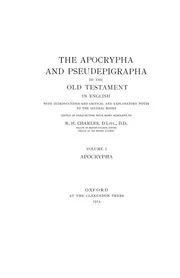
From the “Gnosticism” Collection
View all →




More Free Sacred Texts & Gnosticism Books
View all →