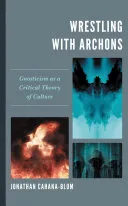
Wrestling with Archons
 75
75

Wrestling with Archons
Jonathan Cahana-Blum's "Wrestling with Archons" offers a compelling, albeit dense, re-evaluation of ancient Gnosticism. The author's primary achievement is demonstrating the structural similarities between Gnostic critiques of the material world and modern critical theory, particularly the Frankfurt School. The book meticulously unpacks how Gnostic myths functioned as allegorical frameworks for deconstructing dominant cultural premises, drawing parallels with poststructuralist thought. A particularly strong section details how Gnostic cosmology can be read as an early form of resistance to ideological domination, mirroring later critiques of societal control. However, the sheer density of theoretical apparatus sometimes overshadows the Gnostic material itself, occasionally making the connections feel more asserted than organically revealed. The reliance on extensive academic jargon may also present a barrier for readers not already steeped in critical theory. Despite this, the work provides a valuable perspective on Gnosticism as a dynamic form of intellectual dissent rather than a static heresy. "Wrestling with Archons" is a significant contribution to understanding Gnosticism's enduring relevance as a critical stance.
📝 Description
75
Jonathan Cahana-Blum's 2018 book argues Gnosticism is a form of cultural critique.
Wrestling with Archons presents ancient Christian Gnosticism not just as a religious movement, but as a sophisticated method of cultural critique. Jonathan Cahana-Blum systematically argues that Gnostic texts functioned similarly to modern critical theory, aiming to deconstruct prevailing societal norms and dominant narratives. The book draws parallels between ancient Gnostic thought and contemporary intellectual frameworks, including the Frankfurt School, poststructuralism, and queer theory. This work is aimed at scholars of religion, philosophy, and cultural studies who are interested in the intersections of ancient thought and modern critical methodologies. Readers familiar with Gnosticism, critical theory, or those seeking to understand how ancient philosophical systems can inform contemporary analyses of power structures and discourse will find it appealing. A certain academic background is required to fully appreciate the comparative approach.
Published in 2018, Wrestling with Archons emerges from a rich academic discourse surrounding Gnosticism and its reinterpretation through contemporary philosophical lenses. The work engages with established Gnostic scholarship while simultaneously applying frameworks from thinkers like Theodor Adorno and Michel Foucault. Its publication situates it within a broader academic trend of reassessing ancient texts through post-Enlightenment critical paradigms, challenging older, purely theological interpretations. The central thesis revolves around Gnosticism as a form of "mythological garb" for cultural criticism. Cahana-Blum explores how Gnostic cosmogonies and narratives served as allegorical tools to critique the material world and its perceived oppressive structures. This is examined through the lens of deconstruction, a philosophical method championed by figures like Jacques Derrida, applied to the symbolic language and dualistic worldview.
This book places Gnosticism within a tradition of esoteric thought that often critiques established societal and cosmic orders. While Gnosticism historically sought liberation from a flawed material world, Cahana-Blum reframes this critique through the lens of modern critical theory. It connects ancient dualistic worldviews and mythologies to contemporary philosophical tools for dissecting power and ideology, suggesting a continuity in the impulse to question dominant realities.
💡 Why Read This Book?
• Gain a novel perspective on ancient Christian Gnosticism, understanding its myths as a form of cultural critique, similar to how modern critical theory operates, as explored in the book's comparative analysis. • Understand how Gnostic thought deconstructed prevailing cultural premises by examining its allegorical narratives, mirroring the methods of poststructural philosophy and queer theory discussed. • Appreciate the historical context of Gnosticism as a counter-discourse, learning how its cosmological ideas functioned as early forms of challenging dominant societal and religious narratives, as detailed in its analysis of the 2018 publication context.
⭐ Reader Reviews
Honest opinions from readers who have explored this book.
❓ Frequently Asked Questions
What is the core argument of "Wrestling with Archons" regarding Gnosticism?
The book argues that ancient Christian Gnosticism functioned as an early form of cultural criticism, using mythological narratives to deconstruct mainstream discourses and cultural assumptions, much like modern critical theories.
Which modern critical theories does the book compare Gnosticism to?
Cahana-Blum draws parallels between Gnosticism and strains of modern critical theory including the Frankfurt School, queer theory, and poststructural philosophy.
When was "Wrestling with Archons" first published?
The book was first published on November 15, 2018.
What is the "Archon" in the context of Gnosticism discussed in the book?
Archons, in Gnostic cosmology, are often depicted as subordinate cosmic rulers or intermediaries who maintain the material world and its illusory order, acting as agents of a flawed creator deity.
Who is the author of "Wrestling with Archons"?
The author is Jonathan Cahana-Blum.
What is the primary intellectual contribution of this book?
Its main contribution is framing Gnosticism as a proto-critical theory, analyzing its myths and cosmology as tools for deconstructing societal norms and philosophical premises.
🔮 Key Themes & Symbolism
Gnosticism as Critical Theory
The central thesis posits that ancient Gnosticism operated as a sophisticated form of cultural criticism, employing mythological language as a vehicle for deconstructing prevailing social, religious, and philosophical discourses. Cahana-Blum argues that Gnostic narratives served to challenge the perceived authority and legitimacy of the material world and its demiurgic creator, much like contemporary critical theories aim to unmask power structures and ideological underpinnings in modern society. This frames Gnosticism not as a mere esoteric belief system, but as an active intellectual project of critique.
Deconstruction of Mainstream Discourses
The work details how Gnostic texts systematically dismantled established cultural premises and religious doctrines of their time. By reinterpreting creation myths and divine hierarchies, Gnostics offered alternative cosmologies that undermined the dominant narratives. This process of deconstruction is analyzed through the lens of modern philosophical tools, highlighting how Gnostic thought sought to expose the illusory nature of worldly authority and conventional wisdom, revealing a shared critical impulse with later intellectual movements.
Comparative Analysis with Modern Thought
"Wrestling with Archons" establishes significant connections between ancient Gnosticism and various modern schools of critical thought. The book specifically examines parallels with the Frankfurt School's critique of instrumental reason, poststructuralist philosophy's focus on discourse analysis, and queer theory's examination of normative structures. This comparative approach underscores the enduring relevance of Gnostic ideas for understanding contemporary issues of power, ideology, and social control, demonstrating a continuity of critical inquiry across millennia.
Mythological Garb for Critique
Cahana-Blum argues that the complex cosmogonies, dualistic worldviews, and symbolic figures within Gnosticism were not simply theological doctrines but were intentionally crafted "mythological garb" for articulating profound critiques. These myths provided a symbolic language to express dissatisfaction with the existing order and to propose radical alternatives. The book explores how this symbolic encoding allowed Gnostic ideas to circulate and challenge norms without always explicitly engaging in direct philosophical argumentation, a strategy with echoes in various forms of resistance.
💬 Memorable Quotes
Direct passages from the work, attributed to the author.
“Ancient Gnosticism was an ancient form of cultural criticism in a mythological garb.”
— This core statement expresses the book's central thesis: that Gnostic myths and narratives should be understood not just as religious or philosophical systems, but as deliberate tools for critiquing and deconstructing the prevailing cultural and ideological landscapes of their time.
“Much like modern forms of critical theory, ancient Gnosticism was set on deconstructing mainstream discourses and cultural premises.”
— This highlights the comparative methodology of the book, drawing a direct line between the aims of ancient Gnostic thinkers and contemporary intellectual movements like poststructuralism or the Frankfurt School, emphasizing a shared critical intent.
“Strains of critical theory dealt with include the Frankfurt School, queer theory, and poststructural philosophy.”
— This specifies the theoretical frameworks Cahana-Blum employs to analyze Gnosticism, indicating the book's engagement with established academic disciplines and its sophisticated approach to interdisciplinary comparison.
“The book documents how in both ancient Gnosticism and modern critical theories issues that used to serve as pr”
— This fragmented but indicative phrase suggests the book explores how both ancient Gnostic thought and modern critical theory address fundamental aspects of existence, power, and knowledge that were previously taken for granted or served to uphold existing structures.
“It establishes that ancient Gnosticism was set on deconstructing mainstream discourses and cultural premises.”
— Reinforcing the main argument, this emphasizes the active, critical function of Gnosticism, positioning it as a force that sought to dismantle and question established norms and ways of thinking prevalent in its historical context.
🌙 Esoteric Significance
Tradition
This work engages primarily with the Gnostic tradition, a complex and diverse set of early Christian and Hellenistic religious movements. It departs from purely theological or historical analyses by framing Gnosticism within the lineage of critical thought. While not strictly Hermetic or Kabbalistic, it shares Gnosticism's dualistic worldview and its emphasis on hidden knowledge (gnosis) as a means of liberation from material illusion, aligning with broader esoteric concerns about spiritual emancipation.
Symbolism
Key symbols explored include the Archons, often depicted as malevolent cosmic rulers who maintain the flawed material realm and hinder spiritual ascent. The Pleroma, the divine fullness or totality, represents the true spiritual reality from which the material world is a fallen or incomplete emanation. The concept of Sophia (Wisdom) and her often problematic descent into the material plane serves as a crucial motif for understanding the origins of suffering and the impetus for seeking gnosis.
Modern Relevance
Contemporary thinkers and practitioners in fields ranging from critical theory and post-colonial studies to certain branches of psychoanalysis and radical philosophy find resonance in the Gnostic critique of oppressive systems. Movements interested in challenging established power structures, exploring alternative cosmologies, and understanding consciousness as a means of liberation can draw inspiration from Cahana-Blum's analysis of Gnosticism as a form of intellectual resistance.
👥 Who Should Read This Book
• Scholars of comparative religion and ancient philosophy seeking to understand Gnosticism through contemporary theoretical frameworks. • Students of critical theory, including those interested in the Frankfurt School, poststructuralism, and queer theory, who want to see these applied to ancient texts. • Esoteric practitioners and enthusiasts interested in Gnostic cosmology and its potential interpretations as a critique of material reality and societal norms.
📜 Historical Context
Published in 2018, "Wrestling with Archons" entered a scholarly landscape where Gnosticism had long been debated, often framed by theological orthodoxies as heresy. However, the late 20th and early 21st centuries saw a resurgence of interest in Gnosticism through the lens of philosophical critique, influenced by thinkers like Hans Jonas and Elaine Pagels. Cahana-Blum's work builds upon this, directly engaging with comparative methodologies popular in the wake of figures like Michel Foucault and the Frankfurt School. Its publication date places it within a period where interdisciplinary studies, particularly those blending ancient religions with modern philosophy and critical theory, were gaining traction. While not directly engaging with a specific contemporary reviewer or censorship event, the book implicitly challenges traditional, religiously-centered interpretations of Gnosticism, aligning with a broader academic trend of re-evaluating ancient texts through secular, critical frameworks.
📔 Journal Prompts
The Gnostic concept of Archons as controllers of the material world.
Deconstructing mainstream discourses through mythological garb.
Parallels between the Frankfurt School and Gnostic critique.
The role of gnosis in challenging cultural premises.
Queer theory's intersection with Gnostic dualism.
🗂️ Glossary
Archons
In Gnostic cosmology, these are often depicted as subordinate rulers or intermediaries who govern the material cosmos, sometimes seen as agents of a flawed creator (the Demiurge) who trap souls within the material realm.
Gnosticism
A diverse set of religious and philosophical movements prominent in the first few centuries CE, characterized by a dualistic worldview and the belief that salvation is achieved through secret knowledge (gnosis).
Demiurge
In Gnosticism, the creator of the material universe, often identified with the God of the Old Testament. Typically depicted as ignorant, malevolent, or subordinate to a higher, true God.
Pleroma
The divine realm or fullness of God in Gnostic cosmology, representing the totality of spiritual beings and powers emanating from the supreme, unknowable God.
Gnosis
Greek for 'knowledge.' In Gnosticism, it refers to esoteric or salvific knowledge, often revealed through a divine intermediary, that leads to spiritual liberation from the material world.
Poststructural Philosophy
A philosophical movement originating in the mid-20th century that critiques structuralism, emphasizing the instability of meaning, the role of power in discourse, and the deconstruction of binary oppositions.
Frankfurt School
A school of German social theory and critical philosophy associated with the Institute for Social Research, known for its critique of capitalism, mass culture, and instrumental reason.