What is Hinduism?
 77
77

What is Hinduism?
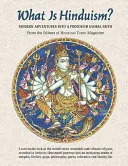
This compilation from Hinduism Today magazine, "What is Hinduism?", offers a broad, visually rich introduction to Sanatana Dharma. Its primary strength lies in its accessibility, presenting complex theological and philosophical ideas in digestible segments, a direct result of its magazine origins. The inclusion of numerous images and diagrams, a hallmark of the publication since its inception in 1979, aids comprehension significantly. However, this very breadth can sometimes lead to a lack of deep engagement with any single topic; it functions more as an extensive overview than an in-depth scholarly treatise. The section on the Trimurti, for instance, clearly outlines the roles of Brahma, Vishnu, and Shiva, but could benefit from exploring the philosophical implications of their interplay more thoroughly. Nevertheless, for newcomers to Hinduism seeking a foundational understanding, this volume provides a solid, informative starting point. It succeeds in its aim of presenting a coherent picture of a vast and ancient tradition.
📝 Description
77
First published in 2007, 'What is Hinduism?' compiles decades of articles from Hinduism Today magazine.
This volume is a comprehensive overview of Sanatana Dharma, the Hindu way of life, drawn from the archives of Hinduism Today magazine. It was created by initiated monks of Kauai's Hindu Monastery and global religious authorities, guided by the principles of founder Satguru Sivaya Subramuniyaswami. The book aims to clarify Hinduism for a wide audience. It is suited for individuals new to the tradition, practicing Hindus seeking deeper insight, and students of comparative religion. The work addresses core Hindu philosophies, rituals, and their societal impact, making it accessible for beginners while still offering substance for those with more knowledge. It emerged during a time of increasing global interest in Eastern religions, presenting an authentic perspective from within the tradition.
Emerging from Hinduism Today magazine, this work offers an insider's view of Sanatana Dharma, contrasting with more academic or Western interpretations. It presents a perspective rooted in traditional practice and monastic scholarship, aiming to demystify Hindu concepts like Brahman, Atman, karma, and samsara for a broad audience. The publication was guided by Satguru Sivaya Subramuniyaswami, emphasizing an authentic understanding of the Hindu way of life.
⭐ Reader Reviews
Honest opinions from readers who have explored this book.
❓ Frequently Asked Questions
What is the primary source material for "What is Hinduism?"?
The book is an anthology of articles and features originally published in Hinduism Today magazine, an international publication founded in 1979. It compiles the best of their educational content on Sanatana Dharma.
Who were the main contributors to the content of "What is Hinduism?"?
The content was guided by Satguru Sivaya Subramuniyaswami, the founder of Hinduism Today. Contributors include initiated monks from Kauai's Hindu Monastery and various global holy figures and experts.
When was "What is Hinduism?" first published?
The book "What is Hinduism?" was first published in 2007, compiling material that had been developed over many years by Hinduism Today magazine.
What is Sanatana Dharma?
Sanatana Dharma is a term often used to refer to Hinduism, meaning 'eternal law' or 'eternal way'. It emphasizes a way of life that is considered timeless and universal, encompassing philosophy, practice, and culture.
Does the book explain Hindu deities?
Yes, the book explores the various deities within Hinduism, explaining their significance, iconography, and roles within the broader theological framework of Sanatana Dharma.
Is this book suitable for beginners?
Absolutely. "What is Hinduism?" is designed to be an accessible introduction, making it highly suitable for individuals new to the study of Hinduism or seeking a clear overview of its fundamental aspects.
🔮 Key Themes & Symbolism
The Concept of Brahman and Atman
The work meticulously unpacks the fundamental Hindu philosophical concepts of Brahman, the supreme, impersonal reality, and Atman, the individual soul or self. It elucidates how these two are understood to be ultimately identical, a core tenet of Advaita Vedanta. The book explores the implications of this non-dualistic perspective for understanding existence, consciousness, and the ultimate goal of spiritual realization, often drawing parallels to the yogic pursuit of self-discovery.
Karma, Samsara, and Moksha
Central to the Hindu worldview presented is the doctrine of karma, the law of cause and effect governing actions and their consequences across lifetimes. This is intrinsically linked to samsara, the continuous cycle of birth, death, and rebirth. The book explains how the ultimate spiritual aim is moksha, liberation from this cycle. It details various paths and practices, including jnana yoga, bhakti yoga, and karma yoga, believed to facilitate this release.
Dharma and the Four Purusharthas
The concept of Dharma, encompassing righteousness, duty, and cosmic order, is presented as a guiding principle for life. The book elaborates on the four Purusharthas – the aims of human life: Dharma (righteousness), Artha (wealth/prosperity), Kama (pleasure/desire), and Moksha (liberation). It demonstrates how these aims are to be pursued in a balanced and harmonious way, guided by one's specific duties and societal roles.
The Pantheon and Temple Worship
"What is Hinduism?" provides an accessible overview of the Hindu pantheon, explaining the roles and significance of major deities like Shiva, Vishnu, and Devi, as well as the Trimurti. It discusses the philosophical underpinnings of idol worship (murti-puja) and the function of temples as sacred spaces for devotion and community. The book clarifies that these deities are often seen as manifestations of the one Supreme Being, Brahman.
💬 Memorable Quotes
Direct passages from the work, attributed to the author.
“Sanatana Dharma is not a religion in the Western sense, but a way of life.”
— This statement highlights Hinduism's holistic nature, emphasizing that it encompasses philosophy, ethics, culture, and daily practices, rather than being solely a set of doctrines or a creed to be followed.
“Every action creates a reaction that shapes future experiences.”
— This succinctly explains the principle of karma, illustrating how conscious choices and actions have direct consequences that influence an individual's present and future circumstances.
“Temples are not just buildings, but centers of spiritual energy.”
— This interpretation emphasizes the sacred function of Hindu temples, portraying them as dynamic spaces that foster spiritual connection and amplify divine presence for devotees.
“Understanding the Trimurti is key to grasping the cosmic functions.”
— This implies that recognizing the distinct yet interconnected roles of Brahma (creator), Vishnu (preserver), and Shiva (destroyer) offers a framework for comprehending the cyclical processes of the universe.
💡 Key Ideas
Editorial paraphrase of the work's core concepts — not direct quotes.
The goal of life is to realize the divine within.
This paraphrased concept underscores the immanent nature of the divine in Hinduism, suggesting that spiritual fulfillment comes through inner exploration and recognizing one's true, divine nature (Atman).
🌙 Esoteric Significance
Tradition
This work draws heavily from the devotional and philosophical traditions within Hinduism, particularly the Shaiva Siddhanta lineage represented by the Kauai Hindu Monastery. While not strictly fitting into Western esoteric categories like Hermeticism or Gnosticism, it engages with universal spiritual principles concerning consciousness, the nature of reality, and the path to liberation, aligning with the broader metaphysical inquiries found across esoteric traditions.
Symbolism
Key symbols explored include the Om (Aum) symbol, representing the primordial sound and the ultimate reality, and the lotus flower, signifying purity, spiritual awakening, and detachment. The concept of the Third Eye, often associated with Shiva, symbolizes inner vision and higher consciousness, a recurring motif in yogic and Tantric traditions.
Modern Relevance
Contemporary spiritual seekers, yoga practitioners, and scholars of comparative religion often reference Hinduism Today's publications, including this volume, for accessible yet authentic explanations of Hindu philosophy and practice. Its clear articulation of concepts like karma, dharma, and meditation continues to inform modern spiritual discourse and self-help approaches.
👥 Who Should Read This Book
["• Beginning students of comparative religion: To gain a clear, visually supported overview of Hinduism's core tenets, history, and practices.", '• Practicing Hindus seeking deeper understanding: To access a structured explanation of philosophical concepts and traditions rooted in authentic monastic teachings.', '• Spiritual explorers curious about Eastern philosophies: To explain Sanatana Dharma and explore its unique perspectives on existence, consciousness, and liberation.']
📜 Historical Context
Published in 2007, "What is Hinduism?" emerged during a period of heightened global interest in Eastern spiritual traditions. The magazine Hinduism Today, its source, began publication in 1979, aiming to provide an authentic voice amidst a landscape often dominated by Western interpretations or academic analyses. This work can be viewed as a counter-narrative, offering an insider's perspective shaped by monastic scholarship and traditional practice, particularly from the lineage of Satguru Sivaya Subramuniyaswami. It sought to present Sanatana Dharma not as a relic of the past, but as a living, relevant tradition. Contemporaries engaging with similar themes, albeit from different perspectives, included scholars like Wendy Doniger, whose more critical analyses often sparked debate, highlighting the diverse scholarly and popular reception of Hindu traditions during this era.
📔 Journal Prompts
The concept of Dharma as a guiding principle in daily life.
Reflecting on the interconnectedness of Brahman and Atman.
Analyzing the role of karma in shaping personal experiences.
Exploring the symbolism of the Om mantra.
Understanding the purpose of moksha within the cycle of samsara.
🗂️ Glossary
Sanatana Dharma
A Sanskrit term meaning 'eternal law' or 'eternal way', often used to refer to Hinduism as a comprehensive way of life that transcends specific historical origins.
Brahman
The ultimate, unchanging reality or Supreme Being in Hinduism. It is the absolute consciousness that underlies all existence, often described as formless and infinite.
Atman
The individual soul or true self. In many Hindu philosophies, Atman is considered identical to Brahman, and realizing this identity is a primary spiritual goal.
Karma
The universal law of cause and effect, where actions (karma) have consequences that influence an individual's present and future lives.
Samsara
The continuous cycle of birth, death, and rebirth, driven by karma and ignorance. Liberation from samsara is a central aim in Hinduism.
Moksha
Liberation or release from the cycle of samsara. It signifies ultimate spiritual freedom and union with the divine.
Dharma
One's duty, righteousness, ethical conduct, and the inherent nature of reality. It guides individuals on the path of righteous living.