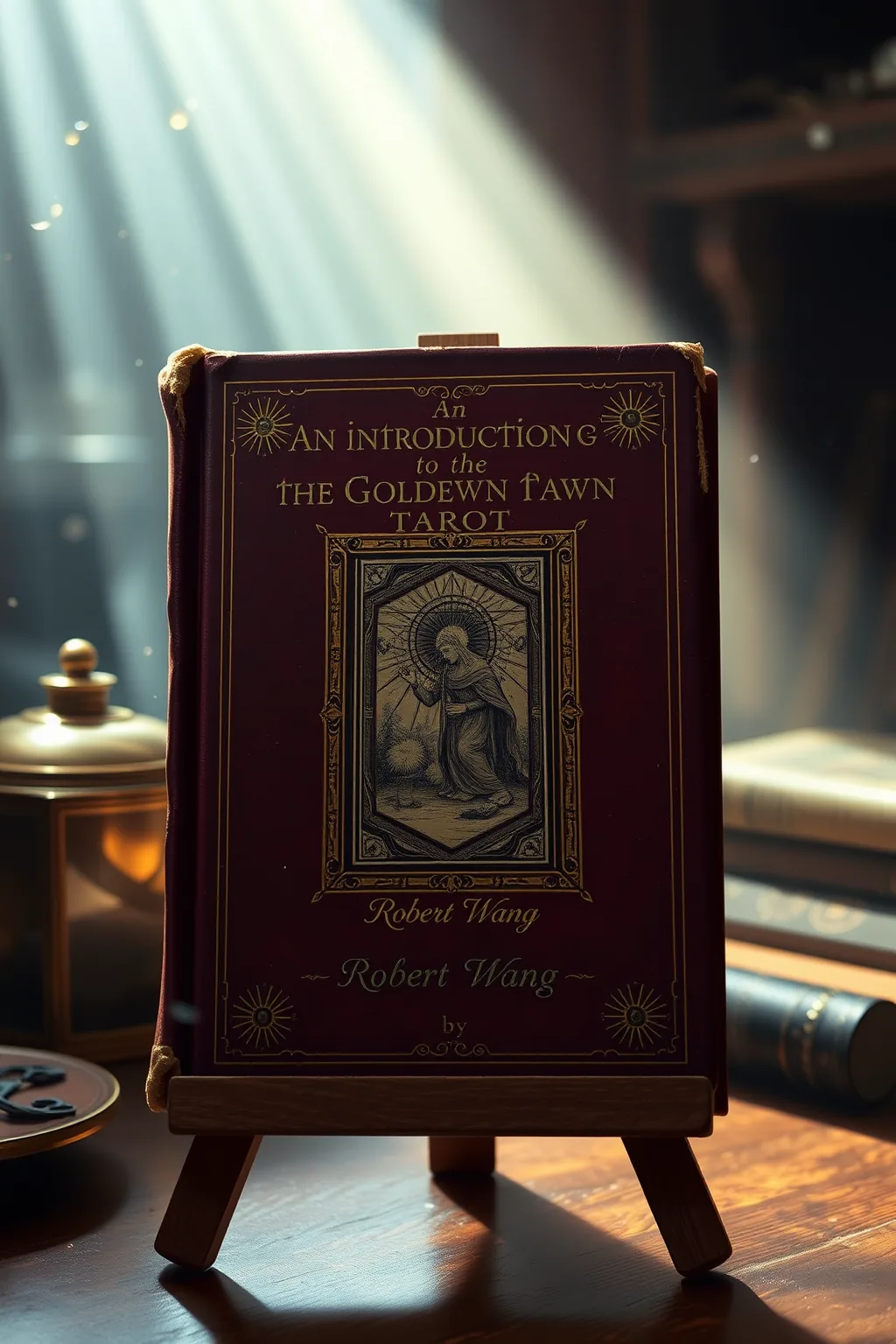
An introduction to the Golden Dawn tarot

 65
65

An introduction to the Golden Dawn tarot



Robert Wang's "An Introduction to the Golden Dawn Tarot" stands as a beacon of clarity and depth within the vast landscape of tarot literature. Isolde Whitaker, Sacred Texts Editor, notes its exceptional ability to distill the complex teachings of the Golden Dawn into accessible, yet profoundly esoteric, insights. Wang's meticulous scholarship illuminates the Qabalistic, astrological, and mythological underpinnings of the RWS deck, offering practitioners a robust framework for deeper understanding and application. This is an indispensable resource for those ready to move beyond superficial readings and engage with the tarot as a sacred science. Its rigorous approach ensures a transformative experience for dedicated students of the occult arts.
📝 Description
65
Robert Wang's 1984 book decodes the Golden Dawn's tarot system, influencing modern occult studies.
Robert Wang's "An Introduction to the Golden Dawn Tarot" was first published in 1984. It examines the Rider-Waite-Smith tarot deck specifically through the Hermetic Order of the Golden Dawn's teachings. Wang connects the tarot's imagery to Qabalah, astrology, and mythology, presenting it as a divinatory system.
The book aims to help readers understand the archetypal forces within the tarot. It is written for those interested in self-discovery and spiritual development through occult studies. Wang's work treats the tarot as a map for understanding consciousness and the Great Work.
This book sits within the Western Esoteric Tradition, specifically focusing on the Hermetic Order of the Golden Dawn's approach to tarot. The Golden Dawn, a late 19th and early 20th-century magical order, developed a complex system of correspondences linking the tarot to Qabalah, astrology, and other esoteric disciplines. Wang's work is a key text for understanding how this specific magical tradition interprets the Rider-Waite-Smith deck, which itself was influenced by Golden Dawn members.
💡 Why Read This Book?
Unlock the mystical heart of the Rider-Waite-Smith tarot with this definitive guide. "An Introduction to the Golden Dawn Tarot" is essential for seekers yearning for deeper meaning, scholars investigating Western esotericism, and practitioners aiming to elevate their divinatory practice. It offers a profound, layered understanding of tarot symbolism, bridging ancient wisdom with modern application for profound personal and spiritual growth.
⭐ Reader Reviews
Honest opinions from readers who have explored this book.
❓ Frequently Asked Questions
What is the primary focus of this book?
This book focuses on interpreting the Rider-Waite-Smith tarot deck through the esoteric teachings and symbolism of the Hermetic Order of the Golden Dawn, emphasizing its Qabalistic and astrological connections.
Is this book suitable for absolute beginners to tarot?
While it delves into complex esoteric concepts, the introduction provides a solid foundation. However, some familiarity with basic tarot principles would be beneficial for a deeper appreciation of its advanced teachings.
What esoteric traditions are explored?
The book primarily explores Hermeticism, Qabalah, Western astrology, and alchemical symbolism as they relate to the tarot.
Does the book include card meanings for all 78 cards?
Yes, it provides comprehensive interpretations for both the Major and Minor Arcana, deeply rooted in the Golden Dawn system.
What makes this book different from other tarot guides?
Its unique strength lies in its rigorous adherence to the Golden Dawn's interpretive framework, offering a more structured and deeply symbolic approach than many general tarot guides.
🔮 Key Themes & Symbolism
The Qabalistic Tarot
This theme explores the profound integration of the Qabalistic Tree of Life with the tarot archetypes. Each card is explored as a pathway or Sephirah, revealing the divine emanations and cosmic principles that govern existence. Wang illuminates how the Hebrew alphabet and numerical values within Qabalah provide a sophisticated framework for understanding the tarot's symbolic language, offering initiates a map of spiritual ascent and the manifestation of the divine within the human experience.
Astrological Correspondences
Uncover the intricate celestial connections woven into the fabric of the tarot. This section meticulously maps the astrological influences—planets, signs, and aspects—to specific tarot cards, particularly the Major Arcana. By understanding these cosmic resonances, readers gain insight into the timing, nature, and energetic currents influencing events and personal journeys. It transforms the tarot from a static image into a dynamic, living system reflecting the ever-moving heavens and their impact on the terrestrial realm.
The Great Work and Tarot Symbolism
This theme explores the tarot as a potent tool for the Great Work—the alchemical process of spiritual transformation and self-perfection. Wang elucidates how the archetypal journeys depicted in the cards mirror the stages of alchemical transformation, from the base metals of the ego to the refined gold of the enlightened consciousness. The symbolic language of the tarot becomes a sacred text guiding the practitioner through dissolution, purification, and re-integration, leading to the realization of one's divine potential.
💬 Memorable Quotes
Direct passages from the work, attributed to the author.
“Each card is a microcosm of the macrocosm.”
— This highlights the intricate mirroring of universal laws and divine patterns within each individual tarot card, emphasizing their deep symbolic resonance.
“The path of initiation is reflected in the Fool's journey.”
— This connects the archetypal journey of the Fool card to the process of spiritual awakening and the challenges faced during esoteric training and self-discovery.
“Understanding the Qabalah unlocks the tarot's deepest secrets.”
— This emphasizes the critical role of Qabalistic study in truly comprehending the layered meanings and hidden structures within the tarot as presented by the Golden Dawn.
“The tarot is a living map of the soul's evolution.”
— This evocative phrase positions the tarot as a dynamic guide for personal growth, spiritual development, and the unfolding journey of consciousness throughout life.
💡 Key Ideas
Editorial paraphrase of the work's core concepts — not direct quotes.
The Tarot is a book of wisdom, inscribed with the language of the universe.
This quote expresses the book's core message: the tarot is not merely a deck of cards, but a profound symbolic language that reveals universal truths and cosmic principles.
🌙 Esoteric Significance
Tradition
This work is deeply rooted in the Western Esoteric Tradition, specifically the teachings of the Hermetic Order of the Golden Dawn. It meticulously unpacks the Order's unique system of correspondences, integrating Qabalah, Hermetic philosophy, ceremonial magic, and astrological principles into a coherent framework for understanding the tarot as a sacred science and a tool for spiritual development.
Symbolism
The book is a deep study in esoteric symbolism, revealing the layers of meaning embedded within the Rider-Waite-Smith tarot. It decodes the visual language of the cards, connecting them to archetypal forces, divine principles, and the alchemical processes of transformation. Readers learn to perceive the intricate relationships between Hebrew letters, planetary rulerships, zodiacal signs, and the imagery of each card, revealing a profound symbolic grammar.
Modern Relevance
In an era often characterized by spiritual seeking and a desire for deeper meaning, Wang's "An Introduction to the Golden Dawn Tarot" offers enduring relevance. It provides a structured, intellectual, and spiritual approach to divination that empowers individuals to engage with archetypal wisdom for self-understanding, personal growth, and navigating life's complexities. Its teachings remain a vital resource for those pursuing the path of self-mastery and esoteric knowledge in the modern world.
👥 Who Should Read This Book
This book is an indispensable guide for the dedicated spiritual seeker yearning to move beyond superficial interpretations and explore the profound depths of tarot symbolism. Tarot practitioners seeking to elevate their practice will find invaluable insights into the Qabalistic and astrological underpinnings of the cards. Students of Western Esotericism and Hermeticism will appreciate its scholarly rigor and clear exposition of Golden Dawn principles. Beginners with a serious interest in occultism will find a comprehensive introduction to a foundational divinatory system, provided they approach it with diligence and an open mind.
📜 Historical Context
Published during a period of burgeoning interest in Western Esotericism, Robert Wang's "An Introduction to the Golden Dawn Tarot" emerged in the late 20th century, a time when occult traditions, once confined to secret societies, were becoming more accessible to the public. The Hermetic Order of the Golden Dawn, a significant 19th-century magical order, had a profound influence on modern occultism, and its teachings, particularly concerning the tarot, were highly sought after. Wang's work provided a crucial bridge, synthesizing the Order's complex system of correspondences—Qabalah, astrology, alchemy—with the widely recognized Rider-Waite-Smith tarot imagery. It arrived as a vital resource for a generation of spiritual seekers and occult students eager to examine the structured, symbolic depth of this powerful divination tool, solidifying its place as a foundational text in contemporary tarot scholarship.
📔 Journal Prompts
Reflect on how the Qabalistic Tree of Life might mirror your own spiritual journey. Which Sephirah resonates most with your current path?
Choose a Major Arcana card and identify its primary astrological correspondence. How does this planetary or zodiacal influence manifest in your life?
Consider the concept of the Great Work. How can the archetypal journey depicted in a tarot card serve as a metaphor for your personal transformation?
Meditate on the symbolism of a specific card (e.g., The Hierophant, The Hermit). What hidden messages or guidance does its imagery offer you at this moment?
How does understanding the Golden Dawn's structured approach to tarot enhance your perception of divination as a sacred art rather than mere fortune-telling?
🗂️ Glossary
Qabalah
A complex system of Jewish mysticism and esoteric philosophy that seeks to understand the nature of God and the universe through symbolic interpretation, particularly the Tree of Life.
Hermeticism
An ancient philosophical and religious tradition based on the purported teachings of Hermes Trismegistus, emphasizing divine wisdom, the interconnectedness of all things, and the pursuit of spiritual enlightenment.
Rider-Waite-Smith Deck
The most widely used tarot deck, first published in 1909, featuring iconic artwork by Pamela Colman Smith and a system of symbolism heavily influenced by Arthur Edward Waite and the Hermetic Order of the Golden Dawn.
Major Arcana
The 22 trump cards of the tarot deck, representing significant life lessons, spiritual archetypes, and major turning points in a person's journey.
Minor Arcana
The 56 cards of the tarot deck, divided into four suits (Wands, Cups, Swords, Pentacles), representing the everyday events, challenges, and experiences of life.
This book appears in 3 collections
🔮 Readers Also Liked
Browse all →








More by Robert Wang
All books →



From the “Tarot” Collection
View all →







More Free Divination & Tarot Books
View all →