An introduction to the Golden Dawn tarot

 77
77

An introduction to the Golden Dawn tarot
Robert Wang's "An Introduction to the Golden Dawn Tarot" is a foundational text for understanding the Order's specific approach to the cards. Its strength lies in its systematic and detailed explication of the Golden Dawn correspondences, particularly the links to the Kabbalah. The work meticulously lays out the astrological and Qabalistic attributions that are crucial to this lineage. However, the original publication date means that some of the more recent scholarly perspectives on the Golden Dawn or alternative interpretations of the tarot are naturally absent. The section detailing the symbolism of the Minor Arcana, especially the court cards and numbered cards, offers a clarity that is often missing in more generalized tarot guides. The book provides a solid, if somewhat austere, presentation of a specific esoteric system.
📝 Description
77
Robert Wang's 1978 book connects tarot imagery to the Golden Dawn's magical system.
Robert Wang's An Introduction to the Golden Dawn Tarot, first published in 1978, offers a detailed study of the tarot deck as used by the Hermetic Order of the Golden Dawn. The book systematically breaks down the cards, linking their imagery and symbolism to the Order's philosophical and magical framework. Wang moves beyond simple divinatory meanings to show how the tarot functions as a symbolic language for spiritual development.
This work is intended for serious students of Western esotericism, particularly those interested in the Golden Dawn tradition. It suits individuals seeking a structured understanding of tarot symbolism in relation to Kabbalah, astrology, and alchemy. While novices might find its depth challenging, readers with a background in occult philosophy will appreciate its thoroughness. Wang's book emerged during a period of renewed interest in occultism, focusing on the traditional Golden Dawn system, distinct from later developments like Crowley's Thoth Tarot.
Wang's book situates itself within the Western esoteric tradition, specifically the Hermetic Order of the Golden Dawn. This influential magical order, though largely defunct by the 1970s, left a significant legacy through its teachings. The book examines the tarot not just as a divinatory tool but as an integral part of a larger system of correspondences linking Kabbalah, astrology, and alchemy, intended for spiritual transformation.
💡 Why Read This Book?
• Gain a structured understanding of the Golden Dawn's unique tarot attributions, which differ significantly from later interpretations, allowing for a deeper engagement with their magical system. • Explore the intricate Qabalistic framework underpinning the tarot, as presented by Robert Wang, offering insights into how the Tree of Life maps onto the Major Arcana. • Grasp the historical significance of the Golden Dawn's tarot system, understanding its influence on Western esotericism and its divergence from other schools of tarot interpretation that emerged post-1900.
⭐ Reader Reviews
Honest opinions from readers who have explored this book.
❓ Frequently Asked Questions
What is the primary focus of Robert Wang's "An Introduction to the Golden Dawn Tarot"?
The book's primary focus is the systematic examination of the tarot deck as interpreted and utilized by the Hermetic Order of the Golden Dawn, detailing its Qabalistic and astrological correspondences.
When was "An Introduction to the Golden Dawn Tarot" first published?
Robert Wang's "An Introduction to the Golden Dawn Tarot" was first published in 1978, reflecting the renewed interest in occultism during that era.
Does this book cover the Thoth Tarot?
No, this book specifically focuses on the tarot deck used by the Hermetic Order of the Golden Dawn prior to the innovations of Aleister Crowley's Thoth Tarot.
Is this book suitable for beginner tarot readers?
While it offers foundational knowledge, its depth and focus on esoteric correspondences make it more suitable for intermediate or advanced students of Western Esotericism.
What esoteric systems are linked to the tarot in this book?
The book extensively links the tarot to Kabbalah (specifically the Tree of Life), astrology, and the magical system of the Hermetic Order of the Golden Dawn.
What makes the Golden Dawn tarot system unique?
The Golden Dawn system is unique for its highly structured and detailed correspondences to Qabalistic paths and Sephiroth, as well as specific astrological rulerships for each card.
🔮 Key Themes & Symbolism
The Tarot as a Qabalistic Map
Wang presents the 22 Major Arcana as keys to the paths and Sephiroth on the Kabbalistic Tree of Life. Each card's imagery is analyzed for its correspondence to specific Hebrew letters, astrological signs, planets, and elements, illustrating the profound interconnectedness of these systems within the Golden Dawn framework. This approach transforms the tarot from a divinatory tool into a symbolic map for spiritual ascent and understanding the divine structure of the cosmos.
Astrological Correspondences
A significant portion of the book is dedicated to the astrological attributions assigned by the Golden Dawn. Wang details how each Major Arcana and Minor Arcana card is linked to a zodiacal sign, a planet, or an element, reflecting the Order's emphasis on celestial influences. This meticulous mapping provides a framework for understanding the energetic qualities and timing associated with each card, integrating cosmic cycles into tarot interpretation.
The Minor Arcana System
Beyond the Major Arcana, Wang looks at the Golden Dawn's interpretation of the Minor Arcana. Unlike simpler divinatory systems, the Golden Dawn assigned complex Hebrew names and specific descriptive phrases to the numbered cards (Pips), reflecting their Qabalistic and elemental nature. The court cards are also treated with significant weight, representing distinct personalities and stages within the unfolding magical drama.
Symbolism and Esoteric Practice
The book emphasizes that the tarot's power lies in its symbolic language, intended for use within the magical and meditative practices of the Golden Dawn. Wang explains how understanding these symbols facilitates inner transformation and the Great Work. The visual iconography of each card is presented as a conduit for esoteric knowledge, meant to be contemplated and integrated by the practitioner.
💬 Memorable Quotes
Direct passages from the work, attributed to the author.
“The Major Arcana represent the paths on the Tree of Life.”
— This statement captures the core of the Golden Dawn tarot system as presented by Wang, highlighting the structured Qabalistic framework that maps the tarot cards onto the divine blueprint of existence.
“Each card carries specific astrological rulerships.”
— This emphasizes the intricate integration of astrology within the Golden Dawn tarot, suggesting that understanding planetary and zodiacal influences is key to unlocking the deeper meanings of the cards.
“The Tarot is a symbolic language for spiritual attainment.”
— Wang positions the tarot not just for fortune-telling, but as a sophisticated system of symbols designed to guide the practitioner on the path of spiritual development and the Great Work.
“The Minor Arcana reflect elemental and Qabalistic forces.”
— This interpretation underscores that the numbered cards are not mere pips but carry profound meaning derived from their elemental associations and positions within the Qabalistic structure.
“The Golden Dawn system provides a unified esoteric cosmology.”
— This highlights how Wang's work demonstrates the Golden Dawn's effort to synthesize various esoteric disciplines—Kabbalah, astrology, alchemy—into a coherent system, with the tarot serving as a central key.
🌙 Esoteric Significance
Tradition
This work is firmly rooted in the Western Esoteric tradition, specifically the Hermetic Order of the Golden Dawn lineage. It represents an attempt to codify and explain the Order's unique synthesis of Kabbalah, astrology, alchemy, and ceremonial magic, using the tarot as a central interpretive key. It departs from more intuitive or psychological approaches by adhering strictly to the Golden Dawn's established attributions and correspondences.
Symbolism
Central symbols include the Tree of Life, which serves as the primary organizational structure for the Major Arcana, mapping each card to a specific path or Sephirah. Astrological symbols (planets, zodiacal signs, elements) are meticulously assigned to each card, providing layers of meaning. The imagery on the cards themselves, derived from earlier decks but reinterpreted through the Golden Dawn lens, becomes a visual language for understanding cosmic forces and spiritual processes.
Modern Relevance
Modern practitioners of Western Esotericism, particularly those studying or working within Golden Dawn-derived traditions (such as the Hermetic Order of the Golden Dawn, Builders of the Adytum, or Rosicrucian Order AMORC), continue to rely on Wang's foundational work. It serves as a crucial reference for understanding the historical tarot system that influenced many subsequent tarot decks and interpretive methods in occult circles.
👥 Who Should Read This Book
• Students of the Hermetic Order of the Golden Dawn: Those seeking to understand the Order's specific tarot system, its Qabalistic and astrological correspondences, and its role in magical practice. • Esoteric Scholars: Researchers interested in the history and development of Western occultism, particularly the influence of the Golden Dawn on tarot interpretation and magical theory. • Dedicated Tarot Enthusiasts: Readers who have moved beyond basic divinatory meanings and wish to explore the deeper symbolic and philosophical underpinnings of the tarot within a specific esoteric framework.
📜 Historical Context
Published in 1978, Robert Wang's "An Introduction to the Golden Dawn Tarot" emerged during a period of significant revival for esoteric traditions. The Hermetic Order of the Golden Dawn, though its original form had dissolved decades prior, cast a long shadow over Western occultism. Wang's work specifically addressed the Order's traditional tarot system, differentiating itself from contemporary popularizers like Aleister Crowley, whose influential Thoth Tarot represented a later evolution of Golden Dawn thought. The intellectual climate was fertile, with figures like Israel Regardie having already published significant portions of Golden Dawn material, making Wang's systematic approach to the tarot particularly valuable for serious students seeking to understand the Order's foundational magical curriculum.
📔 Journal Prompts
The symbolism of the Fool card in relation to Kether.
How the astrological attributions of the court cards reflect personality archetypes.
The Qabalistic path represented by The High Priestess.
Reflecting on the elemental meanings of the Minor Arcana suits.
The Great Work as depicted through the Major Arcana sequence.
🗂️ Glossary
Kabbalah
A system of Jewish mysticism that explores the divine nature of God and the structure of the universe through symbolic interpretations of scripture and numerical/alphabetical analysis, often visualized through the Tree of Life.
Tree of Life
A diagram central to Kabbalistic teachings, consisting of ten Sephiroth (emanations or divine attributes) and twenty-two paths connecting them, often used as a map of creation and spiritual ascent.
Sephirah
One of the ten divine emanations or attributes described in Kabbalistic cosmology, representing stages or aspects of the divine unfolding into creation.
Astrological Correspondences
The system of assigning specific planets, zodiacal signs, and elements to tarot cards, linking their meanings to celestial influences and cycles as understood in astrology.
Hermetic Order of the Golden Dawn
A late 19th and early 20th-century magical order that synthesized various esoteric traditions, significantly influencing modern Western occultism, particularly its approach to tarot, Kabbalah, and ceremonial magic.
The Great Work (Major work)
In alchemy and esoteric traditions, the process of spiritual transformation, self-perfection, and the attainment of higher consciousness or union with the divine.
Minor Arcana
The 40 numbered cards in a tarot deck (Ace through 10 in each of the four suits), which traditionally represent the mundane aspects of life and the unfolding of events, as opposed to the Major Arcana.
🔮 Readers Also Liked
Browse all →









More by Robert Wang
All books →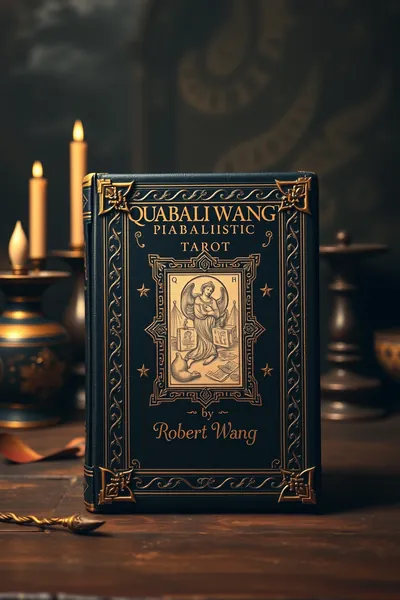




More Free Divination & Tarot Books
View all →