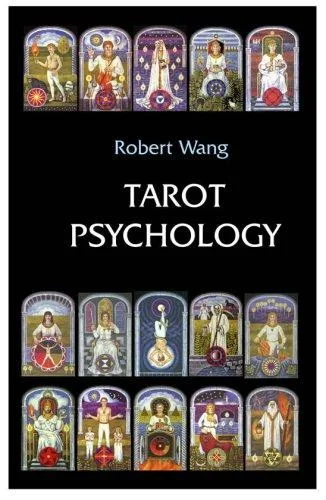
Tarot Psychology
 64
64

Tarot Psychology



Celeste Moreau (Divination & Symbolism Reviewer) — Robert Wang's "Tarot Psychology" is a monumental achievement, illuminating the Tarot's profound connection to Jungian psychology with unparalleled clarity and depth. Wang transcends superficial interpretations, revealing the archetypal patterns and psychic dynamics embedded within each Major and Minor Arcana card. His insightful prose guides the reader through the labyrinth of the unconscious, presenting the Tarot as a sophisticated map for self-discovery and integration. This work is essential for anyone wishing to move beyond simple prognostication and engage with the Tarot as a powerful tool for psychological healing and spiritual growth. An indispensable addition to any serious occult or psychological library.
📝 Description
64
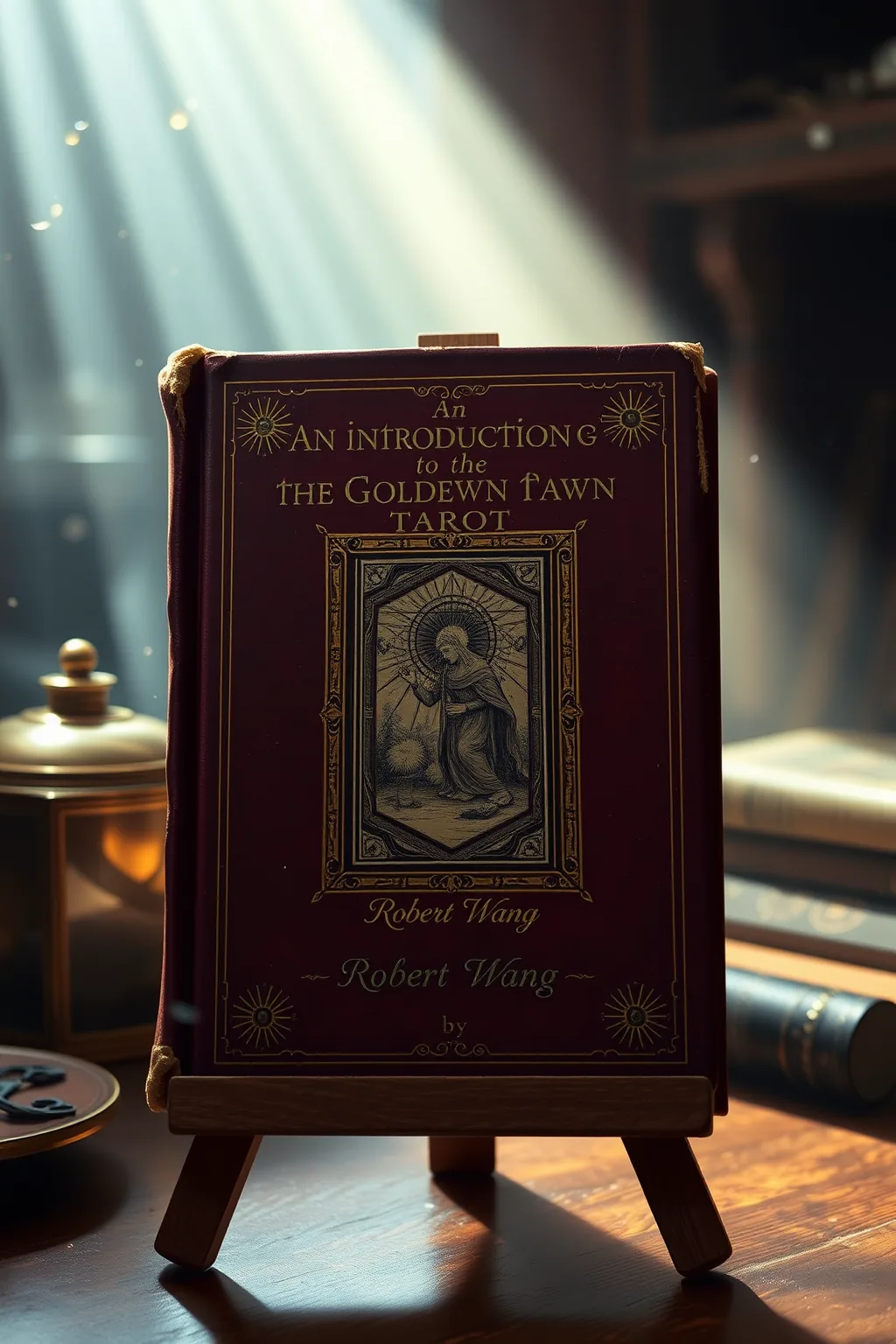
Robert Wang's Tarot Psychology (1983) connects Tarot symbolism to Jungian psychology.
Published in 1983, Robert Wang's Tarot Psychology examines the seventy-eight cards of the Tarot as a symbolic system relevant to the human psyche. The book argues that the Tarot is not just for predicting the future but serves as a language for the unconscious mind. Wang connects the cards to archetypal patterns and transformative processes identified by Carl Jung.
He explains the hidden meanings within each card, linking them to psychological states, myths, and the alchemical quest for personal completion. The book suggests that engaging with the cards can lead to self-understanding by confronting inner conflicts and recognizing the forces that influence life. It is aimed at those interested in integrating spiritual and psychological perspectives through the Tarot.
This work is situated within the tradition of Western esotericism that seeks to find correspondences between symbolic systems and the inner life. It draws on Jungian psychology, which itself engaged with Gnostic, alchemical, and mythological traditions, to interpret the Tarot. The book follows a lineage of esoteric thinkers who viewed the Tarot not as mere fortune telling but as a map of the soul's development and a tool for spiritual growth.
💡 Why Read This Book?
Uncover the deep psychological resonance of the Tarot, transcending mere divination to explore the archetypal forces within. "Tarot Psychology" offers a unique lens for self-understanding, revealing how the cards mirror our inner world and spiritual evolution. Ideal for seekers of esoteric knowledge, students of Jungian psychology, and Tarot practitioners aiming for a more profound and integrated practice.
⭐ Reader Reviews
Honest opinions from readers who have explored this book.
❓ Frequently Asked Questions
How does this book connect Tarot with Jungian psychology?
Robert Wang skillfully maps Tarot archetypes onto Jung's concepts of the collective unconscious, individuation, and the shadow. He demonstrates how each card represents a stage or an aspect of the psychological journey towards self-realization.
Is this book suitable for beginners to Tarot?
While it delves into complex psychological concepts, the book is structured to guide readers with some basic Tarot knowledge. Beginners may find it beneficial to have a foundational understanding of the cards before diving into the deeper psychological interpretations.
What makes this book unique compared to other Tarot psychology books?
Wang's work is distinguished by its rigorous scholarship and its direct engagement with Jungian theory, offering a more integrated and philosophical approach rather than a purely descriptive one. It emphasizes the Tarot's role in the individuation process.
Can this book be used for personal development?
Absolutely. By understanding the psychological dynamics represented by the cards, readers can gain profound insights into their own motivations, challenges, and potential for growth, making it a powerful tool for self-exploration and transformation.
What is the primary philosophical takeaway from 'Tarot Psychology'?
The book posits that the Tarot is a living symbolic system that reflects the universal patterns of human consciousness, offering a profound pathway to understand the interplay between the conscious and unconscious mind and the quest for psychological integration.
🔮 Key Themes & Symbolism
The Unconscious as a Symbolic Landscape
This theme explores the Tarot as a visual language of the unconscious mind, a mirror to the archetypal patterns and hidden dynamics that shape human experience. Robert Wang posits that the seventy-eight cards are not random symbols but rather potent representations of the collective unconscious, offering a roadmap to understanding our deepest motivations, fears, and desires. The book illuminates how engaging with these symbols can facilitate access to inner wisdom and promote psychological integration, allowing us to work through the complexities of our inner world with greater awareness and insight.
Tarot as a Path to Individuation
Central to Wang's thesis is the concept of individuation, Carl Jung's process of psychological development and self-realization. The Tarot, in this context, becomes a sacred text guiding the individual through the stages of this transformative journey. Each card represents a challenge, a lesson, or an aspect of the self that must be integrated. By consciously working with the Tarot's symbolism, readers are encouraged to confront their shadow, embrace their anima/animus, and ultimately achieve a more unified and authentic sense of self, fulfilling their unique potential.
Archetypes and the Tarot's Universal Language
This theme examines the fundamental nature of archetypes as universal, primordial images and patterns that reside in the collective unconscious. Wang demonstrates how the figures and scenes depicted in the Tarot—such as The Fool, The Magician, and The Great Mother—are direct manifestations of these timeless archetypes. Understanding these archetypal energies allows for a deeper, more profound interpretation of the cards, revealing their relevance across cultures and throughout history. It positions the Tarot as a timeless repository of human wisdom, offering insights into the universal dramas of life.
💬 Memorable Quotes
Direct passages from the work, attributed to the author.
“Each card is a step on the path of becoming.”
— This highlights the Tarot's dynamic nature, portraying it not as static symbols but as progressive stages in the ongoing journey of personal growth and self-discovery.
“The unconscious speaks in the language of symbols.”
— This emphasizes the core tenet of depth psychology, stating that the hidden parts of our mind communicate through imagery and metaphor, and the Tarot provides a rich vocabulary for this communication.
“The archetypes are the eternal patterns of existence.”
— This statement underscores the timeless and universal nature of the archetypes, suggesting they are fundamental blueprints of consciousness that the Tarot effectively represents.
💡 Key Ideas
Editorial paraphrase of the work's core concepts — not direct quotes.
The Tarot is the mirror of the soul.
This quote suggests the Tarot's primary function is to reflect the inner state of the individual, revealing hidden aspects of their personality, subconscious thoughts, and emotional landscape.
To know the Tarot is to know thyself.
This quote asserts a profound connection between Tarot study and self-knowledge, implying that understanding the Tarot's meanings leads directly to a deeper understanding of one's own psyche.
🌙 Esoteric Significance
Tradition
This work is deeply rooted in the Western Esoteric Tradition, particularly drawing from Hermeticism, Alchemy, and Jungian Psychology. It aligns with the alchemical pursuit of 'solve et coagula' (dissolve and coagulate) as a metaphor for psychological transformation, and Hermetic principles of 'as above, so below' to connect the macrocosm of the universe with the microcosm of the human psyche.
Symbolism
The book meticulously deciphers the strong symbolism of the Tarot, viewing each card as a complex range of archetypal images, planetary associations, and Hebrew letters. It explores how these symbols function as keys to understanding the archetypal dramas of the unconscious, the alchemical stages of transformation, and the journey of individuation. The symbolism is presented not as mere decoration but as a vital, living language of the soul.
Modern Relevance
In an age increasingly focused on mental well-being and self-awareness, "Tarot Psychology" offers profound and practical insights. It provides a framework for understanding personal challenges through an archetypal lens, fostering greater self-compassion and empowering individuals to navigate life's complexities. The book's emphasis on the integration of conscious and unconscious aspects of the self remains highly relevant for contemporary seekers of holistic growth and psychological wholeness.
👥 Who Should Read This Book
This book is a treasure for several distinct groups: **Tarot practitioners** seeking to deepen their understanding beyond mere divination and engage with the cards as tools for psychological insight. **Students of Jungian psychology** will find a unique and accessible application of archetypal theory and the process of individuation. **Spiritual seekers** looking for a richer, more integrated path to self-discovery will appreciate the book's profound exploration of the inner landscape. **Scholars of esotericism and comparative religion** will find valuable connections between Tarot symbolism and broader mythological and psychological frameworks.
📜 Historical Context
Published in an era of burgeoning interest in depth psychology and esoteric traditions, Robert Wang's "Tarot Psychology" emerged as a significant bridge between the mystical practices of the Tarot and the academic rigor of Carl Jung's analytical psychology. The mid-to-late 20th century witnessed a renewed fascination with ancient wisdom, alchemy, and the exploration of the human psyche, fueled by figures like Jung, Joseph Campbell, and Mircea Eliade. Wang's work capitalized on this intellectual climate, offering a sophisticated interpretation that appealed to both seasoned occultists seeking deeper meaning and psychologists intrigued by the symbolic power of the Tarot. It resonated within circles exploring consciousness, symbolism, and the integration of spiritual and psychological well-being.
📔 Journal Prompts
Reflect on The Fool's journey in your own life. Where are you stepping into the unknown?
Which archetypal figure from the Major Arcana do you feel most drawn to or challenged by currently? Why?
How can the symbolism of the Minor Arcana cards illuminate the everyday challenges and opportunities you face?
Consider the 'shadow' aspects represented in the Tarot. What hidden parts of yourself might the cards be inviting you to acknowledge?
How does the concept of 'individuation' resonate with your personal aspirations for growth and self-understanding?
🗂️ Glossary
Archetype
Universal, archaic patterns and images that derive from the collective unconscious and are the psychic counterpart of instinct. They are primordial images, themes, and figures that structure our psychological experience.
Individuation
Carl Jung's term for the process of psychological differentiation, of becoming an individual. It involves the integration of conscious and unconscious aspects of the psyche to achieve wholeness and self-realization.
Collective Unconscious
A concept introduced by Carl Jung, referring to a layer of the unconscious mind that is shared by all humanity, containing inherited archetypes and instinctual patterns.
Shadow
In Jungian psychology, the shadow represents the repressed, unconscious aspects of the personality that the ego does not identify with. It often contains primitive instincts, desires, and flaws.
Anima/Animus
In Jungian psychology, the anima is the unconscious feminine aspect of a man's psyche, and the animus is the unconscious masculine aspect of a woman's psyche. They are archetypal figures that play a role in relationships and individuation.
This book appears in 3 collections
🔮 Readers Also Liked
Browse all →







More by Robert Wang
All books →




From the “Tarot” Collection
View all →





![CIA Reading Room cia-rdp78t05439a000400230090-7: MENSURATION OF THE [ ]-BUKHARA CANAL, USSR](/img/thumb/cia-reading-room-cia-rdp78t05439a000400230090-7-mensuration-of-the-bukhara-canal-ussr-cia-reading-room.webp)

More Free Divination & Tarot Books
View all →