The Qabalistic Tarot

 69
69

The Qabalistic Tarot



Lorelei Sage (Contemplative Literature Editor) — Robert Wang's 'The Qabalistic Tarot' stands as a beacon for serious students of esoteric traditions. This is no mere guide to card readings; it is a profound exploration of the Qabalistic cosmology as mirrored in the Tarot's archetypes. Wang's erudition shines through, illuminating the intricate symbology with clarity and depth. He bridges the esoteric and the practical, offering insights that resonate with practitioners and scholars alike. This work is indispensable for anyone seeking to understand the Tarot not just as a divinatory system, but as a map of consciousness and a path to spiritual realization. It is a text to be savored and returned to, revealing new layers of meaning with each contemplation.
📝 Description
69
Robert Wang's 1983 book connects the Tarot's imagery to Qabalistic cosmology.
Published in 1983, 'The Qabalistic Tarot' by Robert Wang examines the relationship between the Tarot deck and the Qabalistic Tree of Life. Wang argues that the Tarot's archetypes correspond to the Sephiroth and the paths connecting them. The book aims to show how the cards can be used to understand spiritual development and the structure of the universe.
It presents each Tarot card as a symbol that reflects Qabalistic principles. This approach goes beyond simple divination, suggesting a framework for personal transformation and cosmic understanding. The work is intended for serious students of esoteric traditions who wish to integrate Qabalistic thought with Tarot symbolism. Wang's detailed analysis provides a structured way to engage with these complex ideas.
This book is situated within the Western esoteric tradition, specifically drawing from Qabalistic studies that gained prominence in the late 19th and early 20th centuries. It builds upon earlier attempts to systematize esoteric knowledge, integrating Jewish mysticism with Western occultism. The work follows in the lineage of authors who sought to find correspondences between various symbolic systems and a unified spiritual cosmology. Wang's contribution lies in his detailed mapping of the Tarot's imagery onto the specific structure of the Tree of Life, a key diagram in Qabalistic thought.
💡 Why Read This Book?
Discover the profound spiritual architecture underpinning the Tarot, as revealed through the lens of Qabalistic wisdom. 'The Qabalistic Tarot' offers a unique synthesis that elevates the cards from simple fortune-telling tools to potent keys for self-understanding and spiritual evolution. It is essential reading for seekers yearning to connect with the deeper currents of universal knowledge, scholars investigating the roots of Western esotericism, and practitioners aiming to deepen their Tarot practice with a robust metaphysical framework.
⭐ Reader Reviews
Honest opinions from readers who have explored this book.
❓ Frequently Asked Questions
What is the Qabalistic Tarot?
The Qabalistic Tarot is a system that integrates the symbolic language of the Tarot with the mystical teachings of the Kabbalah, viewing the cards as representations of spiritual principles and pathways on the Tree of Life.
Who is Robert Wang?
Robert Wang was a highly respected scholar and practitioner of Western Esotericism, particularly known for his insightful works on the Kabbalah and its relationship to various mystical traditions, including the Tarot.
Is this book suitable for beginners?
While comprehensive, the book is best appreciated by those with some foundational understanding of either Tarot or Kabbalah. However, its clear explanations make it accessible to dedicated beginners willing to engage deeply.
How does this book differ from other Tarot guides?
Unlike many practical guides, 'The Qabalistic Tarot' focuses on the metaphysical and spiritual underpinnings, presenting the cards as integral components of a larger cosmic and psychological map.
What esoteric tradition does this book explore?
This book primarily delves into the Western Esoteric tradition, with a strong emphasis on Jewish Mysticism (Kabbalah) and its application to the symbolic system of the Tarot.
🔮 Key Themes & Symbolism
The Tree of Life as a Cosmic Map
Explore the profound connection between the Qabalistic Tree of Life and the Tarot. Wang meticulously illustrates how each of the ten Sephiroth and twenty-two paths corresponds to specific Tarot cards, transforming the deck into a dynamic diagram of creation, consciousness, and spiritual evolution. This theme illuminates the inherent structure of the universe and the human psyche, offering a framework for understanding the divine order and one's place within it.
Archetypal Symbolism of the Major Arcana
Explore the deep archetypal significance of the Major Arcana, viewing them as keys to the fundamental forces and stages of the spiritual journey. Wang's analysis reveals how these cards embody universal principles, divine emanations, and the challenges and triumphs encountered on the path of self-realization. Each card becomes a potent symbol, offering insights into the soul's unfolding and the divine mysteries of existence.
The Tarot as a Path to Gnosis
Discover how the Qabalistic Tarot serves as a powerful tool for achieving Gnosis, or direct spiritual knowledge. Wang demonstrates that by understanding and meditating upon the symbolic language of the cards, one can unlock hidden truths about the self and the universe, leading to a profound inner transformation and a deeper communion with the divine. The Tarot becomes a living text for esoteric wisdom.
💬 Memorable Quotes
Direct passages from the work, attributed to the author.
“Each card is a doorway to another dimension of understanding.”
— This highlights the transformative potential of the Tarot, where each card offers a unique perspective and a pathway to deeper spiritual insight.
“The Tree of Life is the blueprint of the soul.”
— This emphasizes the Qabalistic framework's role in mapping the intricate structure and development of human consciousness and its connection to the divine.
“Wisdom is not acquired, but revealed.”
— This points to the esoteric nature of knowledge, suggesting that true understanding comes from inner illumination and direct experience rather than external accumulation.
“The path is the destination.”
— This profound statement underscores the importance of the spiritual journey itself, suggesting that growth and realization are found in the process of seeking, not just in the attainment of a final goal.
💡 Key Ideas
Editorial paraphrase of the work's core concepts — not direct quotes.
The Tarot is a mirror reflecting the divine mind.
This quote suggests the Tarot's cards are not mere images but profound representations of universal consciousness and the creative intelligence of the cosmos.
🌙 Esoteric Significance
Tradition
This book is deeply rooted in the Western Esoteric tradition, specifically drawing from Hermeticism, Kabbalah, and Gnosticism. It presents the Tarot not as a standalone divinatory tool, but as an integral part of a sophisticated metaphysical system designed for spiritual development and the understanding of cosmic principles.
Symbolism
The core symbolism revolves around the Qabalistic Tree of Life, with each card of the Tarot meticulously mapped onto its Sephiroth and Paths. This creates a rich symbolic interweaving, where the archetypes of the Tarot are imbued with the complex meanings of Qabalistic cosmology, offering useful insights into creation, consciousness, and the divine.
Modern Relevance
In an age often characterized by materialism and fragmented knowledge, 'The Qabalistic Tarot' offers a compelling vision of interconnectedness and spiritual depth. Its exploration of archetypes and universal principles provides a timeless framework for self-discovery, personal growth, and understanding the underlying order of existence, making it highly relevant for contemporary seekers of meaning.
👥 Who Should Read This Book
This key work is indispensable for serious students of esoteric lore. Tarot practitioners seeking to deepen their understanding beyond mere predictive techniques will find a profound metaphysical framework. Scholars of mysticism and comparative religion will appreciate the rigorous synthesis of Kabbalah and Tarot. Furthermore, any seeker of truth yearning to connect with the ancient wisdom traditions of the West and to unlock the deeper layers of consciousness will find this book a guiding light on their path.
📜 Historical Context
Robert Wang's 'The Qabalistic Tarot' emerged during a vibrant period of renewed interest in esoteric traditions during the latter half of the 20th century. Following the occult revivals of the late 19th and early 20th centuries, scholars and practitioners sought to synthesize ancient mystical systems with modern understanding. Wang's work built upon the foundations laid by figures like Aleister Crowley, A.E. Waite, and S.L. MacGregor Mathers, who had previously explored the Qabalistic connections to the Tarot. His contribution lies in his meticulous scholarship and clear exposition, making complex Qabalistic concepts accessible to a wider audience, thus solidifying the Tarot's place within the Western Esoteric tradition as a profound spiritual and philosophical tool.
📔 Journal Prompts
Reflect on a Major Arcana card that appeals to your current life path. How does its Qabalistic correspondence deepen your understanding?
Consider the concept of the 'divine mind' as reflected in the Tarot. What does this imply for your personal spiritual journey?
How can the archetypal energies of the Tarot, as explained through the Tree of Life, be integrated into your daily life for greater self-awareness?
Explore the idea of 'wisdom revealed' versus 'wisdom acquired.' How does this concept apply to your personal quest for knowledge?
Meditate on the 'path as destination.' What does this mean for your approach to spiritual growth and personal challenges?
🗂️ Glossary
Kabbalah
A system of Jewish mysticism that explores the divine nature and the creation of the universe through a symbolic interpretation of scripture and esoteric teachings, often centered around the Tree of Life.
Tree of Life
A central diagram in Kabbalistic cosmology, representing the ten Sephiroth (divine emanations) and the twenty-two paths connecting them, symbolizing the structure of the universe and the human soul.
Sephiroth
The ten divine attributes or emanations described in Kabbalah, which represent stages of creation and aspects of the divine nature.
Gnosis
Direct, intuitive knowledge of spiritual truths, often achieved through mystical experience, enlightenment, or esoteric study.
Archetype
A universal, inherited pattern of thought or imagery derived from the experiences of the human race, often appearing in myths, legends, and symbols, such as those found in the Tarot.
This book appears in 3 collections
🔮 Readers Also Liked
Browse all →








More by Robert Wang
All books →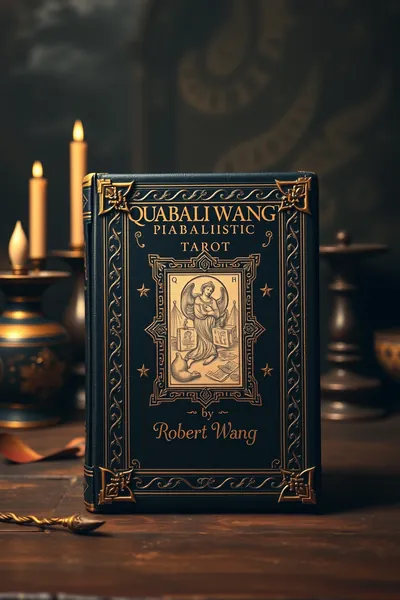



From the “Tarot” Collection
View all →









More Free Divination & Tarot Books
View all →