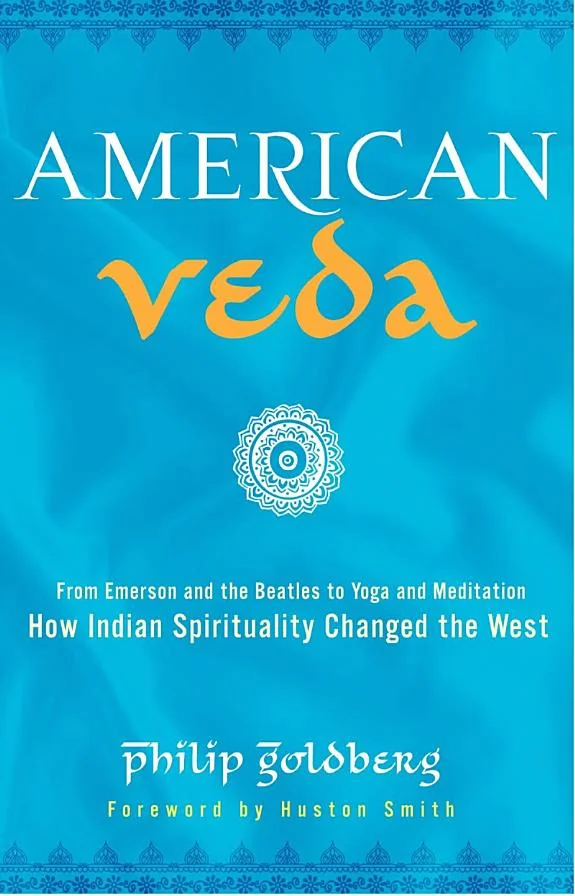
American Veda
 72
72

American Veda
Philip Goldberg’s "American Veda" offers a comprehensive and accessible survey of how Indian spiritual thought has permeated American culture. Its strength lies in its detailed historical tracing, demonstrating how ideas once confined to scholarly circles or small spiritual communities became mainstream. Goldberg effectively illustrates the transformation of concepts like yoga and mindfulness from their complex philosophical origins into widely adopted practices. A particular highlight is the exploration of figures like Swami Vivekananda and their impact on early American reception of Hindu thought. While the book is generally well-researched, its breadth occasionally leads to a somewhat generalized treatment of the nuanced philosophical distinctions within various Indian traditions. A more in-depth examination of the critiques or controversies surrounding the Western adoption of these practices could have added another layer of critical engagement. Nevertheless, "American Veda" serves as an invaluable primer for understanding a significant cultural phenomenon. Goldberg’s work is an essential chronicle of spiritual cross-pollination.
📝 Description
72
Philip Goldberg’s 2010 book, American Veda, traces Indian spiritual ideas in the U.S.
Philip Goldberg's American Veda details how Indian spiritual traditions became part of American culture. The book follows concepts such as karma, yoga, and meditation from India to their widespread adoption in the United States. Goldberg examines how these philosophies were adapted, sometimes secularized, and how they affected personal wellness practices and broader views on consciousness and self-discovery.
This work is useful for anyone curious about the origins of modern spiritual and wellness movements in America. It speaks to students of comparative religion, historians of American culture, and individuals wanting a deeper grasp of the philosophies behind practices like yoga and mindfulness. Those interested in how Eastern thought shaped Western perspectives, or how immigrant traditions evolve in a new country, will find American Veda particularly informative.
Goldberg tracks the historical currents that brought Vedic and Hindu ideas to the U.S., starting with early encounters in the 19th century. Key figures like Swami Vivekananda, who spoke at the Parliament of Religions in Chicago in 1893, were important in popularizing Vedanta and other Indian philosophies. The book shows how later immigration and the counterculture movements of the 20th century increased these influences, leading to the current presence of Indian spirituality in American life.
American Veda fits within the study of how non-Western spiritual traditions are received and transformed in new cultural contexts. It specifically examines the integration of Vedanta and related Hindu philosophies into American society, a process that often involves reinterpretation and adaptation. The book highlights the movement of ideas concerning consciousness, self, and ultimate reality, showing how these concepts, while rooted in ancient Indian thought, have found new expressions and applications within a Western framework, often influencing movements focused on personal development and well-being.
💡 Why Read This Book?
• Gain a concrete understanding of how figures like Swami Vivekananda, speaking at the 1893 Parliament of Religions, introduced core Hindu concepts to the American public, shaping subsequent spiritual movements. • Learn about the specific evolution of practices like Transcendental Meditation, tracing its lineage and impact on American psychology and wellness culture since the mid-20th century. • Discover how concepts such as karma and dharma, originating in ancient Indian texts, have been reinterpreted and integrated into contemporary American discourse on ethics, personal responsibility, and life philosophy.
⭐ Reader Reviews
Honest opinions from readers who have explored this book.
❓ Frequently Asked Questions
When did Indian spirituality first significantly impact the United States?
Significant impact began in the late 19th century, notably with Swami Vivekananda's influential presence at the 1893 Parliament of Religions in Chicago, which introduced Vedanta philosophy to a wider American audience.
What are some key Indian concepts discussed in 'American Veda'?
The book explores fundamental concepts such as karma, dharma, yoga, meditation, Brahman, and Atman, detailing their historical introduction and adaptation within the United States.
How did the counterculture movement influence the spread of Indian spirituality?
The counterculture of the 1960s and 70s embraced Eastern philosophies as an alternative to Western materialism, leading to increased interest in yoga, meditation, and gurus, significantly broadening their appeal.
What role did figures like Swami Vivekananda play?
Swami Vivekananda was instrumental in presenting Hindu philosophy, particularly Vedanta, to an American audience at the 1893 Parliament of Religions, sparking early interest and establishing a foundation for future spiritual exchange.
Does 'American Veda' cover the secularization of Indian spiritual practices?
Yes, the book extensively discusses how practices like yoga and meditation have been secularized and integrated into mainstream American wellness culture, often detached from their original religious and philosophical contexts.
What is the historical significance of the Parliament of Religions in 1893?
The 1893 Parliament of Religions in Chicago served as a crucial early platform for Eastern spiritual leaders, most notably Swami Vivekananda, to share Indian philosophies like Vedanta with a Western audience.
🔮 Key Themes & Symbolism
Vedic Philosophy in America
This theme examines the migration and adaptation of core Vedic concepts like Brahman, Atman, karma, and dharma to the American cultural landscape. Goldberg illustrates how these ancient Indian philosophical tenets have been reinterpreted, often secularized, to resonate with Western audiences. The book details how foundational texts and ideas, once obscure, became influential in shaping American perspectives on consciousness, ethics, and the nature of reality, moving from academic study to popular practice and self-help paradigms.
The Influence of Key Figures
Central to the narrative is the impact of influential individuals who acted as bridges between Indian spirituality and American society. Figures like Swami Vivekananda, who famously addressed the 1893 Parliament of Religions, are highlighted for their role in introducing Vedanta to a Western audience. The work also explores the contributions of gurus, scholars, and cultural figures throughout the 20th century who facilitated the widespread adoption and integration of Indian spiritual practices and philosophies.
Transformation of Practices
This theme focuses on how specific Indian spiritual practices have evolved after arriving in the United States. Goldberg tracks the journey of disciplines like yoga and meditation, charting their transformation from traditional spiritual paths into widely adopted techniques for physical fitness, stress reduction, and personal development. The book analyzes the process of secularization and commercialization that has made these practices ubiquitous in contemporary American life.
American Spiritual Syncretism
Goldberg investigates the unique phenomenon of spiritual syncretism in America, where Indian traditions have blended with existing Western religious and cultural frameworks. The book explores how American society has absorbed and modified elements of Hinduism and Vedic thought, creating new forms of spiritual expression and personal practice. This process involves both the sincere adoption of philosophies and the selective appropriation of practices for cultural or personal benefit.
💬 Memorable Quotes
Direct passages from the work, attributed to the author.
“The history of Indian spirituality in America is not just about the introduction of foreign ideas, but about their assimilation and transformation.”
— This interpretation highlights Goldberg's central argument: that the impact of Indian traditions in the U.S. involves more than mere adoption; it's a dynamic process of cultural integration and change.
“Swami Vivekananda’s 1893 address at the Parliament of Religions was a watershed moment for Vedanta in the West.”
— This emphasizes the key role of Vivekananda's speech in opening American minds to Hindu philosophy, marking a significant turning point in the historical reception and influence of Indian spirituality.
“The American embrace of Indian thought often involved reinterpreting concepts like karma and dharma through a Western lens.”
— This suggests that the understanding and application of Indian philosophical ideas in the U.S. frequently involved modifications to fit existing Western cultural and psychological frameworks, rather than direct, unadulterated adoption.
“The legacy of Indian spirituality is visible in everything from pop psychology to political discourse.”
— This points to the pervasive influence of Indian traditions, indicating that their impact extends far beyond niche spiritual communities, touching various aspects of American culture and public life.
💡 Key Ideas
Editorial paraphrase of the work's core concepts — not direct quotes.
Yoga and meditation moved from ashrams to gyms and corporate wellness programs.
This paraphrase captures the book's exploration of how traditional Indian practices underwent secularization and widespread adoption, becoming integrated into mainstream American health and lifestyle trends.
🌙 Esoteric Significance
Tradition
While not strictly an esoteric text itself, "American Veda" illuminates the transmission and transformation of traditions often categorized within esoteric studies, primarily Vedanta and yogic philosophy. It traces how these complex philosophical systems, originating in ancient India, entered the West and were adapted. The work fits within the broader study of how Eastern esoteric thought intersects with Western spiritual seeking, particularly in its examination of how concepts like consciousness, liberation, and the nature of reality are understood and practiced.
Symbolism
The book frequently touches upon key symbols and motifs central to Vedic and Hindu traditions. Concepts like Brahman (the ultimate reality) and Atman (the self) function symbolically, representing fundamental ontological inquiries. The practice of yoga itself, with its emphasis on the union of mind, body, and spirit, serves as a potent symbol of integration and self-realization. Meditation, as a technique, symbolizes the inward turn towards consciousness and the exploration of inner landscapes, often presented as a path to spiritual insight.
Modern Relevance
The work's relevance to contemporary thinkers and practices is undeniable. Modern proponents of mindfulness-based stress reduction (MBSR), secular yoga instructors, and psychologists integrating Eastern contemplative techniques into therapy all draw, often implicitly, on the history Goldberg chronicles. Thinkers exploring consciousness studies, comparative spirituality, and the globalization of religious ideas find "American Veda" a crucial text for understanding the roots of current trends and the ongoing dialogue between Eastern and Western philosophical traditions.
👥 Who Should Read This Book
• Students of American cultural history: Gain a comprehensive overview of how Indian spiritual traditions became deeply ingrained in the U.S., influencing everything from wellness to philosophy. • Practitioners of yoga and meditation: Understand the historical and philosophical roots of your practice, moving beyond the purely physical to appreciate the deeper traditions from which they emerged. • Researchers in comparative religion: Access a detailed account of the cross-cultural transmission and adaptation of complex philosophical ideas, providing context for modern spiritual landscapes.
📜 Historical Context
Philip Goldberg’s "American Veda" arrived in 2010, a period when yoga and mindfulness were already deeply embedded in American culture. The book provided a much-needed historical anchor, tracing this integration back to the late 19th century. Key figures like Swami Vivekananda, whose 1893 address at the Parliament of Religions in Chicago introduced Vedanta to a broad Western audience, are central to this narrative. Goldberg contextualizes this within a broader intellectual history, showing how Transcendentalist admiration for Eastern thought and the subsequent influx of gurus and teachings in the mid-20th century, particularly during the counterculture era, paved the way for widespread adoption. While the book details this reception, it largely sidesteps the more critical academic discourse surrounding cultural appropriation that gained traction around the same time, focusing instead on the historical flow and impact of these ideas.
📔 Journal Prompts
Reflect on the transformation of yoga from its origins to its contemporary American practice.
Consider the impact of Swami Vivekananda's 1893 Parliament of Religions address on American spiritual thought.
Analyze how the concept of karma has been interpreted and applied in American culture.
Explore the personal significance of meditation techniques as discussed in the book's historical context.
How does the integration of Vedic concepts into American life challenge or affirm your understanding of spirituality?
🗂️ Glossary
Vedanta
A school of Hindu philosophy that interprets the Upanishads, focusing on the nature of ultimate reality (Brahman) and the self (Atman), and the path to liberation (moksha).
Karma
In Indian religions, the principle of cause and effect where actions in this life and past lives influence one's destiny and future rebirths.
Dharma
A complex concept encompassing righteousness, duty, moral law, and the inherent nature of things; often understood as one's purpose or ethical path.
Brahman
The ultimate, unchanging reality or cosmic spirit in Hinduism, considered the source and sustainer of all existence.
Atman
The individual soul or self in Hindu philosophy, often understood as being identical to Brahman, representing the eternal essence of a person.
Yoga
A broad term referring to various Indian spiritual, mental, and physical practices aimed at achieving a state of perfect spiritual insight and tranquility, often involving physical postures, breathing techniques, and meditation.
Moksha
Liberation from the cycle of death and rebirth (samsara); the ultimate spiritual goal in many Indian traditions, achieved through various paths like knowledge, devotion, or action.
This book appears in 1 collection
🔮 Readers Also Liked
Browse all →








From the “Vedanta” Collection
View all →






More Free Esoteric History & Biography Books
View all →