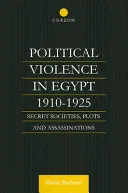
Political Violence in Egypt, 1910-1924
 77
77

Political Violence in Egypt, 1910-1924
Malak Badrawi’s "Political Violence in Egypt, 1910-1924" offers a stark, unsentimental examination of a pivotal period in Egyptian history. The book's strength lies in its rigorous analysis of the motivations behind political assassinations, particularly the 1910 murder of Prime Minister Butrus Ghali, and its subsequent impact on national discourse. Badrawi avoids sensationalism, instead presenting a dispassionate account of how violence became a perceived tool of dissent. A minor limitation is that the focus, while sharp, occasionally leaves the broader socio-economic context feeling somewhat secondary to the political machinations. The detailed exploration of how assassination was adopted as a 'potent expression of political dissatisfaction' by certain factions is particularly compelling. This is a necessary study for understanding the roots of political extremism in the region.
📝 Description
77
Malak Badrawi's 2019 book investigates political assassinations in Egypt from 1910 to 1924.
Political Violence in Egypt, 1910-1924 by Malak Badrawi examines the rise of political assassinations in Egypt, beginning with the murder of Prime Minister Butrus Ghali in 1910. This period marked a significant shift, as dissent escalated and found expression through extreme actions. Badrawi traces the motivations behind these assassinations, understanding them as powerful statements of political discontent and a perceived need for radical change among Egyptian youth.
The book places this analysis within the turbulent years of 1910-1924, a time of growing Egyptian nationalism under British influence and internal political conflicts. The assassination of Butrus Ghali is shown not as an isolated incident but as a symptom of deep dissatisfaction and a turning point in Egyptian political discourse. During this era, assassination was increasingly viewed by some as a viable, though extreme, method for political change and resistance against perceived 'traitors' or foreign control.
Badrawi's study centers on 'political assassination' as a deliberate, ideological act, not random violence. The work charts the development of this tactic in Egypt, showing how it became a potent symbol of opposition and a means to confront perceived internal and external threats.
While categorized as esoteric, this book's focus on the violent political landscape of early 20th-century Egypt positions it within a tradition that examines the hidden currents and radical expressions of societal transformation. It aligns with esoteric thought by scrutinizing the underlying psychological and ideological drivers of extreme action, moving beyond conventional historical accounts to understand the forces that compel individuals and groups toward radical means. The study of such politically charged violence, particularly when analyzed through its symbolic and ideological dimensions, can be seen as an exploration of suppressed desires and the manifestation of collective will through unconventional or forbidden channels, a common theme in esoteric inquiry.
💡 Why Read This Book?
• Understand the precedent set by the 1910 assassination of Butrus Ghali, learning how this event reshaped the landscape of Egyptian political dissent and established a new, radical form of expression. • Analyze the specific socio-political conditions between 1910-1924 that led some groups to view assassination as the only recourse against perceived 'traitors' or oppressive forces. • Gain insight into the mindset of Egypt's youth during this formative period, exploring their radicalization and the complex factors driving their engagement with political violence.
⭐ Reader Reviews
Honest opinions from readers who have explored this book.
❓ Frequently Asked Questions
What specific event marked the beginning of the political violence discussed in the book?
The book highlights the assassination of Prime Minister Butrus Ghali in February 1910 as the inaugural incident of its kind in Egypt for over a century, marking a significant escalation in political expression.
What time period does Malak Badrawi's study cover?
The study focuses on the critical period between 1910 and 1924, a time of intense political upheaval and the emergence of assassination as a tool of dissent in Egypt.
Who was Butrus Ghali and why was his assassination significant?
Butrus Ghali served as Prime Minister of Egypt. His assassination in 1910 was significant because it was the first of its kind in over a century and is presented as a catalyst for radical political action and expression.
What does the book suggest about the motivations behind this political violence?
The book suggests that the violence stemmed from extreme dissatisfaction and dissent, with some factions viewing assassination as the only effective method to remove those perceived as 'traitors' to the nation.
Is this book primarily about the act of assassination itself, or the broader political climate?
While focusing on political violence, the book uses these acts as a lens to examine the broader political climate, the mood of Egypt's youth, and the underlying currents of nationalism and dissent during the 1910-1924 period.
What is the central argument regarding the role of youth in this period?
The central argument is that the youth of Egypt at the time were deeply affected by the political climate, and their engagement with violence, particularly assassination, reflected their extreme dissatisfaction and desire for change.
🔮 Key Themes & Symbolism
Assassination as Political Expression
The work meticulously details how acts of assassination, beginning with the murder of Prime Minister Butrus Ghali in 1910, were re-framed by certain Egyptian youth as the ultimate expression of political dissatisfaction and dissent. This wasn't presented as random violence, but as a calculated, albeit extreme, method to rid the country of figures deemed 'traitors.' The study explores the psychological and ideological shifts that led to this tactical adoption, positioning assassination as a potent symbol against perceived oppression and foreign influence during the 1910-1924 period.
Youth Radicalization and Dissent
Badrawi's study emphasizes the role and mood of Egypt's youth during the tumultuous years of 1910-1924. It examines the societal conditions that fostered radicalization, leading a segment of the younger generation to embrace extreme measures like assassination. The book provides a lens into their motivations, their perception of the political landscape, and how their dissatisfaction manifested in violent acts, setting a precedent for future expressions of dissent within the nation's history.
The Precedent of 1910
The assassination of Butrus Ghali in February 1910 is established as a critical turning point. This event, the first of its kind in over a century, is analyzed for its immediate impact and its long-term implications. The book details how this act, and the subsequent acceptance of assassination by some factions, created a new paradigm for political action in Egypt, influencing how dissent and opposition were perceived and enacted throughout the subsequent decade up to 1924.
Nationalism and 'Traitors'
A significant theme is the interplay between nascent Egyptian nationalism and the concept of 'traitors.' The book explores how political violence was justified by its proponents as a means to protect the nation and expel those who collaborated with or served foreign interests, or who were seen as undermining Egyptian sovereignty. The identification of 'traitors' became a potent justification for extreme actions during the turbulent years examined, framing the violence within a nationalist struggle.
💬 Memorable Quotes
Direct passages from the work, attributed to the author.
“It reflected the mood of Egypt's youth at the time.”
— This highlights the book's focus on the generational aspect of political dissent, suggesting that the violence was not solely the act of isolated individuals but symptomatic of a broader sentiment among younger Egyptians.
“The most potent expression of political dissatisfaction and dissent.”
— This interpretation emphasizes the perceived effectiveness and symbolic power of assassination for certain groups, positioning it as the ultimate, visible manifestation of extreme opposition during the studied period.
“This study is an account of...”
— While incomplete in the original blurb, this phrase indicates the book's nature as a detailed historical investigation, promising a comprehensive examination of the events and their underlying causes.
💡 Key Ideas
Editorial paraphrase of the work's core concepts — not direct quotes.
The murder of the Prime Minister, Butrus Ghali, in February 1910, was the first incident of its kind to take place in Egypt for over a century.
This quote establishes the historical significance and novelty of the event, marking it as a critical turning point that broke a long period of relative political calm and set a new, violent precedent.
Assassination as the only way to rid the country of those who were regarded as 'traitors'.
This paraphrased concept captures the core justification for the political violence discussed, illustrating how extreme acts were rationalized within a nationalist framework to target specific individuals perceived as enemies of the state or nation.
🌙 Esoteric Significance
Tradition
While "Political Violence in Egypt, 1910-1924" is primarily a work of history and political science, its focus on extreme acts of dissent and the motivations behind them can be viewed through an esoteric lens. The concept of 'ridding the country of traitors' can echo Gnostic ideas of purging impure elements or dualistic struggles between light and shadow. The willingness of individuals to sacrifice themselves or commit extreme acts for a cause can be interpreted as a form of intense, albeit secularized, spiritual or ideological devotion, mirroring the asceticism or martyrdom found in various mystical traditions.
Symbolism
The act of assassination itself, particularly in this context, can be seen as a symbolic ritual. The targeted removal of a 'traitor' represents an attempt to excise perceived corruption or foreign influence from the body politic, akin to a symbolic purification or a violent severing of negative ties. The figure of the 'traitor' becomes a potent symbol of impurity or opposition to the national spirit, and the assassination a ritualistic act intended to restore a perceived lost purity or order to the nation.
Modern Relevance
Contemporary discussions on political radicalization, the psychology of extremism, and the role of violence in social movements can draw from Badrawi's analysis. Thinkers exploring the roots of political disillusionment and the adoption of extreme measures in the face of perceived oppression might find parallels in the Egyptian context of 1910-1924. The study's examination of how violence becomes a 'potent expression' offers a case study for understanding the dynamics of protest and revolution in various cultural and historical settings today.
👥 Who Should Read This Book
• Historians specializing in Middle Eastern studies, particularly early 20th-century Egypt, who need a detailed account of political radicalization and the use of violence. • Students of political science and sociology interested in the dynamics of dissent, extremism, and the socio-political factors driving revolutionary action. • Readers seeking a deeper understanding of modern Egyptian history, focusing on the critical period between 1910-1924 and the complex origins of political conflict.
📜 Historical Context
Malak Badrawi's "Political Violence in Egypt, 1910-1924" emerges from a period of intense nationalistic fervor and simmering resentment against British influence, coupled with internal political rivalries. The early 20th century saw the rise of movements advocating for greater Egyptian autonomy, often clashing with the established political order and the occupying powers. The assassination of Prime Minister Butrus Ghali in 1910, a Coptic Christian who had served under British patronage, was a shocking event that signaled a radicalization of dissent. This era was marked by a burgeoning intellectual climate discussing reform and independence, but also by the frustration of those who felt conventional political channels were insufficient. While figures like Ahmed Lutfi al-Sayyid advocated for gradual reform through intellectual discourse, a more militant faction, disillusioned by the pace of change and perceived collaboration, turned to violence. Badrawi’s work investigates this dichotomy, showing how extreme actions became a stark alternative, particularly for segments of the youth, in the struggle for national identity and self-determination.
📔 Journal Prompts
The precedent set by the 1910 assassination of Butrus Ghali.
The concept of 'traitors' in the context of Egyptian nationalism.
The mood of Egypt's youth during 1910-1924.
Assassination as a potent expression of dissent.
The motivations behind political violence in early 20th-century Egypt.
🗂️ Glossary
Political Assassination
The premeditated murder of a prominent political figure, often carried out for political reasons or to achieve political goals. In the context of this book, it signifies a deliberate act of violence intended to express extreme dissatisfaction and effect political change.
Dissent
The expression of opinions or objections contrary to those commonly or officially held. In this study, dissent escalates to extreme forms, including violence, when conventional channels are perceived as ineffective.
Nationalism
A strong identification with one's own nation and support for its interests, often to the exclusion or detriment of the interests of other nations. In early 20th-century Egypt, it fueled movements for independence and resistance against foreign powers.
Traitors
Individuals perceived as betraying their country or its cause, often by collaborating with enemies or undermining national interests. This label was used to justify extreme political violence.
Radicalization
The process by which an individual or group comes to adopt extreme political or religious ideals and aspirations that are far outside the perceived norms of mainstream society. In this book, it refers to the adoption of violence as a political tool.
Precedent
An earlier event or action that is regarded as an example or guide to be considered in subsequent similar circumstances. The 1910 assassination set a precedent for future political violence in Egypt.
Dissatisfaction
A lack of contentment or pleasure; unhappiness. The book explores how deep political dissatisfaction among certain groups fueled extreme actions during the period.