The Maya
 77
77

The Maya
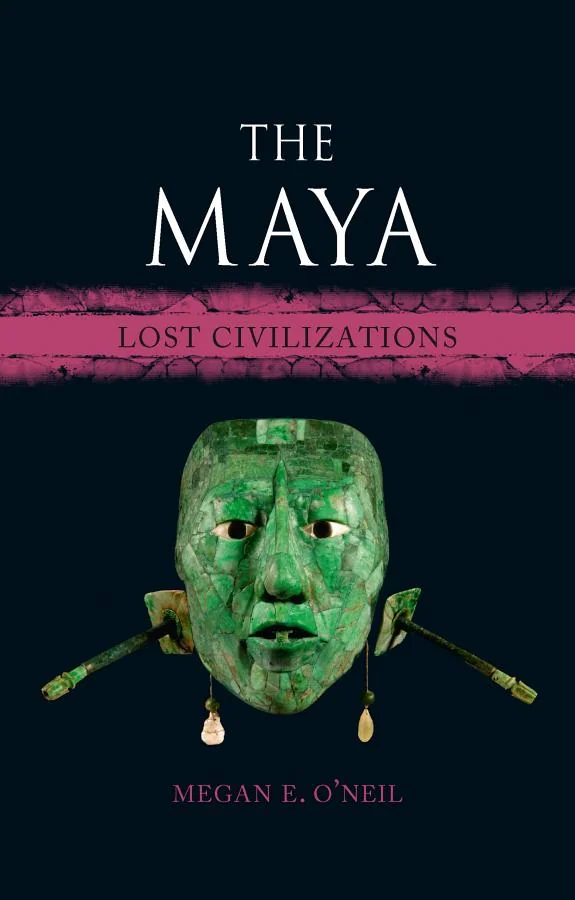
Megan E. O’Neil’s *The Maya* offers a compelling, if occasionally dense, examination of how this ancient civilization has been viewed and utilized since the 16th century. The work excels in its detailed tracing of Maya imagery and concepts through European and American scholarship and popular culture, demonstrating a keen eye for how these representations shifted over time. A particular strength lies in the section discussing the post-classical reception of Maya art, where O’Neil meticulously details the appropriation of iconography by early collectors and scholars. However, the sheer breadth of the subject matter means that some periods of Maya history, particularly the pre-Columbian era, receive less detailed treatment than the subsequent interpretations. While the book successfully synthesizes archaeological and historical data, a deeper engagement with the lived experiences of contemporary Maya peoples in relation to their ancient heritage could have further enriched its analysis. Ultimately, *The Maya* provides a valuable, critical perspective on the construction of historical narratives surrounding a foundational Mesoamerican culture.
📝 Description
77
Megan E. O’Neil’s 2022 book, *The Maya*, analyzes how Maya civilization has been perceived and appropriated over five centuries.
Megan E. O’Neil’s 2022 book, *The Maya*, examines the reception and appropriation of Maya civilization across five centuries. The work traces how Maya art, architecture, ideas, and identities have been understood and misrepresented, both within the Americas and in Europe. O’Neil synthesizes information from preclassical periods through the Spanish conquest while chronicling the history of external engagement with Maya culture.
The study moves beyond a single narrative, highlighting the various communities that have interacted with and interpreted the ancient Maya. O’Neil’s research shows the dynamic relationship between the Maya past and its present interpretations, revealing how historical accounts are built and disputed. It looks at how Maya material culture and intellectual traditions were used and changed by groups seeking to understand or justify their own standing.
The book covers Maya history from its early periods to the disruptions of the colonial era. It then analyzes centuries of scholarship, popular interest, and exploitation that shaped modern understanding. This dual focus offers a look at the civilization and the changing external view of it, providing a perspective on cultural inheritance and representation.
While not explicitly a text of occult practices, *The Maya* engages with esoteric traditions through its examination of how a civilization's cosmology, symbolism, and intellectual frameworks have been interpreted and often distorted by external forces. The book considers how ancient Maya concepts, including their understanding of time, space, and the divine, have been received and repurposed. It addresses how the material remains and intellectual output of the Maya became subjects of fascination, scholarly inquiry, and sometimes, misrepresentation, touching upon themes of hidden knowledge and the manipulation of ancient wisdom.
💡 Why Read This Book?
• Gain a nuanced understanding of how the ancient Maya have been perceived and misrepresented across continents since the 16th century, moving beyond simplistic portrayals. • Explore the interdisciplinary analysis of Maya art and history, from the Preclassical period to the Spanish invasion, revealing the evolution of scholarly and popular engagement. • Understand the mechanisms of cultural appropriation and reinterpretation by examining how Maya objects and ideas were utilized in Americas and Europe for various agendas.
⭐ Reader Reviews
Honest opinions from readers who have explored this book.
❓ Frequently Asked Questions
What is the primary focus of Megan E. O’Neil's book 'The Maya'?
The book primarily focuses on the reception and interpretation of ancient Maya civilization by various communities over five centuries, examining how their buildings, ideas, objects, and identities have been portrayed and exploited.
What historical periods of Maya civilization does the book cover?
It covers Maya history from the Preclassical period up to the Spanish invasion, and then analyzes the subsequent five hundred years of external engagement with Maya culture.
In which geographical regions does the book examine Maya reception?
The book examines Maya reception across the Americas, Europe, and other regions, highlighting the global spread of perceptions and interpretations of Maya civilization.
What kind of analysis does 'The Maya' employ?
It employs interdisciplinary analysis, drawing from art history, archaeology, and cultural history to synthesize information about both the ancient Maya and their historical interpreters.
When was 'The Maya' by Megan E. O’Neil first published?
The book was first published on July 6, 2022.
What does the book reveal about the exploitation of Maya heritage?
It reveals how Maya artifacts, architectural styles, and intellectual traditions have been perceived, portrayed, and exploited by various external groups throughout history for their own purposes.
🔮 Key Themes & Symbolism
The Shifting Maya Image
This theme explores the historical construction of the 'Maya' as an entity in the Western imagination. From early colonial encounters to 20th-century archaeological fervor, the book details how Maya art, architecture, and calendrical systems were selectively interpreted, often to fit pre-existing European or American frameworks. O’Neil illustrates how these perceptions were not static but evolved with changing intellectual currents and political climates, frequently serving to legitimize colonial endeavors or fuel nationalist sentiments, rather than accurately reflecting the ancient civilization's complexity.
Appropriation of Material Culture
The work meticulously documents instances where Maya artifacts and architectural motifs were appropriated and repurposed. This includes everything from the fascination with Maya hieroglyphs and mathematics to the collection and display of stelae and pottery in European museums. The book highlights how these objects, removed from their original contexts, were re-signified, often becoming symbols of exoticism or evidence for speculative theories, thereby divorcing them from their original cultural and spiritual significance.
Interdisciplinary Reception History
O’Neil’s study traces the engagement with Maya civilization through multiple academic disciplines that emerged and evolved over centuries. It examines how early explorers, missionaries, archaeologists, and art historians each contributed to, and sometimes contested, the understanding of Maya culture. This theme underscores how the narrative of the Maya was shaped by the methodologies and biases inherent in these different fields, revealing a layered and often conflicting history of scholarly pursuit.
Identity and Maya Communities
Beyond external perceptions, the book also touches upon the engagement of various communities, including the descendants of the Maya themselves, with their own heritage. It hints at how historical narratives about the ancient Maya have influenced contemporary identity and political discourse. The work implicitly questions who has the authority to define and represent Maya history, suggesting a continuous dialogue between the past and the present across diverse cultural groups.
💬 Memorable Quotes
Direct passages from the work, attributed to the author.
“Maya identities have been perceived, portrayed, and exploited over five hundred years.”
— This statement expresses the book's central argument: that the ancient Maya have been subject to external interpretations and uses since the arrival of Europeans, often for purposes unrelated to understanding the civilization itself.
“The book engages in interdisciplinary analysis, summarizing ancient Maya art and history.”
— This highlights the methodological approach of O'Neil's work, emphasizing its synthesis of various fields of study to reconstruct both the Maya past and the history of how that past has been understood.
“Examining the history of outside engagement with the Maya.”
— This points to a core focus of the book: not just the Maya civilization itself, but the extensive and varied history of how other cultures and scholars have interacted with, studied, and represented Maya civilization.
“The Maya—and their buildings, ideas, objects, and identities—have been perceived.”
— This emphasizes the comprehensive scope of the study, indicating that it analyzes not just physical remnants like buildings and objects, but also intangible aspects like ideas and cultural identities, and how these have been subject to external perception.
💡 Key Ideas
Editorial paraphrase of the work's core concepts — not direct quotes.
The work reveals how ancient Maya culture has been portrayed and exploited.
This paraphrases a key finding of the book, suggesting that the representation of Maya culture throughout history has often involved exploitation, where external actors have used Maya heritage for their own benefit or agendas.
🌙 Esoteric Significance
Tradition
While *The Maya* is primarily a work of cultural history and art history, its focus on ancient cosmologies, calendrical systems, and symbolic representations offers points of resonance with esoteric traditions interested in pre-Christian worldviews. It does not strictly belong to a single lineage like Hermeticism or Gnosticism but provides source material and context for understanding how non-Western cultures developed complex spiritual and philosophical systems. The book's examination of Maya cosmology can inform broader esoteric studies of cyclical time, earth-based spirituality, and the relationship between the human and the divine.
Symbolism
The book frequently engages with Maya symbolism, such as the World Tree (Wacah Chan), which represents the connection between the underworld, the earthly realm, and the heavens—a concept found in many shamanistic and esoteric traditions. It also touches upon the symbolism of jade, often associated with life, fertility, and royalty, and its use in Maya art and ritual. The intricate iconography on stelae and codices, depicting deities, rulers, and cosmological events, offers a rich visual language that esoteric practitioners might interpret through lenses of archetypal psychology or comparative mythology.
Modern Relevance
Contemporary practitioners of Neo-Paganism, shamanism, and those exploring alternative spiritualities often draw inspiration from ancient Mesoamerican cultures. *The Maya* provides a scholarly foundation for understanding the historical context and symbolic richness of Maya civilization, offering a counter-narrative to purely New Age appropriations. Thinkers interested in indigenous wisdom traditions, ecological spirituality, and the study of ancient mathematics and astronomy as potentially esoteric sciences can find valuable insights into the sophisticated worldview of the Maya.
👥 Who Should Read This Book
• Students of Mesoamerican history and archaeology seeking a critical overview of how Maya civilization has been studied and represented since the colonial era. • Art historians and cultural critics interested in the appropriation and reinterpretation of non-Western visual cultures across different time periods and geographical locations. • Readers curious about the complex legacy of ancient civilizations and how their narratives are constructed, contested, and utilized in the modern world.
📜 Historical Context
Published in 2022, Megan E. O’Neil’s *The Maya* arrived at a time when critical approaches to cultural heritage and post-colonial studies were well-established. The intellectual currents it engages with include ongoing debates in art history, archaeology, and anthropology concerning representation, ownership, and the legacy of colonial scholarship. The book implicitly responds to earlier, often romanticized or sensationalized, interpretations of Maya civilization that gained traction in the late 19th and early 20th centuries, exemplified by figures like Augustus Le Plongeon. While O'Neil's work is not directly a response to a specific contemporary scholar in the way some historical texts are, it contributes to a broader academic conversation that seeks to decolonize the study of ancient cultures. Its meticulous documentation of historical engagement can be seen as a counterpoint to more speculative or nationalistic interpretations of Maya history that have historically circulated.
📔 Journal Prompts
The portrayal and exploitation of Maya identities since the 16th century.
The interdisciplinary analysis of Maya art and its reception.
Examining how Maya objects have been perceived and re-signified.
The historical evolution of Maya historical narratives.
Comparing the ancient Maya worldview with later interpretations.
🗂️ Glossary
Preclassical Period
The earliest major period of Maya civilization, generally dated from around 2000 BCE to 250 CE, characterized by the development of agriculture, early settlements, and foundational cultural practices.
Spanish Invasion
Refers to the period starting in the early 16th century when Spanish conquistadors and colonists arrived in Maya territories, leading to conquest, colonization, and significant cultural and demographic changes.
Interdisciplinary Analysis
A method of study that integrates information and methodologies from multiple academic disciplines, such as history, art history, archaeology, and anthropology, to gain a more comprehensive understanding of a subject.
Maya Art
The visual and material culture produced by the Maya civilization, encompassing sculpture, pottery, murals, hieroglyphic inscriptions, and architectural decoration, known for its intricate detail and symbolic complexity.
Maya Identity
The sense of self and belonging among Maya peoples, encompassing cultural, historical, and social aspects that have evolved over centuries, influenced by both internal traditions and external interactions.
Maya Buildings
The architectural structures created by the Maya, including pyramids, temples, palaces, observatories, and ballcourts, often featuring sophisticated engineering and elaborate decoration.
Maya Ideas
The philosophical, cosmological, scientific, and religious concepts developed and transmitted by the Maya civilization, including their understanding of time, the cosmos, and human existence.
This book appears in 1 collection
🔮 Readers Also Liked
Browse all →






From the “Lost Civilizations” Collection
View all →




More Free Esoteric History & Biography Books
View all →