A study of Chinese alchemy

 62
62

A study of Chinese alchemy



In 'A Study of Chinese Alchemy,' Obed Simon Johnson masterfully navigates the intricate labyrinth of Chinese alchemical traditions, revealing their deep mystical roots and historical significance. This book is a treasure trove of esoteric insights, offering readers a comprehensive understanding of alchemy's role in Chinese medicine and magic. Johnson's authoritative tone and meticulous research make this work an indispensable resource for both scholars and practitioners. The book's exploration of Taoist principles and their application in alchemy is particularly enlightening, providing a unique perspective on the quest for spiritual and physical transformation. Highly recommended for those seeking to deepen their knowledge of Eastern mysticism.
📝 Description
62
Obed Simon Johnson's 1980 study examines the philosophical underpinnings of Chinese alchemy.
This book looks at Chinese alchemy, separating its spiritual and practical aims. Johnson connects these practices to Taoist philosophy, showing how alchemists sought not only physical elixirs but also spiritual enlightenment. The work discusses the symbolism involved, drawing on historical texts and ancient sages. It aims to clarify alchemy's role as a transformative discipline.
The study considers the alchemical quest for longevity and immortality, often symbolized by the elixir of life. It traces the philosophical significance of these pursuits within Chinese culture. Johnson's research bridges the gap between mystical beliefs and observable phenomena, presenting a detailed account of these esoteric traditions.
This work is placed within the long tradition of Chinese alchemy, a practice that blends early chemistry with spiritual discipline. Unlike Western alchemy, which often focused on transmutation of metals, Chinese alchemy had a strong emphasis on achieving immortality and spiritual perfection. It is deeply intertwined with Taoist concepts of qi, yin and yang, and the body as a microcosm of the universe. Johnson's study helps situate these practices within their specific cultural and philosophical milieu.
💡 Why Read This Book?
Read 'A Study of Chinese Alchemy' to unlock the secrets of ancient Chinese alchemical practices and their enduring relevance. This book is essential for seekers of hidden knowledge, scholars of Eastern philosophy, and practitioners of mystical arts. Johnson's work offers a profound exploration of alchemy's symbolism and its philosophical significance, making it a must-read for anyone interested in the intersection of science and spirituality.
⭐ Reader Reviews
Honest opinions from readers who have explored this book.
❓ Frequently Asked Questions
What is the primary focus of 'A Study of Chinese Alchemy'?
The book primarily focuses on the historical and mystical aspects of Chinese alchemy, exploring its roots in Taoism and its impact on medicine and magic.
Who would benefit most from reading this book?
Scholars of Eastern philosophy, practitioners of alchemy and Taoism, and seekers of esoteric knowledge will find this book particularly enlightening.
Does the book discuss the practical applications of alchemy?
Yes, it delves into the practical applications of alchemy in Chinese medicine and magical practices, providing a comprehensive view of its historical significance.
What makes this study of alchemy unique?
The book's unique blend of historical research and mystical insights sets it apart, offering readers a deep understanding of alchemy's role in spiritual transformation.
Is this book suitable for beginners in the field of alchemy?
While it is accessible to beginners, the depth of research and mystical content makes it particularly valuable for those with some prior knowledge of alchemy and Eastern philosophy.
🔮 Key Themes & Symbolism
Taoist Philosophy
The book delves deeply into the Taoist principles that underlie Chinese alchemy, revealing how these philosophical foundations guide the alchemical process and spiritual quest.
Historical Significance
Johnson provides a comprehensive historical context for Chinese alchemy, highlighting its impact on medicine and magic throughout the centuries and its enduring influence.
Symbolism and Mysticism
The study explores the strong symbolism of alchemy, unraveling the mystical meanings behind alchemical practices and their role in spiritual transformation.
💬 Memorable Quotes
Direct passages from the work, attributed to the author.
“The elixir of life is not merely a physical substance but a state of being.”
— Johnson emphasizes the spiritual dimension of alchemy, where the quest for the elixir is a journey towards enlightenment.
“The alchemist's laboratory is a temple, where the sacred and the mundane intersect.”
— Johnson's words capture the sacred nature of alchemical practices, where the ordinary and the divine meet.
💡 Key Ideas
Editorial paraphrase of the work's core concepts — not direct quotes.
Alchemy is the art of transformation, both physical and spiritual.
This line underscores the dual nature of alchemy, bridging the gap between empirical science and mystical quest.
In the crucible of the alchemist, base metals are transformed into gold, symbolizing the purification of the soul.
This passage illustrates the alchemical process as a metaphor for spiritual purification and transformation.
The Taoist path to immortality is one of harmony and balance, not conquest and domination.
This quote highlights the Taoist approach to alchemy, focusing on inner harmony and balance as keys to spiritual longevity.
🌙 Esoteric Significance
Tradition
This book belongs to the Hermetic tradition, which seeks to uncover hidden knowledge and spiritual truths through the study of alchemy and other mystical practices.
Symbolism
Key symbols in the book include the elixir of life, the crucible, and the transformation of base metals into gold, all of which represent spiritual purification and transformation.
Modern Relevance
The insights provided in this study are relevant to modern practitioners of alchemy and Taoism, offering a deep understanding of the symbolic and spiritual dimensions of these practices. Contemporary scholars and seekers continue to draw on Johnson's work to explore the intersection of science and mysticism.
👥 Who Should Read This Book
Beginners in the field of alchemy will find this book an accessible introduction to the mystical and historical aspects of Chinese alchemy. Scholars of Eastern philosophy will appreciate the depth of research and the unique perspective on Taoist principles. Spiritual seekers will be drawn to the book's exploration of spiritual transformation and the quest for hidden knowledge. Practitioners of alchemy and Taoism will benefit from the practical insights and historical context provided.
📜 Historical Context
Written during a time of growing interest in Eastern mysticism, 'A Study of Chinese Alchemy' provides a timely exploration of ancient alchemical practices and their relevance in the modern world. The book was influential in bridging the gap between Eastern and Western esoteric traditions, offering a unique perspective on the historical development of alchemy. Its insights into the Taoist principles underlying Chinese alchemy have inspired countless practitioners and scholars, contributing to the ongoing dialogue between science and spirituality.
📔 Journal Prompts
Reflect on the symbolism of the elixir of life in your own spiritual journey.
How does the Taoist approach to alchemy influence your understanding of spiritual transformation?
Consider the role of the alchemist's laboratory as a sacred space in your practice.
Explore the significance of the crucible in the alchemical process and its symbolism in your life.
How does the transformation of base metals into gold reflect your personal quest for enlightenment?
🗂️ Glossary
Alchemy
The ancient practice of transforming base metals into gold, often seen as a metaphor for spiritual transformation.
Taoism
An ancient Chinese philosophy emphasizing living in harmony with the Tao, or the natural order of the universe.
Elixir of Life
A mystical substance believed to grant immortality and spiritual enlightenment.
Crucible
A vessel used in alchemy to heat and transform substances, symbolizing spiritual purification.
Spagiric
A branch of alchemy focused on the purification and transformation of natural substances.
This book appears in 3 collections
🔮 Readers Also Liked
Browse all →






More by Obed Simon Johnson
All books →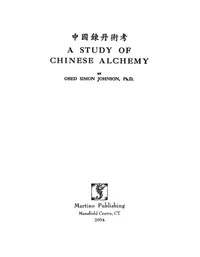
From the “Hermeticism” Collection
View all →






More Free Alchemy & Hermeticism Books
View all →