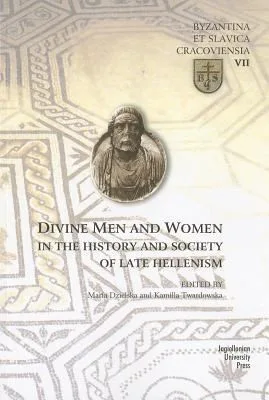
Divine Men And Women In The History And Society Of Late Hellenism
 61
61

Divine Men And Women In The History And Society Of Late Hellenism


In 'Divine Men and Women in the History and Society of Late Hellenism,' Maria Dzielska masterfully blends historical scholarship with esoteric insights, making it a must-read for those interested in the mystical dimensions of ancient philosophy. Dzielska's work is particularly strong in its exploration of deification and the societal impact of esoteric practices. She illuminates the hidden knowledge that guided the lives of divine individuals, offering a rich tapestry of symbolism and philosophical depth. This book is essential for scholars and practitioners alike, providing a comprehensive look at the mystical underpinnings of Late Hellenism. It is a valuable addition to any esoteric library, offering both historical context and esoteric insights.
📝 Description
61
Maria Dzielska examines divine men and women in Late Hellenism, a period of significant spiritual change.
This book looks at the roles of divine men and women within the society and history of Late Hellenism. Dzielska considers figures who were seen as having divine connections or who achieved a form of deification. The study addresses how these individuals fit into the philosophical and spiritual currents of the time, a period marked by shifts in religious and social thought.
The work analyzes the symbolic meanings and societal impact of these divine figures. It investigates the esoteric teachings and practices that were present during this era, showing how they influenced the lives and perceptions of these extraordinary people. The book aims to clarify the relationship between the mortal and the divine as understood in Late Hellenism.
The study of divine men and women in Late Hellenism connects to broader traditions of Neoplatonism and Gnosticism, which sought to understand or achieve union with the divine. Such movements often featured individuals who claimed special insight or a direct connection to higher powers. Dzielska's work situates these figures within a historical context that was grappling with the transition from classical paganism to new forms of spirituality, highlighting a fascination with intermediaries between the human and the sacred.
💡 Why Read This Book?
Read this book to gain a deep understanding of the mystical and esoteric practices that shaped Late Hellenism. Ideal for scholars of ancient philosophy, spiritual seekers, and practitioners of esoteric arts, this volume offers a unique perspective on the deification process and its societal implications. Dzielska's work is a treasure trove of hidden knowledge, symbolism, and philosophical significance, making it an essential read for anyone interested in the mystical dimensions of history.
⭐ Reader Reviews
Honest opinions from readers who have explored this book.
❓ Frequently Asked Questions
What is the main focus of this book?
The book explores the lives and societal roles of divine men and women in Late Hellenism, focusing on esoteric practices and mystical themes.
Who is the intended audience for this book?
This book is intended for scholars of ancient philosophy, spiritual seekers, and practitioners of esoteric arts.
What makes this book unique?
The book uniquely blends historical scholarship with esoteric insights, providing a deep dive into the mystical dimensions of Late Hellenism.
What are some key themes in this book?
Key themes include deification, esoteric practices, societal impact of mystical teachings, and the philosophical significance of divine individuals.
How does this book contribute to the study of esoteric traditions?
This book offers a comprehensive look at the esoteric practices and mystical themes that shaped Late Hellenism, providing valuable insights for scholars and practitioners of esoteric arts.
🔮 Key Themes & Symbolism
Deification and Mysticism
The book looks at the process of deification and its mystical underpinnings, exploring how divine men and women were revered and their roles in society. This theme highlights the esoteric practices and philosophical significance of becoming divine in Late Hellenism.
Esoteric Practices
Dzielska examines the hidden knowledge and symbolic rituals that were central to the lives of divine individuals. This theme provides insights into the esoteric traditions that shaped Late Hellenism, offering a collection of mystical practices and their societal impact.
Philosophical Significance
The book explores the profound philosophical implications of deification and mystical teachings. This theme offers a deep dive into the philosophical underpinnings of divine reverence, providing a comprehensive look at the esoteric dimensions of Late Hellenism.
💡 Key Ideas
Editorial paraphrase of the work's core concepts — not direct quotes.
The path to divinity is a journey of hidden knowledge and mystical practices.
This line underscores the esoteric nature of deification in Late Hellenism.
Divine men and women were the embodiment of societal transformation.
This quote highlights the societal impact of esoteric practices and mystical teachings.
The mystical underpinnings of Hellenism reveal a collection of symbolism and philosophy.
This passage emphasizes the depth and complexity of esoteric traditions in Late Hellenism.
The deification process was a blend of hidden knowledge and societal reverence.
This line explores the dual nature of divine reverence in Late Hellenism.
The esoteric practices of Hellenism shaped the lives of divine individuals.
This quote underscores the importance of esoteric traditions in the mystical dimensions of Late Hellenism.
🌙 Esoteric Significance
Tradition
This book belongs to the Hermetic tradition, exploring the mystical dimensions of Late Hellenism. It looks at the esoteric practices and hidden knowledge that shaped the lives of divine individuals, providing a collection of symbolism and philosophical depth.
Symbolism
Key symbols in this book include the concept of deification, esoteric rituals, and mystical teachings. These symbols represent the hidden knowledge and philosophical significance of divine reverence in Late Hellenism.
Modern Relevance
This book is relevant today for practitioners of esoteric arts and scholars of ancient philosophy. It offers insights into the mystical dimensions of Late Hellenism, providing a comprehensive look at the deification process and its societal impact. Modern practitioners can use this knowledge to deepen their understanding of esoteric traditions and their philosophical significance.
👥 Who Should Read This Book
This book is ideal for scholars of ancient philosophy, spiritual seekers, and practitioners of esoteric arts. Beginners will find it accessible and enlightening, while experienced practitioners will appreciate the depth of esoteric insights. Spiritual seekers will be drawn to the mystical themes and philosophical significance of deification. Scholars will value the historical context and esoteric traditions explored in the book. Overall, anyone interested in the mystical dimensions of Late Hellenism will find this volume to be a valuable addition to their library.
📜 Historical Context
Late Hellenism was a period of profound transformation, where philosophical, spiritual, and societal structures intertwined. This era saw the rise of esoteric practices and mystical teachings that shaped the lives of divine men and women. Dzielska's work provides a comprehensive look at the historical context of this period, highlighting the importance of esoteric traditions and their impact on society. The book was written to shed light on the mystical underpinnings of Late Hellenism, offering insights into the deification process and its philosophical significance.
📔 Journal Prompts
How do the esoteric practices of Late Hellenism resonate with your spiritual journey?
What insights can you gain from the deification process described in the book?
How does the mystical underpinnings of Hellenism influence your understanding of esoteric traditions?
What symbols and rituals from the book have the most wide impact on your spiritual practice?
How can the philosophical significance of divine reverence be applied to modern esoteric practices?
🗂️ Glossary
Deification
The process of becoming divine, often involving esoteric practices and mystical teachings.
Esoteric Practices
Hidden knowledge and symbolic rituals central to the lives of divine individuals in Late Hellenism.
Hellenism
The period of ancient Greek culture and philosophy that saw the rise of esoteric traditions and mystical teachings.
Mystical Teachings
Philosophical and spiritual insights that shape the lives of divine men and women in Late Hellenism.
Symbolism
The use of symbols to represent hidden knowledge and esoteric practices in the mystical dimensions of Late Hellenism.
This book appears in 3 collections
🔮 Readers Also Liked
Browse all →









From the “Neoplatonism” Collection
View all →






More Free Alchemy & Hermeticism Books
View all →