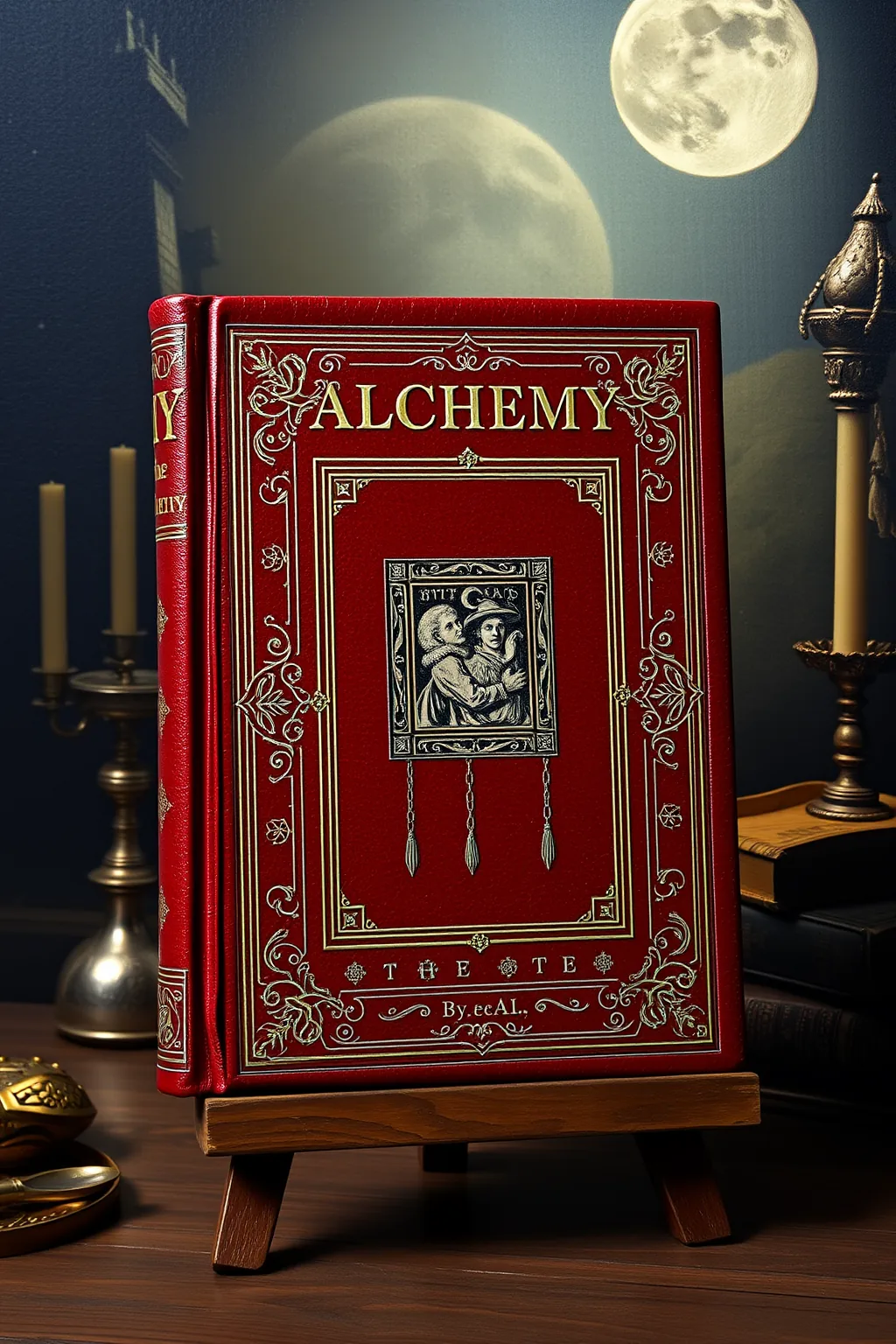
Alchemy: the Hermetic Museum: "Concerning the Secrets of Alchemy" and Other Tracts (Alchemy: the Hermetic Museum)
 61
61

Alchemy: the Hermetic Museum: "Concerning the Secrets of Alchemy" and Other Tracts (Alchemy: the Hermetic Museum)


Review by Aurelia Blackwood (Occult Philosophy Critic) — 'Alchemy: The Hermetic Museum' is a masterful compilation of alchemical texts that stands as a beacon of esoteric knowledge. For those delving into the mystical arts, this collection offers unparalleled insights into the symbolism and philosophy of alchemy. The strength of this work lies in its ability to bridge ancient wisdom with modern understanding, making it an invaluable resource for both novice and seasoned practitioners. The intended audience will find themselves immersed in a world of hidden meanings and transformative practices, all beautifully presented in a single volume.
📝 Description
61
This 1997 collection gathers key alchemical texts, including 'Concerning the Secrets of Alchemy.'
Alchemy: The Hermetic Museum presents several important alchemical writings, offering a direct look into the practices and philosophies of historical practitioners. The texts included focus on the transformative processes central to alchemy, both material and spiritual. Readers will encounter discussions on the manipulation of substances, the symbolism of alchemical apparatus, and the pursuit of the philosopher's stone. The language used is often allegorical, requiring careful study to understand its deeper meanings. This volume collects works that aim to guide the adept through the stages of the alchemical work.
These writings are not merely historical curiosities; they represent a distinct mode of thought that sought to understand the cosmos through material processes. The texts detail a system where the transformation of metals parallels the transformation of the human soul. The collection acts as a primary source for those interested in the practical and theoretical aspects of alchemy as it was understood centuries ago. It provides the raw material for understanding a tradition that has influenced Western esotericism for centuries.
Alchemy stands as a central pillar within the Western esoteric tradition, bridging hermetic philosophy, Gnosticism, and early scientific inquiry. These texts from Alchemy: The Hermetic Museum are part of a lineage that views the material world as a reflection of divine principles. The alchemist's process of purifying and perfecting metals was understood as a microcosm of the soul's purification and return to its divine source. This collection offers insights into a practice that was as much a spiritual discipline as it was a proto-scientific endeavor, deeply embedded in the hermetic worldview.
💡 Why Read This Book?
Read 'Alchemy: The Hermetic Museum' to uncover the secrets of alchemical transformation and its philosophical significance. Ideal for seekers of hidden knowledge, scholars of esoteric traditions, and practitioners of the mystical arts, this book offers a rich exploration of symbolism and ancient wisdom. It is a must-read for those who wish to deepen their understanding of the alchemist's journey and its spiritual implications.
⭐ Reader Reviews
Honest opinions from readers who have explored this book.
❓ Frequently Asked Questions
What is the primary focus of 'Alchemy: The Hermetic Museum'?
The primary focus is on the secrets and symbolism of alchemy, providing a comprehensive collection of alchemical texts and insights.
Who is the intended audience for this book?
The intended audience includes seekers of esoteric knowledge, scholars of occult philosophy, and practitioners of the mystical arts.
What makes this book unique?
This book is unique in its curated collection of alchemical texts, offering a deep dive into the symbolism and philosophical significance of alchemy.
Can beginners understand the content?
While the content is rich and complex, it is presented in a way that can be accessible to beginners with an interest in esoteric studies.
Is there a modern relevance to the topics discussed?
Yes, the book's exploration of alchemical symbolism and transformation has modern relevance for spiritual seekers and practitioners.
🔮 Key Themes & Symbolism
Transformation
The central theme of alchemy is transformation, both physical and spiritual. The alchemist's journey from base materials to the Philosopher's Stone symbolizes the quest for enlightenment and unity with the divine. This theme is explored through strong symbolism and philosophical insights, revealing the deeper meanings behind the alchemical process.
Symbolism
Symbolism is the language of alchemy, with each element and process representing deeper spiritual truths. 'Alchemy: The Hermetic Museum' looks at the intricate web of symbols, decoding their meanings and revealing the hidden knowledge they contain. This exploration invites readers to see the world through a mystical lens, where every object and action holds a sacred significance.
Hidden Knowledge
Alchemy is often associated with hidden knowledge, a secret wisdom passed down through the ages. This book uncovers some of these hidden truths, offering readers a glimpse into the esoteric traditions that have fascinated seekers for centuries. The exploration of hidden knowledge is not just an academic exercise but a spiritual journey, inviting readers to discover their own inner alchemy.
💬 Memorable Quotes
Direct passages from the work, attributed to the author.
“As above, so below.”
— This Hermetic principle highlights the interconnectedness of all things, reflecting the alchemist's quest for unity.
“Nature rejoices in nature.”
— This phrase underscores the natural processes at the heart of alchemy, where the alchemist works in harmony with the universe.
“The great work is the work of the sun.”
— This metaphorical statement ties the alchemical process to the life-giving power of the sun, symbolizing illumination and enlightenment.
💡 Key Ideas
Editorial paraphrase of the work's core concepts — not direct quotes.
The stone of the philosophers is not made with hands.
This quote emphasizes the spiritual nature of alchemy, where true transformation comes from within.
The work is one.
This quote suggests that the alchemical process is a single, unified journey towards enlightenment and transformation.
🌙 Esoteric Significance
Tradition
This book belongs to the Hermetic tradition, which emphasizes the unity of all things and the quest for spiritual enlightenment. Hermeticism draws from ancient Egyptian, Greek, and Jewish mysticism, blending these influences into a coherent philosophy of transformation and unity.
Symbolism
Key symbols in this book include the Philosopher's Stone, the Ouroboros, and the alchemical elements. The Philosopher's Stone represents the ultimate goal of alchemy: spiritual enlightenment and transformation. The Ouroboros, a serpent swallowing its own tail, symbolizes the eternal cycle of life and death, as well as the unity of opposites. The alchemical elements—earth, air, fire, and water—represent the fundamental forces of nature and the building blocks of the alchemist's work.
Modern Relevance
The modern relevance of this book lies in its exploration of symbolism and transformation, which appeals to contemporary seekers of spiritual enlightenment. Practitioners of Hermeticism, alchemy, and other esoteric traditions continue to draw inspiration from the texts and insights presented in 'Alchemy: The Hermetic Museum.'
👥 Who Should Read This Book
This book is ideal for beginners interested in esoteric traditions, offering a rich introduction to the symbolism and philosophy of alchemy. Scholars of occult philosophy will find it a valuable resource for in-depth study. Spiritual seekers will appreciate the book's exploration of transformation and enlightenment, while practitioners of the mystical arts will benefit from its practical insights and ancient wisdom.
📜 Historical Context
Written during an era of intense intellectual and spiritual exploration, 'Alchemy: The Hermetic Museum' reflects the Renaissance fascination with ancient wisdom and the quest for hidden knowledge. The book's importance lies in its preservation and presentation of alchemical texts, which were often shrouded in mystery and secrecy. Its influence can be seen in the development of modern chemistry, as well as in the enduring fascination with alchemy in esoteric and mystical circles.
📔 Journal Prompts
Reflect on the symbolism of the Philosopher's Stone and what it means to you personally.
How does the concept of transformation in alchemy apply to your own spiritual journey?
Consider the Hermetic principle 'As above, so below.' How does this idea manifest in your daily life?
What role does hidden knowledge play in your understanding of the world?
How can you incorporate the alchemical process of purification into your own practices?
🗂️ Glossary
Alchemy
The ancient practice of transforming base materials into gold, symbolizing spiritual enlightenment and unity.
Hermeticism
An esoteric tradition emphasizing the unity of all things and the quest for spiritual transformation.
Philosopher's Stone
The ultimate goal of alchemy, representing spiritual enlightenment and the ability to transform base materials into gold.
Ouroboros
A symbol of the eternal cycle of life and death, often depicted as a serpent swallowing its own tail.
Alchemical Elements
The fundamental forces of nature—earth, air, fire, and water—used in alchemical processes.
This book appears in 3 collections
🔮 Readers Also Liked
Browse all →






From the “Hermeticism” Collection
View all →






More Free Alchemy & Hermeticism Books
View all →