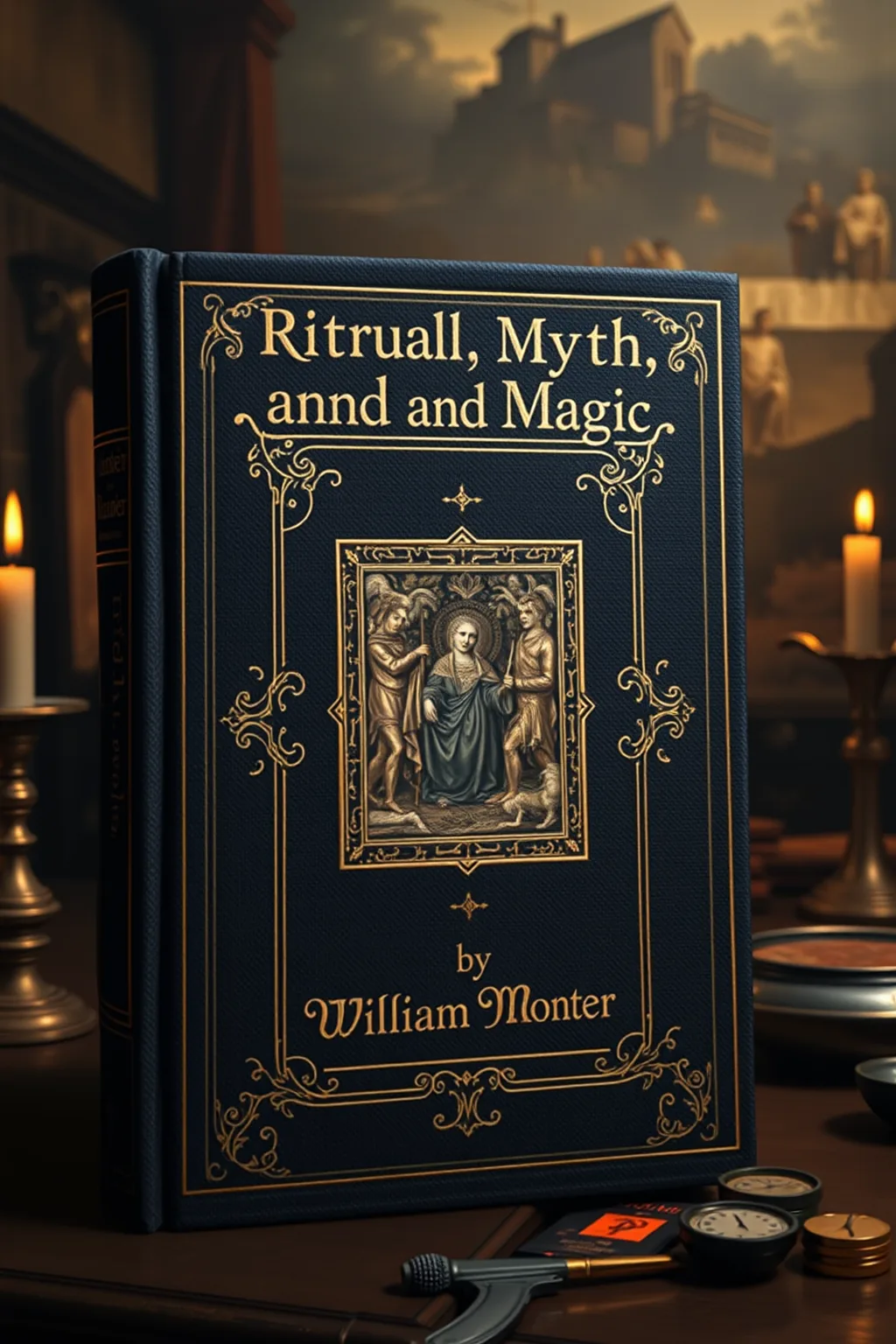
Ritual, myth and magic in early modern Europe
 61
61

Ritual, myth and magic in early modern Europe


By Aurelia Blackwood (Occult Philosophy Critic) — William Monter’s "Ritual, Myth, and Magic in Early Modern Europe" is a masterclass in contextualizing esoteric practices within historical shifts. He astutely navigates the complex interplay between burgeoning Reformation doctrines and the enduring power of folk magic and ritual. This work offers invaluable insights for scholars of religious history and practitioners seeking to understand the roots of contemporary occult traditions. Monter’s strength lies in his ability to demonstrate how the "magical worldview" was not an anomaly, but an integral part of the intellectual and spiritual landscape. A truly illuminating study for anyone interested in the persistent human drive to understand and influence the unseen.
📝 Description
61
William Monter's 1983 book examines magic and ritual in Early Modern Europe.
William Monter's "Ritual, Myth, and Magic in Early Modern Europe" analyzes the role of esoteric beliefs and practices in the daily lives of people from roughly 1500 to 1800. The book details how magical thinking, religious ritual, and folklore were interwoven with societal structures and individual experiences. Monter argues that these elements were not marginal but central to understanding the period's worldview, influencing everything from popular culture to elite intellectual currents.
He discusses various forms of magic, including divination, witchcraft accusations, and ceremonial practices, alongside the myths and rituals that structured communities. The work illustrates how these esoteric dimensions offered explanations for the unknown and provided frameworks for coping with uncertainty. Monter's research reveals a society where the boundaries between the natural and supernatural were fluid, and where magical beliefs held tangible power.
This book fits within the study of Western Esotericism by examining the persistent influence of magical and occult traditions within a period often characterized by rationalization and the rise of science. Monter shows how, far from being suppressed, these beliefs were active forces shaping social realities, often integrated into or existing alongside established religious frameworks. It demonstrates the continuity of esoteric thought during a time of significant cultural and intellectual upheaval, highlighting its role in popular understanding and practice.
💡 Why Read This Book?
Uncover the secret, ritualistic soul of Early Modern Europe. This book reveals how magic and myth were woven into the fabric of daily life and belief systems, offering a unique lens on historical change. Ideal for scholars, seekers of hidden knowledge, and practitioners interested in the historical roots of Western esotericism.
⭐ Reader Reviews
Honest opinions from readers who have explored this book.
❓ Frequently Asked Questions
What is the primary focus of this book?
The book primarily focuses on the pervasive role of ritual, myth, and magical beliefs in Early Modern European society, examining how these elements intersected with religious, social, and political transformations.
Who was William Monter?
William Monter was a distinguished historian specializing in Early Modern European history, particularly known for his work on witchcraft, magic, and religious conflict during the Renaissance and Reformation periods.
Does the book discuss witchcraft trials?
While not solely focused on trials, the book frequently touches upon the context of witchcraft accusations and beliefs, illustrating how magical thinking influenced perceptions of societal deviance and divine displeasure.
Is this book suitable for beginners in occult studies?
Yes, it provides a solid historical foundation for understanding the evolution of magical thought and practice, making it accessible and informative for those new to esoteric studies.
What historical period does "Early Modern Europe" refer to in this context?
"Early Modern Europe" typically refers to the period from roughly the late 15th century to the late 18th century, encompassing the Renaissance, Reformation, and the Age of Enlightenment.
🔮 Key Themes & Symbolism
The Intertwined Nature of Magic and Religion
This theme explores how, in Early Modern Europe, the boundaries between orthodox religious practice and what was considered 'magic' were often fluid and contested. Monter illustrates how individuals and communities utilized both prayer and incantation, sacred rites and folk charms, to read through the challenges of life, from seeking divine favour to warding off evil. This exploration reveals a worldview where the supernatural was an active force, and the manipulation of hidden energies was an accepted, albeit sometimes feared, aspect of existence, challenging modern dichotomies between faith and the occult.
Symbolism and Esoteric Underpinnings of Society
Monter illuminates the pervasive symbolic language and esoteric undercurrents that permeated Early Modern European society. He demonstrates how ancient symbols, alchemical metaphors, and astrological beliefs were not confined to secret societies but informed art, literature, and even political discourse. This theme explores how hidden knowledge and coded meanings provided frameworks for understanding the cosmos, human destiny, and the divine order, revealing a collection of meaning accessible to those initiated into its secrets, and influencing the collective consciousness in profound ways.
The Reformation's Impact on Belief Systems
This crucial theme examines how the seismic shifts of the Reformation radically altered the range of belief in Early Modern Europe. Monter shows how the dismantling of traditional ecclesiastical authority and the emphasis on individual interpretation of scripture created new spaces for both heightened religious fervor and increased suspicion of 'unorthodox' practices. The book explores how the anxieties and opportunities presented by religious upheaval directly influenced the perception and practice of magic, ritual, and the search for spiritual truths outside established dogma.
💬 Memorable Quotes
Direct passages from the work, attributed to the author.
“The veil between worlds was thinner then.”
— This evocative phrase suggests a time when the perceived separation between the material and spiritual realms was less defined, allowing for greater belief in and interaction with supernatural forces.
“Every ritual held a hidden key.”
— This implies that even common practices contained deeper, esoteric meanings, accessible only through specialized knowledge or initiation, hinting at a symbolic language of the universe.
“Fear and fascination danced in equal measure.”
— This captures the dualistic human response to the unknown and the forbidden – a potent mix of dread and intense curiosity that characterized encounters with the magical and the mystical.
“The Reformation reshaped the sacred landscape.”
— This highlights the profound and transformative effect of the religious changes in the period, altering not just doctrines but the very way people understood and interacted with the divine and the arcane.
“Knowledge was a guarded treasure.”
— This points to the idea that esoteric wisdom was not freely available, but rather possessed by a select few, requiring effort, lineage, or initiation to access and understand.
🌙 Esoteric Significance
Tradition
This work significantly illuminates the historical roots and societal integration of various esoteric traditions that coexisted and influenced each other during Early Modern Europe. It touches upon elements that would later coalesce into Western Esotericism, including remnants of Hermeticism, Neoplatonism, Kabbalah (though often in popular or syncretic forms), and folk magical practices imbued with symbolic and spiritual intent. The book demonstrates that these were not isolated phenomena but deeply woven into the fabric of society, influencing how people understood the cosmos, themselves, and their place within a divinely ordered, yet often mysterious, universe.
Symbolism
The book explores the rich symbolic language that permeated Early Modern European thought and practice. It explores how everyday objects, natural phenomena, and crafted artifacts were imbued with deeper, often esoteric meanings. Symbols from alchemy, astrology, and ancient mythologies served as a framework for understanding complex ideas about transformation, divine order, and hidden energies. Monter reveals how these symbols were not mere decorations but active agents in rituals and beliefs, providing a means to access, communicate with, and influence the unseen forces that governed existence, making the world a living text to be deciphered.
Modern Relevance
Understanding the role of ritual, myth, and magic in Early Modern Europe offers clear insights into enduring human needs and anxieties. It highlights the persistent human drive to find meaning, exert control over the uncontrollable, and connect with something larger than oneself. Monter's work resonates today as we navigate a world saturated with information yet often lacking in spiritual grounding. It reminds us that the desire for hidden knowledge, symbolic understanding, and transformative practices is not a relic of the past but a vital, ongoing aspect of the human condition, relevant to contemporary spirituality, psychology, and cultural studies.
👥 Who Should Read This Book
This key work is essential for a diverse readership. **Scholars of Early Modern History, Religious Studies, and the History of Ideas** will find Monter's rigorous analysis indispensable for understanding the complex interplay of belief systems. **Seekers of Esoteric Knowledge and Practitioners of Western Esotericism** will gain invaluable historical context, tracing the lineage of practices and beliefs back to their formative stages. **General readers with a curiosity about the hidden dimensions of history** will be captivated by the vivid portrayal of a world where the mystical was an integral part of daily life. **Students of folklore and cultural anthropology** will appreciate the exploration of ritual and myth as fundamental human expressions.
📜 Historical Context
Early Modern Europe (roughly 1500-1789) was a period of immense upheaval and transformation, marked by the Renaissance, the Protestant Reformation, the Scientific Revolution, and the Enlightenment. Religious wars raged, empires expanded, and new ideas challenged centuries-old traditions. Within this volatile environment, belief systems were in flux. While the Church's authority was questioned, and nascent scientific inquiry began to offer rational explanations, older cosmological models, magical thinking, and ritualistic practices persisted. The perceived presence of supernatural forces, both divine and diabolical, heavily influenced daily life, impacting everything from medicine and agriculture to law and personal relationships. This era witnessed both the persecution of those deemed to practice forbidden arts and a simultaneous fascination with hidden knowledge, alchemy, astrology, and the occult, creating a complex range of belief and practice that William Monter masterfully unravels.
📔 Journal Prompts
Reflect on a modern-day ritual or belief that might have esoteric underpinnings, and how it connects to historical practices discussed in the book.
Consider how the anxieties of Early Modern Europe (e.g., plague, religious conflict) might mirror contemporary global anxieties, and how people seek solace or control today.
Explore a personal symbol that holds significant meaning for you and consider its potential historical or esoteric connections.
Imagine you are a resident of Early Modern Europe; what would be your primary source of spiritual comfort and guidance, and how might it involve ritual or belief in hidden forces?
How has the modern emphasis on rationality and science impacted our perception of 'magic' and 'myth' compared to the era discussed in the book?
🗂️ Glossary
Reformation
A 16th-century religious movement that led to the establishment of Protestant churches, challenging the authority of the Roman Catholic Church and profoundly reshaping European religious and political landscapes.
Esotericism
Systems of thought and practice that focus on hidden knowledge, spiritual transformation, and often involve symbolic interpretation, secret teachings, and the pursuit of direct experience of the divine or ultimate reality.
Ritual
A set of actions performed in a prescribed order, often with symbolic meaning, typically for religious or ceremonial purposes, aiming to connect with the sacred, invoke spiritual forces, or achieve a specific outcome.
Myth
A traditional story, often concerning the early history of a people or explaining some natural or social phenomenon, typically involving supernatural beings or events and carrying significant cultural or religious meaning.
Toleration
The willingness to accept feelings, habits, or beliefs that are different from one's own; in a historical context, it refers to the acceptance of different religious or political views, often as a response to conflict.
This book appears in 2 collections
🔮 Readers Also Liked
Browse all →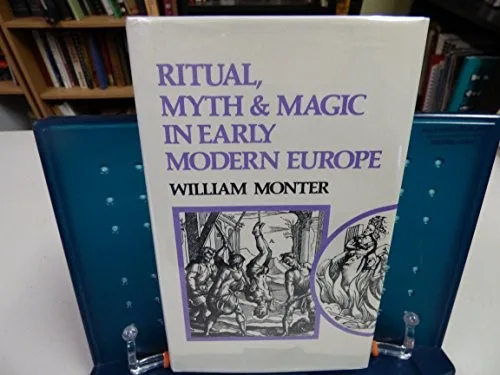






From the “Ritual Magic” Collection
View all →







More Free Magic & Ritual Books
View all →