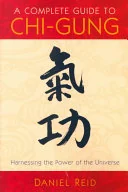
A Complete Guide to Chi-Gung
 76
76

A Complete Guide to Chi-Gung
Daniel Reid’s A Complete Guide to Chi-Gung provides a refreshingly direct approach to a practice often shrouded in esotericism. Unlike many texts that get lost in abstract theory, Reid grounds the reader in the tangible benefits and accessible techniques of chi-gung. The strength of this work lies in its clarity; it demystifies the concept of 'chi' and presents the exercises with straightforward instructions. However, the book’s 2000 publication date means some of its discussions on broader wellness trends might feel slightly dated. A particular strength is the detailed explanation of the Five Element Theory as it applies to chi-gung, offering a practical framework for understanding seasonal health. While it covers the basics thoroughly, readers seeking advanced esoteric interpretations might need to look elsewhere. Nevertheless, for anyone looking to start a chi-gung practice with a solid foundation, this guide is a valuable resource.
📝 Description
76
Daniel Reid's 2000 guide demystifies chi-gung, moving beyond exercise to its spiritual dimensions.
Published in 2000, A Complete Guide to Chi-Gung by Daniel Reid examines the ancient Chinese practice of cultivating vital energy, known as 'chi' or 'qi'. Reid presents chi-gung not just as a health regimen but as a holistic system for achieving balance and longevity, rooted in philosophical and spiritual discipline. The book traces the practice's historical and cultural development within traditional Chinese medicine and Taoist philosophy, showing its evolution over centuries and integration with various schools of thought.
This guide is suited for individuals interested in Eastern philosophies, alternative health, and the energetic aspects of physiology. It offers accessible instruction and theoretical grounding for novices and those with prior experience in Qigong. The text addresses practitioners aiming for improvements in physical health, mental clarity, and spiritual development, explaining core concepts like chi, yin and yang, and the meridian system.
This book situates chi-gung within the broader context of Taoist internal alchemy and cultivation practices. It links the physical movements and breathing techniques to the energetic flows described in traditional Chinese medicine and philosophical texts. Reid connects the practice to concepts of harmonizing body, mind, and spirit, reflecting a long tradition of seeking longevity and spiritual refinement through energetic work.
💡 Why Read This Book?
• Gain a clear understanding of 'chi' and its role in health, as explained through the foundational concepts detailed in the book's exploration of traditional Chinese medicine. • Learn practical exercises and breathing techniques that directly correlate to cultivating vital energy, as presented in the core practices section. • Discover the historical lineage of chi-gung, understanding its roots in Taoist philosophy and its evolution over centuries, offering a deeper appreciation for the practice's origins.
⭐ Reader Reviews
Honest opinions from readers who have explored this book.
❓ Frequently Asked Questions
What is the primary goal of practicing Chi-Gung according to Daniel Reid's guide?
The primary goal, as detailed in A Complete Guide to Chi-Gung, is to cultivate and balance vital energy ('chi' or 'qi') within the body to promote health, longevity, and inner harmony.
Is A Complete Guide to Chi-Gung suitable for beginners with no prior knowledge?
Yes, the guide is designed to be accessible to beginners, explaining basic concepts like chi and the meridian system with clarity, making it a good starting point for newcomers.
When was A Complete Guide to Chi-Gung first published?
Daniel Reid's A Complete Guide to Chi-Gung was first published in March 2000, making it a contemporary introduction to the ancient practice.
What role does breathing play in Chi-Gung as described in the book?
Breathing is presented as a crucial element, working in conjunction with movement and intention to regulate the flow of chi, as emphasized throughout the book's practical sections.
Does the book cover the philosophical underpinnings of Chi-Gung?
Yes, it delves into the philosophical and spiritual aspects, linking chi-gung to Taoist principles and its role in achieving balance and longevity, not just physical fitness.
What is 'qi' as explained in Daniel Reid's guide?
'Qi' (or 'chi') is described as the fundamental vital energy or life force that animates all living things, and the practice of chi-gung aims to cultivate and balance its flow.
🔮 Key Themes & Symbolism
Cultivating Vital Energy (Chi)
The central theme revolves around the concept of 'chi', the vital life force. Daniel Reid meticulously explains how chi-gung practices, through specific movements, breathwork, and mental focus, are designed to gather, refine, and circulate this energy throughout the body. The text elaborates on the belief that a robust and balanced flow of chi is directly linked to physical vitality, emotional equilibrium, and mental clarity, positioning chi-gung as a direct method for enhancing one's fundamental life force.
Mind-Body Harmony
A significant focus is placed on the intrinsic connection between the mind and the body. The book illustrates how chi-gung techniques encourage practitioners to achieve a state of unified awareness, where intention and physical action are synchronized. This integration is presented as essential for optimal health, enabling the body to respond effectively to the energy cultivation practices and fostering a profound sense of inner peace and presence.
Longevity and Health
The guide strongly emphasizes chi-gung's role as a path to sustained health and extended lifespan. It details how the regular practice of specific exercises and mindful breathing can strengthen internal organs, improve circulation, boost the immune system, and prevent the stagnation of energy that contributes to illness. The work presents chi-gung not as a cure-all, but as a consistent lifestyle practice for maintaining vitality and well-being over time.
Taoist Philosophical Roots
The book anchors chi-gung within its rich Taoist philosophical framework. It explores how principles like the balance of yin and yang, the flow of the Tao, and the energetic nature of the universe inform the practice. Understanding these underpinnings, as presented in the text, allows practitioners to engage with chi-gung on a deeper, more meaningful level, recognizing it as an embodiment of ancient wisdom for living in accordance with natural principles.
💬 Memorable Quotes
Direct passages from the work, attributed to the author.
“Chi is the fundamental vital energy that animates all life.”
— This foundational statement defines the core concept of the practice, highlighting 'chi' as the essential life force that practitioners aim to cultivate and balance through specific exercises.
“Movement, breath, and mind work in concert to regulate energy flow.”
— This expresses the triadic approach of chi-gung, indicating that the effective practice involves the synchronized application of physical motion, controlled respiration, and focused intention.
“The meridian system is the energetic pathway within the body.”
— This defines a key anatomical concept within the practice, explaining that chi flows through specific channels, much like blood circulates through vessels, and these pathways are central to energy regulation.
“Yin and Yang represent the complementary forces governing the universe and the body.”
— This explains a fundamental Taoist principle that is integrated into chi-gung, illustrating how the interplay of opposing yet interconnected forces is crucial for maintaining balance and health.
💡 Key Ideas
Editorial paraphrase of the work's core concepts — not direct quotes.
Health and longevity are the natural results of balanced chi.
This paraphrased concept suggests that by harmonizing the body's vital energy, one naturally moves towards a state of optimal physical well-being and a prolonged, healthy life.
🌙 Esoteric Significance
Tradition
Chi-Gung is deeply rooted in Taoist traditions, a major lineage within esoteric Chinese philosophy. Reid's work aligns with this by presenting chi-gung as a method for cultivating 'qi', the vital life force, which is central to Taoist cosmology and internal alchemy. It emphasizes harmony with the Tao, the natural order of the universe, through practices designed to balance yin and yang energies within the practitioner. The book thus acts as a bridge, bringing these ancient Taoist principles and their practical energetic applications to a contemporary, often Western, audience.
Symbolism
Key symbols in chi-gung, as explored in the text, include the concept of 'qi' itself, often visualized as flowing light or breath, representing vital energy. The principles of 'yin' and 'yang' are fundamental, symbolizing the dualistic, complementary forces that must be kept in balance for health. The meridian system, though more anatomical, functions symbolically as the energetic pathways or 'rivers' through which 'qi' flows, and blockages are seen as precursors to illness, much like stagnant water.
Modern Relevance
In contemporary wellness circles, chi-gung continues to be highly relevant, drawing on the foundational principles outlined in works like Reid's. Modern practitioners and researchers in fields like somatic therapy, mindfulness-based stress reduction, and even certain branches of sports science are increasingly investigating and incorporating the mind-body integration techniques that chi-gung embodies. The emphasis on accessible, low-impact movement for stress reduction and energetic balance resonates strongly with current trends in preventative healthcare and holistic well-being.
👥 Who Should Read This Book
• Individuals seeking a practical, accessible introduction to the ancient Chinese practice of cultivating vital energy, looking to improve their physical health and mental clarity. • Practitioners of other mind-body disciplines, such as yoga or tai chi, who wish to broaden their understanding of energetic cultivation and its philosophical underpinnings. • Those interested in Taoist philosophy and traditional Chinese medicine, wanting to explore how these ancient systems can be applied for personal well-being and longevity.
📜 Historical Context
Published in 2000, Daniel Reid's A Complete Guide to Chi-Gung emerged during a period of increasing global interest in complementary and alternative medicine, particularly from Eastern traditions. The late 20th century saw a surge in the popularity of practices like acupuncture, tai chi, and qigong in the West, driven by a growing dissatisfaction with purely materialistic approaches to health and a desire for holistic well-being. Reid's work contributed to this trend by offering a detailed, accessible guide to chi-gung, which had been gaining traction alongside its more widely known cousin, tai chi. While figures like Dr. Yang, Jwing-ming were also influential in popularizing Chinese martial arts and internal energy cultivation, Reid's approach focused specifically on the health and longevity aspects of chi-gung. The book aimed to explain the practice for a Western audience, presenting its philosophical underpinnings and practical applications without extensive jargon, positioning it as a valuable tool for self-care and personal development in a rapidly modernizing world.
📔 Journal Prompts
Reflect on the concept of 'chi' and how it might manifest in your daily life.
Consider the relationship between physical movement and mental focus in your own experience.
Explore the Taoist principle of balancing yin and yang energies within your personal routines.
How might the meridian system, as described, relate to physical sensations you experience?
Analyze the role of breathwork in achieving a state of calm or focus.
🗂️ Glossary
Chi (Qi)
The fundamental vital energy or life force that permeates all things. In chi-gung, the practice aims to cultivate, balance, and circulate chi for health and longevity.
Yin and Yang
Two fundamental, complementary, and interdependent forces or principles in Taoist philosophy. Yin represents passive, dark, and cool aspects, while Yang represents active, light, and warm aspects. Their balance is crucial for health.
Meridian System
A network of invisible pathways within the body through which vital energy (chi) flows. Similar to blood vessels, these meridians are central to traditional Chinese medicine and chi-gung practice.
Tao (Dao)
The fundamental principle of the universe in Taoism; the 'Way'. It represents the natural order, the source, and the driving force of all existence, which chi-gung seeks to align with.
Longevity
The state of living for a long time. In the context of chi-gung, it is considered a natural outcome of cultivating and balancing vital energy, leading to sustained health and vitality.
Esoteric
Intended for or likely to be understood by only a small number of people with a specialized knowledge or interest. In this context, referring to the inner, spiritual, or hidden aspects of chi-gung.
Holistic
Characterized by the belief that the parts of something are intimately interconnected and explicable only by reference to the whole. Applied to chi-gung, it means treating the body, mind, and spirit as an integrated system.
This book appears in 1 collection
🔮 Readers Also Liked
Browse all →




![Protected landscapes and cultural amb [i.e. and] spiritual values](/img/thumb/protected-landscapes-and-cultural-amb-ie-and-spiritual-values-josep-maria-mallarach-i-carrera-064609.webp)



From the “Qi Gong” Collection
View all →



More Free Occult Philosophy Books
View all →