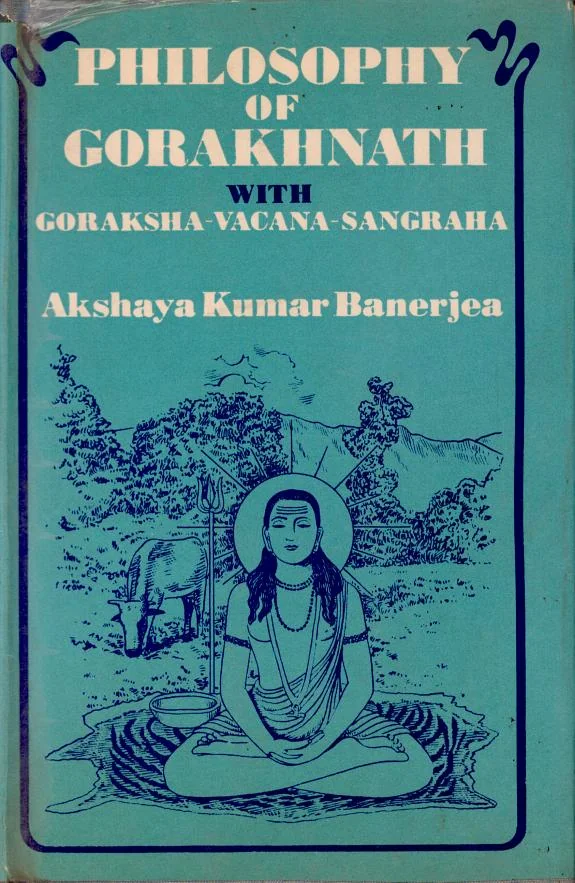
Philosophy of Gorakhnath with Goraksha-Vacana-Sangraha
 77
77

Philosophy of Gorakhnath with Goraksha-Vacana-Sangraha
Akshaya Kumar Banerjea's "Philosophy of Gorakhnath with Goraksha-Vacana-Sangraha" presents a thorough, if dense, academic study of a crucial yet often overlooked segment of Indian spirituality. The book's greatest strength lies in its detailed exploration of the Kanphata Yogi cult, its history, and its doctrines, providing a solid foundation for understanding this ascetic tradition. The inclusion of the Sanskrit text Goraksastaka with English rendering and annotations is invaluable for serious researchers. However, the prose, while accurate, can be dry, occasionally making the philosophical concepts feel more like historical artifacts than living teachings. A passage discussing the yogic body's transformation through practice, while informative, lacks the experiential depth one might hope for in a text on yogic philosophy. Ultimately, Banerjea delivers a foundational text for academic study, less so for spiritual seekers.
📝 Description
77
Akshaya Kumar Banerjea's 1983 study examines the philosophy of Gorakhnath and the Kanphata Yogi sect.
This book presents a scholarly study of Gorakhnath and the Kanphata Yogi sect, a distinct branch within Hinduism. It provides historical and philosophical context for this tradition, detailing its origins, development, and practices. The work situates the Kanphata Yogis within the broader scope of Indian religious history, highlighting their impact on spiritual discourse.
Key philosophical concepts of Gorakhnath are unpacked, including his integration of Nath traditions and his influence on Hatha Yoga. The text analyzes specific ideas such as the yogic body, the importance of the Guru, and the path to liberation through dedicated practice. This examination is valuable for scholars of Indian religions, students of yoga philosophy, and those interested in ascetic traditions.
This work engages with the historical and philosophical underpinnings of the Nath Sampradaya, a significant Siddha tradition within Indian yogic and Tantric traditions. It focuses on Gorakhnath, a pivotal figure often credited with codifying Hatha Yoga and influencing medieval Indian mysticism. The book traces the lineage and teachings of the Kanphata Yogis, a prominent ascetic order that emerged from this tradition, examining their unique doctrines and practices related to spiritual realization.
💡 Why Read This Book?
• Gain a foundational understanding of the Kanphata Yogi sect, a distinct spiritual lineage within Hinduism, as detailed in chapters 1-13. • Explore the philosophical underpinnings of Gorakhnath's teachings, including his views on the yogic body and liberation, as presented in the work. • Access the Sanskrit text Goraksastaka with English annotations, providing direct engagement with primary source material for comparative study.
⭐ Reader Reviews
Honest opinions from readers who have explored this book.
❓ Frequently Asked Questions
What is the primary focus of the "Philosophy of Gorakhnath with Goraksha-Vacana-Sangraha"?
The book focuses on the Kanphata Yogi cult, a distinct group within Hinduism, and explores the philosophy and teachings of Gorakhnath, a key figure in this tradition.
When was this book first published?
This significant work by Akshaya Kumar Banerjea was first published in 1983.
What does the "Goraksha-Vacana-Sangraha" section contain?
The third section of the book includes the Sanskrit text Goraksastaka, its English rendering, and scholarly annotations, offering direct insight into Gorakhnath's teachings.
Who are the Kanphata Yogis?
The Kanphata Yogis are a sect within Hinduism known for their distinctive practices and beliefs, with Gorakhnath being a central figure in their spiritual lineage.
Is this book suitable for beginners in yoga studies?
While it provides historical and philosophical context, the book is academically oriented and best suited for those with some prior knowledge or a scholarly interest in yoga and Indian religious history.
What kind of documentation can be found in the book?
The book is fully documented, featuring a preface, a glossary of terms, a bibliography for further research, and illustrative plates.
🔮 Key Themes & Symbolism
The Kanphata Yogi Tradition
This work meticulously details the Kanphata Yogis, a significant ascetic sect within Hinduism. It traces their history, organizational structure, and unique practices, particularly their initiation rituals involving ear-piercing, which gives them their name ('split-ear'). The book positions this cult as a vital component for understanding the diverse religious field of India, highlighting its distinct theological and practical departures from mainstream Brahmanical traditions.
Gorakhnath's Philosophical Synthesis
Central to the book is the exploration of Gorakhnath's philosophical contributions. Banerjea examines how Gorakhnath synthesized various yogic and tantric traditions, forming the basis of the Nath Sampradaya. Key concepts such as the importance of the Guru, the nature of the subtle body (including chakras and nadis), and the yogic path to liberation (moksha) through Hatha Yoga are elucidated, offering a structured view of his teachings.
Hatha Yoga and Ascetic Practices
The book provides an in-depth look at the practices associated with Gorakhnath and his followers, particularly within the area of Hatha Yoga. It discusses the physical postures (asanas), breath control (pranayama), and meditative techniques aimed at achieving spiritual realization and siddhis (supernatural powers). The ascetic lifestyle and the rigorous discipline required for these practices are emphasized as essential for spiritual advancement.
Primary Texts and Scholarship
A significant aspect of this study is its engagement with primary Sanskrit texts, notably the Goraksastaka (Goraksha-Vacana-Sangraha). By presenting the original Sanskrit alongside English translations and detailed annotations, Banerjea offers scholars direct access to foundational Natha literature. This scholarly apparatus, including a comprehensive bibliography and glossary, underscores the book's value as a rigorously documented academic resource.
💬 Memorable Quotes
Direct passages from the work, attributed to the author.
“The cult of the Kanphata Yogis is a definite unit within Hinduism.”
— This statement highlights the distinct identity and organized structure of the Kanphata Yogis, emphasizing that their practices and beliefs form a coherent and recognizable tradition within the broader spectrum of Hindu religious life.
“Study of this phase of the religious life of India is essential.”
— This underscores the academic and spiritual importance of understanding the Kanphata Yogis, suggesting that a comprehensive grasp of Indian religious history and practice is incomplete without acknowledging this specific ascetic lineage and its philosophical contributions.
“The third section opens with the Sanskrit Text Goraksastaka and its English rendering and annotations.”
— This points to the book's scholarly rigor, offering direct access to a key primary text of Gorakhnath's teachings in its original language, accompanied by scholarly explanations to aid understanding.
“The book is fully documented.”
— This assures the reader of the work's academic credibility, indicating that it relies on thorough research, citations, and includes scholarly apparatus like a bibliography and glossary.
“The cult and history of this sect are dealt with in the first two sections.”
— This provides a clear structural overview of the book's content, guiding the reader on where to find information regarding the historical development and societal context of the Kanphata Yogi movement.
🌙 Esoteric Significance
Tradition
This work examines the Nath Sampradaya, a significant esoteric lineage within Indian Tantra and Yoga. While distinct from the more widely known paths like Vedanta or classical Yoga (Patanjali), the Nath tradition, championed by figures like Gorakhnath, represents a powerful current of asceticism and yogic practice focused on achieving liberation and supernatural powers (siddhis) through a mix of Hatha Yoga, Tantra, and devotional elements.
Symbolism
Key symbols explored include the *hamsa* (swan), often representing the soul or divine breath, and the *bindu* (drop), symbolizing cosmic unity and potential. The concept of the subtle body, with its *chakras* (energy centers) and *nadis* (energy channels), is central, visualized as a microcosm of the universe, whose purification leads to spiritual awakening. The act of piercing the ears itself symbolizes a profound break from the mundane world.
Modern Relevance
Contemporary Hatha Yoga practitioners and scholars of esoteric traditions continue to draw from the foundational teachings attributed to Gorakhnath. Modern yoga studios often incorporate asanas and pranayama techniques that have roots in this tradition. Furthermore, scholars examining the history of asceticism and non-dual philosophies in India find Banerjea's work essential for understanding the enduring influence of the Nath yogis on both orthodox and heterodox spiritual paths.
👥 Who Should Read This Book
• Students of comparative religion and Indian philosophy seeking to understand distinct ascetic movements within Hinduism. • Yoga practitioners interested in the historical and philosophical roots of Hatha Yoga and the teachings of influential yogis like Gorakhnath. • Researchers in religious studies requiring a documented, scholarly examination of the Kanphata Yogi sect and its textual traditions.
📜 Historical Context
Published in 1983, Akshaya Kumar Banerjea's work emerged during a period of increasing academic interest in Indian religious traditions, particularly yogic and tantric lineages. The late 20th century saw scholars like Mircea Eliade (whose work on Yoga was influential) and Georg Feuerstein contributing to the Western understanding of these practices. Banerjea's book arrived as a detailed, documented study focused specifically on the Kanphata Yogis, a sect often viewed as heterodox by mainstream Brahmanical Hinduism. While other scholars were exploring broader yogic traditions, Banerjea provided a specific historical and philosophical examination of this distinct group, offering critical insights into their unique place within the Indian subcontinent's spiritual landscape. The book's meticulous documentation and inclusion of Sanskrit texts aimed to solidify its standing within academic circles, countering potential dismissals of the sect's significance.
📔 Journal Prompts
The Kanphata Yogi cult's historical position.
Gorakhnath's synthesis of yogic and tantric elements.
The significance of the Goraksastaka text.
The ascetic practices of the Nath Sampradaya.
The role of the Guru in Gorakhnath's philosophy.
🗂️ Glossary
Kanphata Yogis
A sect within Hinduism, followers of Gorakhnath, distinguished by the ritual piercing of their earlobes. They are known for their ascetic practices and distinct yogic philosophy.
Gorakhnath
A legendary yogi and the most prominent figure of the Nath Sampradaya. His teachings form the philosophical basis for the Kanphata Yogis and significantly influenced Hatha Yoga.
Goraksha-Vacana-Sangraha
A collection of sayings or teachings attributed to Gorakhnath, serving as a primary textual source for understanding his philosophy and the Nath tradition.
Hatha Yoga
A branch of yoga focusing on physical postures (asanas), breath control (pranayama), and purification techniques, often seen as a preparatory path for Raja Yoga or spiritual liberation.
Nath Sampradaya
A lineage of ascetics and yogis founded by Matsyendranath and greatly developed by Gorakhnath, emphasizing Hatha Yoga and Tantric practices for spiritual attainment.
Asana
A posture or pose, particularly in the context of Hatha Yoga, intended to promote physical health, stability, and spiritual awareness.
Pranayama
The practice of breath control and regulation in yoga, considered essential for managing vital energy (prana) and achieving mental focus.
This book appears in 1 collection
🔮 Readers Also Liked
Browse all →









From the “Hatha Yoga” Collection
View all →







More Free Occult Philosophy Books
View all →