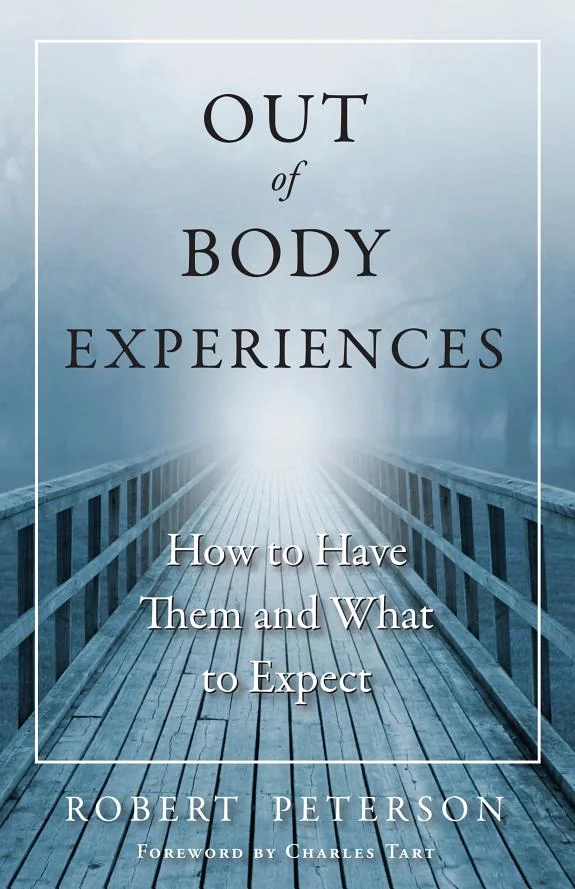
Out-of-Body Experiences
 79
79

Out-of-Body Experiences
Peterson's "Out-of-Body Experiences" offers a necessary primer on a subject often relegated to the fringes of speculative thought. The strength of this manual lies in its systematic approach, grounding anecdotal evidence in an accessible, practical framework. Peterson avoids sensationalism, instead presenting OBEs as a spectrum of human experience worthy of serious consideration. A particularly compelling section details the "silver cord" phenomenon, a common yet often unexplained element reported by experiencers, which Peterson unpacks with careful analysis rather than dogma. However, the work could benefit from a more robust engagement with the philosophical implications of consciousness dissociation, potentially offering more varied interpretations beyond the purely experiential. It successfully consolidates existing knowledge but doesn't venture significantly into uncharted theoretical territory.
Ultimately, it serves as a solid, pragmatic introduction to the mechanics and phenomenology of OBEs.
📝 Description
79
Robert Peterson's 1997 book examines out-of-body experiences, distinguishing them from dreams.
Robert Peterson's work offers a structured look at out-of-body experiences (OBEs). He differentiates these subjective events from ordinary dreams or hallucinations. The book considers their possible causes and what they might mean for our understanding of consciousness. Peterson addresses individuals who have had spontaneous OBEs and want to comprehend them better. It also speaks to those interested in consciousness separate from the physical body. Researchers studying altered states and spiritual seekers interested in astral projection will find relevant material here. The book bridges the gap between psychological inquiry and metaphysical questions.
Peterson details common elements reported by people who have OBEs. These include feelings of floating, encounters with spiritual figures, and the sense of traveling to different places or dimensions. He also discusses methods for intentionally inducing these experiences. The text clarifies the differences between OBEs, lucid dreaming, and astral projection. It provides ways to think about the subjective nature of these altered states.
Reports of consciousness separating from the body span centuries and cultures, from ancient shamanism to modern near-death experience studies. Peterson places contemporary discussions of OBEs within this long history. He references earlier accounts and the work of figures who studied consciousness before the modern era. This book connects these historical threads to current investigations into altered states and the nature of awareness.
💡 Why Read This Book?
• Understand the distinct characteristics of Out-of-Body Experiences (OBEs) as detailed in Chapter 2, separating them from dreams and hallucinations, allowing for accurate self-assessment of personal experiences. • Learn about the historical documentation of OBEs, referencing early accounts and pioneers like Robert Monroe, providing context for the phenomenon's enduring presence across cultures. • Explore practical techniques for intentional OBE induction, as outlined in the latter chapters, offering a structured approach for those seeking to consciously engage with these states.
⭐ Reader Reviews
Honest opinions from readers who have explored this book.
❓ Frequently Asked Questions
What is the difference between an Out-of-Body Experience and a dream?
While both involve subjective consciousness, OBEs are typically characterized by a distinct sense of self-awareness and a perception of existing outside the physical body, often with a feeling of lucidity not always present in dreams. Peterson's book details these differentiating factors in Chapter 2.
Are Out-of-Body Experiences common?
Peterson notes that spontaneous OBEs are reported with increasing frequency, especially from childhood. They are also a common feature of near-death experiences, suggesting a broader human capacity for such phenomena than often acknowledged.
Can anyone have an Out-of-Body Experience?
The book suggests that while some individuals experience OBEs spontaneously, others can learn to induce them through specific mental techniques and practices. Peterson outlines several of these methods for readers to explore.
What is the 'silver cord' often mentioned in OBE accounts?
The silver cord is a frequently reported metaphysical connection linking the out-of-body consciousness to the physical body. Peterson discusses its symbolic and functional interpretations within the context of OBE phenomenology.
Is Robert Peterson's book suitable for beginners?
Yes, "Out-of-Body Experiences" is designed as a comprehensive manual. It begins with foundational concepts and historical context, making it accessible for those new to the subject while offering depth for more experienced explorers.
Where does Robert Peterson's work fit within the history of consciousness studies?
Peterson's 2013 publication builds upon the work of earlier researchers like Robert Monroe, who pioneered scientific study of OBEs starting in the 1970s. It represents a contemporary synthesis of anecdotal reports and experimental findings.
🔮 Key Themes & Symbolism
Phenomenology of OBEs
The book meticulously details the subjective qualities of out-of-body experiences, distinguishing them from dreams and hallucinations. It explores common sensory perceptions, such as the sensation of floating, auditory phenomena, and visual apparitions. Peterson categorizes these experiences, providing a framework for understanding the diverse range of phenomena reported by individuals, from mild dissociation to vivid astral journeys.
Historical Precedents
Peterson contextualizes modern OBE research within a long history of human accounts of disembodied consciousness. He references ancient spiritual traditions and shamanic practices that involved altered states and perceived separation from the physical form. This historical perspective underscores the enduring nature of these experiences across cultures and time periods.
Induction Techniques
A significant portion of the work is dedicated to practical methods for intentionally inducing OBEs. Peterson outlines various techniques, often involving focused relaxation, visualization, and specific mental exercises designed to facilitate the separation of consciousness from the physical body. The emphasis is on controlled practice and understanding the mental states conducive to such experiences.
Near-Death Experiences
The text acknowledges the strong correlation between OBEs and near-death experiences (NDEs). Peterson discusses how the phenomena reported during NDEs often align with classic OBE descriptions, including out-of-body perception, encounters with spiritual beings, and feelings of peace. This connection highlights the potential significance of OBEs in understanding consciousness at the threshold of life and death.
💬 Memorable Quotes
Direct passages from the work, attributed to the author.
“OBEs are a typical feature of near-death experiences and have been described as beautiful, painless, and ecstatic.”
— This statement emphasizes the profound and often positive nature of these experiences, particularly in the context of life-threatening events, suggesting a potential spiritual or transcendent dimension.
“In recent times, modern researchers like Robert Monroe have pioneered the scientific study and practice of OBEs.”
— This highlights the shift towards empirical investigation of subjective phenomena, crediting Monroe's foundational work in bringing OBEs into the area of scientific inquiry and practical exploration.
“Increasingly, people are remembering spontaneous OBEs, especially from early childhood.”
— This observation points to a growing awareness and reporting of these experiences, suggesting they might be more prevalent than previously thought and may have origins in formative developmental stages.
“Throughout history, people have reported spiritual experiences that we now identify as out-of-body experiences or OBEs.”
— This frames OBEs not as a new phenomenon but as a recurring aspect of human spirituality and consciousness that has been interpreted through various cultural and religious lenses over millennia.
“This is the comprehensive manual for inducing out of body...”
— This phrase suggests the book aims to be a practical, in-depth guide, offering detailed instructions and methods for readers interested in actively exploring or achieving out-of-body states.
🌙 Esoteric Significance
Tradition
Peterson's work draws heavily from the modern esoteric tradition focused on consciousness exploration, particularly influenced by figures like Robert Monroe and the broader New Age movement. While not strictly adhering to a single lineage like Hermeticism or Theosophy, it aligns with their interest in non-physical realities and the potential of the human mind to transcend physical limitations. It represents a pragmatic, less dogmatic approach to astral projection and related phenomena.
Symbolism
Key symbols include the "silver cord," often depicted as an ethereal link connecting the out-of-body consciousness to the physical body, signifying vital connection and the return pathway. The concept of "astral travel" itself is symbolic of the soul's potential freedom and exploration beyond material constraints. Encounters with "guides" or non-physical entities can symbolize aspects of the subconscious or higher self, offering insights or assistance.
Modern Relevance
Peterson's manual remains relevant for contemporary practitioners of lucid dreaming, astral projection, and consciousness hacking. It informs discussions in transpersonal psychology and offers a foundational text for those exploring the boundaries of perception. Its practical, step-by-step approach appeals to a generation interested in experiential spirituality and the scientific validation of subjective states, echoing the work of contemporary researchers in altered states.
👥 Who Should Read This Book
• Individuals who have experienced spontaneous OBEs and seek to understand the phenomenon better, gain context from historical accounts, and potentially learn controlled induction methods. • Explorers of consciousness and altered states interested in the scientific and experiential aspects of non-physical perception, building upon foundational work like Robert Monroe's. • Researchers or students of comparative religion and psychology interested in documented subjective experiences that challenge conventional models of mind and reality.
📜 Historical Context
Published in 2013, Robert Peterson's "Out-of-Body Experiences" emerged during a period of renewed academic and popular interest in consciousness studies, building upon decades of research. The late 20th century saw figures like Robert Monroe popularize the concept of astral projection and OBEs through organizations like the Monroe Institute, which began its work in the 1970s. Peterson's work implicitly engages with the burgeoning field of parapsychology and the scientific exploration of altered states, often contrasted with more skeptical psychological or neurological explanations. While not directly engaging in public debate, the book's existence reflects a broader cultural acceptance and curiosity about phenomena once confined to esoteric circles, paralleling developments in research into near-death experiences pioneered by figures like Raymond Moody. Its publication provided a structured, accessible resource for a public increasingly exposed to these ideas through popular culture and personal accounts.
📔 Journal Prompts
The sensation of the 'silver cord' in relation to your physical anchor.
Recollections of spontaneous OBEs from childhood, referencing Peterson's observations.
The distinction between perceived astral travel and vivid dream states.
Potential interpretations of encounters with non-physical entities during OBEs.
The role of focused relaxation and visualization in achieving altered states, as detailed by Peterson.
🗂️ Glossary
Out-of-Body Experience (OBE)
A subjective experience in which an individual perceives their consciousness as being located outside their physical body, often accompanied by a sense of detachment and independent awareness.
Astral Projection
A term often used interchangeably with OBE, referring to the belief that consciousness or a non-physical body (astral body) can travel independently of the physical form to other locations or dimensions.
Silver Cord
A metaphysical, often visualized, connection linking the out-of-body consciousness or astral body to the physical body, believed by some to be essential for maintaining life and facilitating a return.
Lucid Dreaming
A state of dreaming in which the dreamer is aware that they are dreaming and may sometimes exert control over the dream narrative or environment.
Near-Death Experience (NDE)
A profound personal experience associated with events involving actual or imminent death, which often includes phenomena like OBEs, a sense of peace, and encountering spiritual beings.
Vibration Stage
A commonly reported pre-OBE phenomenon characterized by intense physical vibrations or buzzing sensations experienced by the individual.
Separation Stage
The point in an OBE where the individual feels their consciousness or non-physical body disengages from the physical body.
This book appears in 1 collection
🔮 Readers Also Liked
Browse all →









From the “Astral Projection” Collection
View all →








More Free Occult Philosophy Books
View all →