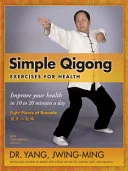
Simple Qigong Exercises for Health
 72
72

Simple Qigong Exercises for Health
Jwing-Ming Yang's "Simple Qigong Exercises for Health" offers a practical entry point into the "Eight Pieces of Brocade." The inclusion of both sitting and standing versions is a significant strength, acknowledging diverse physical needs and environments. Yang’s methodical approach, a hallmark of his extensive work in Qigong, ensures clarity for novices. However, the text occasionally leans towards a purely physiological explanation, potentially underemphasizing the deeper energetic and philosophical underpinnings that are central to Qigong's traditional context. A passage detailing the "Raising the Sky" posture, for instance, effectively describes the physical mechanics but could benefit from a more robust exploration of its symbolic connection to heaven and earth. Despite this limitation, the book succeeds in demystifying a powerful healing art for the uninitiated.
📝 Description
72
Jwing-Ming Yang's 2023 book presents the 'Eight Pieces of Brocade' Qigong.
This volume introduces Qigong, a Chinese practice that combines movement, breathing, and intention. It focuses on the 'Eight Pieces of Brocade' (Ba Duan Jin), a well-known set of exercises for health. The book shows this routine in both seated and standing forms, making it adaptable for different people. Its goal is to guide beginners in developing internal energy, improving physical health, and finding mental calm through regular practice.
The book is for people new to Qigong or those wanting a simple way to start a daily routine. It suits individuals interested in overall health, managing stress, and gentle exercise. Those who find intense workouts difficult will find the low-impact nature of the 'Eight Pieces of Brocade' helpful. It also appeals to anyone interested in traditional Chinese medicine and its concepts of energy flow.
The 'Eight Pieces of Brocade' is an old Qigong form dating back to the Song Dynasty (960-1279 AD). Its continued use shows its effectiveness and how easily it can be adapted. Qigong itself is part of a broader tradition in Chinese culture that influences martial arts, medicine, and spiritual growth. This book connects this ancient practice to modern understanding and accessibility.
💡 Why Read This Book?
• Learn the fundamental "Eight Pieces of Brocade" sequence, presented in both sitting and standing formats, enabling a personalized practice regardless of physical condition, as detailed in the 2023 publication. • Understand the core Qigong principle of Qi cultivation and circulation, gaining insight into how specific movements and synchronized breathing, as explained in the text, can promote internal harmony. • Acquire practical, low-impact exercises for improving health and well-being, directly applicable from the clear instructions provided for each of the eight movements.
⭐ Reader Reviews
Honest opinions from readers who have explored this book.
❓ Frequently Asked Questions
What is Qigong and how does it differ from Tai Chi?
Qigong is an ancient Chinese system of coordinated movement, breath, and meditation used for health, spirituality, and martial arts training. While both Qigong and Tai Chi involve slow, flowing movements and breathwork, Qigong is generally simpler and more focused on cultivating internal energy (Qi), whereas Tai Chi is often a more complex martial art form with specific applications.
What are the 'Eight Pieces of Brocade'?
The 'Eight Pieces of Brocade' (Ba Duan Jin) is one of the most popular and widely practiced Qigong exercise sets. It consists of eight distinct movements designed to improve physical health, flexibility, and the flow of vital energy (Qi) throughout the body.
Can I practice Qigong if I have physical limitations?
Yes, "Simple Qigong Exercises for Health" offers both sitting and standing versions of the 'Eight Pieces of Brocade'. This adaptability makes the practice accessible to individuals with varying physical abilities, allowing them to benefit from Qigong's health advantages.
How long does it take to see benefits from practicing Qigong?
The timeline for experiencing benefits varies per individual and the consistency of practice. However, many practitioners report feeling increased energy, reduced stress, and improved sleep within weeks of regular daily practice, as suggested by the book's focus on accessibility.
Is this book suitable for absolute beginners?
Absolutely. The book is specifically designed for beginners, offering a smart and simplified way to learn Qigong. It breaks down the 'Eight Pieces of Brocade' into manageable steps, making it easy to follow and integrate into daily life.
What is 'Qi' in the context of Qigong?
Qi (pronounced 'chee') is a fundamental concept in traditional Chinese culture, often translated as 'vital energy' or 'life force'. Qigong practices aim to cultivate, strengthen, and balance the flow of Qi within the body to promote health and well-being.
🔮 Key Themes & Symbolism
Qi Cultivation
The central theme is the cultivation and circulation of Qi, or vital energy, through specific physical movements and breathwork. The book details how exercises like the "Eight Pieces of Brocade" are designed to harmonize this internal energy, which is believed to be foundational for physical and mental health in traditional Chinese philosophy. Yang explains the mechanics of how posture and breath synchronize to guide Qi through the body's energetic pathways, offering a practical method for beginners to engage with this esoteric concept.
The Eight Pieces of Brocade
This classic Qigong form serves as the primary focus. The work meticulously breaks down the "Eight Pieces of Brocade" (Ba Duan Jin) into accessible sitting and standing sequences. Each movement is presented with clear instructions, emphasizing its role in strengthening the body, improving flexibility, and balancing the flow of Qi. The book highlights the historical significance and widespread application of this particular set of exercises for promoting overall vitality and longevity.
Holistic Health Practice
Beyond mere physical exercise, the book frames Qigong as a holistic practice contributing to comprehensive well-being. It underscores the interconnectedness of mind, body, and spirit, suggesting that consistent practice can lead to reduced stress, enhanced mental clarity, and improved physical resilience. The emphasis on gentle, accessible movements makes it a viable option for individuals seeking natural health solutions that integrate seamlessly into daily life.
Beginner Accessibility
A key theme is making Qigong accessible to newcomers. The author's approach prioritizes clarity and simplicity, clarifying complex energetic concepts. By offering both sitting and standing options for the "Eight Pieces of Brocade," the book ensures that individuals of different ages and physical conditions can engage with the practice. This focus on ease of learning is designed to encourage consistent engagement and foster a lasting habit.
💬 Memorable Quotes
Direct passages from the work, attributed to the author.
“The 'Eight Pieces of Brocade' can be practiced sitting or standing.”
— This statement highlights the adaptability of a core Qigong exercise set, making it accessible to a wider range of practitioners regardless of their physical condition or available space.
“Qigong uses gentle breathing, stretching, and strengthening movements.”
— This concisely defines the fundamental components of Qigong practice, emphasizing its low-impact and holistic approach to health and energy cultivation.
“The book offers a smart way to learn qigong.”
— This interpretation suggests that the author's method provides an intelligent and efficient approach to understanding and practicing Qigong, particularly for those new to the discipline.
“One of the most popular qigong healing exercise sets.”
— This highlights the recognized efficacy and widespread adoption of the 'Eight Pieces of Brocade' within the Qigong community, signaling its value as a healing practice.
💡 Key Ideas
Editorial paraphrase of the work's core concepts — not direct quotes.
Students can improve overall health and well-being.
This paraphrase points to the primary benefit and goal of practicing the exercises presented in the book, focusing on tangible improvements in physical and mental states.
🌙 Esoteric Significance
Tradition
While Qigong is deeply embedded in Taoist traditions, the "Eight Pieces of Brocade" has transcended strict sectarian boundaries to become a widely accessible health practice. Its esoteric significance lies in its function as a method for cultivating and balancing Qi, the vital life force central to Taoist cosmology and traditional Chinese medicine. It serves as a practical application of Taoist principles concerning harmony with nature, the flow of energy, and the interconnectedness of the body's systems, offering a tangible way to engage with these abstract concepts.
Symbolism
The 'Eight Pieces of Brocade' itself is symbolic, with each movement often associated with specific organs or energetic functions. For instance, 'Two Hands Hold Up the Heavens' symbolizes the connection between the human and the cosmic, promoting respiratory health and spinal alignment. 'Drawing the Bow to Shoot the Hawk' is linked to the liver and gallbladder, promoting physical strength and decisiveness. The smooth, flowing nature of the movements, akin to silk, symbolizes the effortless and harmonious circulation of Qi that the practice aims to achieve.
Modern Relevance
In contemporary wellness culture, Qigong, particularly accessible forms like the "Eight Pieces of Brocade," is highly relevant. Practices drawing on Qigong principles are found in mind-body fitness programs, stress-reduction workshops, and complementary health therapies. Thinkers and practitioners in fields like somatic psychology and integrated medicine often incorporate Qigong-inspired movements to address physical and mental health challenges, demonstrating its continued utility beyond its traditional roots.
👥 Who Should Read This Book
['• Beginners seeking a structured and accessible introduction to Qigong, particularly those interested in the "Eight Pieces of Brocade" for health benefits.', '• Individuals looking for gentle, low-impact exercises to improve physical flexibility, strength, and overall well-being, as presented in the sitting and standing formats.', '• Practitioners of other mind-body disciplines (e.g., Tai Chi, Yoga) interested in exploring a complementary ancient Chinese practice focused on energy cultivation.']
📜 Historical Context
The "Eight Pieces of Brocade" (Ba Duan Jin) is a foundational Qigong form with a lineage stretching back to the Song Dynasty (960-1279 AD). Its enduring popularity across centuries speaks to its effectiveness and adaptability in promoting health. While Qigong practices have deep roots in Taoism and traditional Chinese medicine, their dissemination and interpretation have evolved. In the early 20th century, figures like Sun Lutang were instrumental in codifying and popularizing various internal martial arts and Qigong systems, often in response to societal changes and increased interest in physical culture. Yang's 2023 publication places this ancient practice within a modern framework, utilizing contemporary publishing to make it accessible, contrasting with earlier, more specialized transmissions. Reception of Qigong in the West has varied, from academic study by scholars like Livia Kohn to widespread adoption in wellness circles, often divorced from its original philosophical context.
📔 Journal Prompts
The 'Eight Pieces of Brocade' sequence: Identify the sitting versus standing variations.
Qi cultivation: How does synchronized breathing influence your practice?
Gentle movement: Reflect on the difference between stretching and strengthening in Ba Duan Jin.
Beginner accessibility: What makes this Qigong approach suitable for new students?
Holistic health: Connect a specific movement to an intended physical or energetic benefit.
🗂️ Glossary
Qigong
An ancient Chinese system of coordinated movement, breath, and meditation used for health, spirituality, and martial arts training. It focuses on cultivating and balancing the body's vital energy, known as Qi.
Qi
Often translated as 'vital energy' or 'life force,' Qi is the fundamental energetic substance believed to animate all living beings and the universe in traditional Chinese philosophy and medicine.
Eight Pieces of Brocade
Also known as Ba Duan Jin, this is a popular and foundational Qigong exercise set consisting of eight distinct movements designed to improve physical health, flexibility, and Qi circulation.
Ba Duan Jin
The Chinese name for the 'Eight Pieces of Brocade' Qigong set, signifying its importance and widespread practice within Chinese culture.
Meridians
In traditional Chinese medicine, meridians are pathways through which Qi flows throughout the body. Qigong exercises are often designed to open and clear these energetic channels.
Breathing Synchronization
The practice of coordinating breath with physical movements in Qigong. This technique is essential for guiding Qi and deepening the meditative and therapeutic effects of the exercises.
Holistic Health
An approach to health that considers the interconnectedness of mind, body, and spirit, emphasizing that well-being is achieved through balance across all these aspects.
This book appears in 1 collection
🔮 Readers Also Liked
Browse all →









From the “Qi Gong” Collection
View all →




More Free Occult Philosophy Books
View all →