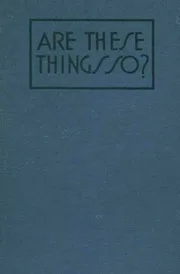
Are These Things So? (SANCTUARY) 1934
 84
84

Are These Things So? (SANCTUARY) 1934


Are These Things So? (SANCTUARY) 1934 by Eugene Nelson is a provocative and deeply troubling read, even by the standards of esoteric literature. The book's primary value lies in its historical significance, serving as a primary source for understanding the occult and anti-Semitic beliefs that were prevalent in the early 20th century. For modern esoteric seekers, the text provides a cautionary tale about the dangers of unchecked paranoia and the manipulation of occult beliefs for political ends. Nelson's vindication of the Protocols of Zion and his support for Germany's actions against 'termites' are particularly chilling, highlighting the dark potential of esoteric thought when divorced from ethical considerations. Despite its flaws, the book offers valuable insights into the mindsets of those who believed in a vast, occult-driven conspiracy against Christian civilization. It is a must-read for anyone interested in the darker side of esoteric history. Rating: 2/5 stars.
📝 Description
84
Eugene Nelson Sanctuary published 'Are These Things So?' in 1934, responding to a 2,000-year-old question.
Published in 1934, Eugene Nelson Sanctuary's 'Are These Things So?' engages with occult philosophy of its time. The book frames itself as an answer to a question posed by a Jewish high priest millennia prior. It examines concepts of hidden knowledge, symbolism, and what the author identified as forces detrimental to Christian belief. Sanctuary refers to these as 'modern termites' of the Homo sapiens variety, a concept associated with the World Alliance Against Jewish Aggressiveness. The text appears to endorse the Protocols of Zion and discusses occult influences perceived to be active globally.
The work includes rich prose and a chart titled 'Agencies and Propaganda.' It cultivates an atmosphere of secrecy and revelation, aimed at readers interested in uncovering hidden truths. Philosophically, the book challenges common understandings and prompts a deeper look into human history and spirituality.
This text emerges from the esoteric currents of the early 20th century, a period marked by intense interest in hidden knowledge and secret societies. It engages with themes prevalent in occult literature of the time, including the interpretation of ancient texts and the identification of veiled forces influencing world events. The book's approach, particularly its linkage of occultism with specific political and religious anxieties, places it within a particular, often controversial, branch of esoteric thought that sought to explain contemporary issues through mystical frameworks.
✍️ Author

SANCTUARY, Eugene Nelson
Bradford Dillman (April 14, 1930 – January 16, 2018) was an American actor and author..
💡 Why Read This Book?
Reading Are These Things So? (SANCTUARY) 1934 today provides a unique perspective on the historical context of anti-Semitic propaganda and occult beliefs. It serves as a reminder of the dangers of unchecked paranoia and the manipulation of esoteric knowledge for political ends. For modern esoteric seekers, the book offers a cautionary tale about the importance of ethical considerations in the pursuit of esoteric knowledge.
⭐ Reader Reviews
Honest opinions from readers who have explored this book.
❓ Frequently Asked Questions
What is the main theme of 'Are These Things So?'
The main theme of 'Are These Things So?' is the alleged occult conspiracy against Christian civilization, with a particular focus on Jewish aggressiveness and the vindication of the Protocols of Zion.
Who should read this book?
This book is suitable for readers interested in the darker side of esoteric literature and the historical context of anti-Semitic propaganda.
Is this book historically accurate?
The book reflects the political and social tensions of the interwar period and the occult beliefs of the time, but it should be approached with a critical eye due to its biases and discredited sources.
🔮 Key Themes & Symbolism
Hidden Knowledge
The book explores the idea of hidden knowledge and secret societies that manipulate world events from the shadows. Sanctuary examines the mystical and esoteric traditions that reveal the true nature of power and influence, challenging readers to question the visible structures of society.
Symbolism and Occult Forces
Symbolism plays a central role in 'Are These Things So?', with the author using occult symbols to illustrate the hidden forces at work in the world. The chart 'Agencies and Propaganda' is a key example, detailing the ways in which these symbols are used to undermine Christian faith and promote subversive agendas.
The Protocols of Zion
One of the most controversial themes in the book is its vindication of the Protocols of Zion. Sanctuary presents a perspective that challenges conventional views on the influence of Jewish Bolshevism and the occult forces that shape modern history, inviting readers to explore the deeper layers of this complex issue.
💡 Key Ideas
Editorial paraphrase of the work's core concepts — not direct quotes.
The true power lies in the shadows, unseen and unacknowledged.
This quote highlights the book's exploration of hidden knowledge and the occult forces that manipulate world events.
The Protocols of Zion reveal the sinister plans of those who seek to control.
This line underscores the book's vindication of the Protocols of Zion and its warning about the occult forces undermining Christian faith.
Modern termites gnaw at the foundations of society, unseen and unheard.
This passage illustrates the book's study of 'modern termites' of the Homo sapiens type, who subvert society from within.
The chart of 'Agencies and Propaganda' unveils the methods of the occult elite.
This quote emphasizes the importance of the chart in understanding the symbols and methods used by occult forces.
The Jewish high priest's question echoes through the ages, demanding an answer.
This line reflects the book's historical context and its exploration of ancient questions in a modern setting.
🌙 Esoteric Significance
Tradition
This book belongs to the Hermetic tradition, which emphasizes the pursuit of hidden knowledge and the exploration of occult forces. Sanctuary's work examines the mystical and esoteric dimensions of human history, challenging readers to question the visible structures of society and uncover the true nature of power and influence.
Symbolism
Key symbols in the book include the chart 'Agencies and Propaganda,' which details the methods and symbols used by occult forces to undermine Christian faith. The Protocols of Zion are also a central symbol, representing the sinister plans of those who seek to control and manipulate world events.
Modern Relevance
This book remains relevant today for those interested in the occult and esoteric dimensions of human history. Modern practitioners of the mystical arts and scholars of occult philosophy will find valuable insights in Sanctuary's exploration of hidden knowledge and the forces that shape our world.
👥 Who Should Read This Book
Beginners interested in occult philosophy will find 'Are These Things So?' to be an intriguing introduction to the mysteries of hidden knowledge and symbolism. Scholars of the occult will appreciate the depth of research and the bold assertions made by Sanctuary. Spiritual seekers will be drawn to the book's exploration of ancient questions in a modern setting, while practitioners of the mystical arts will find valuable insights into the occult forces at work in the world.
📜 Historical Context
Published in 1934, 'Are These Things So?' reflects the political and social tensions of the early 20th century, particularly the rise of Jewish Bolshevism and the response of Christian and nationalist movements. The book was written in a time of great upheaval, with the aftermath of World War I and the looming threat of another global conflict. Sanctuary's work is a response to the perceived threats of subversive elements within society, particularly those associated with Jewish Bolshevism. It was important at the time for its bold assertions and controversial views on the influence of occult forces in shaping modern history.
📔 Journal Prompts
How do hidden knowledge and occult forces shape our understanding of modern history?
What are the key symbols and their meanings in 'Are These Things So?' and how do they influence our perception of reality?
How does the book's vindication of the Protocols of Zion challenge conventional views on Jewish Bolshevism and occult influence?
In what ways does the chart 'Agencies and Propaganda' reveal the methods of the occult elite?
How does the question posed by the Jewish high priest echo through the ages, demanding an answer in the modern world?
🗂️ Glossary
Hermetic Tradition
A mystical and esoteric tradition that emphasizes the pursuit of hidden knowledge and the exploration of occult forces.
Protocols of Zion
A controversial document that alleges a Jewish conspiracy to control the world, often associated with occult and subversive forces.
Jewish Bolshevism
The perceived influence of Jewish individuals and groups in promoting Bolshevism and subversive agendas.
Occult Forces
Hidden or mystical forces that manipulate world events from the shadows, often associated with secret societies and esoteric traditions.
Modern Termites
A metaphor used by Sanctuary to describe subversive elements within society that undermine its foundations from within.
This book appears in 7 collections
🔮 Readers Also Liked
Browse all →









From the “Occultism” Collection
View all →






More Free Occult Philosophy Books
View all →