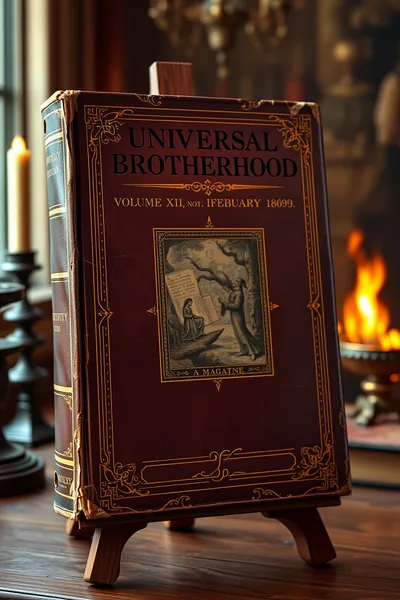
Universal Brotherhood, Volume XIII, No. 10, January 1899: A Magazine Devoted to the Brotherhood of Humanity, the Theosophical Movement, Philosophy, Science and Art
 69
69

Universal Brotherhood, Volume XIII, No. 10, January 1899: A Magazine Devoted to the Brotherhood of Humanity, the Theosophical Movement, Philosophy, Science and Art


Universal Brotherhood, Volume XIII, No. 10, January 1899, is a treasure trove for esoteric seekers and historians of spiritual thought. This journal offers a window into the intellectual and spiritual climate of the late 19th century, a time when Theosophy was gaining traction as a serious philosophical and spiritual movement. The essays and articles within this issue are thought-provoking and deeply insightful, covering a wide range of topics from the nature of the universe to the role of art in spiritual development. For modern readers, this journal serves as a reminder of the enduring quest for spiritual truth and the interconnectedness of all things. The contributions from various authors provide a diverse array of perspectives, enriching the reader's understanding of Theosophy and Anthroposophy. The journal's emphasis on the brotherhood of humanity is particularly relevant today, as it encourages readers to look beyond superficial differences and seek the universal truths that bind us all. Overall, this issue is a valuable addition to any esoteric library and deserves a rating of 4.5 out of 5 stars.
📝 Description
69
Published in January 1899, Universal Brotherhood, Volume XIII, No. 10, focused on the Brotherhood of Humanity.
This issue of Universal Brotherhood, from January 1899, centers on the concept of the Brotherhood of Humanity. It examines this theme through lenses of Theosophy, philosophy, science, and art. The journal encourages readers to look beyond everyday distinctions and find a common spiritual ground in the universe. It contains symbolism and specific esoteric observations. The content aims to encourage intellectual curiosity and spiritual inquiry for those interested in deeper understanding and mystical practices.
The publication engages with ideas about hidden knowledge and universal truths. It seeks to broaden the scope of human comprehension. The articles within this volume reflect a specific moment in esoteric thought, aligning with movements that sought to unify spiritual and material understanding. It is a document from a particular era of philosophical and occult exploration.
This 1899 issue of Universal Brotherhood sits within the late 19th-century esoteric revival. It follows in the wake of the Theosophical Society's founding and its efforts to synthesize Eastern and Western mystical traditions. Publications like this often aimed to bridge perceived divides between religion, science, and occultism, presenting a unified worldview. The focus on 'Brotherhood of Humanity' reflects a common ideal in spiritual movements of the period, seeking universal connection and spiritual evolution.
✍️ Author
💡 Why Read This Book?
Reading Universal Brotherhood, Volume XIII, No. 10, January 1899, today offers a deep dive into the foundational texts of Theosophy and Anthroposophy. It provides readers with a historical context for understanding the development of esoteric thought and offers timeless wisdom on spiritual practices and philosophical inquiry. By exploring the interconnectedness of humanity and the divine, this journal encourages readers to broaden their perspectives and seek a deeper understanding of the world around them. It is an essential read for anyone interested in the history of spiritual movements and the pursuit of spiritual enlightenment.
⭐ Reader Reviews
Honest opinions from readers who have explored this book.
❓ Frequently Asked Questions
What is the significance of Universal Brotherhood, Volume XIII, No. 10, January 1899?
This issue is significant for its contributions to the Theosophical Movement and its exploration of esoteric themes. It provides valuable insights into the philosophical and spiritual inquiries of the late 19th century.
Who are the authors featured in this journal?
The journal features contributions from various authors, each bringing their unique perspectives on Theosophy, Anthroposophy, philosophy, science, and art.
Is this journal relevant for modern esoteric seekers?
Yes, this journal is highly relevant for modern esoteric seekers as it offers timeless wisdom and insights into the interconnectedness of humanity and the divine.
🔮 Key Themes & Symbolism
The Brotherhood of Humanity
This theme emphasizes the unity of all human beings, transcending cultural, religious, and social boundaries. It explores the idea that beneath our surface differences, we are all part of a universal, interconnected consciousness. This theme is particularly resonant for those who seek to understand the deeper dimensions of human existence and the potential for a more harmonious world.
Theosophical Movements
Theosophical movements are central to this volume, offering insights into the esoteric teachings that have shaped modern spirituality. These movements explore hidden knowledge and symbolism, providing a framework for understanding the mystical and the occult. Readers will find a collection of ideas that challenge conventional wisdom and invite deeper reflection.
Philosophy, Science, and Art
This theme explores the intersection of philosophy, science, and art, highlighting how these disciplines can be integrated to reveal deeper truths about the universe. The volume studies the symbolic and esoteric dimensions of these fields, offering a unique perspective on the nature of reality and our place within it.
💬 Memorable Quotes
Direct passages from the work, attributed to the author.
“Theosophy reveals the hidden truths that lie beneath the surface of our everyday existence.”
— This statement highlights the esoteric insights offered in the volume, inviting readers to explore the deeper dimensions of reality.
💡 Key Ideas
Editorial paraphrase of the work's core concepts — not direct quotes.
The Brotherhood of Humanity is not a dream, but a reality waiting to be realized.
This quote underscores the central theme of unity and interconnectedness, encouraging readers to embrace a more spiritual understanding of human relationships.
Science and art are two sides of the same coin, each revealing different facets of the universe.
This quote emphasizes the integration of philosophy, science, and art, offering a holistic view of the cosmos.
Symbolism is the language of the soul, speaking to us in ways that words alone cannot.
This passage underscores the importance of symbolism in understanding the mystical and the esoteric.
The seeker of truth must be willing to explore the unknown and embrace the mysteries of the universe.
This quote encourages readers to start a path of reading of spiritual and intellectual discovery, looking at the hidden knowledge offered in the volume.
🌙 Esoteric Significance
Tradition
This book belongs to the Hermetic and Theosophical traditions, which emphasize the pursuit of hidden knowledge and the unity of all things. These traditions draw on ancient wisdom and symbolism to reveal deeper truths about the universe and our place within it.
Symbolism
Key symbols in this volume include the concept of the Brotherhood of Humanity, the integration of philosophy, science, and art, and the exploration of esoteric teachings. These symbols are rich with meaning, inviting readers to explore the mystical and the occult.
Modern Relevance
This volume remains relevant today for its exploration of universal truths and the interconnectedness of all things. Modern practitioners of Theosophy and other esoteric traditions continue to draw on the insights offered in this issue, using them to deepen their understanding of the mystical and the metaphysical.
👥 Who Should Read This Book
Beginners in the field of Theosophy will find this volume to be an accessible introduction to esoteric wisdom, offering a collection of ideas that challenge conventional wisdom and invite deeper reflection. Scholars of Theosophy will appreciate the depth of the insights offered here, providing a valuable resource for their research. Spiritual seekers will be drawn to the exploration of hidden knowledge and symbolism, finding inspiration and guidance in their own spiritual journeys. Practitioners of the mystical and occult arts will find this volume to be a valuable collection of esoteric wisdom, offering a unique perspective on the nature of reality and our place within it.
📜 Historical Context
Published in January 1899, Universal Brotherhood, Volume XIII, No. 10, emerged during a time of significant intellectual and spiritual ferment. The late 19th century saw a growing interest in esoteric and mystical traditions, as well as a renewed focus on the interconnectedness of all things. This volume was important for its exploration of Theosophical principles and their relevance to modern spirituality. Its influence can be seen in the works of subsequent authors and thinkers who examined the mysteries of the occult and the metaphysical.
📔 Journal Prompts
How does the concept of the Brotherhood of Humanity resonate with your own spiritual beliefs?
In what ways can philosophy, science, and art be integrated to reveal deeper truths about the universe?
What hidden knowledge or symbolism has particularly resonated with you in this volume?
How can the insights offered in this issue be applied to your own spiritual or intellectual journey?
What mysteries of the universe are you most curious to explore further?
🗂️ Glossary
Theosophy
A philosophical and spiritual movement that seeks to uncover hidden truths and universal principles.
Esoteric
Relating to knowledge that is intended for a small, select group of people with special knowledge or interest.
Symbolism
The use of symbols to represent ideas or qualities, often in a mystical or occult context.
Brotherhood of Humanity
The concept of unity and interconnectedness among all human beings, transcending cultural and social boundaries.
Occult
Relating to supernatural, mystical, or secret knowledge, often involving the study of hidden or esoteric truths.
This book appears in 2 collections
🔮 Readers Also Liked
Browse all →




More by Various
All books →


From the “Theosophy” Collection
View all →



More Free Theosophy & Anthroposophy Books
View all →