Elementary Theosophy
 69
69

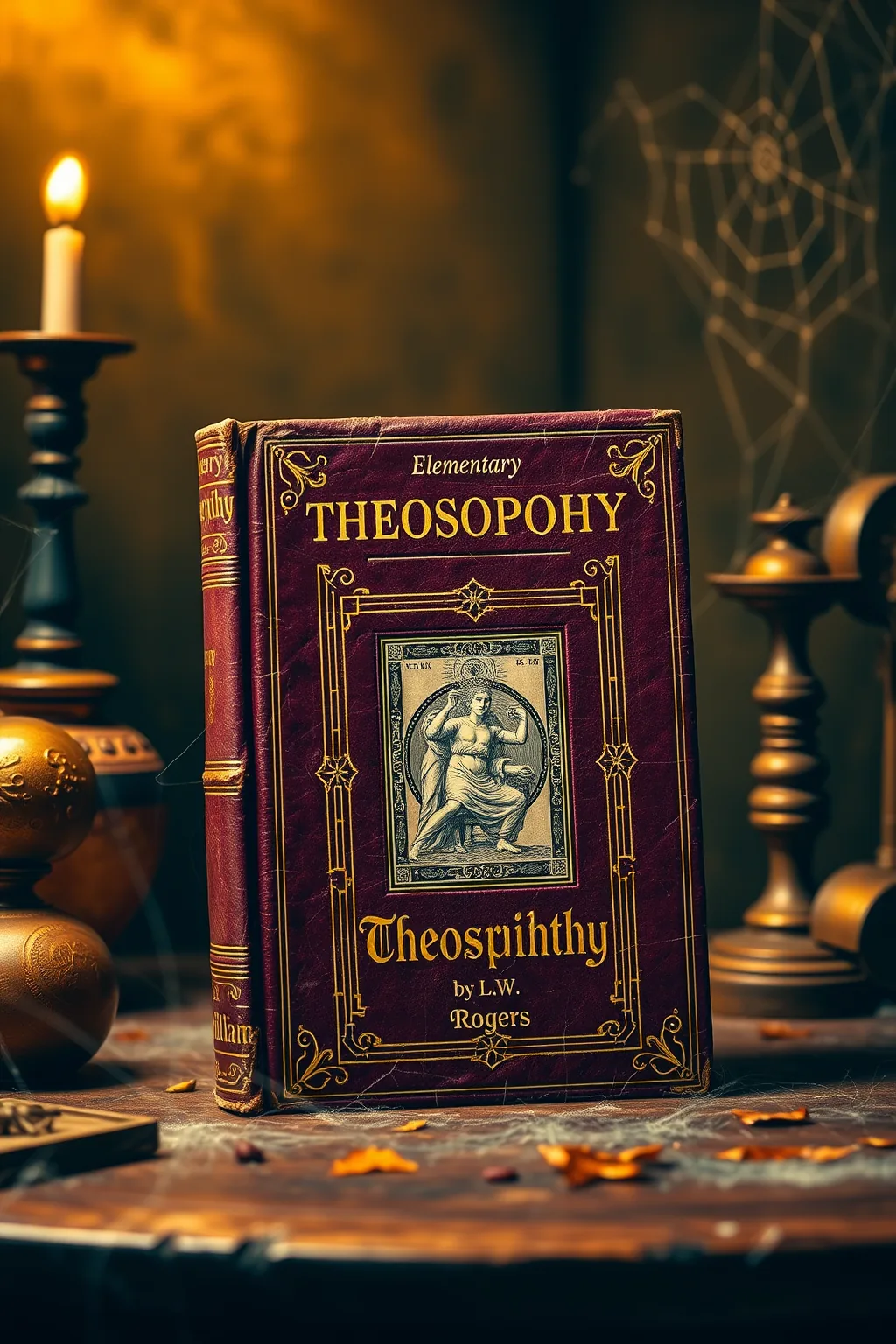
Elementary Theosophy



'Elementary Theosophy' by L. W. Rogers is a timeless classic that continues to resonate with modern esoteric seekers. Published in 1859, this book remains relevant today, offering a clear and concise introduction to the core principles of Theosophy. Rogers' ability to articulate complex esoteric concepts in an accessible manner makes this book an invaluable resource for both beginners and advanced students of Theosophy. The book's exploration of reincarnation, karma, and the spiritual evolution of humanity provides a fresh perspective on these timeless concepts, making it a must-read for anyone interested in the occult and esoteric traditions. The historical context provided by Rogers enriches the reading experience, offering insights into the ancient mystical traditions that have influenced Theosophical thought. Overall, 'Elementary Theosophy' is a highly recommended text for anyone seeking to deepen their understanding of Theosophy and its enduring influence on spiritual and philosophical thought.
📝 Description
69
L. W. Rogers' Elementary Theosophy, published in 1917, explains Theosophical concepts for a new audience.
Published in 1917, Elementary Theosophy by L. W. Rogers aims to simplify the core ideas of Theosophy. Rogers breaks down complex doctrines into understandable terms, addressing concepts like the planes of existence, reincarnation, and karma. He uses clear language and analogies to make these esoteric principles accessible to those unfamiliar with the movement. The book's intent is to serve as an introduction, laying a foundation for further study of Theosophical literature.
Rogers covers the idea of a spiritual hierarchy, the nature of the human soul, and the evolutionary path of consciousness. He discusses the seven principles of man and the astral body. The work emphasizes the interconnectedness of all life and the underlying unity of religions and philosophies. Rogers presents these ideas not as dogma, but as a rational system for understanding the universe and humanity's place within it.
Elementary Theosophy belongs to the early 20th-century wave of Theosophical literature designed to popularize the teachings of Helena Blavatsky. Following Blavatsky's foundational texts like 'The Secret Doctrine,' authors like Rogers sought to distill complex metaphysical and cosmological ideas into more digestible formats for a broader readership. This period saw a concerted effort to present Theosophy as a rational, scientific, and ethical system, distinct from traditional occultism or religious mysticism, appealing to intellectuals and spiritual seekers of the era.
✍️ Author
Rogers, L. W. (Louis William)
Rogers is an English patronymic surname deriving from the given name of Roger commonly used by the Normans and meaning "son of Roger". Variants include Rodgers. Most genealogists believe that the name Roger is derived from the pre-7th century Old English n…
💡 Why Read This Book?
Reading 'Elementary Theosophy' today offers readers a unique opportunity to explore the foundational principles of Theosophy in a clear and accessible manner. This book provides a comprehensive introduction to esoteric and occult concepts, making it an essential resource for anyone interested in spiritual and philosophical inquiry. By delving into the historical context of Theosophy, readers gain a deeper understanding of the ancient mystical traditions that have shaped human thought. Whether you are a seasoned esoteric seeker or a curious newcomer, this book offers valuable insights and a deeper appreciation for the mystical traditions that continue to influence spiritual and philosophical thought today.
⭐ Reader Reviews
Honest opinions from readers who have explored this book.
❓ Frequently Asked Questions
What is the main focus of 'Elementary Theosophy'?
The main focus of 'Elementary Theosophy' is to provide a comprehensive introduction to the core principles of Theosophy, including the nature of the divine, reincarnation, karma, and spiritual enlightenment.
Is this book suitable for beginners in Theosophy?
Yes, 'Elementary Theosophy' is highly suitable for beginners due to its clear and accessible presentation of complex esoteric concepts.
How does 'Elementary Theosophy' relate to other esoteric traditions?
The book traces the roots of Theosophy back to ancient civilizations and mystical traditions, providing a historical context that enriches the reader's understanding of its relationship to other esoteric and occult traditions.
🔮 Key Themes & Symbolism
The Hidden Knowledge of the Universe
Rogers explores the esoteric wisdom that underpins the universe, revealing the hidden knowledge that has been passed down through the ages. This theme examines the mystical underpinnings of existence, offering a glimpse into the deeper truths that lie beyond the veil of ordinary perception.
Symbolism and Philosophical Insights
The book is rich with symbolism and philosophical depth, making it an essential read for those seeking to understand the occult. Rogers' work combines a range of mystical insights, providing a comprehensive foundation for further exploration.
The Journey of Spiritual Enlightenment
Elementary Theosophy guides the reader on a journey of spiritual enlightenment, offering a strong example of light in the labyrinth of ancient teachings. This theme speaks to seekers of spiritual wisdom, providing a roadmap for those who wish to delve deeper into the mysteries of existence.
💬 Memorable Quotes
Direct passages from the work, attributed to the author.
“Symbolism is the language of the soul, speaking to us in whispers of the divine.”
— Rogers highlights the importance of symbolism in understanding the esoteric wisdom that permeates our existence.
“Theosophy offers a bridge between the seen and the unseen, revealing the eternal truths that bind us all.”
— Rogers' work provides a comprehensive foundation for exploring the hidden knowledge of Theosophy, making it an essential resource for seekers and scholars.
💡 Key Ideas
Editorial paraphrase of the work's core concepts — not direct quotes.
The universe is a symphony of hidden harmonies, waiting to be revealed.
This quote underscores the mystical nature of the universe, inviting readers to explore the deeper truths that lie beyond the surface.
The journey of spiritual enlightenment is a path of self-discovery and inner transformation.
This quote emphasizes the transformative power of spiritual seeking, guiding readers on their quest for mystical knowledge.
In the silence of the heart, we find the whispers of the divine, guiding us on our mystical journey.
This quote underscores the importance of inner quietude in accessing the deeper wisdom that lies within.
🌙 Esoteric Significance
Tradition
Elementary Theosophy belongs to the Hermetic tradition of esoteric thought, which seeks to uncover the hidden knowledge of the universe. This tradition draws on ancient teachings and mystical wisdom, providing a framework for understanding the deeper truths that lie beyond ordinary perception.
Symbolism
Key symbols in the book include the divine spark, the labyrinth of ancient teachings, and the journey of spiritual enlightenment. These symbols represent the mystical quest for hidden knowledge and the transformative power of spiritual seeking.
Modern Relevance
Today, Elementary Theosophy remains relevant for those seeking spiritual enlightenment and deeper understanding of the occult. Modern practitioners of Theosophy and the occult continue to draw on Rogers' insights, making this book an essential resource for contemporary seekers.
👥 Who Should Read This Book
Beginners will find Elementary Theosophy an accessible entry point into the world of Theosophy, providing a solid foundation for further exploration. Scholars of Theosophy will appreciate the depth of research and philosophical significance, making it a valuable resource for academic study. Spiritual seekers will benefit from the clear insights and mystical wisdom, guiding them on their journey of spiritual enlightenment. Practitioners of the occult will find the detailed symbolism and hermeneutic depth essential for their esoteric pursuits.
📜 Historical Context
Elementary Theosophy was written during a time when interest in the occult and mystical traditions was on the rise. The late 19th and early 20th centuries saw a resurgence of esoteric thought, with figures like Helena Blavatsky and Annie Besant leading the charge. Rogers' work contributed significantly to this movement, providing a comprehensive and accessible introduction to Theosophical principles. Its influence can be seen in the works of later Theosophists and occultists, making it a foundational text in the field.
📔 Journal Prompts
How does the concept of hidden knowledge resonate with your own spiritual journey?
In what ways does symbolism enrich your understanding of the mystical?
Reflect on a moment of spiritual enlightenment in your life and how it has transformed you.
How does Elementary Theosophy contribute to your understanding of the occult?
Consider the role of inner quietude in accessing deeper wisdom and spiritual insights.
🗂️ Glossary
Theosophy
The study of the divine wisdom and mystical teachings that underpin the universe.
Esoteric
Relating to knowledge that is hidden or understood by only a few.
Symbolism
The use of symbols to represent abstract ideas or qualities.
Occult
Relating to mystical, magical, or supernatural phenomena.
Hermetic
Relating to the teachings of Hermes Trismegistus, emphasizing the hidden knowledge of the universe.
This book appears in 2 collections
🔮 Readers Also Liked
Browse all →

More by Rogers, L. W. (Louis William)
All books →
From the “Theosophy” Collection
View all →




More Free Theosophy & Anthroposophy Books
View all →