55,000+ Esoteric Books Free + Modern Compare Prices
Home Collections Anthroposophy
📖

Theosophy Books: A Comprehensive Reading Guide

Theosophy books trace a path from ancient esoteric traditions to modern spiritual science, offering a synthesis of philosophy, religion, and science. Key works like H. P. Blavatsky's 'The Secret Doctrine' (multi-volume) and Rudolf Steiner's 'An Outline of Occult Science' provide foundational frameworks. Annie Besant's 'Thought-Forms' offers visual interpretations of psychic phenomena. This guide presents essential texts for understanding Theosophy, from introductory concepts to deeper philosophical explorations.

Top Anthroposophy Books

25 Anthroposophy books
Clairvoyance
📖
Clairvoyance
Leadbeater, C. W. (Charles Webster)
4.3
69
SCHOLAR'S PICK
Invisible helpers
📖
Invisible helpers
Leadbeater, C. W. (Charles Webster)
4.2
69
SCHOLAR'S PICK
Elementary Theosophy
📖
Elementary Theosophy
Rogers, L. W. (Louis William)
4.3
69
Aryan Path Vol. 4
📖
Aryan Path Vol. 4
Theosophy Company (Mysore) India
4.4
73
SCHOLAR'S PICK
Aryan Path Volume 5
📖
Aryan Path Volume 5
Theosophy Company (Mysore) India
4.5
78
Aryan Path Vol. 6
📖
Aryan Path Vol. 6
Theosophy Company (Mysore) India
4.6
80
HIDDEN GEM
Aryan Path Vol. 6.3
📖
Aryan Path Vol. 6.3
Theosophy Company (Mysore) India
4.7
84
SCHOLAR'S PICK
Aryan Path Vol. 5.10
📖
Aryan Path Vol. 5.10
Theosophy Company (Mysore) India
4.3
71
MASTERPIECE
Aryan Path Vol. 5.12
📖
Aryan Path Vol. 5.12
Theosophy Company (Mysore) India
4.7
84
HIDDEN GEM
Aryan Path Vol. 6.4
📖
Aryan Path Vol. 6.4
Theosophy Company (Mysore) India
4.4
73
TRENDING
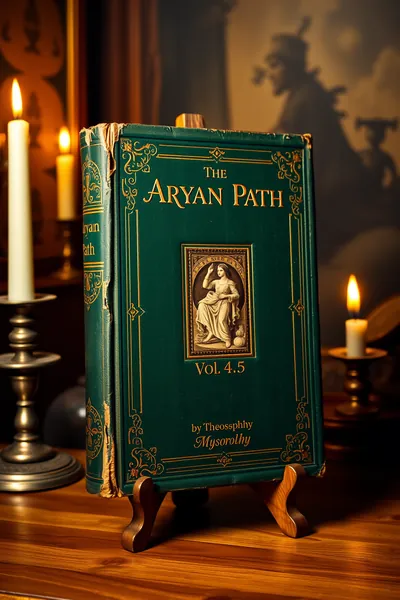
Aryan Path Vol. 4.5
📖
Aryan Path Vol. 4.5
Theosophy Company (Mysore) India
4.6
81
MASTERPIECE
Aryan Path Vol. 6.8
📖
Aryan Path Vol. 6.8
Theosophy Company (Mysore) India
4.4
73
TIMELESS
Aryan Path Vol. 5.11
📖
Aryan Path Vol. 5.11
Theosophy Company (Mysore) India
4.3
72
Aryan Path Vol. 6.2
📖
Aryan Path Vol. 6.2
Theosophy Company (Mysore) India
4.7
83
Aryan Path Vol. 6.11
📖
Aryan Path Vol. 6.11
Theosophy Company (Mysore) India
4.4
74
HIDDEN GEM
Aryan Path Vol. 6.9
📖
Aryan Path Vol. 6.9
Theosophy Company (Mysore) India
4.4
74
Aryan Path Vol. 6.5
📖
Aryan Path Vol. 6.5
Theosophy Company (Mysore) India
4.4
75
Aryan Path Vol. 6.12
📖
Aryan Path Vol. 6.12
Theosophy Company (Mysore) India
4.3
72
Aryan Path Vol. 6.10
📖
Aryan Path Vol. 6.10
Theosophy Company (Mysore) India
4.5
76

What is Theosophy?

Theosophy, meaning 'divine wisdom,' is a philosophical and religious system that seeks to understand the underlying unity of all religions and the hidden laws of nature and humanity. It posits a universal divine principle from which all existence emanates, and emphasizes the spiritual evolution of consciousness through cycles of reincarnation. Theosophy often draws upon Eastern mystical traditions and seeks to reconcile them with Western science and philosophy.

Best Books for Complete Beginners

For those new to Theosophy, William Quan Judge's 'The Ocean of Theosophy' offers a clear, concise introduction to its core tenets. Annie Besant's 'Esoteric Christianity, or The Lesser Mysteries' explores the mystical dimensions of Christian teachings, making them accessible. C. W. Leadbeater's 'A Textbook of Theosophy' provides a systematic overview of key concepts, including karma, reincarnation, and planes of existence. These texts lay a solid groundwork for further study.

Intermediate Reading

Building on foundational knowledge, Annie Besant and C. W. Leadbeater's 'Thought-Forms' offers a visual and conceptual exploration of the subtle realms and the nature of thought. Leadbeater's 'The Astral Plane: Its Scenery, Inhabitants and Phenomena' delves into the nature of the astral realm. Jiddu Krishnamurti's 'Education as Service' touches on the practical application of spiritual principles in daily life and education. These works expand understanding of Theosophical cosmology and ethics.

Classical / Advanced Texts

The cornerstone of Theosophical literature is H. P. Blavatsky's monumental 'The Secret Doctrine' (available in four volumes), a dense synthesis of ancient wisdom, cosmology, and evolution. Her 'The Key to Theosophy' provides a direct Q&A exposition of the Society's principles. Rudolf Steiner's 'An Outline of Occult Science' offers his unique perspective on spiritual science and human evolution, presented in a systematic manner. Jacob Boehme's 'Threefold Life of Man' represents an earlier, influential mystical precursor.

Reading Order — Step by Step

Begin with foundational texts like 'The Ocean of Theosophy' by William Quan Judge (Month 1, Week 1-2) for a broad overview. Follow with 'A Textbook of Theosophy' by C. W. Leadbeater (Month 1, Week 3-4) for systematic concepts. In Month 2, explore 'Esoteric Christianity' by Annie Besant and 'Thought-Forms' by Besant and Leadbeater. Month 3 can be dedicated to H. P. Blavatsky's 'The Key to Theosophy' and selected volumes of 'The Secret Doctrine,' or Rudolf Steiner's 'An Outline of Occult Science' for a different lineage.

Frequently Asked Questions

Which Theosophy book should I read first?

For a clear starting point, begin with 'The Ocean of Theosophy' by William Quan Judge. It systematically covers the fundamental concepts without overwhelming new readers.

Is Anthroposophy the same as Theosophy?

Anthroposophy, founded by Rudolf Steiner, originated from Theosophy but developed distinct philosophical and practical approaches, particularly in education and agriculture. While sharing roots, they are not identical.

Are H. P. Blavatsky's books difficult to read?

Blavatsky's major works, especially 'The Secret Doctrine,' are dense and complex, requiring focused study. 'The Key to Theosophy' is more accessible for understanding her core ideas.

What is the relationship between Theosophy and Eastern religions?

Theosophy draws heavily from Eastern traditions, particularly Hinduism and Buddhism, integrating concepts like karma, reincarnation, and the Seven Principles of Man into its framework.

Can I find free copies of these Theosophy books?

Many older Theosophical texts, including works by Blavatsky, Besant, and Leadbeater, are in the public domain and can be found in digital formats through various online archives.

What are the main goals of Theosophy?

The primary goals are to form a nucleus of universal brotherhood, encourage the study of comparative religion, philosophy, and science, and investigate unexplained laws of nature and human capabilities.

Who were the 'Mahatmas' mentioned in Theosophy?

The Mahatmas, or Masters, were described by Blavatsky as highly evolved spiritual beings from the East who transmitted esoteric teachings and guided the Theosophical Movement.

How does Theosophy view science?

Theosophy aims to synthesize science, religion, and philosophy, suggesting that true science will eventually validate esoteric principles. It explores both the physical and subtler realms of existence.
Why Each Book Matters

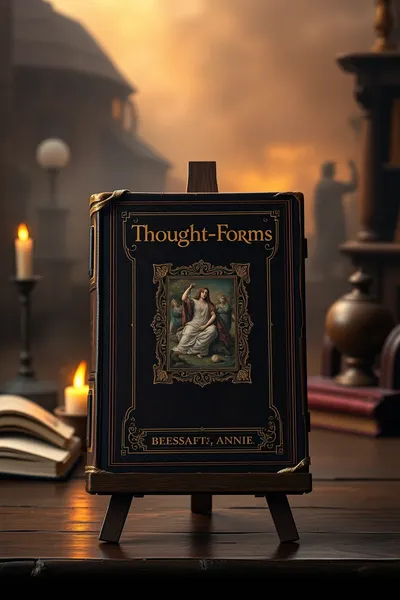
Thought-Forms

Thought-Forms

by Besant, Annie

"Thought-Forms" by Annie Besant and C. W. Leadbeater, published in 1901, illustrates how thoughts and emotions create distinct energetic forms visible to clairvoyant perception. This pioneering work includes detailed descriptions and colorful illustrations of these psychic phenomena, exploring their impact on individuals and their environment. It offers a unique visual understanding of the subtle energies that influence human experience, connecting directly to the Anthroposophical view of the astral body.

Death—and After?

Death—and After?

by Besant, Annie

Annie Besant's "Death—and After?" (1893) offers a Theosophical perspective on the journey of the soul after physical death. It describes the various stages of the afterlife, including the astral and devachanic (heavenly) planes, and the processes of reincarnation and karma. This book provides a comforting and rational framework for understanding mortality and the continuity of consciousness, concepts that form a crucial part of Anthroposophy's understanding of human evolution.

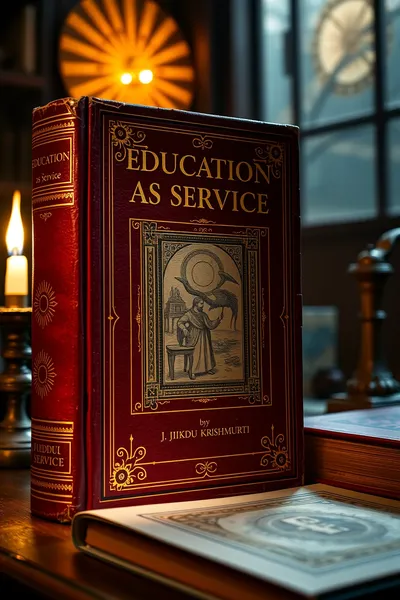
Education as Service

Education as Service

by J. (Jiddu) Krishnamurti

J. (Jiddu) Krishnamurti's "Education as Service" (1912) explores the profound purpose of education beyond mere academic instruction. Written during his early association with the Theosophical Society, this work emphasizes education as a means for spiritual and moral development, fostering self-awareness and selfless service. While Krishnamurti later distanced himself from organized movements, his early ideas on holistic education resonate with the principles found in Waldorf education, a practical application of Anthroposophy.

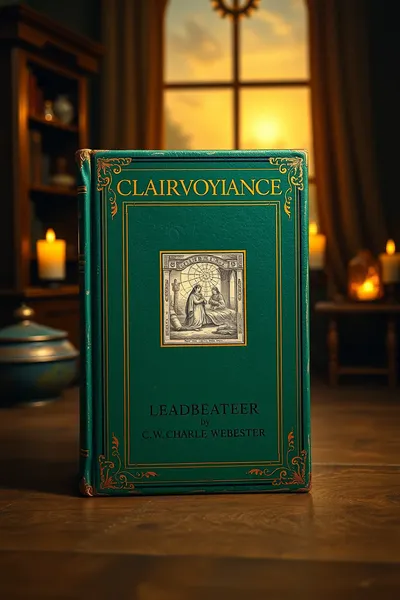
Clairvoyance

Clairvoyance

by Leadbeater, C. W. (Charles Webster)

C. W. Leadbeater's "Clairvoyance" provides a systematic exploration of spiritual perception and its various forms, from simple thought-reading to visions of the past and future. Published in 1899, it details methods for developing clairvoyant abilities and describes the different planes of existence accessible through these faculties. The book serves as a practical guide for those interested in expanding their spiritual awareness beyond ordinary senses, a concept highly relevant to the spiritual science of Anthroposophy.

Invisible helpers

Invisible helpers

by Leadbeater, C. W. (Charles Webster)

C. W. Leadbeater's "Invisible helpers," published in 1901, explores the concept of spiritual beings and their assistance in human affairs. The book details various types of 'invisible helpers,' including those who have passed on and those who work on higher planes, describing their roles in aiding humanity and the conditions under which such help is rendered. It offers insights into the unseen spiritual hierarchies and their benevolent influence, a theme also present in Anthroposophical cosmology.

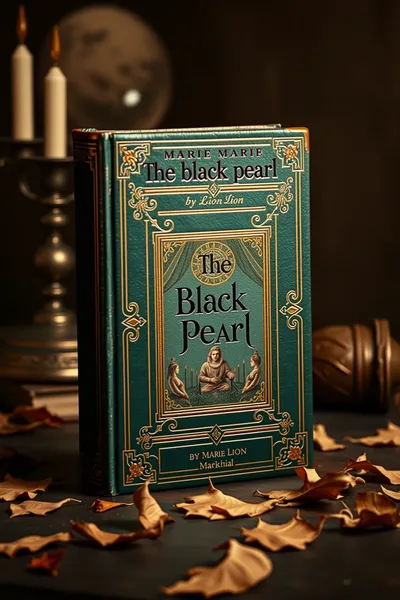
The black pearl

The black pearl

by Lion, Marie

"The black pearl" by Marie Lion is a less commonly known work, likely a fictional or allegorical narrative with esoteric undertones. While specific details are scarce, such texts often explore themes of spiritual quest, hidden truths, and inner transformation through symbolic storytelling. Its inclusion suggests an exploration of spiritual journeys and the discovery of inner wisdom, aligning with the broader themes found in Anthroposophy and esoteric literature.

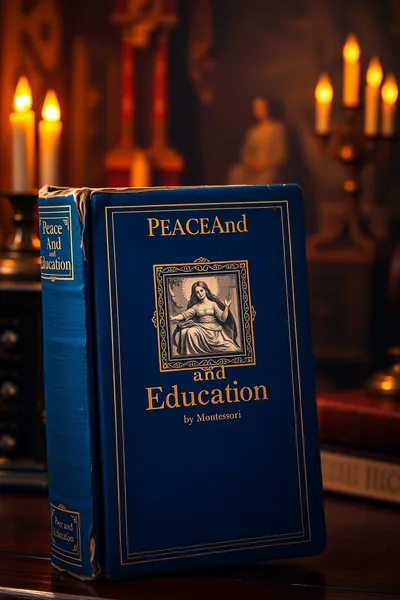
Peace_And_Education_

Peace_And_Education_

by Maria Montessori

Maria Montessori's "Peace_And_Education_" (1932) highlights her profound belief in education as a pathway to global peace. While not directly Anthroposophical, Montessori's educational philosophy shares common ground with Anthroposophy's Waldorf education in its child-centered approach and emphasis on fostering inner development and respect for the individual. Her work advocates for a pedagogy that cultivates harmony and understanding, contributing to a broader vision of human flourishing.

Elementary Theosophy

Elementary Theosophy

by Rogers, L. W. (Louis William)

L. W. Rogers' "Elementary Theosophy," published in 1917, serves as an accessible introduction to the fundamental tenets of Theosophy. It covers concepts such as karma, reincarnation, the planes of existence, and the evolution of consciousness in a clear and concise manner. This book provides a solid groundwork for understanding the broader esoteric tradition from which Anthroposophy emerged, making complex spiritual ideas understandable for beginners.

Theosophy (CW 9)

Theosophy (CW 9)

by Steiner, Rudolf

Rudolf Steiner's "Theosophy (CW 9)", first published in 1904, is one of his most important foundational works, outlining the core principles of Anthroposophy. In this text, Steiner systematically describes the nature of humanity, the cosmos, and the spiritual world, including the physical, etheric, astral, and ego bodies, as well as the path of spiritual knowledge. It serves as an essential introduction to the spiritual science that he developed, distinctly defining Anthroposophy's unique approach.

Aryan Path Vol. 4

Aryan Path Vol. 4

by Theosophy Company (Mysore) India

"Aryan Path Vol. 4" is a volume from a prominent Theosophical journal published by Theosophy Company (Mysore) India. These journals, active in the mid-20th century, featured articles on philosophy, religion, art, and the occult, often reflecting the intellectual discourse of the time. This specific volume, likely from the 1930s, contains a collection of essays that explore various spiritual and ethical questions, providing a window into the broader esoteric movement that influenced Anthroposophy.

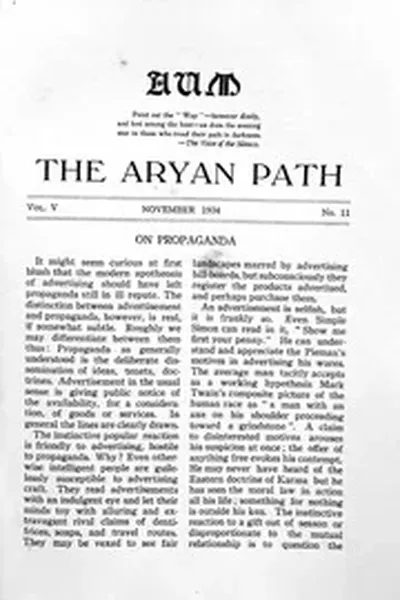
Aryan Path Volume 5

Aryan Path Volume 5

by Theosophy Company (Mysore) India

"Aryan Path Volume 5" continues the tradition of the Theosophical journal published by Theosophy Company (Mysore) India, likely from the mid-1930s. This volume brings together a selection of insightful articles that explore topics ranging from Eastern philosophies and Western mysticism to social ethics and the nature of consciousness. It serves as a valuable resource for understanding the intellectual currents and spiritual inquiries prevalent during the period when Anthroposophy was gaining traction.

Aryan Path Vol. 6

Aryan Path Vol. 6

by Theosophy Company (Mysore) India

"Aryan Path Vol. 6" is another installment from the influential Theosophical journal published by Theosophy Company (Mysore) India. This volume, part of a series from the mid-1930s, compiles diverse articles and commentaries on spiritual wisdom, ancient traditions, and contemporary philosophical issues. It offers readers a rich tapestry of thought from various contributors, reflecting the intellectual environment surrounding the development and reception of spiritual sciences like Anthroposophy.

Aryan Path Vol. 6.3

Aryan Path Vol. 6.3

by Theosophy Company (Mysore) India

"Aryan Path Vol. 6.3" represents a specific issue or part of the sixth volume of the Theosophical journal published by Theosophy Company (Mysore) India, likely from 1935. This particular installment features a curated selection of essays and discussions, offering perspectives on spiritual living, philosophical debates, and the synthesis of world religions. It provides a snapshot of the ongoing intellectual and spiritual dialogue within the Theosophical movement, which historically informed Anthroposophy.

Aryan Path Vol. 5.10

Aryan Path Vol. 5.10

by Theosophy Company (Mysore) India

"Aryan Path Vol. 5.10" is an issue from the fifth volume of the Theosophical journal, published by Theosophy Company (Mysore) India, likely from 1934. This installment compiles a variety of articles addressing spiritual philosophy, ethical living, and the exploration of consciousness. It provides a valuable snapshot of the intellectual and spiritual inquiries prevalent in the mid-1930s, offering context for the development of spiritual movements like Anthroposophy.

Aryan Path Vol. 5.12

Aryan Path Vol. 5.12

by Theosophy Company (Mysore) India

"Aryan Path Vol. 5.12" is the final issue of the fifth volume of the Theosophical journal, published by Theosophy Company (Mysore) India, likely from 1934. This compilation of essays and discussions often includes year-end summaries or reflections on spiritual progress and philosophical insights. It serves as a record of the ongoing dialogue within the Theosophical movement, which historically influenced the early development of Anthroposophy.

Aryan Path Vol. 6.4

Aryan Path Vol. 6.4

by Theosophy Company (Mysore) India

"Aryan Path Vol. 6.4" is another segment from the sixth volume of the Theosophical journal, published by Theosophy Company (Mysore) India, likely in 1935. This issue presents a collection of articles that explore various facets of spiritual wisdom, ancient texts, and contemporary ethical dilemmas. Readers can find diverse viewpoints on topics relevant to esoteric studies, reflecting the intellectual environment that fostered the emergence of spiritual sciences like Anthroposophy.

Aryan Path Vol. 4.5

Aryan Path Vol. 4.5

by Theosophy Company (Mysore) India

"Aryan Path Vol. 4.5" is a specific issue from the fourth volume of the Theosophical journal, published by Theosophy Company (Mysore) India, likely from 1933. This installment offers a collection of articles and commentaries on spiritual philosophy, comparative religion, and the occult. It provides insights into the intellectual concerns and spiritual inquiries prevalent in the early 20th century, contributing to the broader esoteric discourse that included Anthroposophy.

Aryan Path Vol. 6.8

Aryan Path Vol. 6.8

by Theosophy Company (Mysore) India

"Aryan Path Vol. 6.8" is an issue from the sixth volume of the Theosophical journal, published by Theosophy Company (Mysore) India, likely from 1935. This particular compilation features articles that delve into spiritual ethics, the nature of reality, and the synthesis of Eastern and Western thought. It offers a valuable historical record of the ongoing discussions within the Theosophical movement, providing context for the development of Anthroposophy and its unique perspectives.

Aryan Path Vol. 5.11

Aryan Path Vol. 5.11

by Theosophy Company (Mysore) India

"Aryan Path Vol. 5.11" is an issue from the fifth volume of the Theosophical journal, published by Theosophy Company (Mysore) India, likely from 1934. This installment features a collection of articles that explore diverse aspects of spiritual wisdom, comparative religion, and ethical thought. It offers readers insights into the intellectual and spiritual landscape of the time, providing a rich background for understanding the emergence of spiritual sciences such as Anthroposophy.

Aryan Path Vol. 6.2

Aryan Path Vol. 6.2

by Theosophy Company (Mysore) India

"Aryan Path Vol. 6.2" is a specific issue from the sixth volume of the Theosophical journal, published by Theosophy Company (Mysore) India, likely from 1935. This installment presents a curated selection of articles covering spiritual philosophy, cultural criticism, and esoteric insights. It reflects the intellectual and spiritual concerns of the mid-1930s, offering a glimpse into the diverse topics discussed within the broader Theosophical movement that influenced Anthroposophy.

Aryan Path Vol. 6.11

Aryan Path Vol. 6.11

by Theosophy Company (Mysore) India

"Aryan Path Vol. 6.11" is an issue from the sixth volume of the Theosophical journal, published by Theosophy Company (Mysore) India, likely from 1935. This particular compilation features articles that delve into spiritual ethics, the nature of reality, and the synthesis of Eastern and Western thought. It offers a valuable historical record of the ongoing discussions within the Theosophical movement, providing context for the development of Anthroposophy and its unique perspectives.

Aryan Path Vol. 6.9

Aryan Path Vol. 6.9

by Theosophy Company (Mysore) India

"Aryan Path Vol. 6.9" is an issue from the sixth volume of the Theosophical journal, published by Theosophy Company (Mysore) India, likely from 1935. This particular collection of articles explores themes of spiritual evolution, theosophical teachings, and ethical living. It provides a continued look into the intellectual landscape of the time, where discussions on spirituality and human development were vibrant, contributing to the context in which Anthroposophy flourished.

Aryan Path Vol. 6.5

Aryan Path Vol. 6.5

by Theosophy Company (Mysore) India

"Aryan Path Vol. 6.5" is a specific issue from the sixth volume of the Theosophical journal, published by Theosophy Company (Mysore) India, likely from 1935. This installment features a range of essays on spiritual philosophy, the wisdom of ancient traditions, and contemporary moral questions. It offers readers diverse perspectives on esoteric knowledge and ethical conduct, reflecting the ongoing dialogue within the Theosophical movement that shares historical roots with Anthroposophy.

Aryan Path Vol. 6.12

Aryan Path Vol. 6.12

by Theosophy Company (Mysore) India

"Aryan Path Vol. 6.12" is the final issue of the sixth volume of the Theosophical journal, published by Theosophy Company (Mysore) India, likely from 1935. This compilation of essays and discussions often includes year-end summaries or reflections on spiritual progress and philosophical insights. It serves as a record of the ongoing dialogue within the Theosophical movement, which historically influenced the early development of Anthroposophy.

Aryan Path Vol. 6.10

Aryan Path Vol. 6.10

by Theosophy Company (Mysore) India

"Aryan Path Vol. 6.10" is an issue from the sixth volume of the Theosophical journal, published by Theosophy Company (Mysore) India, likely from 1935. This particular collection of articles explores themes of spiritual evolution, theosophical teachings, and ethical living. It provides a continued look into the intellectual landscape of the time, where discussions on spirituality and human development were vibrant, contributing to the context in which Anthroposophy flourished.

Esoteric Library
Browse Esoteric Library
📚 All 55,000+ Books 🜍 Alchemy & Hermeticism 🔮 Magic & Ritual 🌙 Witchcraft & Paganism Astrology & Cosmology 🃏 Divination & Tarot 📜 Occult Philosophy ✡️ Kabbalah & Jewish Mysticism 🕉️ Mysticism & Contemplation 🕊️ Theosophy & Anthroposophy 🏛️ Freemasonry & Secret Societies 👻 Spiritualism & Afterlife 📖 Sacred Texts & Gnosticism 👁️ Supernatural & Occult Fiction 🧘 Spiritual Development 📚 Esoteric History & Biography
Esoteric Library
📑 Collections 📤 Upload Your Book
Account
🔑 Sign In Create Account
Info
About Esoteric Library