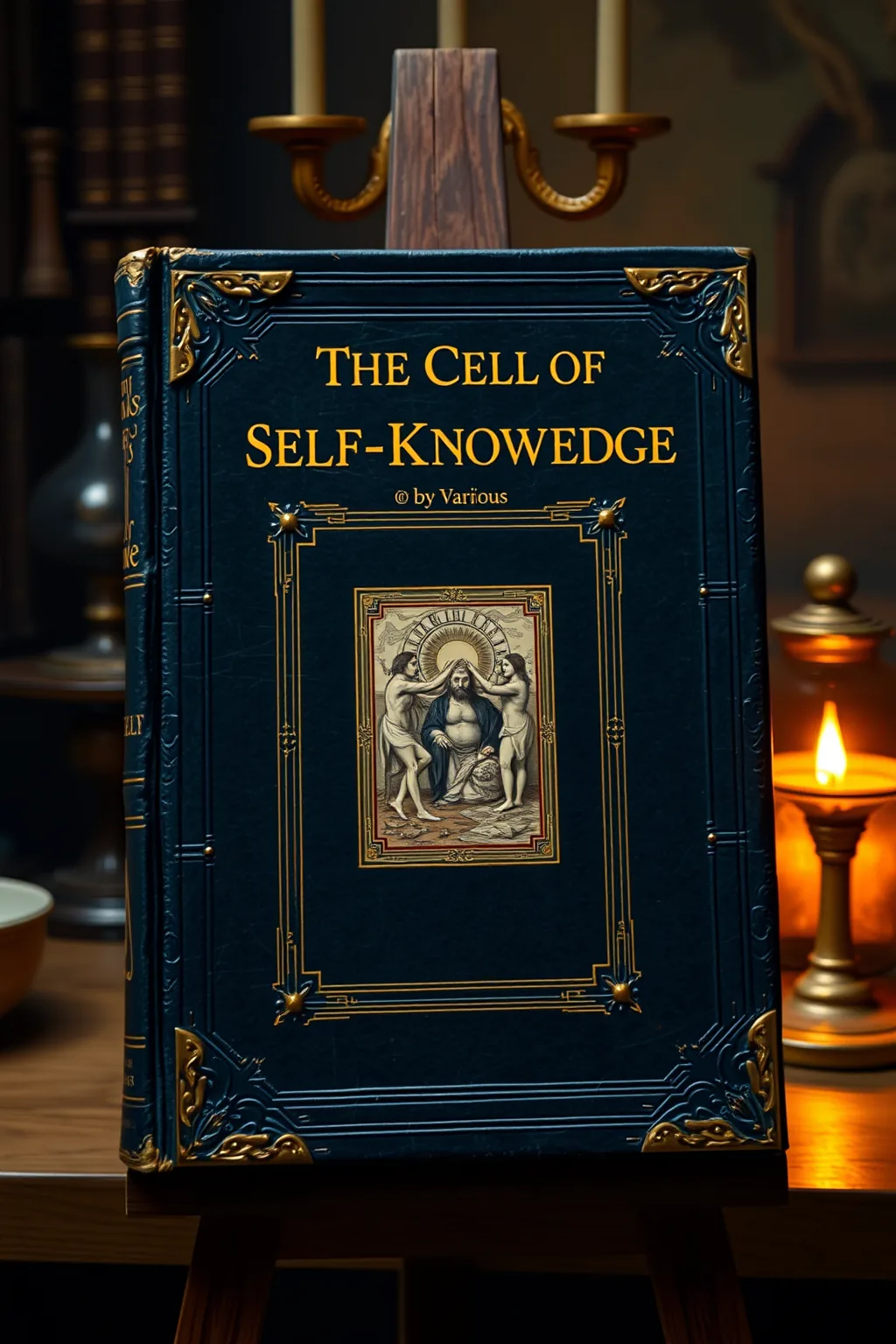
The Cell of Self-Knowledge
 75
75

The Cell of Self-Knowledge



Cassian Rothmann (Senior Critic, Ancient Wisdom) — 'The Cell of Self-Knowledge' is an indispensable treasure for serious students of the Western Esoteric Tradition. This compilation masterfully presents foundational texts, offering direct access to the heart of early English mysticism. The treatises, particularly the profound insights from Richard of Saint Victor and the hagiographical wisdom of Saint Katherin of Seenes, reveal a sophisticated understanding of the soul's journey and the practice of divine union. Its strength lies in its unadulterated presentation of these potent teachings, eschewing modern interpretation for the raw power of original contemplation. Essential for scholars, practitioners, and anyone seeking authentic paths to self-knowledge.
📝 Description
75
This 1910 collection gathers seven early English mystical texts on self-knowledge.
The Cell of Self-Knowledge collects seven early English mystical writings. These treatises aim to guide readers toward understanding their inner selves through spiritual inquiry. The texts discuss concepts like the Mights and Virtues of Man's Soul, drawing on figures such as Richard of Saint Victor. They also include the teachings of Saint Katherin of Seenes, focusing on devotion and spiritual union. The book presents these ideas as a path to deeper contemplation and self-realization, moving beyond ordinary experience to connect with spiritual truths.
This compilation is for individuals seeking to explore esoteric ideas and engage in serious spiritual practice. It offers a collection of historical texts that explore the inner life and the potential for spiritual growth. The writings are intended to facilitate a more profound understanding of the self and its connection to the divine. Readers will find discussions on contemplation and the attainment of inner peace through dedicated study of these mystical works.
This collection belongs to the Western esoteric tradition, specifically within Christian mysticism. The texts focus on internal spiritual development and the direct experience of the divine, rather than external ritual or dogma alone. The emphasis on the 'Mights and Virtues of Man's Soul' suggests an interest in the latent spiritual capacities within individuals. Such works often draw from Neoplatonic ideas and contemplative practices prevalent in medieval Christian thought, seeking a path to union with God through self-understanding and inner purification.
✍️ Author
💡 Why Read This Book?
Embark on a profound journey of inner discovery. 'The Cell of Self-Knowledge' offers direct access to foundational mystical teachings from revered medieval figures. Perfect for seekers yearning for deeper spiritual insight, scholars of esoteric history, and practitioners of contemplative prayer seeking authentic pathways to divine union and self-realization. Uncover timeless wisdom that resonates profoundly with the modern soul.
⭐ Reader Reviews
Honest opinions from readers who have explored this book.
❓ Frequently Asked Questions
What are the primary themes explored in this collection?
The primary themes include the nature and virtues of the human soul, the path to true contemplation, divine love, spiritual union with the divine, and the practice of devout living. It delves into the inner landscape of the spirit and the methods for achieving profound self-awareness and connection.
Who is Richard of Saint Victor and why is he included?
Richard of Saint Victor (died 1173) was a prominent theologian and mystic known for his influential treatises on contemplation and the soul. His inclusion highlights the intellectual and spiritual rigor of early Christian mysticism, offering systematic guidance for the contemplative life.
What makes the treatises 'early English' mystical?
These texts represent the flourishing of mystical thought in England during the medieval period, predating the major continental movements. They showcase a distinct spiritual sensibility and devotional practice that formed a crucial part of the English intellectual and religious heritage.
Is this book suitable for beginners in mysticism?
While the texts are profound, their directness and focus on core spiritual principles make them accessible to earnest beginners willing to engage with contemplation. The language, though archaic, is rich and rewarding. It offers a foundational understanding.
Can I find translations or modern interpretations of these texts elsewhere?
This collection presents the original English (or early translations) for direct engagement. While modern scholarly interpretations exist, this volume prioritizes the unadulterated wisdom of the original authors, offering an authentic historical and spiritual experience.
🔮 Key Themes & Symbolism
The Divine Spark Within
This collection profoundly explores the concept of the soul as a divine vessel, imbued with inherent 'Mights and Virtues' waiting to be awakened. It posits that true self-knowledge is not an intellectual pursuit alone, but a spiritual excavation, a journey inward to uncover the luminous core of one's being. The treatises guide the reader to recognize the divine spark resident within, emphasizing that the path to spiritual enlightenment begins with an intimate understanding and cultivation of this inner sanctity. It's a call to recognize the sacred architecture of the self.
The Ascent to True Contemplation
Central to these works is the meticulous charting of the contemplative path, a sacred ascent from the sensory world to the field of direct divine apprehension. The texts delineate stages of spiritual awareness, moving from foundational devotion to the sublime state of 'true contemplation.' This involves not just prayer, but a transformative process of purification, quietude, and the surrender of the ego to allow for the ineffable presence of the divine to be experienced. It is a disciplined yet grace-filled journey towards spiritual union.
The Power of Devotion and Spiritual Marriage
The treatises highlight the transformative power of fervent devotion, particularly through the lens of spiritual wedlock, exemplified by the life of Saint Katherin of Seenes. This 'marriage' signifies a profound and intimate union with the divine, a complete offering of the self that leads to spiritual ecstasy and useful insights. It underscores that love for the divine is not merely an emotion but a dynamic force that reorients the soul, empowering it to transcend worldly limitations and embrace a higher, more radiant existence through unwavering commitment and surrender.
💬 Memorable Quotes
Direct passages from the work, attributed to the author.
“The soul is a mirror where God doth shine.”
— This aphorism speaks to the inherent capacity of the human soul to reflect the divine essence. It suggests that through purification and inner stillness, the soul can become a clear vessel for God's light and presence to manifest.
“To know thyself is to know God's work.”
— This profound statement links self-awareness directly to divine understanding. It posits that the most direct route to comprehending the Creator is through a deep and honest exploration of one's own being, its complexities and potential.
“Love makes the hard path easy.”
— This captures the power of divine love as a driving force in the spiritual life. It suggests that when one is motivated by genuine love for God, even the most arduous spiritual disciplines and challenges become manageable and even joyful.
“In silence, the voice of truth is heard.”
— This highlights the necessity of inner silence and stillness for spiritual discernment. It implies that the external noise of the world and the internal chatter of the mind obscure the subtle, divine wisdom that can only be perceived in quietude.
💡 Key Ideas
Editorial paraphrase of the work's core concepts — not direct quotes.
Contemplation is the soul's highest flight.
This quote elevates contemplation to the pinnacle of human spiritual experience. It describes it not as passive reflection, but an active, soaring engagement of the soul with the divine, a transcendental journey.
🌙 Esoteric Significance
Tradition
These texts are foundational to the Christian Esoteric Tradition, specifically within the field of Christian Mysticism. They embody a lineage of contemplative practice aimed at direct, experiential knowledge of the divine, distinct from purely dogmatic or scholastic theology. This tradition emphasizes inner transformation, the purification of the soul, and the ultimate union with God, viewing spiritual development as a sacred art and science.
Symbolism
Symbolism in these treatises often revolves around light (divine presence, illumination), the mirror (the soul reflecting God), the ascent (spiritual progress), and the marriage (union with the divine). The 'Cell' itself symbolizes the inner sanctuary of the soul, a space for profound communion. The language is rich with allegorical interpretations of scripture and natural phenomena, serving as keys to unlock deeper spiritual realities.
Modern Relevance
In an age often characterized by external distractions and a disconnect from inner life, these ancient texts offer a powerful antidote. They provide timeless wisdom on cultivating mindfulness, inner peace, and a deeper sense of purpose. For modern seekers, they illuminate pathways to spiritual resilience, self-discovery, and a profound connection to something greater than oneself, proving that the quest for the divine remains eternally relevant.
👥 Who Should Read This Book
This collection is a profound resource for a diverse range of spiritual explorers. For the seasoned **practitioner** of meditation and contemplative prayer, it offers ancient techniques and useful insights to deepen their practice and achieve greater union. **Scholars** of religious history and Western Esotericism will find invaluable primary source material, offering a direct glimpse into medieval mystical thought. **Seekers** yearning for a more profound spiritual connection and understanding of their inner lives will discover a roadmap for self-discovery and divine communion. Even **beginners** with a sincere desire for spiritual growth will find accessible wisdom that can lay a strong foundation for their journey.
📜 Historical Context
These treatises emerge from the vibrant intellectual and spiritual range of medieval England, a period marked by intense theological debate and profound mystical exploration. Appearing roughly between the 12th and 14th centuries, they represent a significant strand of the Western Esoteric Tradition, predating and influencing later movements. The era was characterized by a deep engagement with scripture, Patristic thought, and the burgeoning monastic orders, which served as crucibles for spiritual experimentation. Figures like Richard of Saint Victor were important in systematizing contemplative practices, while the lives of saints like Katherin of Seenes provided exemplars of divine union. These texts offer a window into a world where the spiritual and the material were deeply intertwined, and where the pursuit of inner knowledge was considered paramount to salvation and understanding.
📔 Journal Prompts
Reflect on the 'Mights and Virtues' of your own soul. Which are most prominent, and which require cultivation?
Describe your personal 'cell of self-knowledge.' What practices help you enter this inner sanctuary?
How does the concept of 'spiritual marriage' resonate with your understanding of divine love and commitment?
What does 'true contemplation' mean to you, and what steps can you take to move closer to it?
Consider the symbolism of light in your spiritual journey. Where do you perceive divine illumination most strongly?
🗂️ Glossary
Contemplation
A state of deep, meditative prayer or reflection focused on the divine. It involves a quietening of the mind and an opening of the heart to experience God directly, beyond words or images.
Mights and Virtues
Refers to the inherent spiritual powers and positive qualities endowed within the human soul by its divine creator, often seen as latent potentials to be awakened and developed through spiritual practice.
Spiritual Marriage
A metaphor in mystical theology signifying the ultimate union between the soul and the divine, characterized by profound love, intimacy, and shared existence, akin to the bond of human marriage but on a divine plane.
Treatise
A formal written discourse on a specific subject, often philosophical, theological, or scientific. In this context, it refers to a structured essay or book dedicated to spiritual teachings.
Ineffable
Too great or extreme to be expressed or described in words. It refers to experiences or realities that transcend ordinary language and comprehension, particularly in the context of divine encounters.
This book appears in 3 collections
🔮 Readers Also Liked
Browse all →




More by Various
All books →


From the “Meditation” Collection
View all →


![CIA Reading Room cia-rdp75-00149r000200590003-6: PROTECTING [PRIVACY AND FREEDOM]](/img/thumb/cia-reading-room-cia-rdp75-00149r000200590003-6-protecting-privacy-and-freedom-cia-reading-room.webp)


More Free Mysticism & Contemplation Books
View all →