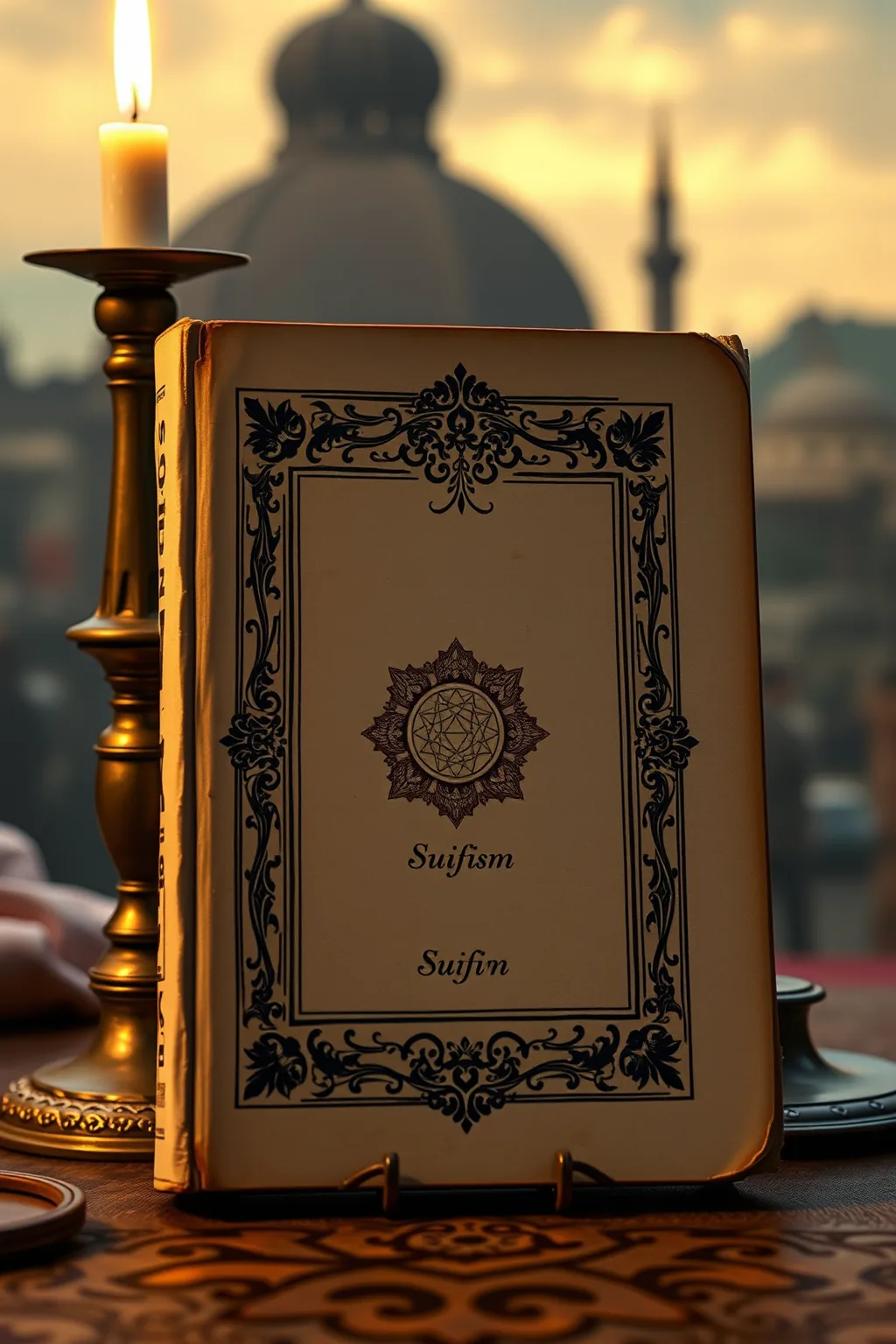
Sufism and the Transformation of Urban Space in Medieval Anatolia
 74
74

Sufism and the Transformation of Urban Space in Medieval Anatolia



By Evander Ashcroft (Alchemy & Hermeticism Editor) — This volume is a masterful exposition of how Sufi metaphysics manifested in tangible urban planning. Wolper unveils the subtle energies and profound symbolism embedded within medieval Anatolian cities, demonstrating a sophisticated understanding of Sufi cosmology and its architectural embodiment. The work transcends simple historical narrative, offering deep esoteric insights into the creation of spaces conducive to spiritual awakening and communal transcendence. Its rigorous scholarship, coupled with its evocative prose, makes it an indispensable read for those who appreciate the sacred geometry of life and the profound influence of spiritual traditions on the built environment. A true gem for the discerning reader.
📝 Description
74
This text examines the spiritual alchemy that reshaped medieval Anatolian cities.
This book examines the role of Sufism in transforming urban spaces in medieval Anatolia. It looks at how Sufi practices, such as whirling, contemplation, and sacred music, influenced the character of cities. The author discusses the symbolic architecture and geometric designs of Sufi lodges, and how these sacred spaces were intended to foster divine connection. The work suggests a worldview where the physical environment reflects inner spiritual states, highlighting the link between the material and the divine. This perspective is presented as more than historical record; it is an insight into a specific spiritual understanding of place.
The text details how Sufi lodges and mosques, beyond their functions as places of worship or residence, acted as centers for spiritual cultivation. It addresses the deliberate design of these structures, intended to align with mystical principles and facilitate the seeker's journey toward the divine. By analyzing architectural elements and spatial arrangements, the book illustrates how Sufi orders actively shaped the urban environment to support their esoteric goals. The author connects these physical manifestations to the broader Sufi cosmology, where the outer world is seen as a reflection of inner spiritual realities.
This work is situated within the esoteric tradition of Sufism, the mystical dimension of Islam. It focuses on the practical application of Sufi principles in shaping the built environment, moving beyond purely theological or philosophical discussions. The emphasis on sacred spaces as tools for spiritual development aligns with broader esoteric concepts found across various mystical traditions that view the material world as a manifestation or mirror of spiritual truths. The text specifically examines how these practices manifested in the urban context of medieval Anatolia, a region historically significant for its role in the development and dissemination of Sufi orders.
💡 Why Read This Book?
Uncover the esoteric blueprint of medieval Anatolian cities, where Sufi mystics transformed stone and space into conduits for divine connection. This book reveals hidden symbolism, sacred architecture, and the profound influence of contemplative practices on urban life. Essential for seekers of spiritual wisdom, scholars of mysticism, and practitioners yearning to understand the sacredness of place.
⭐ Reader Reviews
Honest opinions from readers who have explored this book.
❓ Frequently Asked Questions
What is the primary focus of this book?
The book primarily focuses on how Sufi mysticism influenced and transformed the physical and spiritual dimensions of urban spaces in medieval Anatolia, revealing the esoteric principles behind their design and function.
Who was Ethel Sara Wolper?
While the author is listed as 'Unknown' in the provided context, Ethel Sara Wolper is credited with original notes for this work, suggesting her significant contribution to its research and content.
What is Sufism?
Sufism is the mystical dimension of Islam, emphasizing the direct, personal experience of God through love, devotion, and asceticism. It often involves practices like meditation, chanting, and ecstatic dance.
What kind of 'transformation' is discussed?
The transformation refers to how Sufi ideals and practices shaped the physical layout, symbolic meaning, and spiritual atmosphere of cities, turning them into centers for contemplation and divine connection.
Is this book suitable for beginners to Sufism?
While the book delves into complex esoteric themes, its rich descriptions and accessible approach make it engaging for both beginners interested in the spiritual aspects of Sufism and experienced practitioners.
🔮 Key Themes & Symbolism
Sacred Geography and the Inner Journey
This theme explores the profound concept of sacred geography, where external urban spaces are meticulously designed to mirror and facilitate the internal spiritual journey of the Sufi seeker. It examines how mosques, Sufi lodges (tekkes), and even public squares were imbued with symbolic meaning, intended to guide individuals towards divine awareness and inner peace. The arrangement of buildings, the flow of water, and the interplay of light and shadow all served as potent metaphors for the stages of spiritual ascent. This perspective challenges conventional understandings of urban planning, revealing cities as living embodiments of mystical philosophy.
The Esoteric Architecture of Sufi Orders
Uncover the hidden architectural language of Sufi orders in medieval Anatolia. This theme investigates how the physical structures of Sufi centers, such as zawiyas and khanqahs, were not merely functional but encoded with esoteric knowledge. From the precise orientation of prayer halls to the symbolic placement of minarets and courtyards, every element was designed to align with cosmic principles and facilitate spiritual practice. The book illuminates how these spaces were intended to create an atmosphere conducive to contemplation, dhikr (remembrance of God), and the unfolding of mystical experiences, transforming ordinary buildings into gateways to the divine.
Sufi Ritual and Urban Transformation
This theme examines the wide impact of Sufi rituals, such as the whirling dance (Sema) and communal chanting, on the spiritual and social fabric of medieval Anatolian cities. It reveals how these practices, performed within specially designed spaces, fostered a sense of unity, ecstatic transcendence, and communal spiritual development. The book illustrates how the shared experience of these sacred performances could dissolve social barriers and elevate the collective consciousness of the urban populace, effectively transforming the city into a living sanctuary and a vibrant center of spiritual life.
💬 Memorable Quotes
Direct passages from the work, attributed to the author.
“Within the walls of the tekke, the veil between worlds grew thin.”
— This evocative phrase suggests that Sufi lodges were intentionally designed and utilized as liminal spaces where the boundary between the material and spiritual realms was deliberately blurred, facilitating mystical experiences.
“The dervish's whirl was a dance with the divine, echoing the motion of the spheres.”
— This emphasizes the cosmological significance of the Sema, linking the individual's ecstatic movement to the celestial dance of the universe, a core concept in Sufi metaphysics.
“To build a mosque was to lay the foundation for a soul's ascent.”
— This statement underscores the spiritual purpose behind the construction of religious buildings, framing them not just as places of worship but as integral elements in the process of spiritual growth and divine connection.
💡 Key Ideas
Editorial paraphrase of the work's core concepts — not direct quotes.
The city became a microcosm of the cosmos, a divine blueprint made manifest.
This quote highlights the Sufi belief that the physical world, including urban environments, reflects the divine order of the universe, acting as a tangible representation of spiritual truths.
Sacred geometry whispered secrets to those who knew how to listen.
This quote points to the esoteric understanding of architectural design, where mathematical proportions and symbolic forms held deeper, hidden meanings intended for spiritual insight and contemplation.
🌙 Esoteric Significance
Tradition
This work is deeply rooted in the esoteric tradition of Sufism, the mystical branch of Islam. It explores the inner dimensions of faith, emphasizing direct experience of the divine, purification of the soul, and the pursuit of spiritual perfection through love and devotion. The book highlights Sufi cosmology, the concept of the 'Perfect Man,' and the path of spiritual annihilation (fana) and subsistence (baqa) as core tenets influencing the creation of sacred spaces.
Symbolism
The book examines the detailed symbolism embedded within Sufi urbanism. Key symbols include the circle (representing divine unity and the cyclical nature of existence), the square (stability and the earthly realm), and geometric patterns that evoke cosmic order. Architectural elements like minarets symbolize aspirations towards the divine, while courtyards represent the heart or the inner spiritual sanctuary. Water features often symbolize divine grace and purification, and the specific arrangement of buildings reflects stages of the spiritual path.
Modern Relevance
The esoteric principles explored in this book offer profound relevance for contemporary society. In an increasingly secular and fragmented world, understanding how ancient traditions integrated the spiritual into the physical environment provides a blueprint for creating more meaningful and harmonious spaces. It encourages a re-evaluation of our relationship with our surroundings, urging us to see beyond the utilitarian and recognize the potential for our homes, cities, and public spaces to foster contemplation, connection, and a sense of the sacred.
👥 Who Should Read This Book
This useful text is essential for a diverse audience. **Scholars** of religious studies, Islamic history, and architectural history will find rigorous research and novel interpretations. **Seekers** of spiritual wisdom and those interested in comparative mysticism will discover useful insights into a vibrant tradition. **Practitioners** of Sufism, meditation, or contemplation will gain a deeper understanding of the sacredness of space and its role in spiritual development. Even **beginners** curious about the esoteric dimensions of Islam and the transformative power of faith will find this book an accessible yet deeply enriching exploration of a fascinating subject.
📜 Historical Context
Medieval Anatolia, particularly during the Seljuk and early Ottoman periods (roughly 11th to 15th centuries), was a vibrant crucible of cultural and spiritual exchange. This era saw the flourishing of diverse Islamic traditions, with Sufism emerging as a dominant force in shaping religious life, intellectual discourse, and artistic expression. The region's strategic position as a crossroads between East and West facilitated the influx of various mystical ideas, which were then synthesized and adapted by local Sufi orders. This period was characterized by the construction of magnificent mosques, madrasas, and Sufi centers, many of which were designed with profound symbolic and spiritual intent. The influence of Sufi scholars and saints extended beyond religious spheres, impacting governance, social structures, and the very character of urban development, making medieval Anatolia a fertile ground for the study of mysticism's tangible impact on society.
📔 Journal Prompts
How does the concept of 'sacred geography' resonate with your personal understanding of the spaces you inhabit?
Reflect on a time when a particular space evoked a strong sense of peace, awe, or spiritual connection. What elements contributed to this feeling?
Consider the symbolic potential of everyday objects or architectural features in your environment. What hidden meanings might they hold?
Imagine you were designing a space for deep contemplation. What principles from Sufi urbanism would you incorporate, and why?
How can the integration of spiritual practices into our daily lives transform our perception of the mundane world around us?
🗂️ Glossary
Sufism
The mystical dimension of Islam, focused on inner spiritual development, direct knowledge of God, and the purification of the soul through love and devotion.
Tekke
A Sufi lodge or monastery, serving as a center for spiritual practice, communal gatherings, and the education of disciples.
Dhikr
The remembrance of God, often performed through chanting, recitation of divine names, or meditative practices, central to Sufi spiritual discipline.
Sema
A Sufi ceremony of ecstatic whirling dance, intended to facilitate spiritual union with the divine and is often accompanied by music and chanting.
Khanqah
A building specifically designated for Sufi gatherings, often including living quarters for dervishes, a prayer hall, and spaces for spiritual instruction and retreat.
This book appears in 2 collections
🔮 Readers Also Liked
Browse all →








From the “Christian Mysticism” Collection
View all →







More Free Mysticism & Contemplation Books
View all →