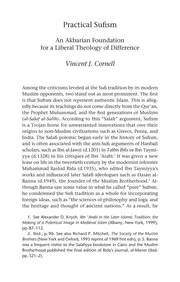
A Sufi Message of Spiritual liberty by Inayat Khan
 76
76

A Sufi Message of Spiritual liberty by Inayat Khan



Aurelia Blackwood, Occult Philosophy Critic — Inayat Khan's "A Sufi Message of Spiritual Liberty" stands as a beacon of esoteric illumination within the vast ocean of mystical literature. Khan masterfully deciphers the intricate symbolism of Sufism, presenting its profound teachings on spiritual liberation with unparalleled clarity and grace. This work is not merely academic; it is an invitation to direct experience, offering practical wisdom for the awakening soul. Its strength lies in its accessibility, making complex metaphysical concepts comprehensible without sacrificing their inherent depth. Essential reading for seekers of truth, students of comparative mysticism, and anyone drawn to the transformative power of inner exploration.
📝 Description
76
Inayat Khan's 1926 "A Sufi Message of Spiritual Liberty" presents Sufism as a direct experience of the divine.
Published in 1926, "A Sufi Message of Spiritual Liberty" by Inayat Khan outlines the esoteric principles of Sufism. The book addresses spiritual liberty, focusing on the individual's direct connection to the divine rather than religious dogma. Khan describes the inner architecture of existence and the unity of all creation, using symbolic language to convey philosophical ideas about the soul.
The work aims to guide the reader toward an awakening of their spiritual sovereignty. It moves beyond cultural and religious divides, advocating a universal message centered on love, harmony, and beauty as core spiritual tenets. The text invites earnest seekers and contemplative individuals to explore the deeper aspects of life.
This work is situated within the broader tradition of esoteric Sufism, which emphasizes the inner, mystical dimensions of Islam. Unlike exoteric interpretations focused on law and ritual, esoteric Sufism, as presented by Khan, concerns the direct apprehension of divine realities and the purification of the self. It draws upon a rich history of Sufi thought that often uses allegory and symbolism to describe the soul's journey toward union with God, placing it alongside other mystical traditions that seek transcendent experience.
💡 Why Read This Book?
Discover the universal essence of spiritual freedom beyond dogma. "A Sufi Message of Spiritual Liberty" offers a profound exploration of the soul's innate connection to the divine. Ideal for seekers of truth, contemplative practitioners, and scholars of mysticism, this book provides timeless wisdom for achieving inner peace and understanding life's deeper mysteries.
⭐ Reader Reviews
Honest opinions from readers who have explored this book.
❓ Frequently Asked Questions
What is the primary focus of "A Sufi Message of Spiritual Liberty"?
The book's primary focus is on the esoteric teachings of Sufism, emphasizing spiritual liberty, the interconnectedness of all life, and the direct experience of the divine as a path to inner freedom and enlightenment.
Is prior knowledge of Sufism required to understand this book?
While prior knowledge can enhance understanding, Inayat Khan's eloquent prose and clear explanations make the work accessible to newcomers interested in mystical philosophy and the spiritual journey.
What are the key benefits of reading this book?
Readers can expect to gain deeper insights into the nature of the soul, the universe, and their place within it, fostering personal growth, spiritual awareness, and a profound sense of peace and liberty.
Who is Inayat Khan, and what is his background?
Inayat Khan was an Indian Sufi master and musician who brought Sufism to the West in the early 20th century. His teachings emphasize universal spirituality, love, harmony, and beauty.
How does this book contribute to the broader field of mysticism?
It offers a unique synthesis of Eastern Sufi wisdom and Western philosophical thought, presenting a universal message of spiritual liberation that resonates across diverse traditions and backgrounds.
🔮 Key Themes & Symbolism
The Nature of Spiritual Liberty
This theme examines the concept of true freedom, not as external emancipation, but as an inner state achieved through self-realization and detachment from egoic limitations. It explores how shedding illusions and embracing the divine essence leads to an unshakeable sense of liberty, allowing the individual to live in harmony with the universal flow of existence. The message is one of awakening to one's inherent spiritual sovereignty, transcending the bonds of material concerns and societal conditioning.
The Unity of Being and Universal Love
A core tenet of the message is the profound interconnectedness of all creation, a divine range woven with the threads of love. The book elucidates how recognizing this intrinsic unity dissolves barriers of separation, fostering empathy and compassion for all beings. It presents love not merely as an emotion, but as the fundamental force that binds the cosmos, urging the reader to cultivate this divine attribute within themselves as the highest form of spiritual practice and understanding.
The Path of Contemplation and Inner Knowing
This theme focuses on the internal journey of spiritual discovery, emphasizing the power of contemplation, meditation, and intuitive insight. It guides the reader away from external dogma and towards the cultivation of inner awareness, where true wisdom resides. The message highlights that the answers to life's most profound questions are found not in external sources, but within the depths of one's own being, accessible through quiet introspection and sincere spiritual seeking.
💬 Memorable Quotes
Direct passages from the work, attributed to the author.
“The world is a dream, and you are its dreamer.”
— This profound statement points to the illusory nature of material reality and emphasizes the power of consciousness as the creator of our perceived experiences, urging us to recognize our inner creative potential.
“True liberty is the freedom to be yourself.”
— This highlights the essence of spiritual freedom as authenticity, the courage to shed societal masks and embrace one's true nature, unburdened by external expectations or internal fears.
“In silence, the universe speaks.”
— This aphorism underscores the importance of stillness and quietude for spiritual perception, suggesting that the deepest truths and insights are revealed not through noise, but through attentive inner listening.
“Every soul is a spark of the divine fire.”
— This metaphor illustrates the inherent divinity within every individual, asserting that each person carries a fragment of the universal spirit, a reminder of our sacred origin and potential.
💡 Key Ideas
Editorial paraphrase of the work's core concepts — not direct quotes.
Love is the essence of all religions.
This quote posits love as the foundational and unifying principle underlying all spiritual traditions, suggesting that its pure expression is the ultimate aim of religious and mystical pursuit.
🌙 Esoteric Significance
Tradition
This work is deeply rooted in the Chishti order of Sufism, a prominent branch of Islamic mysticism known for its emphasis on love, devotion, and spiritual union. However, Inayat Khan's interpretation transcends sectarian boundaries, presenting Sufism as a universal path applicable to all humanity, focusing on the esoteric core of spiritual realization rather than outward religious observance.
Symbolism
The book employs strong symbolism drawn from Sufi tradition, including the rose, the nightingale, the wine of divine love, and the journey of the soul. These symbols are not mere decorative elements but serve as keys to understanding complex spiritual concepts, representing stages of inner transformation, the Beloved (Divine), and the ecstatic experience of union with the Absolute.
Modern Relevance
In an age often characterized by spiritual seeking and a desire for authentic self-discovery, "A Sufi Message of Spiritual Liberty" offers profound relevance. Its emphasis on inner peace, universal love, and the interconnectedness of all beings provides a timeless antidote to modern anxieties and divisions. The book's message of spiritual liberty appeals to contemporary individuals seeking personal growth and a deeper understanding of life beyond material pursuits.
👥 Who Should Read This Book
This profound work is important for a diverse audience. **Spiritual Seekers** will find a clear and inspiring roadmap for their inner journey, useful the path to self-discovery and divine connection. **Students of Mysticism and Comparative Religion** will gain a deep understanding of Sufi philosophy and its universal principles. **Practitioners of Meditation and Contemplation** will discover guidance for deepening their practice and experiencing spiritual liberation. **Anyone yearning for a more meaningful existence** and seeking to cultivate love, harmony, and beauty in their lives will find this book a transformative and empowering read.
📜 Historical Context
Published in the early 20th century, "A Sufi Message of Spiritual Liberty" emerged during a period of burgeoning global interest in Eastern philosophies and mysticism, particularly Sufism, in the Western world. Inayat Khan, an influential Sufi teacher, played a key role in introducing these traditions to a Western audience. The book reflects the era's intellectual climate, which was increasingly questioning traditional religious frameworks and seeking deeper, more experiential forms of spirituality. It arrived at a time when scholars and seekers were exploring comparative religion and metaphysics, offering a bridge between Eastern esoteric wisdom and Western thought, and contributing significantly to the growth of the New Age movement and esoteric studies.
📔 Journal Prompts
Reflect on a time you experienced true spiritual liberty. What were the circumstances, and what did it feel like?
How does the concept of 'universal love' as presented by Khan challenge or affirm your current understanding of love?
Identify one symbol from the book that resonates deeply with you. Explore its potential meaning in your own spiritual journey.
Consider the idea that 'the world is a dream, and you are its dreamer.' How does this perspective shift your view of your daily life and challenges?
What practices can you incorporate into your daily routine to cultivate inner silence and listen more attentively to the 'universe speaking'?
🗂️ Glossary
Sufi
A practitioner of Sufism, the mystical dimension of Islam, focused on direct experience of God through love, devotion, and asceticism. Sufism seeks to purify the heart and attain spiritual union with the Divine.
Murshid
A spiritual guide or teacher within Sufism, responsible for leading disciples on the path to enlightenment and providing spiritual instruction and support.
Dhikr
A Sufi devotional practice involving the remembrance of God, often through chanting the names of Allah, reciting prayers, or meditating on divine attributes. It aims to induce a state of spiritual ecstasy and presence.
Fana
A key Sufi concept meaning 'annihilation' or 'dissolution' of the ego or self in the Divine. It signifies a state of ecstatic union where the individual self ceases to exist as a separate entity.
Baqa
Following fana, baqa signifies 'subsistence' or 'permanence' in God. It is the state of continued existence in the Divine after the ego has been annihilated, characterized by spiritual awareness and divine consciousness.
This book appears in 2 collections
🔮 Readers Also Liked
Browse all →







From the “Christian Mysticism” Collection
View all →









More Free Mysticism & Contemplation Books
View all →