What is Jainism
 72
72

What is Jainism



Champat Rai Jain's 'What is Jainism' is a seminal work for anyone interested in the esoteric and occult dimensions of Jainism. The author's assertion that Jainism is a science rather than a religious dogma is both provocative and enlightening. By focusing on the knowledge of enlightened beings, Jain presents a pathway to spiritual perfection that is both rational and mystical. For modern esoteric seekers, this book offers a unique blend of scientific rigor and spiritual depth, making it a valuable addition to any spiritual library. The text is well-researched and presents complex ideas in an accessible manner, making it suitable for both beginners and advanced students of Jainism. The emphasis on contemplation and mysticism provides a rich tapestry for spiritual exploration. Overall, this book is a must-read for those seeking a deeper understanding of Jainism's mystical and scientific foundations.
📝 Description
72
Champat Rai Jain's 1917 book explains Jainism's philosophical and ethical dimensions.
Published in 1917, Champat Rai Jain's "What is Jainism" approaches the tradition as a systematic inquiry into existence. The author frames Jainism not as a religion of dogma, but as a science of the soul and the cosmos. He details the core principles, including ahimsa (non-violence), anekantavada (non-absolutism), and aparigraha (non-possession).
The text explains the metaphysical structure of the universe according to Jain philosophy, covering the nature of souls, karma, and liberation. It also outlines the ascetic practices and meditative techniques central to the Jain path. The book aims to clarify these concepts for those unfamiliar with the tradition, presenting them as logical and verifiable truths.
This work situates Jainism within a lineage of spiritual thought that predates many major world religions. It emphasizes the tradition's internal logic and its focus on direct experience and self-control as means to understanding reality. The book highlights Jainism's emphasis on rigorous asceticism and ethical conduct as pathways to spiritual liberation, a common concern in esoteric traditions that seek transcendence beyond ordinary human perception.
✍️ Author
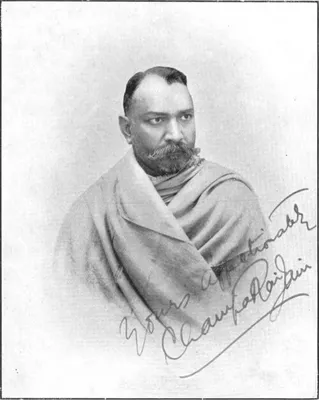
Champat Rai Jain
Champat Rai Jain (6 August 1867–2 June 1942) was a Digambara Jain born in Delhi and who studied and practised law in England. He became an influential Jainism scholar and comparative religion writer between 1910s and 1930s who translated and interpreted Dig…
💡 Why Read This Book?
Reading 'What is Jainism' today offers a unique perspective on the intersection of science and spirituality. In an age where many seek authentic spiritual paths, this book provides a solid foundation rooted in ancient wisdom and modern scientific thought. Readers will gain insights into the contemplative practices of Jainism, understanding how they can achieve spiritual perfection through a scientific approach. This book is particularly relevant for those interested in exploring esoteric traditions and seeking a deeper connection with the mystical aspects of Jainism.
⭐ Reader Reviews
Honest opinions from readers who have explored this book.
❓ Frequently Asked Questions
What makes Jainism a science?
Jainism is considered a science because it is founded on the knowledge of enlightened beings who have achieved perfection through its principles, rather than relying on arbitrary rules or divine commandments.
Who should read this book?
This book is ideal for spiritual seekers, esoteric enthusiasts, and anyone interested in the scientific underpinnings of mysticism and contemplative practices.
What are the key themes in 'What is Jainism'?
The key themes include the pursuit of perfection, the scientific basis of spiritual practices, and the importance of contemplation in achieving spiritual enlightenment.
🔮 Key Themes & Symbolism
Esoteric Teachings of Jainism
The book examines the hidden knowledge and symbolic wisdom that form the core of Jainism, offering readers a deep understanding of its mystical dimensions.
Philosophical Underpinnings
Jainism is presented as a scientific exploration of the self and the universe, with a focus on the philosophical frameworks that define this ancient path.
Contemplative Practices
The book provides insights into the contemplative practices and ethical frameworks that are central to Jainism, inviting readers to begin a study of self-discovery and spiritual enlightenment.
💡 Key Ideas
Editorial paraphrase of the work's core concepts — not direct quotes.
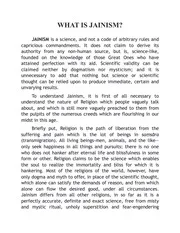
Jainism is a science, not a code of arbitrary rules.
This quote underscores the book's emphasis on the empirical and rational foundations of Jainism.
It is founded on the knowledge of those Great Ones who have attained perfection.
This line highlights the importance of spiritual attainment and wisdom in Jain thought.
Scientific validity can be claimed neither by dogmatism nor mysticism.
This quote emphasizes the book's focus on the scientific and rational dimensions of Jainism.
To understand Jainism is to understand the self and the universe.
This line invites readers to explore the profound philosophical insights offered by Jainism.
It is a journey of self-discovery and spiritual enlightenment.
This quote captures the transformative potential of studying Jainism's mystical dimensions.
🌙 Esoteric Significance
Tradition
What is Jainism belongs to the esoteric tradition of mystical and contemplative spirituality, drawing on the ancient wisdom of Jainism to offer clear insights into the self and the universe.
Symbolism
Key symbols in the book include the concept of ahimsa (non-violence) and the idea of the self as a spiritual entity, which are central to Jainism's esoteric teachings.
Modern Relevance
Today, the book remains relevant for its emphasis on the scientific and rational dimensions of spirituality, making it a valuable resource for modern practitioners and seekers.
👥 Who Should Read This Book
Beginners interested in Jainism's mystical dimensions will find this book an accessible and enlightening introduction. Scholars of comparative religion and philosophy will appreciate its deep exploration of Jain thought. Spiritual seekers will benefit from the contemplative practices and ethical frameworks presented, while practitioners of mystical traditions will find it a rich source of esoteric insights.
📜 Historical Context
What is Jainism was written during a time when the mystical and esoteric dimensions of spiritual traditions were gaining renewed interest. Champat Rai Jain's work was instrumental in shedding light on the profound and hidden aspects of Jainism, making it accessible to a wider audience. The book's influence can be seen in the growing appreciation for Jainism's contemplative practices and philosophical insights, as well as its impact on modern spiritual seekers and scholars.
📔 Journal Prompts
How does the concept of ahimsa resonate with your own spiritual journey?
In what ways can the scientific approach to Jainism inform your understanding of spirituality?
Reflect on the idea of the self as a spiritual entity and its implications for your life.
How do the contemplative practices in Jainism compare to those in other mystical traditions?
What insights from What is Jainism can you apply to your daily spiritual practice?
🗂️ Glossary
Ahimsa
The principle of non-violence, central to Jainism's ethical framework and esoteric teachings.
Karma
The concept of action and its consequences, which plays a central role in Jainism's philosophical and mystical dimensions.
Moksha
The ultimate goal of liberation from the cycle of rebirth, achieved through spiritual attainment and wisdom.
Anekantavada
The principle of non-absolutism, emphasizing the multiplicity of viewpoints in Jain thought.
Tapas
The practice of asceticism and self-discipline, essential for spiritual growth and enlightenment in Jainism.
This book appears in 1 collection
🔮 Readers Also Liked
Browse all →







From the “Christian Mysticism” Collection
View all →









More Free Mysticism & Contemplation Books
View all →