Chapter Nostalgia and Creaturality in H. Leivick’s Тhe Golem

 73
73

Chapter Nostalgia and Creaturality in H. Leivick’s Тhe Golem

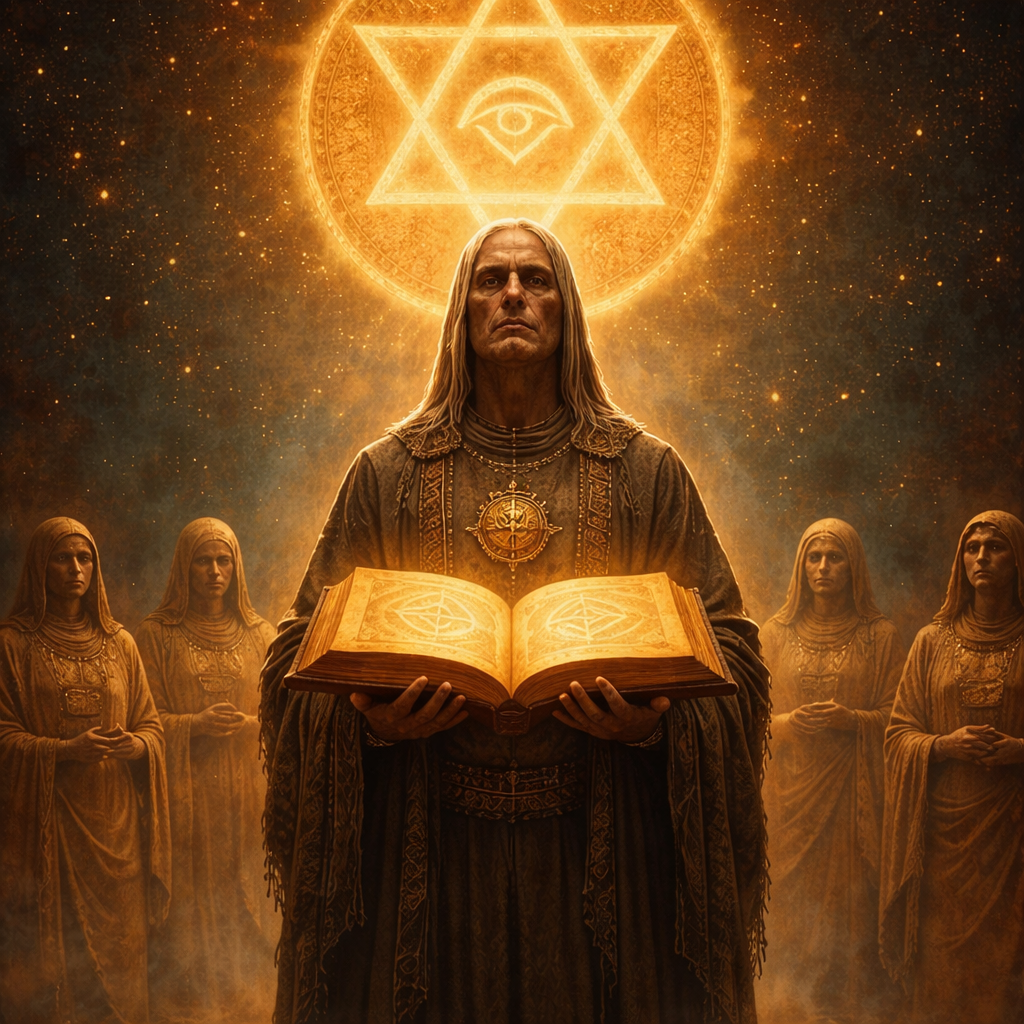

H. Leivick's 'Chapter Nostalgia and Creaturality in H. Leivick’s The Golem' is a profound exploration of Jewish angst and mysticism, making it an invaluable resource for modern esoteric seekers. The book's in-depth analysis of the Golem legend, coupled with its examination of Jewish toska, provides a rich tapestry of cultural and spiritual insights. Leivick's work is not just a historical study but a timeless reflection on the human condition, particularly relevant in today's world where spiritual longing is as prevalent as ever. The text's esoteric depth and literary elegance make it a must-read for those delving into the mysteries of Kabbalah and Jewish mysticism.
📝 Description
73
H. Leivick's 'The Golem' is analyzed for its themes of nostalgia and creaturality.
This study examines H. Leivick's Yiddish drama, 'The Golem,' focusing on its concepts of nostalgia and creaturality. The author traces the metaphysical elements within the play, revealing the symbolic meanings associated with the Golem figure. The work connects the drama to both Kabbalistic traditions and Russian Symbolism. It discusses themes of Jewish melancholic nostalgia and existential yearning.
The book is aimed at readers interested in esoteric knowledge, Jewish mysticism, and occult practices. It delves into the philosophical underpinnings of Jewish angst and the search for ontological meaning within the context of the play.
This analysis places Leivick's 'The Golem' within the esoteric tradition of Jewish mysticism, particularly its engagement with Kabbalistic concepts. The Golem, a figure central to Jewish folklore and mystical thought, serves as a locus for exploring themes of creation, artificial life, and the human condition. The book also situates the play within the broader context of Russian Symbolism, a movement that often incorporated mystical and occult ideas. This intersection allows for an examination of how ancient esoteric traditions can inform modern dramatic and philosophical inquiry.
💡 Why Read This Book?
Reading 'Chapter Nostalgia and Creaturality in H. Leivick’s The Golem' today offers a deep dive into the esoteric traditions of Judaism, providing a unique perspective on the enduring symbol of the Golem. This book is essential for those seeking to understand the spiritual and cultural dimensions of Jewish mysticism. It offers valuable insights into the human condition, making it relevant for modern esoteric seekers and anyone interested in the intersection of religion, culture, and spirituality.
⭐ Reader Reviews
Honest opinions from readers who have explored this book.
❓ Frequently Asked Questions
What is the main theme of 'Chapter Nostalgia and Creaturality in H. Leivick’s The Golem'?
The main theme is the exploration of Jewish melancholic nostalgia, or 'toska,' through the lens of the Golem legend. The book delves into the spiritual and cultural anxieties of the Jewish people, providing a rich historical context.
Who is the intended audience for this book?
This book is intended for readers interested in Kabbalah, Jewish mysticism, and the deeper spiritual dimensions of Jewish culture. It is also valuable for esoteric seekers and those studying the intersection of religion and spirituality.
What historical context does the book provide?
The book provides a detailed historical context, exploring the interplay between Jewish mysticism and broader esoteric traditions, particularly focusing on the sixteenth-century creation of the Golem by Rabbi Loew, the Maharal of Prague.
🔮 Key Themes & Symbolism
Jewish Nostalgia
This theme examines the deep sense of longing and melancholy that permeates Jewish mysticism, as embodied by the Golem. It explores the ontological distance between the divine and the human, and the existential quest for meaning within this gap.
Kabbalistic Symbolism
The book unpacks the strong symbolism of the Golem legend, drawing on ancient Kabbalistic lore to reveal the hidden knowledge and metaphysical insights that underpin the story.
Russian Symbolism
This theme examines the influence of Russian Symbolism on H. Leivick's work, highlighting how the literary and philosophical movements of the time shaped the mystical and esoteric elements of 'The Golem'.
💡 Key Ideas
Editorial paraphrase of the work's core concepts — not direct quotes.
The Golem stands as a evidence of the eternal struggle between the divine and the mundane.
This line underscores the existential quest for meaning within Jewish mysticism.
Nostalgia is the melancholic longing for a lost divine connection.
This quote highlights the deep sense of longing and melancholy that characterizes Jewish angst.
The Golem embodies the metaphysical quest for ontological completeness.
This passage emphasizes the Golem's role as a symbol of the search for meaning and wholeness.
Russian Symbolism and Kabbalistic lore intertwine in the set of 'The Golem'.
This line underscores the rich interplay of literary and esoteric traditions that inform the drama.
The Golem's journey is a reflection of the Jewish people's existential plight.
This quote highlights the Golem's role as an emblem of Jewish identity and mysticism.
🌙 Esoteric Significance
Tradition
This book belongs to the Kabbalistic tradition, drawing on ancient Jewish mysticism to explore the metaphysical and symbolic dimensions of 'The Golem.' It also incorporates elements of Russian Symbolism, enriching the esoteric set of the text.
Symbolism
Key symbols include the Golem itself, representing the quest for ontological completeness, and the concept of 'toska,' or Jewish melancholic nostalgia. These symbols embody the deep sense of longing and existential search for meaning within Jewish mysticism.
Modern Relevance
Today, this work remains relevant for its insights into the intersection of Kabbalistic and Symbolist traditions. Modern practitioners and scholars of Jewish mysticism continue to draw on 'The Golem' for its strong symbolism and esoteric wisdom.
👥 Who Should Read This Book
This book is ideal for scholars of Jewish mysticism, practitioners of the occult, and seekers of esoteric wisdom. Beginners will find it accessible and enlightening, while experienced readers will appreciate the depth of its analysis. Spiritual seekers will be drawn to the profound philosophical and metaphysical themes, making it a valuable addition to any esoteric library.
📜 Historical Context
Written in 1921, 'The Golem' by H. Leivick emerged during a time of significant cultural and intellectual ferment in Eastern Europe. The drama reflects the influence of Russian Symbolism and the resurgence of interest in Kabbalistic lore. Leivick's work was important in bridging the gap between traditional Jewish mysticism and modern literary movements, making it a seminal text for scholars and practitioners of esoteric wisdom.
📔 Journal Prompts
How does the concept of 'toska' resonate with your own spiritual journey?
What are the key symbols in 'The Golem' and how do they reflect Jewish mysticism?
How does Russian Symbolism influence the esoteric elements of the drama?
In what ways does the Golem embody the existential quest for meaning?
How can the insights from this book be applied to modern spiritual practices?
🗂️ Glossary
Golem
A legendary creature from Jewish folklore, often associated with the mystical traditions of Kabbalah. In 'The Golem,' it serves as a symbol of Jewish melancholic nostalgia and the quest for meaning.
Kabbalah
An esoteric tradition within Judaism that focuses on the mystical interpretation of Jewish texts and practices. It explores the hidden knowledge and metaphysical dimensions of Jewish mysticism.
Toska
A Russian term for a deep sense of melancholic longing or spiritual anguish, often associated with existential quests for meaning and connection.
Russian Symbolism
A literary and philosophical movement that emerged in Russia in the late 19th and early 20th centuries, characterized by its focus on mystical and esoteric themes.
Maharal of Prague
A renowned 16th-century Jewish scholar and mystic, credited with creating the Golem. His legend is central to the mystical and esoteric elements of 'The Golem.'
This book appears in 1 collection
🔮 Readers Also Liked
Browse all →







From the “Kabbalah” Collection
View all →








More Free Kabbalah & Jewish Mysticism Books
View all →