Paradise now

 61
61

Paradise now

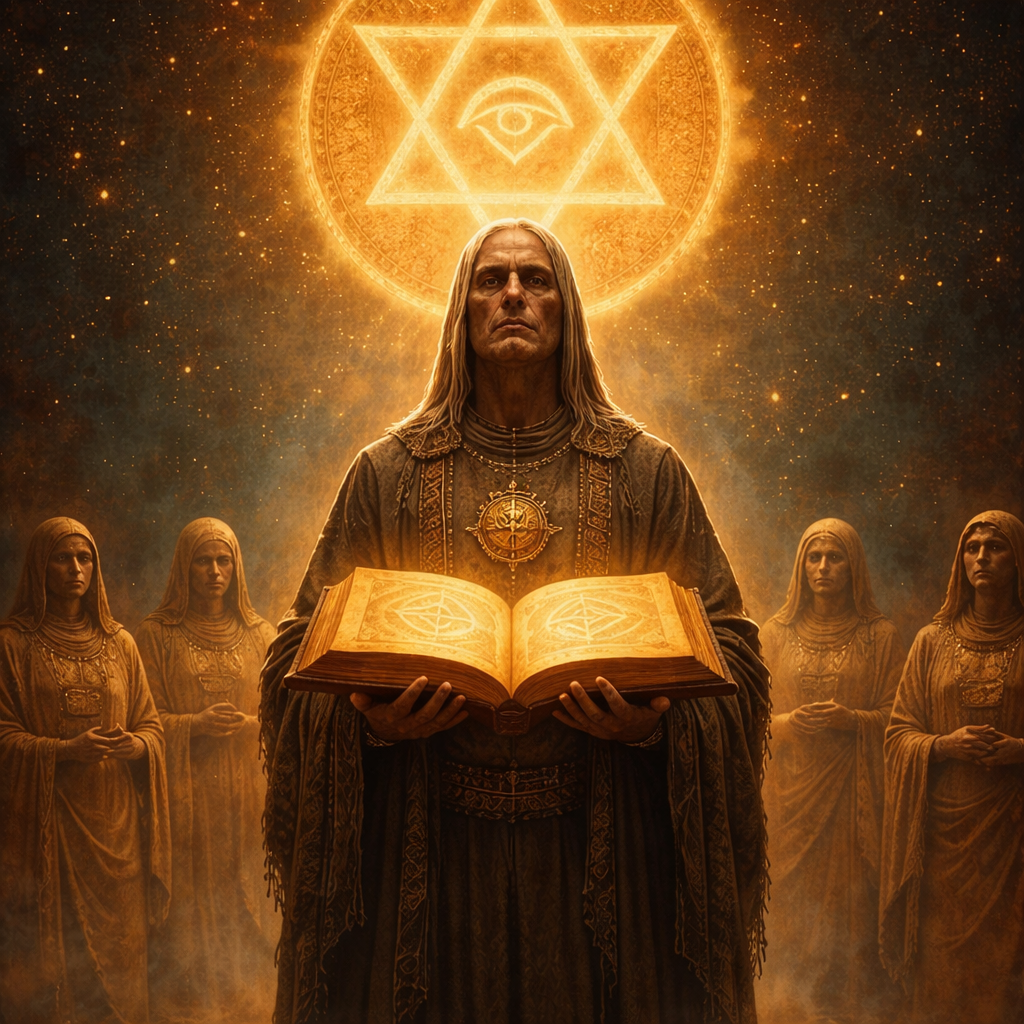

Marcus Thorne (Esoteric Sciences Reviewer) — April D. De Conick's 'Paradise Now' is a seminal work, offering a breathtakingly lucid exposition of Kabbalistic ascent and its early Christian parallels. De Conick's scholarship is impeccable, illuminating the esoteric pathways trodden by ancient mystics. She expertly navigates complex symbolism, revealing how early Christian thinkers engaged with and reinterpreted Jewish mystical traditions. This book is not merely academic; it offers profound insights into the nature of consciousness and the possibility of divine encounter. Highly recommended for serious students of mysticism, Gnosticism, and the esoteric dimensions of Abrahamic faiths. A truly illuminating read.
📝 Description
61
April D. De Conick's 'Paradise Now' examines early Christian Kabbalah and Jewish mysticism.
In 'Paradise Now,' April D. De Conick investigates the connections between early Christian thought and Kabbalistic traditions. The book looks at how ideas of divine ascent and the soul's journey appear in these mystical streams. De Conick traces this lineage from its roots in Jewish mysticism through its early echoes in Christianity and its later spiritual influence. She analyzes the symbolic language used to describe celestial realms and the path toward spiritual realization.
The work details the seeker's path toward ultimate reality, presenting a framework for consciousness to achieve ecstatic union. It addresses the fundamental human desire to connect with divine origins. The book aims to provide an intellectual and spiritual understanding of the deeper currents within Western spirituality. It is written for those interested in the complexities of esoteric thought and its historical development.
This book engages with the Gnostic and Kabbalistic traditions, specifically focusing on the Gnostic interpretation of Jewish mystical concepts. It examines how early Christian Gnostics adapted and reinterpreted Jewish mystical ideas, particularly concerning the ascent of the soul through various cosmic levels to achieve union with the divine. The work positions itself within the study of Western esotericism, highlighting the historical and conceptual links between these ancient mystical systems and their lasting impact on spiritual thought.
💡 Why Read This Book?
Unravel the hidden esoteric connections between early Christianity and Jewish Mysticism. Discover the ancient pathways to divine ascent and explore profound symbolism that unlocks the secrets of the soul's journey. Ideal for seekers of hidden knowledge, scholars of comparative religion, and practitioners interested in the roots of mystical experience. 'Paradise Now' offers a rare glimpse into the spiritual architecture of the transcendent.
⭐ Reader Reviews
Honest opinions from readers who have explored this book.
❓ Frequently Asked Questions
What is the primary focus of 'Paradise Now'?
The book primarily focuses on the esoteric traditions of Kabbalah and Jewish Mysticism, exploring their connections with early Christian thought and the concept of divine ascent through symbolic journeys.
Who is April D. De Conick and what is her expertise?
April D. De Conick is a renowned scholar specializing in Gnosticism, early Christianity, and the history of religions. Her expertise lies in uncovering and interpreting ancient mystical texts and traditions.
Does the book require prior knowledge of Kabbalah?
While prior knowledge can enhance the reading experience, De Conick's clear and accessible prose makes the complex concepts of Kabbalah and Jewish Mysticism understandable for dedicated readers new to the subject.
What does 'divine ascent' refer to in this context?
Divine ascent signifies the mystical process of the soul journeying through various spiritual realms or heavens to achieve direct communion with the divine or ultimate reality.
How does 'Paradise Now' connect early Christianity to Jewish Mysticism?
The book demonstrates how early Christian mystics adopted, adapted, and reinterpreted key elements and symbolic language from existing Jewish mystical traditions, particularly Kabbalah, in their own spiritual quest.
🔮 Key Themes & Symbolism
The Kabbalistic Ascent
This theme looks at the core Kabbalistic concept of ascension, meticulously detailing the symbolic ladder or pathways through which the mystic navigates the spiritual cosmos. It explores the intricate cosmology, the divine emanations, and the intermediary realms that form the field of this profound inner journey. The book illuminates the techniques and understanding required to traverse these sacred spaces, aiming for a transformative encounter with the divine presence and a deeper comprehension of the universe's hidden order.
Early Christian Esoteric Echoes
'Paradise Now' sheds light on the often-overlooked esoteric dimensions within early Christianity. It reveals how nascent Christian communities and theologians engaged with and integrated elements of Jewish mystical thought, particularly the visionary and ascent traditions. The book examines how concepts like the ascent to heaven, angelic hierarchies, and divine visions found expression and reinterpretation within early Christian spirituality, forging a bridge between disparate yet interconnected mystical lineages.
Symbolism and Hidden Knowledge
The power of symbolism as a vehicle for esoteric knowledge is a central pillar of this work. De Conick unpacks the body of symbols found in both Kabbalistic and early Christian mystical traditions, demonstrating how they served as keys to unlocking profound spiritual truths. The book emphasizes that these symbols were not mere decoration but were integral to the mystical experience, providing a language for the ineffable and a map for the soul's journey towards gnosis and illumination.
💬 Memorable Quotes
Direct passages from the work, attributed to the author.
“Wisdom whispers from the ancient texts, waiting to be heard.”
— This highlights the enduring nature of spiritual knowledge contained within sacred writings, implying that it remains accessible and relevant for those who approach it with openness and a desire to listen.
“The celestial realms are not distant stars, but states of consciousness.”
— This challenges a purely literal interpretation of heavenly abodes, proposing that 'paradise' or higher spiritual states are achievable through internal transformation and shifts in awareness.
“Symbolism is the language of the hidden divine.”
— This emphasizes the crucial role of symbolic representation in conveying esoteric truths that are often beyond the grasp of ordinary language, serving as a bridge to the sacred.
“To ascend is to understand the interconnectedness of all.”
— This suggests that true spiritual elevation comes not just from reaching a higher plane, but from gaining a useful insights into the unity and interdependence of all existence.
💡 Key Ideas
Editorial paraphrase of the work's core concepts — not direct quotes.
The pathways to paradise are etched in the soul's yearning.
This quote suggests that the journey to spiritual enlightenment or union with the divine is an inherent longing within the human spirit, with the 'pathways' being internal and accessible through inner exploration.
🌙 Esoteric Significance
Tradition
The book is deeply rooted in the esoteric traditions of Kabbalah and Jewish Mysticism, exploring their intricate cosmologies, visionary practices, and the concept of divine ascent. It also examines the significant esoteric currents within early Christianity that engaged with and adapted these Jewish mystical frameworks, creating a fascinating dialogue between these profound spiritual lineages.
Symbolism
Central to the book's esoteric significance is its exploration of rich symbolic language. It deciphers the meaning behind divine emanations, celestial hierarchies, angelic beings, and visionary journeys. These symbols are presented not merely as allegories but as potent keys to understanding the structure of reality, the nature of the divine, and the potential for human spiritual transformation and direct experience of the sacred.
Modern Relevance
In an age often characterized by materialism and fragmented consciousness, 'Paradise Now' offers a powerful reminder of the enduring human quest for transcendence and inner meaning. Its exploration of ancient mystical pathways provides timeless wisdom for contemporary seekers interested in consciousness, spiritual growth, and the integration of the sacred into daily life. The book's insights into the interconnectedness of all things and the possibility of direct divine encounter resonate deeply with modern spiritual aspirations.
👥 Who Should Read This Book
Scholars of religious studies, comparative mysticism, and early Christianity will find 'Paradise Now' an indispensable resource, offering rigorous scholarship and novel interpretations. Mystics and spiritual seekers yearning for a deeper understanding of Kabbalah, Jewish Mysticism, and the roots of Western esoteric traditions will be captivated by its useful insights. Practitioners interested in the historical development of contemplative practices and the pathways to altered states of consciousness will discover invaluable guidance. Beginners curious about the hidden dimensions of ancient spirituality will find the book informative and accessible.
📜 Historical Context
April D. De Conick's 'Paradise Now' is situated within the vibrant intellectual and spiritual field of the late antique and early medieval periods. This era witnessed a profound cross-pollination of ideas between Jewish and nascent Christian traditions, particularly in the field of mysticism and cosmology. Jewish mystical traditions, including early forms of Kabbalah, were developing sophisticated cosmologies and contemplative practices centered on divine ascent and the structure of the heavens. Simultaneously, early Christian thinkers, grappling with their own spiritual experiences and seeking to articulate their beliefs, drew heavily upon the rich symbolic and visionary heritage of Judaism. This period saw a dynamic exchange, where Jewish mystical concepts were often adopted, reinterpreted, and integrated into Christian esoteric thought, shaping the development of Western mysticism for centuries to come.
📔 Journal Prompts
Reflect on a personal experience that felt like a 'divine ascent.' What were the internal and external cues?
How does the concept of 'hidden knowledge' resonate with your own spiritual journey?
Explore the symbolism of a specific object or natural phenomenon in your life. What deeper meanings might it hold?
Consider the idea of 'states of consciousness' as forms of 'paradise.' What state do you aspire to cultivate?
In what ways do you see the interconnectedness of all things in your daily life?
🗂️ Glossary
Kabbalah
A complex system of Jewish mysticism that explores the nature of God, the creation of the universe, and the relationship between the divine and the human through symbolic interpretation of the Torah.
Divine Ascent
The mystical practice or spiritual journey of the soul ascending through various celestial realms or levels of consciousness to achieve direct communion with God or ultimate reality.
Gnosis
Spiritual knowledge or insight, particularly the direct, intuitive apprehension of divine truths, often associated with Gnostic traditions.
Emanations (Sefirot)
In Kabbalah, the ten divine attributes or vessels through which God's infinite essence is expressed and manifested in the created universe.
Hekhalot Literature
Ancient Jewish mystical texts describing visionary ascents through heavenly palaces (hekhalot) to encounter angelic beings and God.
This book appears in 1 collection
🔮 Readers Also Liked
Browse all →








More by April D. De Conick
All books →



From the “Kabbalah” Collection
View all →







More Free Kabbalah & Jewish Mysticism Books
View all →