Lord of the Three in One
 71
71

Lord of the Three in One
Kenneth Dean's "Lord of the Three in One" offers a sober, ethnographic look at a vibrant religious revival in Southeast China. The book's strength lies in its detailed observation of the "Three in One" cult's contemporary practices, particularly its organizational structure and Lin's veneration. Dean avoids sensationalism, presenting a grounded account of how a previously suppressed movement can re-emerge with significant popular support, drawing tens of thousands of initiates. A limitation, however, is the narrative's occasional density, which can make the ethnographic details feel somewhat overwhelming. The discussion surrounding the cult's syncretic blend of Daoist, Buddhist, and folk elements, particularly how it reinterprets traditional deities for a modern context, is illuminating. Despite its academic rigor, the work provides a compelling glimpse into religious innovation. Dean's study is a valuable contribution to understanding religious change in contemporary China.
📝 Description
71
Kenneth Dean's 2010 book traces the revival of a syncretic Chinese religious movement after Mao's death.
Kenneth Dean's "Lord of the Three in One" examines the significant resurgence of a syncretic religious movement in China following the Mao era. Once forced into secrecy, the "Three in One" cult has gained considerable public presence and influence. Dean provides a thorough ethnographic study of how this tradition has changed and its current practices.
The book places the "Three in One" cult within the larger historical context of Chinese folk religions and movements anticipating an end time. It contrasts the cult's revival after 1976 with earlier periods of suppression and underground activity, showing the persistence and flexibility of these groups. The account covers many years, following the movement from its beginnings to its present form.
Dean analyzes core ideas within the "Three in One" belief system. This includes its particular view of the universe, its collection of gods, and the rituals that connect its members. The study breaks down the cult's mixed religious character, showing how it combines elements from different religious and philosophical systems to create its unique identity.
This study of the "Three in One" cult fits within the broader academic interest in Chinese folk religions and millenarian traditions. These movements often blend elements from Confucianism, Daoism, and Buddhism, creating unique cosmologies and practices. The "Three in One" cult's ability to adapt and re-emerge after periods of state repression highlights a recurring pattern in the history of esoteric and popular religious groups in China, showing their resilience in the face of political change.
💡 Why Read This Book?
• Gain an understanding of the "Three in One" cult's syncretic theological framework, particularly its adaptation of traditional Chinese religious elements for post-Mao society, as detailed in Dean's ethnographic research. • Learn about the specific revival of religious practices in Southeast China, including the worship of Lin in over a thousand temples by tens of thousands of initiates since the late 20th century. • Comprehend the dynamics of religious adaptation and resilience in the face of political change, drawing insights from the cult's journey from clandestine activity to open revival.
⭐ Reader Reviews
Honest opinions from readers who have explored this book.
❓ Frequently Asked Questions
What is the "Three in One" cult mentioned in Kenneth Dean's book?
The "Three in One" cult is a syncretic religious movement, detailed by Kenneth Dean, that experienced a significant revival in post-Mao China. It venerates Lin and operates in numerous temples across Southeast China and Southeast Asia.
When was Kenneth Dean's "Lord of the Three in One" first published?
Kenneth Dean's "Lord of the Three in One" was first published in 1998, offering an early examination of the cult's resurgence.
What regions does the "Three in One" cult influence according to the book?
According to Kenneth Dean's "Lord of the Three in One," the cult has a strong presence in Southeast China and Southeast Asia, with worship occurring in over a thousand temples.
Who is Lin in the context of the "Three in One" cult?
Lin is the central figure worshipped as "Lord of the Three in One" by the cult's initiates. The book explores the nature of this veneration within the movement's syncretic framework.
How many initiates does the book suggest are part of the "Three in One" cult?
Kenneth Dean's "Lord of the Three in One" suggests that tens of thousands of cult initiates worship Lin across Southeast China and Southeast Asia, demonstrating the movement's considerable reach.
What historical period does Dean focus on for the cult's revival?
Dean's work primarily focuses on the revival of the "Three in One" cult in the post-Mao era in China, detailing its transition from clandestine operations to a more open and widespread practice.
🔮 Key Themes & Symbolism
Syncretic Religious Evolution
The work meticulously details how the "Three in One" cult synthesizes diverse religious elements, including Daoist, Buddhist, and indigenous folk traditions, to create a unique theological system. Dean illustrates how this syncretism is not merely additive but transformative, reinterpreting established deities and doctrines to resonate with contemporary initiates. The revival of Lin's worship exemplifies this process, showcasing how a figure can gain prominence by integrating various spiritual currents into a cohesive narrative that addresses the needs and beliefs of its followers in post-Mao China.
Religious Revival in Post-Mao China
"Lord of the Three in One" provides a critical ethnographic lens on the remarkable resurgence of religious movements following the Cultural Revolution. Dean documents how groups like the "Three in One" cult, previously forced into clandestine operations, have re-emerged and expanded significantly. The book examines the socio-political conditions that facilitate this revival, contrasting the movement's historical periods of suppression with its contemporary visibility in over a thousand temples, attended by tens of thousands of initiates across Southeast China and Southeast Asia.
The Figure of Lin
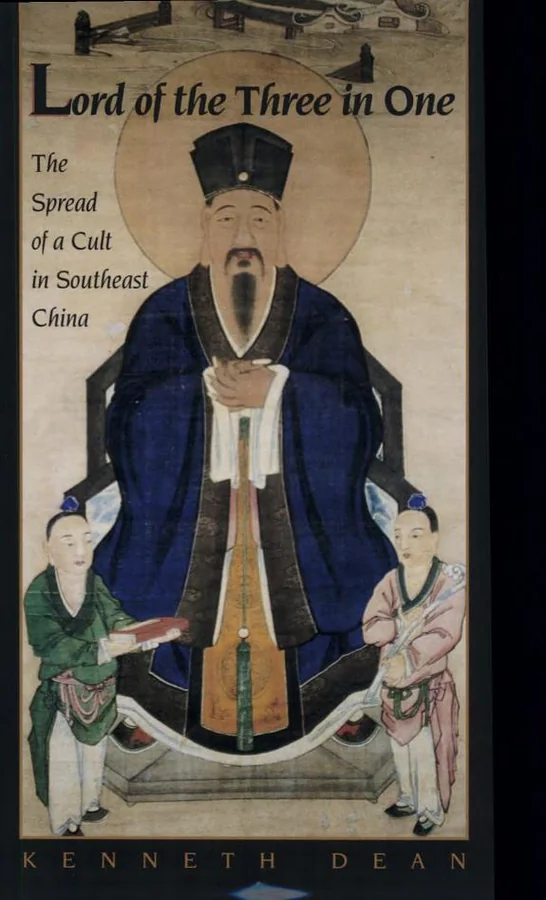
Central to the cult's identity is the figure of Lin, worshipped as the "Lord of the Three in One." Dean's research explores the iconography, mythology, and devotional practices associated with Lin. The book explores how Lin's role and significance are constructed through the cult's syncretic framework, serving as an anchor for initiates seeking spiritual guidance and community. The widespread veneration of Lin in numerous temples highlights the efficacy of this central deity in galvanizing the movement and its adherents.
Clandestine to Public Practice
The narrative arc of the "Three in One" cult, as presented by Dean, is one of transition from secrecy to openness. The book contrasts the "periods of clandestine activity" with the cult's "remarkable revival." This shift underscores the dynamic relationship between religious groups and the state, and how societal changes can impact the visibility and scale of religious practice. Dean's account offers insights into the strategies and conditions that allow such movements to move from the shadows into public life.
💬 Memorable Quotes
Direct passages from the work, attributed to the author.
“the Three in One cult has undergone a remarkable revival in post-Mao China”
— This statement highlights the central thesis of Dean's work: the significant and observable resurgence of a religious movement after a period of political upheaval and suppression in China.
“in over a thousand temples by tens of thousands of cult initiates”
— This quantifies the scale of the "Three in One" cult's revival, providing concrete numbers that demonstrate its significant presence and the active participation of a large body of adherents.
“Despite periods of clandestine activity since its inception”
— This phrase contextualizes the cult's history, acknowledging that its existence has not always been public or sanctioned, implying a past of hidden practices and potential persecution.
“This book examines the resurgence of the Three in One cult”
— A direct statement of the book's primary subject matter, emphasizing its focus on the adaptive and growing nature of this specific religious tradition in a contemporary setting.
💡 Key Ideas
Editorial paraphrase of the work's core concepts — not direct quotes.
Lin is worshipped throughout Southeast China and Southeast Asia as Lord of the Three in One
This quote points to the geographical spread and the specific devotional title given to the primary deity of the cult, indicating its widespread influence and unique theological focus.
🌙 Esoteric Significance
Tradition
The "Three in One" cult, as documented by Dean, represents a fascinating strand of Chinese folk religion, deeply interwoven with Daoist principles and millenarian aspirations. While not strictly adhering to a single esoteric lineage like Hermeticism or Kabbalah, its syncretic nature and emphasis on divine hierarchy and cosmic order echo broader patterns found in esoteric traditions worldwide. The cult's unique cosmology and pantheon can be seen as a localized manifestation of universal human attempts to understand the divine and its relationship to the material world, adapted through a distinct Chinese cultural lens.
Symbolism
Key symbols within the "Three in One" cult often draw from established Chinese religious iconography but are recontextualized. The number 'three' itself is highly symbolic, potentially representing Heaven, Earth, and Humanity, or a trinity of divine forces central to their cosmology. Lin, the Lord of the Three in One, likely embodies a synthesis of various archetypal figures, representing ultimate authority and spiritual attainment. The temples themselves, with their specific architectural motifs and devotional objects, serve as microcosms of the cult's worldview, facilitating spiritual connection and reinforcing shared beliefs.
Modern Relevance
Contemporary scholars of religion and sociology of religion continue to reference Dean's work when discussing religious innovation and adaptation in China. The "Three in One" cult's ability to thrive by integrating diverse beliefs and practices offers a model for understanding how new religious movements gain traction globally. Thinkers interested in the resilience of tradition in the face of modernization and political change find Dean's case study particularly relevant. The cult's success provides a counterpoint to narratives of secularization, illustrating the enduring human need for spiritual community and meaning.
👥 Who Should Read This Book
• Scholars of Chinese religions and anthropology: Gain an in-depth ethnographic case study of a significant religious revival, offering crucial data on syncretism and post-Mao religious dynamics. • Researchers of new religious movements: Understand the factors contributing to the growth and adaptation of cults in transitional societies, using the "Three in One" as a prime example. • Students of comparative religion: Explore how distinct religious traditions merge and evolve, examining the unique theological framework and practices developed by the "Three in One" cult.
📜 Historical Context
Kenneth Dean's "Lord of the Three in One" emerged in 1998, a period when scholarly attention was increasingly turning towards the complex religious range of post-Mao China. The era was marked by a cautious relaxation of state control over religion, allowing for the re-emergence and growth of previously suppressed movements. Dean's work contrasts sharply with the atheistic doctrines promoted during the Cultural Revolution (1966-1976), offering empirical evidence of religious vitality. While other scholars focused on established traditions like Buddhism and Daoism, Dean's focus on a specific syncretic folk cult provided crucial insights into the dynamism of popular religion. The book's detailed ethnographic approach helped to counter simplistic narratives about religious decline, demonstrating instead the adaptive capacity of Chinese folk traditions. Its reception contributed to a growing body of literature on new religious movements in East Asia.
📔 Journal Prompts
The "Three in One" cult's syncretic blend of traditions: How does this synthesis address the spiritual needs of its adherents?
Lin's veneration: Reflect on the qualities and roles attributed to Lin as the "Lord of the Three in One."
The transition from clandestine activity to public revival: What societal factors facilitated this shift for the cult?
The role of temples in the "Three in One" movement: Consider their function beyond mere places of worship.
Analyze the significance of the number 'three' within the cult's cosmology and practices.
🗂️ Glossary
Three in One cult
A syncretic religious movement, studied by Kenneth Dean, that experienced a revival in post-Mao China. It venerates Lin as its central deity and integrates elements from various Chinese religious traditions.
Lin
The primary figure worshipped as the "Lord of the Three in One" within the described cult. The book details the nature of this veneration and Lin's significance to the initiates.
Post-Mao China
The period in Chinese history following the death of Mao Zedong in 1976. This era saw significant socio-political and economic changes, including shifts in state policy towards religion.
Clandestine activity
Refers to the periods when the "Three in One" cult operated secretly or underground, likely due to government suppression or societal pressures, as contrasted with its later open revival.
Syncretism
The blending of different religious beliefs, practices, and traditions. The "Three in One" cult is characterized by its syncretic nature, drawing from Daoism, Buddhism, and folk religion.
Initiates
Individuals who have formally joined and become members of the "Three in One" cult, participating in its rituals and adhering to its doctrines.
Southeast China and Southeast Asia
Geographical regions where Kenneth Dean observed the widespread presence and worship of the "Three in One" cult and its deity, Lin.
This book appears in 1 collection
🔮 Readers Also Liked
Browse all →








From the “Confucianism” Collection
View all →



More Free Esoteric History & Biography Books
View all →