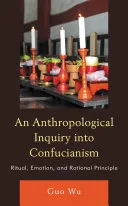
An Anthropological Inquiry into Confucianism
 84
84

An Anthropological Inquiry into Confucianism
Guo Wu's "An Anthropological Inquiry into Confucianism" presents a compelling argument for viewing Confucianism through the lens of its core conceptual tensions, specifically ritual (Li), emotion (qing), and rational principle (li). The book's strength lies in its disciplined focus, eschewing a broad survey for a deep dive into how these three elements were debated and integrated across centuries. Wu's analysis of the Song Dynasty's engagement with these concepts, particularly the philosophical attempts to harmonize ritual practice with genuine sentiment, is particularly illuminating. A limitation, however, is the dense academic prose, which may present a barrier for readers not already steeped in sinological discourse. The work's exploration of how the performance of rites in daily life became a site of intense philosophical contestation, rather than mere rote adherence, is a significant contribution. It offers a vital corrective to static interpretations of this enduring tradition.
📝 Description
84
Guo Wu's 2022 book examines Confucianism not as a fixed doctrine but as a living practice.
Guo Wu's An Anthropological Inquiry into Confucianism analyzes the tradition as a dynamic belief system rather than a static set of rules. The book traces Confucianism's development through various Chinese dynasties, highlighting the constant negotiation between ritual propriety (Li), human emotion (qing), and rational principle (li). Wu does not aim for exhaustive coverage. Instead, the work focuses on how Chinese thinkers sought to integrate these core components, showing their practical application in daily life. This approach offers a look at the historical development of ethical systems and the way philosophical ideas are lived.
The book situates Confucianism within broader historical and intellectual movements. It discusses key figures and periods, including Confucius himself in the 6th-5th century BCE, and later thinkers like Mencius and Xunzi. Wu's analysis contrasts with more simplified or dogmatic interpretations of Confucianism that have appeared in recent times. By concentrating on the balance of Li, qing, and li, the inquiry reveals the inherent tensions within the tradition. The work is intended for those who appreciate detailed historical analysis and the specific conceptual challenges faced within a long-standing philosophical tradition.
While Confucianism is often seen as a social and ethical philosophy, this inquiry touches upon its contemplative and mystical dimensions by examining the internal cultivation required to align ritual practice, emotional states, and rational understanding. The focus on harmonizing these elements speaks to a broader esoteric concern with achieving inner balance and spiritual integrity through disciplined practice and self-reflection. The book's consideration of how individuals grapple with these concepts reveals a path toward a more integrated self, a common goal in many contemplative traditions.
💡 Why Read This Book?
• Gain a nuanced understanding of Confucianism's internal dynamics by analyzing the interplay between Li (ritual), qing (emotion), and li (principle), as explored in the Song Dynasty context. • Appreciate Confucianism as a lived practice, not just doctrine, by examining how thinkers historically balanced outward rites with inner emotional states and rational considerations. • Develop critical analytical skills applicable to other ethical systems by following Guo Wu's focused anthropological approach to specific conceptual conflicts within a major philosophical tradition.
⭐ Reader Reviews
Honest opinions from readers who have explored this book.
❓ Frequently Asked Questions
What are the three core concepts explored in An Anthropological Inquiry into Confucianism?
The book centers on ritual (Li), emotion (qing), and rational principle (li). Guo Wu examines how Confucian thinkers grappled with balancing these three fundamental elements throughout various historical periods.
Does this book provide a comprehensive overview of all Confucian philosophy?
No, the inquiry intentionally focuses on the dynamic interplay and historical negotiation of Li, qing, and li, rather than attempting an exhaustive survey of all Confucian concepts.
What historical periods does the book cover regarding Confucianism?
The work provides a chronological, historicized reappraisal, examining how Confucian thinkers addressed Li, qing, and li across multiple dynasties, offering insights into their evolution over time.
Who is the intended audience for this anthropological inquiry?
It is designed for scholars of East Asian religions and philosophy, cultural anthropologists, and students seeking a rigorous, historically grounded analysis of Confucianism's practical and conceptual dimensions.
How does Guo Wu's book approach the practice of Confucian rites?
The book investigates how the performance of rites in daily life became a focal point for Confucian thinkers wrestling with the balance between Li, qing, and li, analyzing it as a site of philosophical debate.
When was An Anthropological Inquiry into Confucianism first published?
The book was first published on March 24, 2022, making it a contemporary scholarly contribution to the study of Confucian traditions.
🔮 Key Themes & Symbolism
The Triad of Li, Qing, and Li
This work meticulously dissects the core Confucian concepts of ritual propriety (Li), human emotion (qing), and rational principle (li). It moves beyond static definitions to illustrate how these elements were historically negotiated, often in tension, by thinkers across successive Chinese dynasties. The book demonstrates that Confucianism was not a monolithic ideology but a constantly evolving framework for understanding human conduct and social order, where the balance between outward observance and inner conviction was a perpetual philosophical challenge.
Confucianism as Lived Practice
Guo Wu emphasizes Confucianism not merely as a theoretical system but as a way of life deeply embedded in daily practices and social interactions. The performance of rites (Li) is presented as a crucial arena where philosophical ideals were tested and adapted. This perspective highlights the pragmatic and experiential dimensions of Confucianism, showing how individuals and communities engaged with its principles in their everyday lives, seeking harmony and ethical cultivation through concrete actions and social relationships.
Historical Evolution of Confucian Thought
The book offers a chronological reappraisal, tracing the development of Confucian ideas through various dynasties. This historical lens reveals how concepts like Li, qing, and li were reinterpreted and debated in response to changing social, political, and intellectual landscapes. By examining polemics and practices across centuries, Wu illustrates the dynamic nature of Confucianism, showcasing its capacity for adaptation and its enduring relevance as a system of thought continually shaped by historical context.
The Anthropology of Belief Systems
Positioning Confucianism within an anthropological framework, the study treats it as a complex belief system and a guide for living. It explores how the interaction between structured ritual, subjective emotional experience, and objective rational principles shaped the worldview and ethical framework of individuals and society. This approach allows for an examination of the humanistic and social dimensions of Confucianism, understanding its role in constructing meaning and social cohesion.
💬 Memorable Quotes
Direct passages from the work, attributed to the author.
“Confucian thinkers grappled with balancing ritual (Li), emotion (qing), and rational principle (li).”
— This concise statement captures the book's central analytical framework. It frames Confucianism not as a set of fixed rules, but as a dynamic philosophical project focused on the intricate and often challenging task of harmonizing outward social forms with inner states and reasoned judgment.
“Instead of examining all pertinent concepts of Confucianism, the book focuses on how Confucian thinkers grappled with these three words.”
— This highlights the book's methodological rigor. By concentrating on the specific conceptual triad of Li, qing, and li, Guo Wu avoids superficial breadth, opting instead for a deep, historically informed analysis of a core tension within the tradition.
“The book focuses on... polemics and practice performing rites in daily life.”
— This points to the book's emphasis on the lived reality of Confucianism. It suggests that the practice of rites was not merely symbolic but a site of active philosophical debate and contestation, revealing the dynamic relationship between theory and everyday action.
“A chronological, historicized reappraisal of Confucianism.”
— This phrase signals the book's scholarly approach. It promises an examination that respects the historical development and changing interpretations of Confucian thought, moving beyond ahistorical or essentialist views of the tradition.
“Confucianism as a belief system and a way of life.”
— This dual framing underscores the book's comprehensive perspective. It acknowledges Confucianism's intellectual depth as a belief system while also stressing its practical implications for guiding human conduct and shaping social existence.
🌙 Esoteric Significance
Tradition
While Confucianism is primarily a philosophical and ethical system, its emphasis on self-cultivation, harmony with cosmic order (Tian), and the proper ordering of society contains elements that resonate with broader esoteric traditions. The meticulous focus on ritual (Li) and its connection to inner states aligns with practices found in many mystical paths that seek to align the microcosm (individual) with the macrocosm (universe) through structured action and mindful observance. The book’s approach can be seen as uncovering the 'inner technology' of Confucian practice.
Symbolism
The concept of Li, or ritual propriety, serves as a potent symbol. Beyond mere etiquette, Li represents the structured manifestation of social and cosmic order, a symbolic language through which individuals learn their place and responsibilities. Qing, or emotion, symbolizes the vital, often unruly, human element that must be understood and integrated, not suppressed, within the framework of Li. The interplay reveals a symbolic concern with achieving balanced personhood through the disciplined expression and regulation of inner life.
Modern Relevance
Contemporary thinkers exploring embodied cognition, ritual studies, and the philosophy of practice can draw significant insights from Guo Wu's analysis. Schools of thought focusing on applied ethics and mindfulness in secular contexts may find the Confucian approach to balancing internal states with external actions particularly relevant. Furthermore, researchers in comparative religion and cultural studies continue to utilize anthropological frameworks to understand enduring traditions like Confucianism, seeking parallels and divergences with contemporary spiritual and ethical movements.
👥 Who Should Read This Book
• Scholars of East Asian philosophy and religion seeking a deep, historically grounded analysis of Confucianism's core conceptual tensions. • Cultural anthropologists interested in the intersection of belief systems, ritual practice, and lived experience in non-Western contexts. • Students of comparative ethics and social theory looking to understand how ethical frameworks evolve and are negotiated within specific historical and cultural settings.
📜 Historical Context
Guo Wu's "An Anthropological Inquiry into Confucianism" enters contemporary academic discourse in 2022, a field shaped by centuries of scholarship since Confucius himself (c. 551–479 BCE). The work engages with intellectual currents that have evolved through dynasties like the Han (206 BCE–220 CE), Tang (618–907 CE), and particularly the Song (960–1279 CE), a period of intense Neo-Confucian development. Wu's focus on the dynamic tension between ritual (Li), emotion (qing), and principle (li) implicitly contrasts with more rigid or simplified interpretations of Confucianism that have emerged over time. While the book doesn't detail specific reception events, its anthropological lens offers a fresh perspective compared to purely philosophical or historical treatments prevalent in Sinology. Its detailed examination of the interplay between practice and theory appeals to ongoing scholarly debates about the nature of religious and ethical systems in a globalized world.
📔 Journal Prompts
The balance between ritual (Li) and emotion (qing) in your own life.
How the concept of rational principle (li) informs your daily decision-making.
Reflecting on the historical evolution of a personal ethical practice.
Analyzing the performative aspect of social interactions you engage in.
Investigating the relationship between inner conviction and outward expression in a chosen tradition.
🗂️ Glossary
Li (禮)
Refers to ritual, propriety, ceremony, and the proper conduct of social and religious rites. It encompasses the norms, etiquette, and codified behaviors essential for maintaining social harmony and order within the Confucian framework.
Qing (情)
Encompasses human emotion, sentiment, feelings, and passion. The book explores how Confucian thinkers sought to understand, integrate, or regulate qing within the context of Li and li, recognizing its an important role in human experience.
Li (理)
Denotes rational principle, reason, logic, and the underlying order of the cosmos or a situation. This concept represents the intellectual and objective dimension that Confucian thinkers aimed to align with ritual practice and emotional understanding.
Polemics
The art of political or intellectual controversy; arguments or debates. In the context of the book, it refers to the disputes and dialogues among Confucian thinkers regarding the interpretation and application of core concepts.
Historicized
To place or consider something within its historical context. The book offers a historicized reappraisal, meaning it examines Confucianism as it evolved and was understood across different historical periods.
Anthropological Inquiry
An investigation conducted from the perspective of anthropology, focusing on human societies, cultures, and their development. This approach examines beliefs, practices, and social structures as integral parts of human life.
Belief System
A set of mutually supportive beliefs that together form a coherent worldview for an individual or community. Confucianism is analyzed here as a comprehensive belief system guiding ethics and social organization.