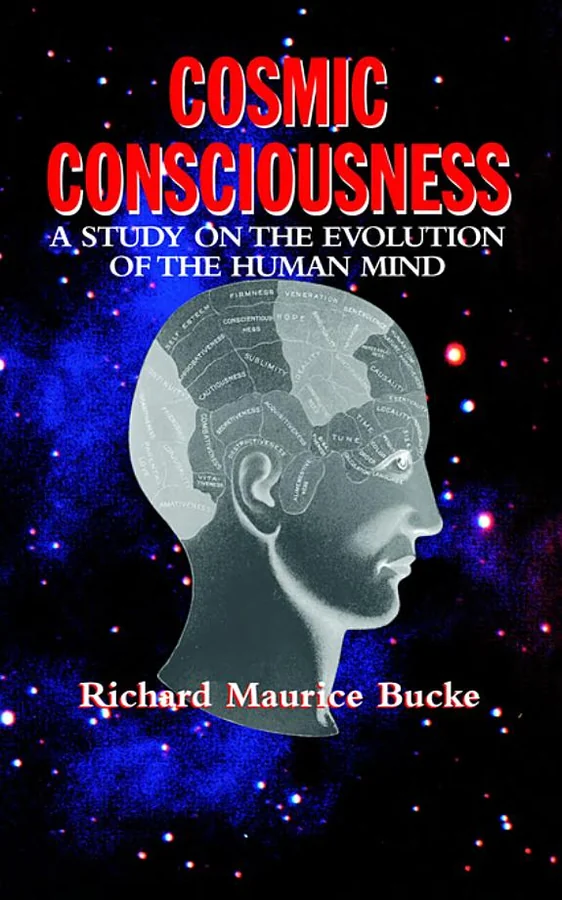
Cosmic Consciousness
 76
76

Cosmic Consciousness
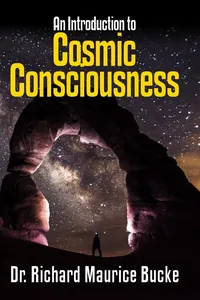
Bucke’s ambitious survey, "Cosmic Consciousness," attempts to chart the evolution of human awareness towards a transcendent state. He presents a compelling, albeit dated, case for a progressive psychical development, citing individuals he believed embodied this higher consciousness. His descriptions of the subjective experience—moments of illumination and intellectual clarity—are particularly evocative. However, the work suffers from a certain Anglo-centric bias and a reliance on anecdotal evidence that can feel speculative by modern standards. The inclusion of figures like Walt Whitman as exemplars, while interesting, also highlights the subjective nature of his classifications. Despite these limitations, Bucke's exploration of the potential for human consciousness to expand remains a significant, if flawed, contribution to esoteric thought.
📝 Description
76
Richard Maurice Bucke's 1901 book describes a coming evolution of human consciousness.
In "Cosmic Consciousness: A Study in the Evolution of the Human Mind," Richard Maurice Bucke proposed that humanity was on the verge of a significant psychical revolution. Published in 1901, the book details his belief in a gradual ascent to higher states of awareness, which he termed "cosmic consciousness." Bucke supported his theory by examining historical figures and personal accounts he believed exemplified this advanced state of being.
The work is intended for readers interested in the development of human intellect and spirituality. It offers a framework for understanding mystical experiences through a historical and psychological viewpoint, appealing to those curious about the future potential of human evolution. Bucke's analysis connects spiritual development with evolutionary theory.
Bucke's work emerged from the late 19th century's fascination with spiritualism, psychology, and evolutionary ideas. He engaged with contemporary psychical research and was influenced by figures like Walt Whitman. The book stands as a counterpoint to purely materialistic interpretations of human development, asserting a spiritual or psychical dimension to our progression. It situates the concept of higher consciousness within a broader evolutionary narrative.
💡 Why Read This Book?
• Understand the historical framework of "cosmic consciousness" as Bucke conceptualized it, drawing parallels between historical figures like Buddha and Jesus. • Examine Bucke's theory of psychical revolution, which suggests a continuous evolution of human faculties beyond ordinary intellectual capacity. • Explore the specific characteristics Bucke attributed to "cosmic consciousness," such as intellectual enlightenment and moral exaltation, as distinct stages of human awareness.
⭐ Reader Reviews
Honest opinions from readers who have explored this book.
❓ Frequently Asked Questions
What year was Richard Maurice Bucke's 'Cosmic Consciousness' first published?
Richard Maurice Bucke's 'Cosmic Consciousness' was first published in 1901, marking a significant contribution to the study of mystical experiences and human evolution at the turn of the 20th century.
Who are some key figures mentioned in 'Cosmic Consciousness' as examples of higher consciousness?
Bucke discusses figures such as Buddha, Jesus, Plotinus, and Walt Whitman as individuals who exhibited or embodied 'cosmic consciousness,' viewing them as exemplars of advanced human spiritual and intellectual development.
What are the three stages of consciousness Bucke outlines?
Bucke describes three stages: simple consciousness (found in animals), self-consciousness (typical of modern humans), and cosmic consciousness (a higher, intuitive, and spiritual state of awareness).
Is 'Cosmic Consciousness' considered a scientific or esoteric work?
While Bucke aimed for a systematic study, his work is primarily considered an esoteric and philosophical exploration of consciousness, bridging psychology, mysticism, and evolutionary theory.
Where can I find 'Cosmic Consciousness' by Richard Maurice Bucke?
As a work first published in 1901, 'Cosmic Consciousness' is in the public domain and is widely available online through various digital libraries and archives, often for free.
What is the main argument of Richard Maurice Bucke's 'Cosmic Consciousness'?
The central argument is that humanity is undergoing a psychical evolution, moving towards a higher state of awareness termed 'cosmic consciousness,' exemplified by certain historical and contemporary figures.
🔮 Key Themes & Symbolism
The Evolution of Consciousness
Bucke posits that human consciousness is not static but evolves through distinct stages. He meticulously traces this progression, identifying 'simple consciousness' and 'self-consciousness' as foundational levels. The ultimate stage, 'cosmic consciousness,' represents a leap in awareness, characterized by illumination and a profound understanding of the universe. This evolutionary perspective suggests a teleological movement within humanity towards higher spiritual and intellectual states, a concept explored through historical examples.
Forms of Cosmic Consciousness
The book details the characteristics of individuals who have attained cosmic consciousness. Bucke describes it as a sudden, intuitive grasp of the universe, accompanied by intense joy, moral exaltation, and intellectual clarity. He categorizes manifestations into three forms: first sight (brief illumination), second sight (more prolonged and profound), and the full cosmic consciousness state. These descriptions serve to delineate the experience from ordinary perception.
Historical Precursors
Bucke identifies numerous historical figures, including religious founders, philosophers, and poets, as examples of individuals who have touched or embodied cosmic consciousness. He analyzes their lives and teachings, suggesting they were harbingers of this future stage of human development. Figures like Buddha, Jesus, and later, Walt Whitman, are presented not just as enlightened beings but as markers in humanity's psychical evolutionary journey.
The Psychical Revolution
Central to Bucke's thesis is the idea of a 'psychical revolution' occurring in humanity. This revolution is not merely social or technological but a fundamental shift in consciousness. He argues that this transformation is ongoing and inevitable, leading to a future where cosmic consciousness will be more widespread. This concept frames the book as a prophecy of human potential and spiritual advancement.
💬 Memorable Quotes
Direct passages from the work, attributed to the author.
“The next great step in evolution is the appearance of the Cosmic man.”
— This statement expresses Bucke's core belief that humanity is on the cusp of a significant evolutionary leap, moving beyond current limitations towards a higher, universally aware state of being.
“The sight of the universe in all its parts, in all its connexions, in its infinity, in its eternity.”
— This describes the profound, all-encompassing vision characteristic of cosmic consciousness, where the individual perceives reality with a clarity and scope far beyond normal human perception.
“He saw and knew that the universe was in all respects perfect.”
— This highlights the sense of ultimate peace and validation that accompanies the experience of cosmic consciousness, where all perceived imperfections dissolve into a sense of universal harmony.
“The new faculty is the faculty of the third eye, the organ of spiritual perception.”
— Bucke links the attainment of cosmic consciousness to the development of a new sensory or perceptive capacity, often metaphorically referred to as a 'third eye,' enabling direct spiritual insight.
“The moral nature is exalted, and the intellect is illuminated.”
— This interpretation points to the dual transformation experienced: a heightened sense of ethical understanding and a vastly expanded intellectual capacity, fundamental to the state of cosmic consciousness.
🌙 Esoteric Significance
Tradition
Bucke's work can be situated within the broader lineage of esoteric thought that seeks to understand human potential beyond the ordinary senses, drawing parallels with Gnostic ideas of higher knowledge and Neoplatonic concepts of spiritual ascent. It aligns with the Theosophical movement's interest in spiritual evolution and humanity's hidden potentials, though Bucke's approach is more psychologically focused and less reliant on occult hierarchies or specific Eastern traditions than figures like Blavatsky. It represents an attempt to frame mystical experience within a framework of evolutionary psychology.
Symbolism
The concept of "illumination" serves as a primary symbol, representing the sudden flash of insight and universal understanding characteristic of cosmic consciousness. The "third eye" is another potent symbol, signifying the development of a new faculty for direct spiritual perception, transcending the limitations of the physical senses. The figures of Buddha and Jesus function symbolically as archetypes of perfected human consciousness, serving as historical benchmarks for this evolutionary trajectory.
Modern Relevance
Contemporary thinkers in consciousness studies, transpersonal psychology, and even certain branches of neuroscience echo Bucke's ideas about expanded states of awareness and the potential for human cognitive and spiritual growth. His framework provides a historical anchor for discussions on altered states, mystical experiences, and the ongoing exploration of consciousness's higher potentials. Practices such as mindfulness and certain forms of meditation can be seen as paths towards cultivating the inner states Bucke described.
👥 Who Should Read This Book
• Students of comparative religion and mysticism seeking historical analyses of spiritual experiences and figures like Buddha and Jesus. • Aspiring psychologists and philosophers interested in early theories of consciousness evolution and the potential for human psychical development. • Individuals exploring esoteric traditions who wish to understand early 20th-century Western frameworks for interpreting mystical states beyond conventional psychology.
📜 Historical Context
Published in 1901, Richard Maurice Bucke's "Cosmic Consciousness" arrived during a fertile period for explorations of the mind and spirit, influenced by the burgeoning field of psychology and the ongoing interest in spiritualism. Bucke, a Canadian psychiatrist, was part of a transatlantic intellectual current that sought to reconcile scientific advancement with spiritual experience, a pursuit also seen in figures like William James. His work engaged with evolutionary theory, proposing a spiritual dimension to human development that contrasted with purely materialistic philosophies prevalent at the time. While not directly engaging with a single competing school of thought in a polemical way, his optimistic spiritual evolutionism stood apart from the more reductionist scientific materialism of figures like Ernst Haeckel. The book received significant attention, championed by figures like Walt Whitman, whom Bucke greatly admired and included as an example of cosmic consciousness, cementing its place within the esoteric and philosophical discourse of the era.
📔 Journal Prompts
The characteristics of "cosmic consciousness" as described by Bucke.
The concept of the "psychical revolution" in human history.
Buddha and Jesus as exemplars of evolved consciousness.
The experience of "illumination" versus ordinary perception.
The potential for "self-consciousness" to transition to higher states.
🗂️ Glossary
Cosmic Consciousness
The highest stage of human awareness, characterized by a sudden, intuitive, and comprehensive understanding of the universe, accompanied by intellectual and moral exaltation.
Simple Consciousness
The basic form of awareness, akin to that possessed by animals, characterized by sensation and instinctual response without self-awareness.
Self-Consciousness
The typical state of human awareness, characterized by the ability to recognize oneself as an individual entity distinct from the environment and others.
Psychical Revolution
Bucke's theory that humanity is undergoing a continuous, gradual evolution of its mental and spiritual faculties, leading to higher forms of consciousness.
Illumination
A sudden flash of useful insights or understanding, often associated with the experience of cosmic consciousness, revealing the nature of reality.
Moral Exaltation
A state of heightened ethical awareness and a profound sense of rightness and goodness that accompanies the experience of higher consciousness.
Third Eye
A metaphorical organ of spiritual perception, distinct from the physical eyes, enabling direct insight into higher realities and truths.
This book appears in 1 collection
🔮 Readers Also Liked
Browse all →






From the “Cosmic Consciousness” Collection
View all →





More Free Esoteric History & Biography Books
View all →