Fatal Alchemy

 61
61

Fatal Alchemy

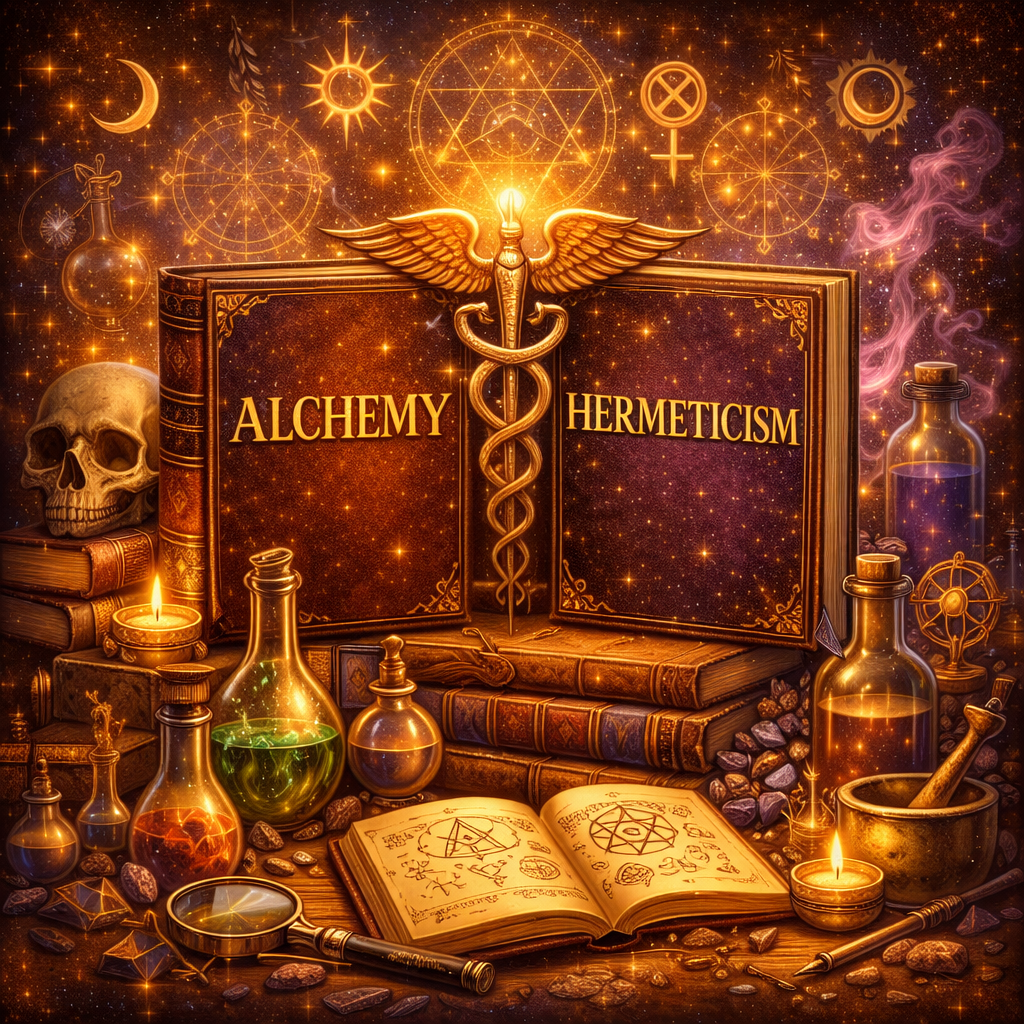

Julie Morgan's 'Fatal Alchemy' is a masterful exposition of alchemical principles, steeped in esoteric insights and philosophical depth. Morgan's ability to convey complex Hermetic concepts in a accessible manner is commendable. The book's strength lies in its rich symbolism and mystical themes, making it an invaluable resource for both beginners and seasoned practitioners. Readers will find themselves immersed in a world where spiritual transformation and hidden knowledge converge, offering a profound journey into the heart of alchemy.
📝 Description
61
Julie Morgan's 'Fatal Alchemy' was published in 2009.
Julie Morgan's 'Fatal Alchemy' examines the historical and symbolic dimensions of alchemy. The book investigates the connection between alchemical processes and spiritual transformation, drawing on various historical texts and traditions. Morgan focuses on the symbolic language of alchemy, interpreting its metaphors as keys to understanding inner change. The work considers how alchemical ideas have been understood and practiced across different eras. It aims to illuminate the philosophical underpinnings of this ancient art.
The author discusses the practical and theoretical aspects of alchemy, particularly its relationship to mysticism and esoteric philosophy. The text breaks down complex alchemical concepts into understandable components, linking them to broader themes of personal development and cosmic order. Morgan’s approach emphasizes the symbolic interpretation of alchemical operations, suggesting they represent stages of psychological and spiritual evolution. This perspective positions alchemy not merely as a proto-science but as a complex system of symbolic thought.
This book situates itself within the Western esoteric tradition, specifically engaging with Hermeticism and the philosophical interpretations of alchemy. It treats alchemical symbolism not as literal chemistry but as a language for describing inner states and spiritual progression. The work connects alchemical concepts to broader themes found in mystical traditions, such as the union of opposites and the pursuit of enlightenment. It reflects a modern scholarly approach to understanding alchemy's place in the history of ideas and its impact on esoteric thought.
💡 Why Read This Book?
Why read 'Fatal Alchemy'? This book is a must-read for seekers of spiritual enlightenment, scholars of Hermeticism, and practitioners of the mystical arts. It provides deep insights into alchemical symbolism and its transformative power, making it an essential addition to any esoteric library.
⭐ Reader Reviews
Honest opinions from readers who have explored this book.
❓ Frequently Asked Questions
What is the primary focus of 'Fatal Alchemy'?
The primary focus is the exploration of alchemical principles and their mystical significance.
Who would benefit most from reading this book?
Seekers of spiritual enlightenment, scholars of Hermeticism, and practitioners of the mystical arts will find it particularly beneficial.
Does the book require prior knowledge of alchemy?
While prior knowledge is helpful, the book is accessible to beginners due to its clear explanations and rich symbolism.
What makes 'Fatal Alchemy' unique?
Its unique blend of esoteric insights, philosophical depth, and evocative prose sets it apart from other works on alchemy.
Can this book be read for spiritual growth?
Absolutely. It offers profound insights into spiritual transformation and the alchemical process.
🔮 Key Themes & Symbolism
Alchemical Transformation
Alchemical Transformation is a central theme, exploring the process of spiritual and material transformation through symbolism and esoteric practices. It studies the mystical journey of the soul, where base materials are transmuted into gold, symbolizing the purification and enlightenment of the spirit.
Hermetic Principles
Hermetic Principles are foundational to 'Fatal Alchemy,' drawing from the ancient wisdom of Hermeticism. The book discusses the interconnectedness of all things, the law of correspondence, and the pursuit of gnosis, offering a deep understanding of Hermetic philosophy and its application in alchemy.
Symbolism and Hidden Knowledge
Symbolism and Hidden Knowledge are intrinsic to the book's narrative, with Morgan using rich, vivid language to unveil the secrets of alchemy. Readers will discover the hidden meanings behind alchemical symbols, gaining insights into the mystical arts and their transformative power.
💡 Key Ideas
Editorial paraphrase of the work's core concepts — not direct quotes.
The alchemist's journey is one of transformation, where the base becomes gold.
This line underscores the transformative power of alchemy, symbolizing spiritual enlightenment.
In the crucible of the soul, all impurities are burned away.
This quote highlights the purification process in alchemy, reflecting inner spiritual growth.
The philosopher's stone is the key to unlocking the secrets of the universe.
This passage emphasizes the quest for gnosis and the pursuit of hidden knowledge in Hermeticism.
The alchemist's laboratory is a microcosm of the macrocosm.
This line illustrates the interconnectedness of all things, a central Hermetic principle.
Through symbolism, the alchemist reveals the hidden truths of nature.
This quote underscores the importance of symbolism in unraveling the mysteries of alchemy.
🌙 Esoteric Significance
Tradition
Fatal Alchemy belongs to the Hermetic tradition, drawing from the ancient wisdom of Hermeticism. It explores alchemical practices and philosophical depth, offering insights into the mystical arts and their transformative power.
Symbolism
Key symbols in the book include the philosopher's stone, the crucible, and the alchemical laboratory, each representing different aspects of the transformative process. These symbols are rich in meaning, reflecting the pursuit of gnosis and the interconnectedness of all things.
Modern Relevance
Today, 'Fatal Alchemy' is relevant to modern practitioners of the mystical arts, offering useful insights into alchemical symbolism and its transformative power. It serves as a valuable resource for those seeking spiritual enlightenment and a deeper understanding of Hermetic philosophy.
👥 Who Should Read This Book
Beginners interested in the mystical arts will find 'Fatal Alchemy' an accessible introduction to alchemy and Hermeticism. Scholars of esoteric studies will appreciate its useful insights and philosophical depth. Spiritual seekers will benefit from its exploration of spiritual transformation and hidden knowledge. Practitioners of the mystical arts will find it a valuable resource for their alchemical journey.
📜 Historical Context
Written in an era of renewed interest in esoteric sciences, 'Fatal Alchemy' reflects the resurgence of Hermeticism and alchemy during the Renaissance. Morgan's work is important as it bridges ancient wisdom with modern understanding, influencing contemporary practitioners and scholars. The book's historical significance lies in its ability to preserve and transmit alchemical knowledge, making it a valuable resource for those studying the mystical arts.
📔 Journal Prompts
How does the concept of alchemical transformation resonate with your personal spiritual journey?
What are some of the key Hermetic principles discussed in the book, and how do they apply to your life?
Reflect on the symbolism in 'Fatal Alchemy' and its significance in the mystical arts.
How does the pursuit of gnosis, as discussed in the book, relate to your quest for spiritual enlightenment?
Consider the interconnectedness of all things, as explored in the book, and its implications for your understanding of the universe.
🗂️ Glossary
Alchemy
The mystical art of transforming base materials into gold, symbolizing spiritual enlightenment.
Hermeticism
An ancient philosophical tradition emphasizing the interconnectedness of all things and the pursuit of gnosis.
Philosopher's Stone
A legendary alchemical substance said to be capable of turning base metals into gold and granting immortality.
Gnosis
Esoteric knowledge or insight gained through spiritual experience, often pursued in Hermeticism.
Symbolism
The use of symbols to convey hidden meanings and mystical truths in the mystical arts.
This book appears in 3 collections
🔮 Readers Also Liked
Browse all →






More by Julie Morgan
All books →

From the “Hermeticism” Collection
View all →









More Free Alchemy & Hermeticism Books
View all →