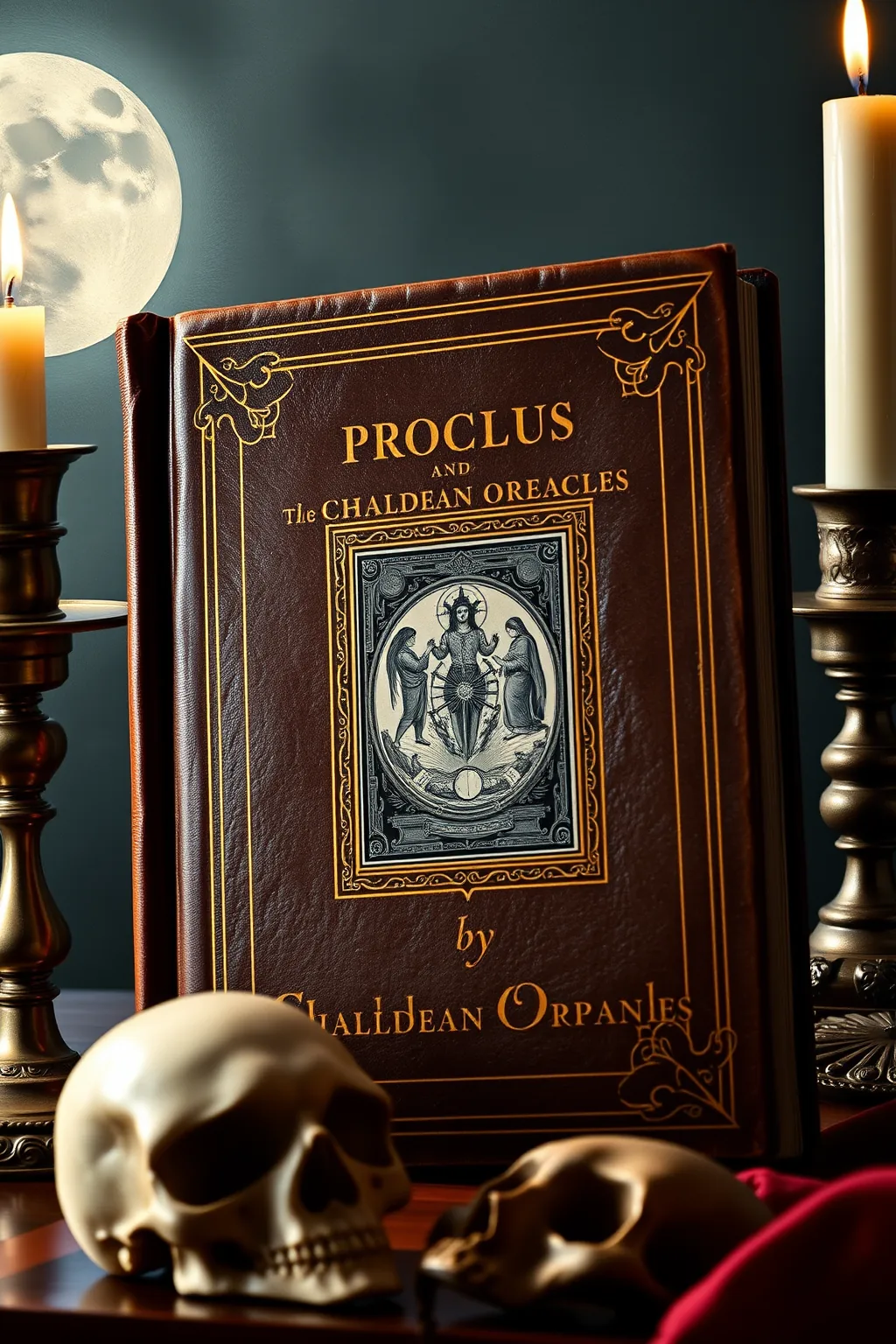
Proclus and the Chaldean Oracles
 62
62

Proclus and the Chaldean Oracles



Review by Evander Ashcroft (Alchemy & Hermeticism Editor) — Nicola Spanu's 'Proclus and the Chaldean Oracles' is a masterful blend of historical scholarship and esoteric insight. The book's strength lies in its detailed examination of Proclus' exegesis of the Chaldean Oracles, providing a fresh perspective on ancient metaphysics. Spanu's translation and commentary are particularly noteworthy, offering readers a comprehensive understanding of Proclus' philosophical significance. This volume is indispensable for scholars of Neoplatonism and seekers of hidden knowledge, as it bridges the gap between ancient mysticism and modern esoteric thought.
📝 Description
62
Nicola Spanu's 2023 work examines Proclus' engagement with the Chaldean Oracles.
This volume analyzes the Neoplatonist philosopher Proclus's use of the Chaldean Oracles in his philosophical writings. Nicola Spanu translates and comments on Proclus's 'Treatise on Chaldean Philosophy,' a text that had previously been inaccessible to many.
The author investigates the accuracy of Proclus's understanding of the original Chaldean traditions. Spanu questions whether Proclus's interpretations offer genuine insight or if they represent a departure from the source material. The book aims to clarify these complex philosophical and religious connections.
It provides a detailed look at how a major figure in later antiquity engaged with a significant esoteric tradition. The work is suited for those interested in the transmission of ancient philosophical and religious ideas.
The Chaldean Oracles, a collection of oracular verses, circulated in the late Roman Empire and deeply influenced Neoplatonic thought. Philosophers like Iamblichus and Proclus saw them not merely as poetry but as a source of theological and cosmological doctrine, a guide to spiritual ascent. Proclus, in particular, integrated their teachings into his systematic philosophy, interpreting them through a Platonic lens. This engagement created a complex body of thought, merging Hellenic philosophy with what was perceived as a more ancient, divinely inspired wisdom.
💡 Why Read This Book?
Read 'Proclus and the Chaldean Oracles' to gain a deeper understanding of ancient metaphysical doctrines and their relevance in modern times. This book is ideal for scholars of Neoplatonism, practitioners of Hermeticism, and spiritual seekers interested in the occult. It offers a unique perspective on the Chaldean Oracles and their influence on Western esoteric traditions.
⭐ Reader Reviews
Honest opinions from readers who have explored this book.
❓ Frequently Asked Questions
What are the Chaldean Oracles?
The Chaldean Oracles are a collection of mystical texts from the 2nd century AD, attributed to the Chaldeans. They are renowned for their esoteric wisdom and influence on Neoplatonism and other mystical traditions.
Who was Proclus?
Proclus was a prominent Neoplatonic philosopher who lived in the 5th century AD. He is known for his extensive commentaries on Plato and his work on the Chaldean Oracles.
What is the significance of this book?
This book offers a detailed analysis of Proclus' interpretations of the Chaldean Oracles, providing insights into ancient metaphysics and their modern relevance.
Is this book suitable for beginners?
While the book is scholarly, it is accessible to those with a basic understanding of Neoplatonism and esoteric traditions.
Does the book include translations?
Yes, the book includes a translation of Proclus' 'Treatise on Chaldean Philosophy,' along with a detailed commentary.
🔮 Key Themes & Symbolism
Ancient Mysticism
The book explores the ancient mystical doctrines of the Chaldean Oracles, offering readers a window into the esoteric wisdom of the 2nd century AD. This theme is crucial for understanding the roots of Western esoteric traditions.
Neoplatonic Philosophy
Proclus' interpretations of the Chaldean Oracles are a central to Neoplatonic philosophy. This theme explores how Proclus' exegesis shaped the development of Neoplatonism and its influence on modern esoteric thought.
Esoteric Symbolism
The book is rich in esoteric symbolism, providing readers with a deep understanding of the hidden meanings and mystical language used in the Chaldean Oracles. This theme is essential for those seeking to unravel the mysteries of the occult.
💡 Key Ideas
Editorial paraphrase of the work's core concepts — not direct quotes.
The Chaldean Oracles are a strong example of esoteric wisdom, guiding seekers through the labyrinth of the occult.
This quote underscores the significance of the Chaldean Oracles in the field of ancient mysticism.
Proclus' exegesis offers a clear insights into the metaphysical underpinnings of the Chaldean teachings.
This line highlights the depth of Proclus' analysis and its relevance to modern esoteric research.
The symbolism in the Chaldean Oracles is a key to unlocking the mysteries of the ancient world.
This quote emphasizes the importance of esoteric symbolism in understanding the Chaldean doctrines.
Spanu's translation and commentary provide a fresh perspective on the Chaldean Oracles.
This passage underscores the scholarly rigor and insight offered by the author's work.
The book bridges the gap between ancient mysticism and modern esoteric thought.
This line highlights the book's significance in connecting ancient wisdom with contemporary esoteric practices.
🌙 Esoteric Significance
Tradition
This book belongs to the Hermetic and Neoplatonic traditions, which emphasize the search for hidden knowledge and the mystical union with the divine. It is a central to Western esotericism.
Symbolism
Key symbols in the book include the Tetrad, the Henad, and the concept of the One. These symbols represent the fundamental principles of Neoplatonic metaphysics and the esoteric wisdom of the Chaldean Oracles.
Modern Relevance
This book is relevant today for modern practitioners of Hermeticism and Neoplatonism. It provides insights into ancient mystical doctrines and their application in contemporary esoteric practices.
👥 Who Should Read This Book
Beginners interested in ancient mysticism and esoteric traditions will find this book enlightening. Scholars of Neoplatonism and Hermeticism will appreciate the detailed analysis and translations. Spiritual seekers and practitioners of the occult will benefit from the clear insights into the Chaldean Oracles and their symbolism. Those interested in the historical context of Western esotericism will find this book invaluable.
📜 Historical Context
The Chaldean Oracles, attributed to the Chaldeans of the 2nd century AD, were an important influence on Neoplatonism and other mystical traditions. Proclus, a leading Neoplatonic philosopher of the 5th century AD, extensively studied these oracles, shaping his philosophical views and influencing subsequent generations of esoteric thinkers. The era in which Proclus lived was marked by a resurgence of interest in ancient wisdom and a quest for hidden knowledge. His work on the Chaldean Oracles was instrumental in preserving and transmitting this esoteric heritage to modern times.
📔 Journal Prompts
Reflect on the significance of the Chaldean Oracles in your spiritual journey.
How do Proclus' interpretations of the Chaldean Oracles influence your understanding of Neoplatonism?
Explore the symbolism in the Chaldean Oracles and its relevance to modern esoteric practices.
Consider the historical context of the Chaldean Oracles and their impact on Western mysticism.
What insights have you gained from Spanu's translation and commentary of Proclus' work?
🗂️ Glossary
Chaldean Oracles
A collection of mystical texts from the 2nd century AD, attributed to the Chaldeans, known for their esoteric wisdom.
Neoplatonism
A philosophical system that emerged in the 3rd century AD, combining Plato's ideas with other mystical and religious traditions.
Hermeticism
An esoteric tradition based on the writings attributed to Hermes Trismegistus, emphasizing the search for hidden knowledge and spiritual enlightenment.
Tetrad
A fundamental symbol in Neoplatonic metaphysics, representing the four primary principles of the universe.
Henad
A concept in Neoplatonism, referring to the individual principles or divine entities that emanate from the One.
This book appears in 5 collections
🔮 Readers Also Liked
Browse all →









More by Nicola Spanu
All books →
From the “Neoplatonism” Collection
View all →









More Free Alchemy & Hermeticism Books
View all →