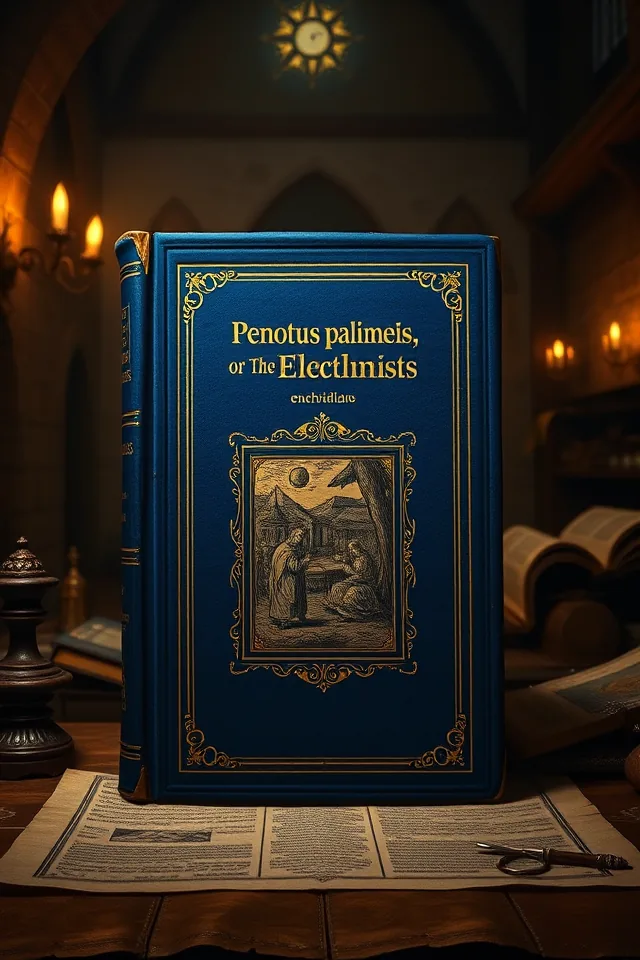
Penotus palimeis, or, The alchymists enchiridion
 61
61

Penotus palimeis, or, The alchymists enchiridion



Review by Aurelia Blackwood (Occult Philosophy Critic) — Bernard Georges Penot's 'Penotus Palimeis, or, The Alchemist's Enchiridion' is a seminal work that stands as a testament to the enduring allure of alchemy. This enchiridion is not merely a guide to the physical processes of alchemy but a spiritual manual that delves into the symbolic and philosophical underpinnings of the art. Penot's insights into the Hermetic tradition are both profound and accessible, making this book an invaluable resource for both novice seekers and seasoned practitioners. The text is rich in esoteric symbolism, offering readers a deep dive into the mystical language of alchemy. Whether you are a scholar of the occult, a spiritual seeker, or an alchemist in practice, this book will enrich your understanding and deepen your connection to the mystical arts.
📝 Description
61
Bernard Georges Penot published 'Penotus Palimeis, or, The Alchemist's Enchiridion' in the 17th century.
This 17th-century text by Bernard Georges Penot, 'Penotus Palimeis, or, The Alchemist's Enchiridion,' details the alchemical process. It presents alchemical symbolism and philosophical ideas, framing the alchemical work as a means of spiritual change. The book conveys a sense of hidden knowledge, suggesting universal and soul secrets within its pages.
It aims to guide those seeking esoteric truths, occult scholars, and practitioners of mystical disciplines. Penot's work looks into the core of alchemy, where the material and spiritual realms meet in the pursuit of the Philosopher's Stone. The text serves as a guide for individuals wishing to grasp the deeper aspects of existence and alchemy's transformative potential.
Published in the 17th century, 'Penotus Palimeis' belongs to the Hermetic tradition, a lineage of thought tracing back to Hermes Trismegistus. This tradition often views the physical world as a reflection of spiritual realities and seeks knowledge through correspondence between the macrocosm and microcosm. Alchemy within this context is not merely about material transmutation but also about the inner purification and enlightenment of the practitioner. Penot's work fits within this framework, using alchemical operations as a metaphor for spiritual development and the attainment of higher consciousness.
💡 Why Read This Book?
Why read 'Penotus Palimeis, or, The Alchemist's Enchiridion'? This book is a must-read for anyone interested in the mystical and esoteric traditions of alchemy. It offers a comprehensive exploration of the Hermetic arts, providing both historical context and spiritual insights. Ideal for seekers of hidden knowledge, scholars of the occult, and practitioners of alchemy, this work will enhance your understanding of the transformative power of alchemy and its relevance in the modern world.
⭐ Reader Reviews
Honest opinions from readers who have explored this book.
❓ Frequently Asked Questions
What is the primary focus of 'Penotus Palimeis, or, The Alchemist's Enchiridion'?
The primary focus is the mystical and philosophical aspects of alchemy, exploring the Hermetic tradition and its symbolic language.
Who is the intended audience for this book?
The intended audience includes seekers of hidden knowledge, scholars of the occult, and practitioners of alchemy.
What makes this book unique among alchemical texts?
This book stands out for its deep dive into the symbolism and spiritual significance of alchemy, making it a valuable resource for both historical study and spiritual practice.
Are there practical alchemical instructions in this book?
While the book does discuss alchemical processes, its primary focus is on the philosophical and symbolic aspects of alchemy.
How does this book contribute to modern alchemical studies?
It provides a rich historical context and esoteric insights that are relevant to modern practitioners and scholars of the mystical arts.
🔮 Key Themes & Symbolism
Hermetic Alchemy
This book studies the Hermetic tradition of alchemy, exploring the philosophical and spiritual underpinnings of the art. Penot's insights reveal the symbolic language of alchemy and its transformative power, making it a vital resource for those seeking to understand the deeper layers of existence.
Symbolism and Mysticism
Penotus Palimeis is rich in esoteric symbolism, offering readers a profound journey into the mystical language of alchemy. Each symbol and process is imbued with spiritual significance, inviting readers to explore the hidden knowledge of the universe.
Spiritual Transformation
The alchemical process, as described by Penot, is a path to spiritual transformation. This book guides readers through the stages of the Great Work, where matter and spirit converge in the quest for the Philosopher's Stone, symbolizing the ultimate union of the divine and the human.
💡 Key Ideas
Editorial paraphrase of the work's core concepts — not direct quotes.
The alchemist's work is a journey of the soul, seeking to transform the base into the divine.
This quote highlights the spiritual significance of alchemy, viewing it as a path to inner transformation.
In the crucible of the mind, the Philosopher's Stone is forged.
This passage emphasizes the mental and spiritual aspects of alchemical practice.
The symbols of alchemy are the language of the universe, whispering secrets to those who listen.
This quote underscores the mystical and symbolic nature of alchemical practices.
The true alchemist seeks not gold, but the elixir of life.
This line reflects the deeper, spiritual goals of alchemical pursuits beyond material gain.
Through the alchemical process, the soul ascends to the divine.
This passage underscores the transformative and spiritual journey that alchemy represents.
🌙 Esoteric Significance
Tradition
This book belongs to the Hermetic tradition, which emphasizes the unity of all things and the transformative power of the alchemical process. Hermeticism draws on ancient Egyptian and Greek philosophies, seeking to reveal the hidden knowledge of the universe.
Symbolism
Key symbols in this text include the Philosopher's Stone, the alchemical crucible, and the stages of the Great Work. Each symbol carries deep spiritual significance, representing the journey of the soul from the base to the divine.
Modern Relevance
In the modern world, 'Penotus Palimeis' continues to inspire seekers of hidden knowledge and practitioners of the mystical arts. Its esoteric insights and philosophical depth make it a valuable resource for those exploring the spiritual dimensions of alchemy.
👥 Who Should Read This Book
This book is ideal for beginners seeking an introduction to the mystical arts of alchemy, scholars researching the Hermetic tradition, spiritual seekers looking for deeper insights into the transformative power of alchemy, and practitioners aiming to deepen their understanding and practice of the alchemical arts. It offers a collection of symbolism and philosophical insights that will enrich the journey of any reader interested in the esoteric and occult.
📜 Historical Context
Written in the 17th century, 'Penotus Palimeis, or, The Alchemist's Enchiridion' reflects the heightened interest in alchemy and the occult during the early modern period. This era was marked by a resurgence of Hermetic and Neoplatonic thought, as scholars and mystics sought to reconcile ancient wisdom with contemporary scientific discoveries. Penot's work contributed to this intellectual ferment, offering a comprehensive guide to the alchemical arts that blended practical techniques with profound philosophical insights. Its influence can be seen in the works of later alchemists and occultists, who continued to explore the mystical dimensions of the alchemical process.
📔 Journal Prompts
Reflect on the symbolism of the Philosopher's Stone in your own spiritual journey.
How does the alchemical process of transformation resonate with your personal growth?
Consider the role of hidden knowledge in your understanding of the universe.
Explore the mystical language of alchemy and its relevance to your spiritual practices.
What insights from 'Penotus Palimeis' can you apply to your own quest for spiritual enlightenment?
🗂️ Glossary
Philosopher's Stone
A legendary alchemical substance said to be capable of turning base metals into gold and granting immortality.
Hermeticism
A philosophical and spiritual tradition based on the writings attributed to Hermes Trismegistus, emphasizing the unity of all things.
Alchemical Crucible
A vessel used in alchemy to contain the materials undergoing transformation, symbolizing the soul's journey.
Great Work
The process of alchemical transformation, aiming to achieve the union of the divine and the human.
Materia Medica
The study of medicinal substances, often explored in the context of alchemical practices for their transformative properties.
This book appears in 3 collections
🔮 Readers Also Liked
Browse all →







More by Bernard Georges Penot
All books →
From the “Hermeticism” Collection
View all →






More Free Alchemy & Hermeticism Books
View all →