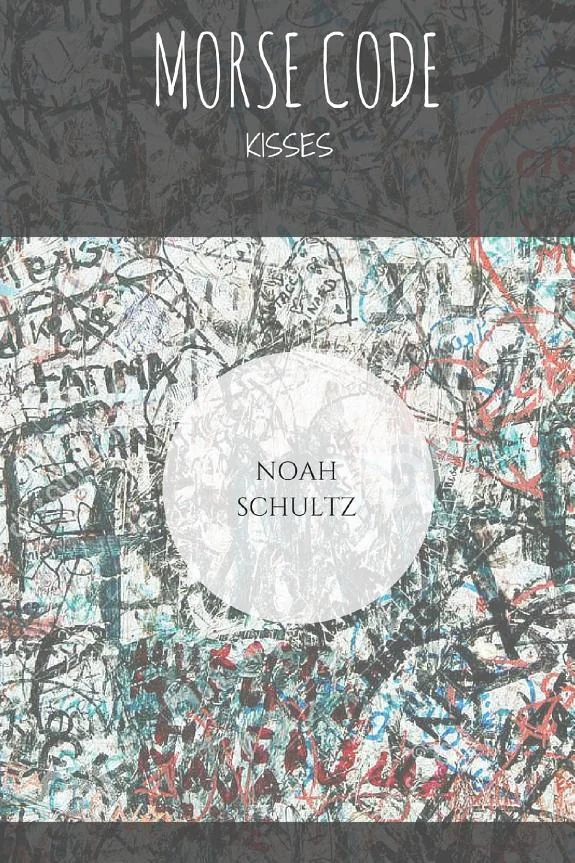
Morse Code Kisses
 79
79

Morse Code Kisses
Noah Schultz’s Morse Code Kisses is a stark and moving collection that bypasses sentimentality to confront the raw realities of intimacy denied. Emerging from the restrictive environment of prison, these poems function as a lifeline, a defiant assertion of emotional and spiritual freedom. The language is often spare, mirroring the austerity of its genesis, yet it carries a potent charge. Schultz masterfully conveys the ache of separation and the fervent desire for connection, particularly evident in pieces that explore the imagined closeness with loved ones.
A notable strength is the book’s consistent focus on resilience; even in moments of despair, the poems circle back to the power of love and memory. However, the thematic consistency, while a strength, can occasionally lead to a sense of repetition. A particularly poignant section explores the concept of a "reconciliation" that transcends physical presence, where the act of writing itself becomes a bridge. The collection offers a vital perspective on how the human heart insists on connection, regardless of external barriers. Morse Code Kisses succeeds as a potent testament to the enduring power of the poetic voice.
📝 Description
79
Noah Schultz’s Morse Code Kisses, published in 2015, emerged from his time in correctional facilities.
Morse Code Kisses is a collection of poems by Noah Schultz, first published in November 2015. The work originated during the author's confinement, where physical and social isolation spurred significant creative activity. These poems go beyond personal reflections to address themes of intimacy, freedom, and the resilience of the human spirit under severe pressure. The collection speaks to readers interested in expressions of hope and fortitude found in difficult circumstances. It especially appeals to those who see art as a means of liberation, even within restricted environments. Individuals drawn to poetry that examines love, loss, and the pursuit of connection against formidable odds will find considerable depth here.
Published in 2015, Morse Code Kisses appeared when discussions about prison reform and incarceration's psychological effects were growing, though often from a policy perspective. Schultz's poems offer a different viewpoint, focusing on the inner lives of those imprisoned and the universal need for emotional expression. The work engages with the fundamental human need for connection, a subject present in literature from Ovid's exile poems to contemporary confessional writing. The core ideas center on the dual nature of confinement and freedom. The title's "Morse code" suggests a limited or encoded form of communication, while "kisses" signify intimate connection. The poems examine how love and closeness can be conveyed and sustained when direct contact is not possible. Reconciliation, both internal and with others, is a strong undercurrent, alongside the sheer tenacity of the human spirit when faced with extreme constraints.
While not strictly esoteric in the occult sense, Morse Code Kisses can be seen as touching on esoteric themes of inner freedom and the transcendence of material limitations. The poems explore how the spirit can remain connected and expressive even when the body is confined. This resonates with traditions that emphasize the power of the mind and spirit to overcome physical circumstances, finding liberation through internal states and symbolic communication. The "Morse code" aspect suggests a search for hidden meaning and connection, a common thread in esoteric thought where external realities often mask deeper truths.
💡 Why Read This Book?
• Gain insight into the power of art as liberation, as demonstrated by Schultz’s poems written within prison walls (2015), illustrating how creativity can transcend physical confinement. • Experience the profound exploration of connection and reconciliation, concepts central to the book’s theme of maintaining intimacy despite separation. • Understand the resilience of the human spirit through Schultz's verses, offering a unique perspective on love and hope fostered by adversity.
⭐ Reader Reviews
Honest opinions from readers who have explored this book.
❓ Frequently Asked Questions
When was Morse Code Kisses first published?
Morse Code Kisses was first published on November 20, 2015, by Noah Schultz.
What inspired Noah Schultz to write Morse Code Kisses?
The collection was inspired by the author's experiences within a prison setting, a drive to maintain intimate connection despite adversity, and a need to express freedom and liberation.
What are the main themes explored in Morse Code Kisses?
The primary themes include love, intimacy, freedom, liberation, reconciliation, and resilience, all explored through the lens of confinement and separation.
How does the title 'Morse Code Kisses' relate to the book's content?
The title suggests a form of communication (Morse code) that is indirect and perhaps limited, used to convey intimate connection (kisses), reflecting the challenge of maintaining closeness while physically separated.
Is Morse Code Kisses a collection of prose or poetry?
Morse Code Kisses is a collection of poems.
What is the author's background related to this book?
Noah Schultz wrote Morse Code Kisses while incarcerated, drawing directly from the adversity and isolation of prison life to fuel his writing.
🔮 Key Themes & Symbolism
Intimacy Beyond Proximity
The collection confronts the paradox of maintaining intimate bonds when physical presence is impossible. Schultz explores how love, memory, and imagination serve as crucial conduits for connection, turning the limitations of incarceration into a space where emotional closeness is fiercely cultivated. This theme examines the psychological and spiritual dimensions of intimacy, suggesting that true connection transcends the physical realm. The poems highlight the 'Morse code' aspect of communication—finding ways to send love's signals through restricted means, making the 'kisses' felt across any distance.
Liberation Through Expression
Written within the confines of prison, the poems themselves represent an act of liberation. Schultz uses verse as a vehicle to escape the psychological constraints of his environment, finding freedom in the act of creation and expression. This theme underscores the transformative power of art, demonstrating how creative output can foster a sense of agency and autonomy even under extreme duress. The exhilarating feeling of freedom described in the blurb is directly tied to the writing process, positioning poetry as a means of reclaiming one's inner landscape.
Reconciliation and Resilience
A significant thread running through Morse Code Kisses is the concept of reconciliation, not just with external circumstances or others, but with oneself. The poems wrestle with the challenges of confinement and the desire for connection, ultimately emphasizing the human capacity for resilience. Schultz illustrates how the act of confronting adversity, processing loss, and reaffirming love can lead to a profound inner strength. The work suggests that reconciliation is an ongoing process, fueled by the enduring power of hope and the will to connect.
The Human Spirit in Adversity
Fundamentally, Morse Code Kisses is a proof of the indomitable human spirit. The collection showcases how individuals can find meaning, express love, and maintain a sense of self even when stripped of conventional freedoms. The poems are born from adversity, yet they radiate a powerful affirmation of life and connection. This theme speaks to the universal human drive to seek and maintain bonds, demonstrating that the capacity for love and emotional depth is not extinguished by external hardship.
💬 Memorable Quotes
Direct passages from the work, attributed to the author.
“These poems brought the exhilarating feeling of freedom and liberation.”
— This statement from the original blurb highlights the paradoxical nature of the work: created in a space of restriction, it paradoxically evokes a sense of liberation for the author and, by extension, the reader.
“Inspired by adversity and an unwilling drive to forgo the right to intimate connection.”
— This phrase expresses the core motivation behind the collection, emphasizing how challenging circumstances and the denial of basic human connection spurred the creative process.
“The message of love echoes through the pages with intention.”
— This interpretation suggests that love is not merely a subject but an active force within the poetry, intentionally conveyed to connect with readers on a deep emotional level.
“Connecting the reader to the power of reconciliation and resiliency.”
— This points to the intended impact of the poems, aiming to foster a sense of understanding and empathy for the processes of healing and inner strength, particularly in the face of hardship.
“Written within the confines of a prison.”
— This factual statement about the book's origin is crucial, setting the context for the themes of adversity, isolation, and the search for freedom that permeate the collection.
🌙 Esoteric Significance
Tradition
While not explicitly tied to a single named esoteric lineage like Hermeticism or Gnosticism, Morse Code Kisses engages with universal spiritual themes that resonate across many traditions. Its focus on inner liberation, the power of consciousness to transcend physical limitations, and the cultivation of love and resilience aligns with contemplative practices found in mystical paths worldwide. The work can be seen as a modern manifestation of how spiritual principles—like finding freedom within oneself—can be expressed through artistic endeavor, irrespective of formal affiliation.
Symbolism
The title itself, 'Morse Code Kisses,' is rich with symbolic potential. 'Morse code' represents a system of communication that is indirect, encoded, and requires interpretation, mirroring how intimate feelings and connections must be conveyed through limited means in confinement. 'Kisses' symbolize direct, intimate human contact and affection. Together, they symbolize the profound challenge and art of maintaining love and connection across vast physical and social distances, turning the act of communication into a sacred, resilient practice.
Modern Relevance
In contemporary contexts, particularly with the rise of digital communication and its own forms of mediated intimacy, Schultz's work offers a prescient exploration of connection. Thinkers and practitioners in fields like ecopsychology or transpersonal psychology might find resonance in its emphasis on the enduring nature of the human spirit and the capacity for inner freedom. Furthermore, the collection serves as a powerful reminder for artists and writers exploring themes of confinement, social justice, or the psychological impact of isolation in their own work today.
👥 Who Should Read This Book
• Individuals interested in contemporary poetry that directly confronts themes of adversity and confinement, offering a unique perspective from within the prison system. • Readers seeking to explore the power of art and writing as tools for personal liberation and emotional resilience in challenging circumstances. • Those who appreciate poetry that focuses on the enduring human capacity for love and connection, even when physical intimacy is impossible.
📜 Historical Context
Published in November 2015, Noah Schultz’s Morse Code Kisses emerged during a period of increasing public discourse surrounding the realities of the American carceral system. While policy-focused discussions on prison reform were gaining momentum, the artistic and emotional lives of incarcerated individuals often remained in the background. Schultz’s poetry collection offered a potent counter-narrative, directly from within the system, highlighting the persistent human need for intimacy and connection against overwhelming odds. The work can be seen as part of a broader tradition of literature produced under duress, echoing sentiments found in works by figures like Oscar Wilde during his imprisonment or even earlier epistolary forms of expressing longing and connection across distance. The 2015 publication date places it after the peak of the 'New Sincerity' movement in literature, which encouraged earnest emotional expression, a quality readily found in Schultz's direct approach to themes of love and resilience, contrasting with more ironic or postmodern literary trends.
📔 Journal Prompts
The exhilarating feeling of freedom: How does Schultz's poetry evoke this sensation despite its origin?
Intimate connection against adversity: Reflect on the 'Morse code' aspect of maintaining bonds.
The power of reconciliation: How does the collection explore healing and self-acceptance?
Resiliency in confinement: What specific images or ideas represent the enduring human spirit?
The intention of love: Where do you feel the 'message of love' most strongly in the poems?
🗂️ Glossary
Confinement
The state of being physically restricted or imprisoned. In the context of Morse Code Kisses, it refers to the author's experience within a correctional facility and the psychological implications of such limitations.
Intimate Connection
A deep, personal bond characterized by emotional closeness, vulnerability, and affection. The book explores the drive to maintain this connection despite physical separation and isolation.
Liberation
The act of being set free from confinement or restriction. In the poems, liberation is often achieved through the act of writing and artistic expression, representing an inner freedom.
Reconciliation
The process of restoring friendly relations or resolving conflict. The book suggests this can apply to relationships with others, oneself, or one's circumstances, often facilitated by understanding and acceptance.
Resiliency
The capacity to recover quickly from difficulties; toughness. The poems demonstrate the human spirit's ability to withstand and bounce back from adversity, particularly through emotional and spiritual strength.
Adversity
Difficulties; misfortune. The collection is directly inspired by the hardships faced by the author, using these challenges as a catalyst for creative expression.
Morse Code
A method of transmitting text information as a series of on-off tones, lights, or clicks. Symbolically, it represents indirect, encoded, or limited communication.
This book appears in 1 collection
🔮 Readers Also Liked
Browse all →







From the “Mental Alchemy” Collection
View all →








More Free Alchemy & Hermeticism Books
View all →