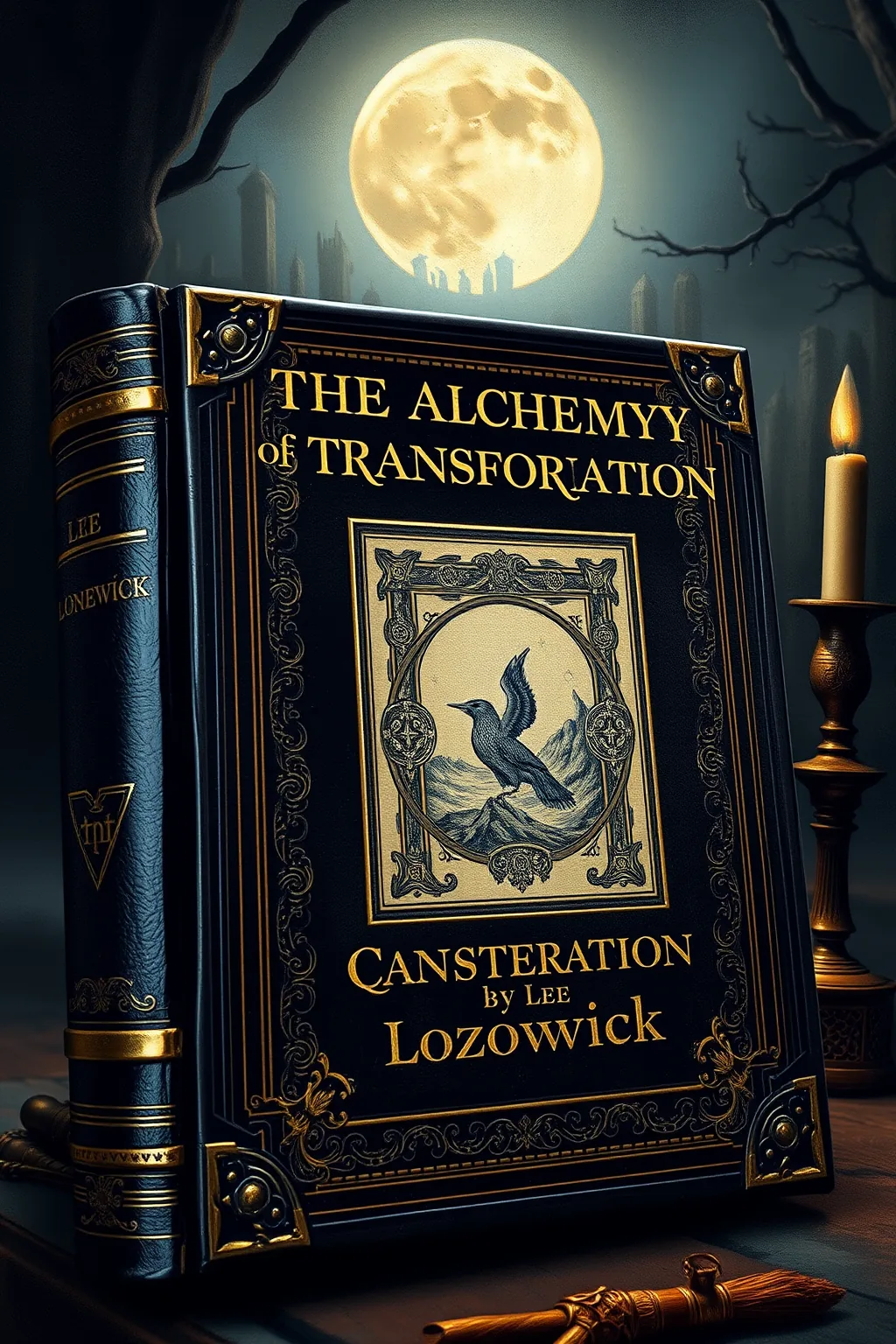
The alchemy of transformation
 82
82

The alchemy of transformation
Lee Lozowick’s "The Alchemy of Transformation" offers a potent, no-frills manual for those serious about inner change. Unlike many contemporary spiritual texts that skim the surface, Lozowick directly confronts the reader with the demanding nature of alchemical work. His explanation of the *solutio* stage, where egoic boundaries are dissolved, is particularly arresting; he doesn't shy away from the potential disorientation this process entails, framing it as a necessary precursor to true integration. While the book’s strength lies in its unvarnished depiction of these often-uncomfortable stages, its primary limitation is its density. For newcomers to esoteric concepts, the sheer volume of symbolic language and the assumed familiarity with alchemical operations might present a steep initial learning curve. The book demands significant internal engagement, which is precisely its power. It is a rigorous exploration for the dedicated seeker, not a casual read. Lozowick’s work remains a vital text for understanding the mechanics of profound personal evolution.
📝 Description
82
Lee Lozowick's 1996 book, The Alchemy of Transformation, details inner change through alchemical stages.
Published in 1996, "The Alchemy of Transformation" by Lee Lozowick examines the principles of personal and spiritual metamorphosis. It moves beyond simple self-help to address the difficult processes of genuine inner change. The book acts as a guide to understanding alchemical stages as they appear in the human psyche and energetic systems. Lozowick presents alchemy not as a historical artifact but as a force for evolution available to anyone seeking it. His approach stems from direct experience with these principles, blending theory with practical application for those ready for deeper engagement. This work is for individuals committed to their spiritual or psychological growth, especially those interested in esoteric traditions and their practical use. It appeals to sincere seekers willing to face challenging truths about themselves and reality. Readers familiar with or curious about transmutation, the four elements, or classical alchemy's symbols will find much to consider. It is also for those who want to grasp the mechanics of consciousness and the universe, moving past surface ideas to understand fundamental forces of change. Those seeking a serious, direct exploration of spiritual work will find it particularly valuable.
This work engages with the perennial philosophy and Hermetic traditions, viewing alchemy as a practical method for inner transformation rather than merely a historical pursuit of material change. It situates alchemical processes within the human psyche and energy body, drawing connections to broader spiritual and consciousness studies. Lozowick's direct experiential approach grounds these concepts, making them accessible to those interested in applying esoteric principles to their own evolution. The book emerged during a period of renewed interest in esoteric spirituality, but it distinguished itself by focusing on the rigorous, internal aspects of alchemical work.
⭐ Reader Reviews
Honest opinions from readers who have explored this book.
❓ Frequently Asked Questions
What is the 'prima materia' in Lee Lozowick's 'The Alchemy of Transformation'?
The prima materia, as explored in Lozowick's 1996 work, refers to the undifferentiated, raw potential within an individual—the fundamental substance that alchemy seeks to refine and transmute into higher forms.
How does 'The Alchemy of Transformation' relate to traditional alchemy?
The book interprets classical alchemical processes like calcinatio and solutio as metaphors and practical stages for psychological and spiritual transformation, applying ancient symbolism to modern inner work.
Is this book suitable for beginners in esoteric studies?
While accessible, the book requires a serious commitment. It delves deeply into complex esoteric concepts, making it more suitable for those already exploring spiritual or psychological transformation and familiar with symbolic language.
What distinguishes Lozowick's approach to alchemy?
Lozowick's approach is characterized by its directness and emphasis on lived experience. He presents alchemy not as a historical curiosity but as a living, actionable system for profound personal evolution, first detailed in his 1996 publication.
Can 'The Alchemy of Transformation' help with personal crises?
Yes, the book frames alchemical stages like solutio (dissolution) and fermentatio (rebirth) as models for understanding and navigating personal crises, offering a structured perspective on periods of breakdown and renewal.
What is the significance of the 'coniunctio' in this text?
The coniunctio, or sacred union, represents the integration of opposites within the psyche—a critical stage in alchemical transformation where dualities are resolved into a unified whole, as detailed in Lozowick's work.
🔮 Key Themes & Symbolism
The Alchemical Stages of Psyche
Lozowick meticulously unpacks the seven primary operations of classical alchemy—calcinatio, solutio, separatio, coniunctio, fermentatio, distillatio, and coagulatio—interpreting each as a distinct phase in the human journey toward spiritual maturity. He emphasizes that these are not merely theoretical constructs but active processes occurring within consciousness. The work provides a practical, if demanding, map for understanding periods of breakdown and breakthrough, offering guidance on how to consciously engage with the dissolution of egoic structures (*solutio*) and the subsequent integration of transformed elements (*coniunctio*). This theme offers a rigorous framework for self-inquiry, moving beyond abstract notions of growth to concrete, sequential steps.
Prima Materia and Potential
Central to the text is the concept of the *prima materia*, the primordial, undifferentiated substance that forms the foundation of all existence and the starting point for alchemical work. Lozowick presents this not as an external element but as the inherent, raw potential residing within each individual. The book guides the reader in recognizing and engaging with this fundamental essence, which must first be understood before it can be subjected to the transformative processes. It highlights the necessity of confronting one's own unrefined state before higher transmutation can occur, stressing that true alchemy begins with an honest appraisal of one's own raw material, free from pretense or illusion.
Consciousness and Divine Will
A significant thread woven through "The Alchemy of Transformation" is the interplay between individual consciousness and the Divine Will. Lozowick posits that genuine transformation arises not solely from personal effort but from aligning one's will with a higher, universal intelligence. This alignment is crucial for working through the often-turbulent alchemical stages successfully. The book suggests that the alchemist's task involves developing the capacity to perceive and cooperate with this cosmic force, allowing it to direct the process of refinement. This perspective elevates the work from mere psychological self-improvement to a sacred undertaking, emphasizing surrender and receptivity as key components of the transformative path.
The Symbolism of Elements
The four classical elements—Earth, Water, Air, and Fire—serve as fundamental archetypes throughout Lozowick's exploration of transformation. Each element represents distinct qualities, states of consciousness, and phases within the alchemical process. Fire, for instance, is often associated with *calcinatio* (purification through burning), while Water relates to *solutio* (dissolution and emotional cleansing). Understanding the interplay and balance of these elements is presented as vital for the alchemist. The book uses this elemental language to describe the fundamental energies and materials involved in the profound restructuring of the self, offering a symbolic grammar for inner work.
💬 Memorable Quotes
Direct passages from the work, attributed to the author.
“The prima materia is not something to be found outside of yourself; it is yourself.”
— This statement underscores the internal locus of alchemical work. Lozowick redirects the seeker's attention inward, asserting that the raw potential for transformation exists within one's own being, rather than requiring an external substance or catalyst.
“Solutio is the dissolution of egoic structures.”
— This concisely defines a crucial alchemical operation. It highlights that the process of breaking down the solidified ego, often perceived as painful, is a necessary precursor to forming a more authentic, refined self.
“Alchemy is the art of taking yourself apart and putting yourself back together again.”
— This offers a direct, practical metaphor for the entire alchemical endeavor. It emphasizes the active, deliberate process of deconstruction and reconstruction that defines profound personal change.
“True transformation requires aligning your will with the Divine Will.”
— This highlights the spiritual dimension of alchemy. It suggests that personal effort alone is insufficient; genuine change stems from a conscious cooperation with a higher, universal intelligence.
💡 Key Ideas
Editorial paraphrase of the work's core concepts — not direct quotes.
The coniunctio is the union of opposites.
This paraphrased concept points to a key stage where internal dualities, such as masculine/feminine or spirit/matter, are reconciled. It signifies a move toward wholeness and integration within the psyche.
🌙 Esoteric Significance
Tradition
This work fits within the Western Esoteric tradition, particularly drawing from Hermeticism and the symbolic language of classical alchemy. It interprets ancient alchemical texts and practices not as literal chemical processes but as profound metaphors for psychological and spiritual evolution. Lozowick’s approach is less about historical scholarship and more about accessing the living essence of alchemical principles, viewing them as universally applicable laws of consciousness and transformation. It departs from purely theoretical Gnostic or Kabbalistic interpretations by focusing on the dynamic, operational stages of transmutation as lived experiences.
Symbolism
Key symbols include the *prima materia*, representing the undifferentiated potential of the psyche, and the seven alchemical operations (*calcinatio*, *solutio*, etc.), which map the stages of ego dissolution and spiritual refinement. The elements (Earth, Water, Air, Fire) are fundamental motifs, representing distinct energetic qualities and states of consciousness essential for the transformative process. The *coniunctio*, or sacred union, symbolizes the integration of inner opposites, a crucial step toward wholeness. These symbols are presented as active forces within the individual's inner landscape.
Modern Relevance
Lozowick's work continues to influence contemporary spiritual seekers and practitioners interested in depth psychology and esoteric traditions. Thinkers exploring Jungian archetypes, shadow work, and integral spirituality often find resonance with his detailed mapping of the transformative process. His direct, no-nonsense approach appeals to those disillusioned with superficial self-help, making his texts relevant for modern contemplative practices and psychospiritual development schools that emphasize rigorous inner work and the integration of difficult psychological material.
👥 Who Should Read This Book
['• Serious students of Western Esotericism: Those seeking to understand classical alchemy beyond historical accounts, applying its symbolic stages to personal spiritual growth.', '• Depth Psychology Practitioners: Individuals interested in the symbolic language of the psyche and the processes of ego dissolution and integration as explored through an alchemical lens.', '• Dedicated Spiritual Seekers: Anyone committed to profound inner transformation who is ready for a challenging, direct, and unvarnished exploration of the stages of personal metamorphosis.']
📜 Historical Context
Published in 1996, "The Alchemy of Transformation" emerged in a landscape increasingly interested in esoteric spirituality, yet it stood apart from the more common New Age trends of the era. Lee Lozowick, a prominent spiritual teacher, brought a rigorous, experience-based perspective to the ancient art of alchemy. Unlike the burgeoning field of purely psychological self-help, Lozowick insisted on the necessity of working with subtle energies and profound symbolic processes. His work engaged with perennial philosophical questions about human nature, drawing parallels between classical alchemical symbolism and the practicalities of modern spiritual development. The book's publication predated the widespread digital saturation of esoteric information, positioning it as a substantial printed resource for dedicated practitioners seeking a deeper understanding of transformation. It offered an alternative to the often-simplified spiritual doctrines prevalent at the time, grounding esoteric principles in direct, actionable experience.
📔 Journal Prompts
The nature of your own *prima materia*: what raw, unformed potential resides within you?
Reflecting on *calcinatio*: identify one aspect of your false self that needs purification.
Navigating *solutio*: how can you consciously engage with the dissolution of limiting egoic structures?
The challenge of *coniunctio*: explore an internal duality that yearns for integration.
Experiences of *distillatio*: what refined essence has emerged from your past challenges?
🗂️ Glossary
Prima Materia
The fundamental, undifferentiated substance or potential that is the starting point for all alchemical transformation. In the context of personal growth, it refers to the raw, unrefined state of the individual's consciousness and being.
Calcinatio
The first alchemical operation, symbolizing purification by fire. It involves burning away the false ego, impurities, and superficial layers of the personality to reveal the essential core.
Solutio
The second operation, representing dissolution. This stage involves breaking down solidified ego structures, emotional blockages, and rigid beliefs, often leading to a state of formlessness and vulnerability.
Separatio
The third operation, meaning separation. It involves discerning the essential from the non-essential, the subtle from the gross, and separating pure from impure within oneself.
Coniunctio
The fourth operation, signifying the sacred union or conjunction. This stage involves the integration of opposites within the psyche, leading to a state of wholeness and balance.
Fermentatio
The fifth operation, representing fermentation or rebirth. It is the process by which the transformed substance is imbued with new life and begins to multiply, signifying renewal.
Distillatio
The sixth operation, involving distillation. This process refines the essence through repeated vaporization and condensation, leading to a more concentrated and purified form of the transformed substance.
🔮 Readers Also Liked
Browse all →








More by Lee Lozowick
All books →
More Free Alchemy & Hermeticism Books
View all →