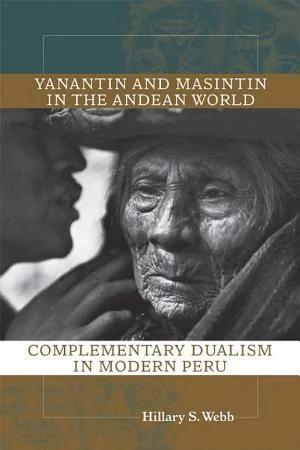
Yanantin and Masintin in the Andean World
 83
83

Yanantin and Masintin in the Andean World
Hillary S. Webb's examination of yanantin offers a deeply personal and intellectually rigorous engagement with Andean philosophy. Her autoethnographic approach, while sometimes placing the author's subjective experience at the forefront, provides an accessible entry point into a complex conceptual system. A particular strength lies in her ability to connect abstract philosophical ideas to lived realities, illustrating how concepts like complementary opposites influence daily interactions and worldview. One point of potential limitation is the inherent challenge of fully conveying the nuanced spiritual and relational dimensions of yanantin through academic prose alone; some depth might be lost in translation from lived experience to written word. Webb's discussion of the Pachakuti concept, for instance, vividly portrays a worldview where disruption is integral to renewal, a concept far removed from static Western notions of order. The book ultimately serves as a valuable primer for understanding a vital aspect of Andean thought, urging readers to reconsider their own assumptions about duality.
📝 Description
83
Published in 2012, Hillary S. Webb's book examines yanantin, a core Andean philosophy.
Hillary S. Webb's 2012 work, "Yanantin and Masintin in the Andean World," investigates the indigenous Andean concept of yanantin, which understands dualities like male/female or dark/light not as opposing forces, but as interdependent elements essential for balance. Webb uses an autoethnographic approach, blending personal experience with scholarly analysis to show how this philosophy shapes Andean worldviews and practices.
The book is aimed at academics in anthropology, religious studies, and philosophy, as well as general readers interested in non-Western thought and indigenous cosmologies. It will especially appeal to those looking for alternative ways to understand duality, reciprocity, and how relationships form the basis of existence. Webb places yanantin within the history of Andean thought, contrasting it with Western ideas of opposition and demonstrating the complex philosophical systems present in non-Western cultures.
This book is situated within the study of indigenous cosmologies, specifically those of the Andean region. It engages with philosophies that conceptualize reality through relationality and interdependence, rather than through binary opposition. By detailing concepts like yanantin and Pachakuti, Webb connects Andean thought to broader esoteric traditions that see the universe as a dynamic interplay of forces, emphasizing balance and transformation over conflict.
💡 Why Read This Book?
• Gain a nuanced understanding of yanantin, the Andean concept of complementary opposites, as explored through Hillary S. Webb's autoethnography, offering a distinct perspective on duality beyond Western philosophical binaries. • Grasp the significance of masintin as a counterpoint to yanantin, learning how these concepts shape social relations and cosmological understanding within the Andean worldview, as detailed in Webb's 2012 research. • Explore the practical implications of yanantin and masintin on worldview and daily life, moving beyond abstract theory to see how these indigenous philosophies offer alternative models for harmony and interdependence.
⭐ Reader Reviews
Honest opinions from readers who have explored this book.
❓ Frequently Asked Questions
What is the core concept of yanantin as presented in the book?
Yanantin, as explored by Hillary S. Webb, represents the Andean philosophical principle of "complementary opposites." It posits that dualities like male/female, light/dark, or inner/outer are not in conflict but are interdependent and essential components of a balanced and harmonious existence.
What is masintin in the context of Andean thought according to this book?
Masintin is presented as a contrasting concept to yanantin. While yanantin signifies a harmonious union of opposites, masintin can refer to a more isolated or even competitive relationship between dualistic elements, highlighting different forms of duality within the Andean worldview.
Who is Hillary S. Webb and what is her approach in this book?
Hillary S. Webb is the author, who employs an autoethnographic method. This means she combines scholarly research with personal experience and reflection to explore the indigenous Andean concept of yanantin.
When was Yanantin and Masintin in the Andean World first published?
The book was first published in 2012, making it a relatively contemporary exploration of indigenous Andean philosophy and its significance.
What other key Andean concepts are discussed alongside yanantin?
Besides yanantin and masintin, the work delves into concepts like Pachakuti, which signifies a cosmic inversion or transformation, and explores the fundamental role of reciprocity in maintaining balance within the Andean worldview.
How does this book differ from Western approaches to duality?
The book highlights how yanantin offers a relational ontology, viewing dualities as inherently connected and mutually constitutive, unlike many Western philosophical traditions that tend to emphasize separation, conflict, or hierarchy between opposites.
🔮 Key Themes & Symbolism
Complementary Opposites
The central theme is yanantin, the indigenous Andean philosophy of complementary opposites. This concept challenges Western notions of binary opposition, asserting instead that dualities are interdependent and mutually necessary for wholeness. Webb's autoethnography illustrates how this principle informs social structures, cosmology, and individual perception, moving beyond simple yin-yang dichotomies to a more integrated understanding of relational existence and cosmic balance.
Masintin and Relational Dynamics
Contrasting with yanantin is masintin, which Webb explores as a form of duality that is more distinct, separate, or potentially competitive. The interplay between yanantin and masintin reveals the nuanced ways Andean cultures conceptualize relationships between different entities or forces. This theme is crucial for understanding how social harmony and cosmic order are maintained through specific forms of connection and distinction.
Autoethnography and Indigenous Knowledge
Webb’s methodological choice of autoethnography is a significant theme, allowing for a deeply personal yet analytical engagement with Andean concepts. This approach validates subjective experience as a source of knowledge and bridges the gap between the researcher and the researched. It emphasizes the importance of lived experience in understanding complex philosophical and spiritual traditions like that of the Andes.
Cosmology and Reciprocity
The book examines how yanantin and masintin are embedded within a broader Andean cosmology that values reciprocity. Concepts like Pachakuti, a transformative cosmic upheaval, are presented not as chaos but as part of a cyclical process of renewal. This perspective underscores the interconnectedness of all things and the ongoing effort to maintain balance through mutual exchange and respect.
💬 Memorable Quotes
Direct passages from the work, attributed to the author.
“Yanantin describes the union of complementary opposites.”
— This concise statement captures the essence of the book's primary focus: the Andean philosophical concept where dualities are not in opposition but form a unified, interdependent whole essential for balance.
“Masintin refers to a more isolated or competitive form of duality.”
— This highlights the contrast to yanantin, illustrating that Andean thought recognizes different modes of relationship between dualistic elements, not all of which are harmoniously integrated.
“The author uses autoethnography to explore indigenous Andean concepts.”
— This describes Webb's research methodology, emphasizing her personal journey and lived experience as integral to her academic inquiry into yanantin and masintin.
“Andean thought prioritizes relational ontology.”
— This interpretation suggests that the Andean worldview, as presented, defines existence and meaning through relationships and connections rather than through isolated, independent entities.
“Pachakuti signifies a cosmic inversion or transformation.”
— This points to a dynamic aspect of Andean cosmology, where periods of disruption are understood as necessary for renewal and rebalancing the cosmic order.
🌙 Esoteric Significance
Tradition
While not strictly within a Western esoteric lineage like Hermeticism or Kabbalah, "Yanantin and Masintin in the Andean World" engages with universal esoteric principles concerning duality and unity. It offers an indigenous perspective that complements and sometimes challenges Western esoteric models. Its focus on relational ontology and the integration of opposites aligns with mystical traditions that seek to overcome division and achieve wholeness, providing a non-Western lens on the perennial philosophy.
Symbolism
The core concepts of yanantin and masintin themselves function as profound symbols of relational existence. Yanantin symbolizes the sacred union and interdependence of all things, representing a cosmic principle of harmonic balance. Masintin, conversely, symbolizes separation or distinctness within duality, reminding practitioners that balance requires acknowledging both unity and difference. The broader Andean cosmology, which these concepts inhabit, often employs natural symbols like mountains, rivers, and celestial bodies to represent these dynamic relationships.
Modern Relevance
Contemporary thinkers and practitioners in fields ranging from integral theory to ecopsychology are increasingly drawing on non-Western models of interconnectedness. Webb's work provides valuable insights for those seeking alternatives to Western dualistic thinking, offering frameworks for understanding sustainability, social justice, and psychological integration through the lens of relationality and complementary opposites. It informs practices that emphasize community, ecological harmony, and the decolonization of knowledge.
👥 Who Should Read This Book
• Anthropologists and Religious Studies scholars: Gain a deeper understanding of indigenous Andean cosmologies and philosophical frameworks, particularly concerning duality and relational ontology. • Students of Comparative Philosophy: Explore alternative models of existence and logic that diverge from Western dualistic traditions, enriching their understanding of philosophical diversity. • Individuals interested in Esoteric and Metaphysical thought: Discover non-Western perspectives on unity, duality, and the integration of opposites, offering new conceptual tools for personal and spiritual development.
📜 Historical Context
Published in 2012, Hillary S. Webb's "Yanantin and Masintin in the Andean World" emerged during a period of increasing academic and public interest in non-Western philosophies and indigenous knowledge systems. This era saw a growing critique of Western hegemonic thought, particularly its tendency towards binary oppositions and dualistic frameworks. Webb's work contributes to this discourse by informative the sophisticated relational ontology present in Andean cultures, often contrasted with the more atomistic or conflict-driven dualisms found in Western traditions like Aristotelian logic or Cartesian philosophy. The book engages with scholars like John Murra and anthropologist Thomas Abercrombie, who have extensively studied Andean social and economic structures, providing an intellectual lineage for Webb's exploration. Its reception contributed to the broader academic movement recognizing the philosophical depth of indigenous cosmologies, challenging earlier ethnocentric interpretations.
📔 Journal Prompts
Yanantin's principle of complementary opposites as a framework for understanding personal relationships.
The symbolic meaning of masintin in contrast to yanantin within Andean cosmology.
How autoethnography can illuminate complex philosophical concepts like yanantin.
Reflecting on moments where perceived opposites in your life were actually complementary.
The role of reciprocity in maintaining balance, as suggested by the Andean worldview.
🗂️ Glossary
Yanantin
The indigenous Andean philosophical concept representing the union of complementary opposites, where dualities are interdependent and essential parts of a harmonious whole.
Masintin
A concept in Andean thought that refers to a more distinct, separate, or potentially competitive relationship between dualistic elements, contrasting with the harmonious union of yanantin.
Autoethnography
A research method that involves the researcher using their own personal experiences (auto) to describe and interpret culture (ethno) and self (graphy).
Complementary Opposites
The idea that dualistic forces or concepts are not in conflict but are necessary complements that create balance and wholeness, a central tenet of yanantin.
Relational Ontology
A philosophical perspective that defines existence and reality primarily through relationships and connections between entities, rather than through the inherent properties of isolated entities.
Pachakuti
A Quechua term signifying a cosmic inversion, transformation, or upheaval, often understood as a cyclical process of renewal within Andean cosmology.
Reciprocity
The practice of exchanging things with others for mutual benefit, a fundamental principle in Andean social and cosmological systems for maintaining balance.
This book appears in 1 collection
🔮 Readers Also Liked
Browse all →








From the “Shamanism” Collection
View all →






More Free Occult Philosophy Books
View all →