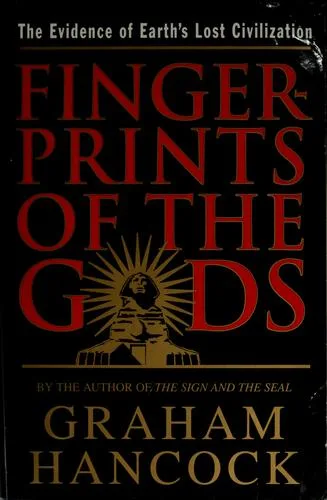
Fingerprints of the gods
 81
81

Fingerprints of the gods
Graham Hancock's Fingerprints of the Gods presents a compelling, albeit contentious, argument for a lost global civilization predating recorded history. The strength of the book lies in its ambitious synthesis of disparate evidence—from geological data suggesting a Younger Dryas impact event around 10,800 BCE to the architectural precision of sites like Puma Punku. Hancock’s ability to connect these dots, however tenuously, creates a narrative that captivates the imagination. A notable limitation is the reliance on speculative interpretations of archaeological and mythological data, often sidestepping more conventional explanations or requiring a significant suspension of disbelief from the reader. The discussion surrounding the precise alignment of the Sphinx and the pyramids, for instance, is a prime example of this interpretive leap. Ultimately, Fingerprints of the Gods functions less as a definitive historical account and more as an elaborate thought experiment that challenges the reader to reconsider established timelines.
📝 Description
81
Graham Hancock's 2001 book argues a lost global civilization existed before recorded history.
Fingerprints of the Gods, published in 2001, puts forth the idea that a sophisticated global civilization thrived in prehistoric times, predating known societies. Hancock suggests that evidence for this vanished culture appears in ancient megalithic sites, widespread myths, and astronomical alignments found around the world. The book challenges the accepted timelines of human development and archaeological understanding.
Hancock posits a 'civilization before history,' a global society that flourished thousands of years ago, possibly destroyed by a cataclysm. He highlights the advanced engineering of sites such as the Giza pyramids and Machu Picchu, contending their construction implies knowledge beyond what is usually credited to early cultures. The book also examines flood myths common to diverse cultures as potential collective memories of this ancient event.
This work fits within a tradition of esoteric history that seeks hidden knowledge and alternative explanations for humanity's past. It follows in the vein of authors who interpret ancient myths and monuments as evidence of forgotten advanced cultures, often linking them to cataclysmic events or lost continents. Hancock's approach draws on a long-standing interest in uncovering suppressed historical narratives and questioning mainstream interpretations of archaeology and ancient texts.
💡 Why Read This Book?
• You will learn about the Younger Dryas impact hypothesis, a geological event around 10,800 BCE that Hancock links to the destruction of a prehistoric civilization, offering a unique perspective on global cataclysms. • You will explore the concept of 'civilization before history,' examining Hancock's interpretation of megalithic sites like the Giza pyramids and their implications for advanced ancient knowledge. • You will encounter interpretations of global flood myths, understanding how Hancock uses these widespread narratives as potential evidence for a shared ancient past and a common ancestral memory.
⭐ Reader Reviews
Honest opinions from readers who have explored this book.
❓ Frequently Asked Questions
What is the primary argument of Fingerprints of the Gods?
The book's central thesis is that an advanced global civilization existed thousands of years before recorded history, which was destroyed by a cataclysm, leaving behind enigmatic ruins and myths.
What evidence does Graham Hancock use to support his theory?
Hancock draws on evidence from ancient megalithic structures (e.g., Giza, Machu Picchu), astronomical alignments, geological data (like the Younger Dryas period), and comparative mythology.
What is the significance of the Younger Dryas period in the book?
The Younger Dryas, a period of rapid cooling around 10,800 BCE, is presented as the likely time of the cataclysm that ended the hypothesized advanced civilization.
How does Fingerprints of the Gods differ from mainstream archaeology?
It challenges the conventional timeline of human development, suggesting a far older and more advanced prehistoric civilization than mainstream archaeology accepts.
What is the 'Great Year' concept as discussed by Hancock?
Hancock utilizes the concept of the Great Year, an astronomical cycle of approximately 25,920 years, to correlate with ancient Egyptian calendar systems and the timing of cataclysmic events.
Does the book offer solutions or explanations for the lost civilization's technology?
While not providing detailed blueprints, Hancock suggests this civilization possessed advanced knowledge of astronomy, engineering, and possibly other sciences that allowed for the construction of monumental works.
🔮 Key Themes & Symbolism
Prehistoric Advanced Civilization
Hancock posits the existence of a highly advanced global civilization that flourished in the epoch prior to known recorded history, potentially around 10,800 BCE. He argues that this civilization possessed sophisticated astronomical knowledge and engineering capabilities, evidenced by megalithic sites such as the Sphinx and Puma Punku. The work suggests this society was destroyed by a cataclysmic event, possibly linked to the Younger Dryas period, leaving behind fragmented knowledge and enigmatic ruins that hint at its former glory.
Global Cataclysm and Memory
A central theme is the idea that a widespread cataclysm, likely occurring at the end of the last Ice Age, wiped out this advanced civilization. Hancock interprets the prevalence of flood myths and destruction narratives across diverse cultures as collective memories of this event. These stories, he suggests, are not mere legends but elements of a genuine historical catastrophe that erased much of humanity's early sophisticated past.
Astronomical Alignments and Ancient Knowledge
The book heavily emphasizes the role of astronomy in understanding ancient cultures. Hancock argues that many ancient structures, including the pyramids of Giza, are precisely aligned with celestial bodies and cosmic cycles, such as the precession of the equinoxes (the Great Year). This alignment is presented as proof of advanced astronomical observation and calculation capabilities possessed by these early societies.
Challenging Conventional Timelines
Fingerprints of the Gods directly confronts established archaeological and historical timelines. Hancock challenges the notion that civilization progressed linearly from primitive beginnings, proposing instead a cyclical model where advanced cultures can rise and fall, leaving behind mysteries that current scientific paradigms struggle to explain. The work encourages a re-evaluation of the accepted narrative of human development.
💬 Memorable Quotes
Direct passages from the work, attributed to the author.
“The Earth is a planet of the past.”
— This statement captures Hancock's view that our current understanding of history is incomplete, and that remnants of much older, forgotten epochs still hold significant clues about our origins.
“The evidence for a lost civilization is written in stone.”
— Hancock uses this metaphor to describe the enduring presence of megalithic structures and artifacts worldwide, which he believes bear the silent testimony of a sophisticated society predating conventional historical accounts.
“Flood myths are the collective memory of a world-ending cataclysm.”
— This interpretation suggests that the widespread stories of global floods are not symbolic but represent a literal recollection of a devastating event that annihilated a previous advanced civilization.
“We are the inheritors of a forgotten golden age.”
— This phrase suggests that humanity's current state is a regression from a far more advanced past, and that understanding this lost era is crucial to comprehending our true heritage.
“The Sphinx is older than conventional Egyptology allows.”
— Hancock argues that geological evidence, particularly water erosion patterns, suggests the Great Sphinx of Giza predates the dynastic Egyptians, pointing to an earlier builder civilization.
🌙 Esoteric Significance
Tradition
While not strictly adhering to a single esoteric lineage, Hancock's work draws heavily on themes found in Hermeticism and Gnosticism concerning lost ancient wisdom and cyclical epochs of civilization. It aligns with the Theosophical concept of root races and lost continents, proposing a sophisticated pre-diluvian society that mirrors these esoteric narratives of forgotten golden ages and catastrophic resets of human history.
Symbolism
The megalithic structures, such as the pyramids and the Sphinx, serve as potent symbols of lost knowledge and advanced capabilities. Their precise astronomical alignments symbolize a deep understanding of cosmic order and universal laws, hinting at a worldview rooted in a sophisticated, possibly spiritual, connection to the cosmos. The recurring motif of the flood represents purification, destruction, and the cyclical nature of existence, a common theme in many spiritual traditions.
Modern Relevance
Hancock's ideas continue to influence contemporary fringe archaeology, ancient astronaut theories, and alternative history communities. Thinkers and content creators exploring the origins of civilization, consciousness studies, and ancient technologies often reference Fingerprints of the Gods as a foundational text that opened new avenues of inquiry beyond mainstream academia.
👥 Who Should Read This Book
• Amateur historians and archeology enthusiasts who enjoy exploring controversial theories about ancient civilizations and questioning established timelines. • Readers interested in comparative mythology and global flood narratives, seeking to understand their potential connections to historical events. • Individuals drawn to speculative non-fiction that bridges geology, astronomy, and ancient history to construct grand narratives of human origins.
📜 Historical Context
Published in 2001, Fingerprints of the Gods arrived at a time of burgeoning interest in alternative history and ancient mysteries, fueled by internet forums and a growing skepticism towards established academic narratives. It built upon a tradition of speculative archaeology and Atlantis theories, notably echoing Ignatius Donnelly's Atlantis: The Antediluvian World (1882). The book generated significant public discourse, challenging the consensus presented by mainstream archaeologists and Egyptologists who largely dismissed its claims. Critics, such as Professor Colin Renfrew, advocated for the prevailing view of gradual human development, creating a clear intellectual divide. The work’s reception was polarized, with widespread popular appeal contrasting sharply with academic disapproval, highlighting a tension between popular curiosity and scientific orthodoxy regarding early human history.
📔 Journal Prompts
The Giza pyramids' astronomical alignments and their implications for a lost civilization.
Reflecting on shared flood myths across cultures as potential historical echoes.
The Younger Dryas period and its hypothesized role in ending a global society.
The concept of a 'civilization before history' and its evidence in megalithic ruins.
Interpreting ancient maps and symbols as clues to forgotten geographical knowledge.
🗂️ Glossary
Younger Dryas
A period of rapid and severe cooling that occurred approximately 12,900 to 11,700 years ago, marking the end of the last glacial period. Hancock links this event to a cataclysm that destroyed a prehistoric civilization.
Precession of the Equinoxes
A slow wobble in Earth's axis that causes the position of the vernal equinox to shift westward through the constellations over a cycle of roughly 25,920 years, known as the Great Year.
Megalithic Structures
Large structures built from stone, typically prehistoric, such as Stonehenge, the pyramids of Giza, and Puma Punku. Hancock argues their construction implies advanced ancient knowledge.
Puma Punku
An ancient site in Bolivia featuring intricately cut stone blocks, whose precise stonework Hancock uses as evidence for advanced prehistoric technology.
Atlantis
A legendary island civilization described by Plato, often associated with advanced technology and a sudden destruction. Hancock's theories echo and expand upon Atlantis myths.
Great Year
Synonymous with the precession of the equinoxes cycle (approx. 25,920 years), which Hancock believes ancient cultures understood and incorporated into their calendrical and architectural systems.
Orion Correlation Theory
A hypothesis suggesting that the layout of the three main pyramids at Giza mirrors the stars of Orion's Belt, implying advanced astronomical knowledge by their builders.
🔮 Readers Also Liked
Browse all →









More by Graham Hancock
All books →





More Free Occult Philosophy Books
View all →