Journey To Ixtlan
 81
81

Journey To Ixtlan
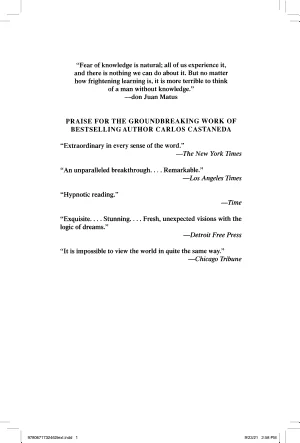
Castaneda’s account in Journey to Ixtlan offers a stark, often brutal, portrayal of initiation into what Don Juan Matus terms the "sorcerer's path." The strength lies in its unflinching depiction of psychological disorientation and the dismantling of the apprentice's ego. One passage that particularly illustrates this is Don Juan’s insistence that Castaneda cease his rationalizing and simply *act*, a core tenet of the sorcerer's method that forces the reader to confront their own reliance on intellect over embodied experience. However, the narrative’s persistent ambiguity regarding the literal truth of events can be a limitation for readers seeking concrete, verifiable anthropological data. The work ultimately presents a compelling, if controversial, exploration of shamanic epistemology.
Verdict: A challenging, seminal text that forces a re-evaluation of perceived reality, despite ongoing scholarly debate.
📝 Description
81
Carlos Castaneda detailed his apprenticeship with Yaqui sorcerer Don Juan Matus in Journey to Ixtlan, published in 1972.
Journey to Ixtlan chronicles Carlos Castaneda's account of his apprenticeship with the Yaqui sorcerer Don Juan Matus. Published in 1972, the book describes Castaneda's initiation into a shamanic worldview. It moves beyond detached observation to his direct involvement in altered states of consciousness and perception.
The narrative follows Castaneda's efforts to grasp and integrate Don Juan's teachings. These teachings challenge common Western ideas about reality and the self. The book requires thoughtful engagement from the intellectually curious, rather than being a casual read.
Published in 1972 during a period of intense interest in non-Western spiritual paths, Journey to Ixtlan appeared as countercultural movements explored various consciousness-altering practices and indigenous traditions. The book tapped into a growing Western fascination with shamanism and alternative ways of knowing. Its reception sparked discussions regarding anthropology, consciousness, and the nature of shamanic practice, even as its authenticity faced scholarly scrutiny.
💡 Why Read This Book?
• Gain insight into the concept of "stopping the world" as taught by Don Juan Matus, a core practice for altering ordinary perception and accessing hidden knowledge. • Understand the specific challenges of Castaneda’s apprenticeship, including encounters with the "assemblage point" and the necessity of "not-doing" to achieve sorcery states. • Explore the philosophical implications of Don Juan’s teachings on "seeing" as a method of direct apprehension, distinct from intellectual understanding, as described in the book's initial chapters.
⭐ Reader Reviews
Honest opinions from readers who have explored this book.
❓ Frequently Asked Questions
When was Carlos Castaneda's Journey to Ixtlan first published?
Journey to Ixtlan by Carlos Castaneda was first published in February 1972, becoming a pivotal work in the study of shamanism and altered states of consciousness.
Who is Don Juan Matus in Journey to Ixtlan?
Don Juan Matus is presented as the Yaqui sorcerer and shaman who serves as Carlos Castaneda's mentor throughout his apprenticeship, guiding him through a complex system of esoteric knowledge and practices.
What is the concept of the 'assemblage point' in Castaneda's work?
The assemblage point, as described in works like Journey to Ixtlan, is a fundamental concept referring to the locus of an individual's awareness, which, when shifted, allows for the perception of different realities.
Is Journey to Ixtlan considered an anthropological study?
While written by an anthropologist, Journey to Ixtlan is often debated as to whether it is purely ethnographic. It blurs the lines between fieldwork, personal experience, and perhaps fictionalized narrative, making it a subject of ongoing academic discussion.
What does 'stopping the world' mean in the context of Don Juan's teachings?
In the context of Don Juan's teachings in Journey to Ixtlan, 'stopping the world' refers to the shamanic practice of suspending the ordinary, rational interpretation of reality to perceive the world directly and in its energetic essence.
What is 'not-doing' as explained by Don Juan?
'Not-doing,' as detailed in Journey to Ixtlan, is a sorcerous technique of performing actions without the usual habitual intent or expectation, thereby disrupting the ordinary state of the assemblage point and opening pathways to alternate realities.
🔮 Key Themes & Symbolism
Shamanic Apprenticeship
The narrative structure of Journey to Ixtlan is built around Castaneda's prolonged apprenticeship with Don Juan Matus. This theme explores the arduous process of spiritual training, where the student's ingrained rational mind is systematically dismantled. It highlights the master-disciple dynamic, the role of obedience, and the intense psychological pressure involved in learning esoteric knowledge that defies conventional understanding. Castaneda's internal struggle to reconcile his academic background with Don Juan's 'sorcerer's path' forms the core of this theme.
Altered States of Consciousness
A central focus is the exploration and induction of altered states of consciousness. Don Juan employs various methods, including the use of psychotropic plants and specific shamanic techniques, to shift Castaneda's 'assemblage point.' These shifts are not presented as mere hallucinations but as doorways to perceiving different realities and energetic structures of the world, challenging the reader's own definition of what constitutes 'reality'.
Epistemology and Perception
The book fundamentally questions Western epistemology, particularly the reliance on empirical observation and rational thought. Don Juan introduces concepts like 'seeing' and 'non-ordinary reality,' suggesting that true knowledge comes from direct, energetic apprehension rather than intellectual analysis. This theme challenges readers to consider alternative ways of knowing and perceiving the world, emphasizing intuition, embodied experience, and the subjective nature of reality construction.
The Sorcerer's Path
Don Juan's teachings are framed as a rigorous discipline, the 'sorcerer's path,' which requires absolute self-mastery, detachment, and a willingness to confront the unknown. This path is not about acquiring power in a conventional sense but about achieving a state of energetic freedom and clarity. Concepts like 'stopping the world,' 'dreaming,' and the confrontation with one's own death are integral to understanding the demands and transformative potential of this esoteric discipline.
💬 Memorable Quotes
Direct passages from the work, attributed to the author.
“A warrior acts, he doesn't think.”
— This statement captures the sorcerer's emphasis on direct action and embodied knowledge over intellectual deliberation. It suggests that true understanding and efficacy in the sorcerer's path come from spontaneous engagement with reality, bypassing the paralysis of overthinking.
“To be a sorcerer means to be an enemy of the ordinary.”
— This provocative statement defines the sorcerer not by magical powers but by a fundamental stance against the mundane and the taken-for-granted. It signifies a commitment to perpetual questioning and a rejection of complacency in perception and being.
“The only thing that can save you is the practice of not-doing.”
— This highlights the crucial role of 'not-doing' in the sorcerer's training. It's a technique to disrupt habitual patterns of perception and behavior, essential for shifting the assemblage point and accessing non-ordinary states of awareness.
“Don't be a victim of your own thoughts.”
— A direct admonition from Don Juan, this emphasizes the internal discipline required of a sorcerer. It warns against the tyranny of the rational mind and the ego, advocating for a state of detachment from one's own mental processes.
💡 Key Ideas
Editorial paraphrase of the work's core concepts — not direct quotes.
The world is what it is. Everything we know is only what we have been told by others.
This quote challenges the reader's assumptions about objective reality and learned knowledge. Don Juan implies that our perceived world is a social and cultural construct, urging a dismantling of accepted truths to perceive reality directly.
🌙 Esoteric Significance
Tradition
Journey to Ixtlan is deeply rooted in what Don Juan Matus describes as the lineage of "sorcerers" or "men of knowledge." While not aligning strictly with Western Hermeticism or Eastern yogic traditions, it shares common ground with shamanic practices found globally and Gnostic emphasis on direct, experiential knowledge over dogma. It presents a unique, self-contained cosmology and praxis that departs from established esoteric schools, focusing on the energetic nature of reality and the disciplined manipulation of perception.
Symbolism
Key symbols include the "assemblage point," representing the nexus of an individual's perceptual reality, which Don Juan teaches how to shift. The "nagual" and "tonal" represent the unknowable, energetic universe and the knowable, structured world respectively, offering a dualistic framework for understanding existence. The concept of "seeing" itself functions as a symbol for direct, energetic apprehension, transcending ordinary sensory input and intellectual interpretation.
Modern Relevance
Contemporary thinkers and practitioners in fields like transpersonal psychology, consciousness studies, and various forms of modern shamanism and neo-shamanism continue to draw from Castaneda's work. His exploration of altered states, the power of intention, and the idea of shifting one's "assemblage point" remain influential concepts for those seeking to expand their understanding of reality and human potential beyond conventional psychological frameworks.
👥 Who Should Read This Book
• Aspiring practitioners of shamanic or altered-state work seeking foundational concepts that challenge ordinary perception. • Students of comparative religion and anthropology interested in accounts of indigenous spiritual traditions, particularly those that push the boundaries of ethnographic study. • Individuals exploring personal transformation and self-inquiry who are prepared for a text that questions deeply ingrained beliefs about reality and the self.
📜 Historical Context
Published in 1972, Journey to Ixtlan arrived during a period of intense countercultural exploration and a burgeoning interest in non-Western spiritual traditions. Castaneda's work tapped into a zeitgeist fascinated by altered states, shamanism, and alternative ways of knowing, offering a compelling narrative that seemed to validate these interests. It emerged at a time when anthropological methods were also being questioned, with some scholars exploring more participatory approaches. The book's reception was immense, selling millions of copies and influencing thinkers beyond academia, though its anthropological validity was hotly debated. Critics, such as anthropologist John Greenway, questioned Castaneda's ethnographic claims and the authenticity of Don Juan Matus, suggesting the work was largely fictional. This controversy, however, only amplified the book's impact, positioning it as a key text in the esoteric and consciousness studies movements of the late 20th century.
📔 Journal Prompts
The concept of the assemblage point and its role in shaping perceived reality.
Don Juan's admonition that 'a warrior acts, he doesn't think.'
The sorcerer's confrontation with death as a source of power.
The practice of 'not-doing' and its potential to disrupt habitual perception.
The distinction between the tonal and the nagual in understanding existence.
🗂️ Glossary
Assemblage Point
The focal point of an individual's awareness, described as a luminous ball of energy. Shifting this point is crucial for entering non-ordinary states of perception and accessing different realities.
Nagual
In Don Juan's teachings, the nagual refers to the unknowable, the infinite, the field of pure energy and spirit that lies beyond ordinary comprehension and description.
Tonal
The tonal represents the known world, the structured reality of the ego, the self, and the everyday. It encompasses all that can be named, described, and organized through rational thought.
Seeing
A sorcerous ability to perceive the energetic nature of beings and objects directly, bypassing the limitations of ordinary sensory perception and intellectual interpretation. It is a direct apprehension of reality.
Not-doing
A technique used by sorcerers to disrupt the habitual patterns of ordinary behavior and perception. It involves performing actions without the usual intent or expectation, thereby altering the assemblage point.
Stopping the World
A shamanic practice aimed at suspending the ordinary, rational interpretation of reality, allowing for a direct apprehension of the world's energetic essence and hidden structures.
Warrior
In Don Juan's context, a warrior is one who pursues the path of knowledge with discipline, courage, and detachment, confronting the challenges of existence without complaint or self-pity.
This book appears in 1 collection
🔮 Readers Also Liked
Browse all →








From the “Shamanism” Collection
View all →





More Free Occult Philosophy Books
View all →