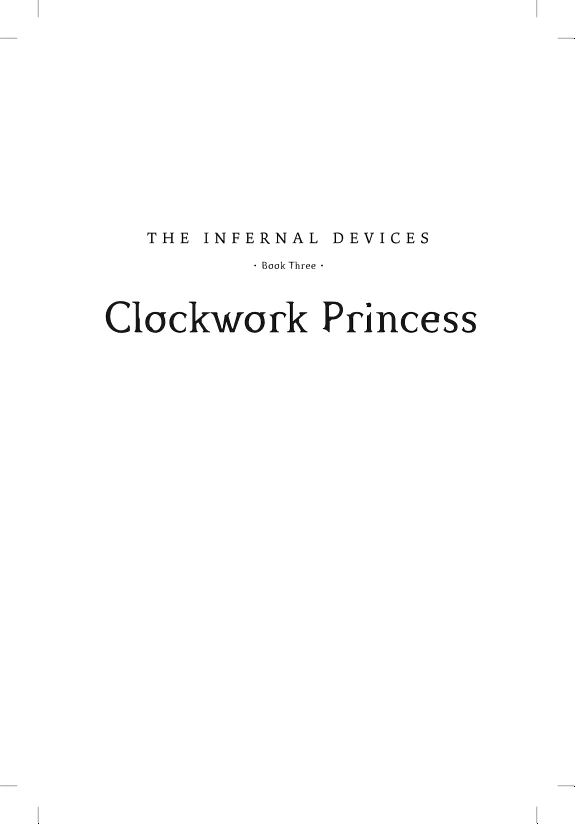
Pseudodoxia Epidemica: Or, Enquiries Into Commonly Presumed Truths (1672) (Hardback)
 77
77

Pseudodoxia Epidemica: Or, Enquiries Into Commonly Presumed Truths (1672) (Hardback)
Thomas Browne's Pseudodoxia Epidemica is less a dry catalog of debunked myths and more a fascinating exploration of how we come to believe what we do. Browne, writing in the mid-17th century, displays a remarkable intellectual curiosity, dissecting everything from the supposed existence of unicorns to the dietary habits of serpents. His strength lies in his erudition and his methodical approach, often citing classical authorities only to gently, or sometimes not so gently, correct them with logic and emerging empirical observations. One limitation is that some of his "corrections" are now themselves outdated, a testament to the ongoing nature of inquiry. The passage detailing the supposed ability of certain birds to hatch eggs by looking at them is a prime example of his detailed, yet ultimately mistaken, investigations into natural phenomena.
Browne's work is a valuable, if sometimes meandering, predecessor to modern critical thinking.
📝 Description
77
Thomas Browne cataloged popular misconceptions in "Pseudodoxia Epidemica" starting in 1646.
Thomas Browne's "Pseudodoxia Epidemica," first published in 1646 and available here in its 1672 edition, systematically examines commonly held beliefs and popular errors. It is not merely a list of debunked myths but a scholarly inquiry into how accepted notions, often derived from old texts and folklore, become widespread. Browne scrutinizes a wide range of subjects, including the supposed virtues of herbs, the behaviors of mythical beasts, and historical inaccuracies.
This work will interest scholars of early modern English literature, the history of science, and intellectual history. Readers curious about the development of skepticism, the methods of empirical investigation before scientific societies were formally established, and how knowledge spreads through culture will find it particularly rewarding. The book appeals to those who appreciate detailed notes and a thorough, though sometimes peculiar, method for testing popular assumptions.
Published in 1672, "Pseudodoxia Epidemica" emerged during a period of intellectual change in England, preceding the Royal Society's charter. Browne's work engages with scholastic traditions while anticipating the empirical methods of the Scientific Revolution. It marks a shift from relying on ancient authorities like Aristotle and Pliny the Elder towards a more critical examination of the natural world based on evidence. Browne's approach, blending textual analysis, historical research, and observation, reflects an early form of skeptical inquiry.
💡 Why Read This Book?
• Gain insight into the pre-Enlightenment methodology of inquiry by examining Browne's detailed refutation of the belief that the phoenix revives from ashes, as detailed in Book III, Chapter XI. • Understand the historical roots of common misconceptions by exploring Browne's specific investigation into the "vulgar error" of the Basilisk's deadly gaze, a concept prevalent in medieval bestiaries. • Appreciate the evolution of empirical observation by tracing Browne's dissection of the supposed properties of the "Salamander" and its ability to live in fire, discussed within the text.
⭐ Reader Reviews
Honest opinions from readers who have explored this book.
❓ Frequently Asked Questions
When was Pseudodoxia Epidemica first published?
The first edition of Pseudodoxia Epidemica, or Enquiries Into Commonly Presumed Truths, by Sir Thomas Browne was published in 1646. The edition referenced here is from 1672.
What does 'Pseudodoxia Epidemica' mean?
'Pseudodoxia Epidemica' is derived from Greek and Latin, roughly translating to 'epidemic (or common) false doctrines' or 'popular errors.' It refers to widely held beliefs that are, in fact, untrue.
What kind of errors does Thomas Browne address?
Browne addresses a vast range of errors, including those concerning natural history (e.g., the habits of animals), medicine (e.g., herbal remedies), geography, mythology, and historical accounts. He examines beliefs passed down through tradition and ancient texts.
Is Pseudodoxia Epidemica a scientific text?
While it predates formal modern science, it is a foundational text in the history of skepticism and empirical inquiry. Browne uses observation and logic to question established beliefs, foreshadowing scientific methodology.
What is the significance of the 1672 edition?
The 1672 edition represents a later iteration of Browne's work, potentially incorporating revisions or additions. It signifies the book's continued relevance and readership in the latter half of the 17th century, after its initial publication in 1646.
Who was Thomas Browne?
Sir Thomas Browne (1605-1682) was an English polymath, physician, philosopher, and author. He is known for his erudite and often idiosyncratic writings, including Religio Medici and Pseudodoxia Epidemica.
🔮 Key Themes & Symbolism
The Nature of Belief
Browne meticulously dissects how 'vulgar errors' or popular misconceptions become entrenched. He illustrates this by examining beliefs such as the supposed ability of the human eye to attract insects or the notion that elephants lack knees. His approach highlights the human tendency to accept tradition and hearsay over critical examination, revealing the psychological and social mechanisms that perpetuate misinformation across generations. The work serves as an early case study in epistemology and the sociology of knowledge.
Empirical Inquiry vs. Authority
A central theme is the tension between deference to ancient authorities (like Aristotle, Pliny, and Galen) and the emerging value of direct observation and logical deduction. Browne frequently cites these classical texts, only to point out their inaccuracies or inconsistencies with observable reality. For instance, his detailed refutation of the belief that the Moon influences human madness showcases his method of challenging long-held doctrines by appealing to reason and empirical evidence, even when it contradicts established wisdom.
The Limits of Knowledge
While championing critical inquiry, Browne also acknowledges the boundaries of human understanding, particularly concerning the natural world and the divine. He treats subjects like the phoenix or the miraculous properties of certain stones with a blend of skepticism and wonder. This reflects the intellectual field of the 17th century, where scientific investigation coexisted with a profound sense of mystery and religious awe. His approach suggests that while we should rigorously test what we claim to know, some phenomena may remain beyond complete rational explanation.
Literary and Rhetorical Craft
Beyond its intellectual content, Pseudodoxia Epidemica is celebrated for Browne's distinctive prose style. His elaborate sentences, Latinate vocabulary, and unique rhetorical flourishes are evident throughout. The work demonstrates how early modern writers used complex literary techniques to explore philosophical and scientific questions. The very act of cataloging and refuting errors becomes a vehicle for demonstrating erudition and literary artistry, making the book a significant piece of 17th-century English literature.
💬 Memorable Quotes
Direct passages from the work, attributed to the author.
“The eagle's eye cannot pierce the Sun.”
— This aphorism, used in Browne's discussions on natural history and perception, illustrates his point that even powerful natural phenomena or creatures have limitations. It serves as a metaphor for the boundaries of observation and the need for accurate understanding.
“That a Salamander lives in fire, and is not consumed thereby.”
— This represents a specific 'vulgar error' Browne investigates. He meticulously examines ancient and medieval accounts of the mythical Salamander, contrasting them with logical possibilities and observations about fire's properties.
“We are of ourselves, and our own souls are the only proper objects of our study.”
— This interpretation reflects Browne's emphasis on introspection and self-knowledge, a theme present in his other works like Religio Medici. It suggests a turn inward, even amidst external inquiries.
💡 Key Ideas
Editorial paraphrase of the work's core concepts — not direct quotes.
Many vulgar errors are commonly presumed truths.
This paraphrased concept expresses the book's core thesis: that widely accepted beliefs are often factually incorrect. Browne argues that the prevalence of an idea does not validate its truth, necessitating critical investigation.
The Serpent cannot be charmed without a Musick.
This quote points to Browne's investigation into popular beliefs about animal behavior, specifically regarding the supposed influence of music on serpents. He seeks to understand the empirical basis, or lack thereof, for such claims.
🌙 Esoteric Significance
Tradition
While not strictly an esoteric text in the vein of Hermeticism or Kabbalah, Pseudodoxia Epidemica engages with themes resonant in Western esoteric traditions. Browne's detailed examination of supposed magical properties of plants and animals, and his critique of folklore, touches upon the boundaries between natural philosophy and occult belief prevalent in his era. His work can be seen as an early attempt to rationalize or demarcate the empirical from the purely speculative, a process that later esoteric movements would grapple with in their own ways.
Symbolism
The book itself functions as a symbolic dismantling of corrupted or misunderstood knowledge. Specific symbols Browne tackles include the Phoenix, representing cycles of death and rebirth, which he subjects to rational scrutiny; the Unicorn, often a symbol of purity and Christ in medieval lore, which Browne investigates for its zoological accuracy; and the Basilisk, a mythical serpent symbolizing death and evil, whose alleged powers Browne attempts to clarify through naturalistic explanations.
Modern Relevance
Modern thinkers interested in the history of skepticism, critical thinking, and the philosophy of science find Browne's meticulous approach highly relevant. His method of questioning widely accepted 'facts' and tracing their origins echoes contemporary debunking efforts and the study of misinformation. Scholars of literature and intellectual history also draw on his work to understand the transition from Renaissance humanism to early modern scientific thought, appreciating his unique prose and philosophical inquiries.
👥 Who Should Read This Book
• Students of early modern English literature and history: To understand the intellectual field of the 17th century, Browne's linguistic artistry, and the development of skepticism. • Researchers in the history of science and medicine: To examine pre-scientific methodologies, the critique of ancient authorities, and the evolution of empirical observation. • Curious general readers: Those fascinated by the origins of popular myths, the process of critical inquiry, and the elegant prose of a master stylist.
📜 Historical Context
Pseudodoxia Epidemica emerged in the fertile intellectual soil of mid-17th century England, a period marked by the English Civil War and the burgeoning Scientific Revolution. While contemporaries like Robert Boyle were experimenting with air pumps and challenging Aristotelian physics, Browne engaged in a more literary and philosophical form of skepticism. His work predates the formal establishment of the Royal Society in 1660 but shares its spirit of empirical questioning. Browne's method involved scrutinizing classical authorities like Pliny the Elder and Aristotle, whose writings were still foundational in education, and contrasting their accounts with contemporary observations and logical reasoning. The book's reception was significant; it was widely read and translated, influencing later thinkers on the nature of evidence and the dissemination of knowledge. It stood apart from purely theological or metaphysical treatises, offering a detailed examination of the natural world through a critical lens.
📔 Journal Prompts
The 'vulgar error' concerning the Salamander's fire resistance: Analyze the evidence Browne presents for and against this belief.
Browne's skepticism towards ancient authorities: How does his critique of Pliny the Elder's accounts differ from modern historical analysis?
The concept of the Unicorn: Explore Browne's investigation into its supposed existence and symbolism.
The methodology of 'Pseudodoxia Epidemica': Identify three distinct methods Browne uses to debunk common beliefs.
The Phoenix myth: Reflect on Browne's rationalization of this symbol of cyclical renewal.
🗂️ Glossary
Vulgar Errors
Commonly held beliefs, popular misconceptions, or widely accepted 'truths' that lack factual basis or sufficient evidence. Browne's work is dedicated to identifying and refuting these.
Physick
An archaic term for medicine or the practice of healing. Browne, being a physician, often discusses medicinal properties attributed to plants and animals.
Chimeras
In a literary or philosophical context, refers to illusory or imaginary things; fantastic creatures or combinations of features, often from mythology. Browne uses the term when discussing mythical beasts.
Antipodes
Literally 'opposite feet'; refers to people or lands diametrically opposite on the Earth's surface. Browne addresses beliefs related to the inhabitants and nature of the Southern Hemisphere.
Apochryphal
Of doubtful authenticity; belonging to an obscure or uncanonical tradition. Browne applies this term to texts or beliefs lacking credible origin or verification.
Natural Philosophy
The historical term for the study of nature and the physical universe, encompassing what we now call physics, astronomy, biology, and chemistry. Browne operated within this framework.
Verifiable
Capable of being proven true or accurate. Browne emphasizes the importance of verification through observation and reason over mere tradition.
This book appears in 1 collection
🔮 Readers Also Liked
Browse all →









From the “Superstition” Collection
View all →







More Free Occult Philosophy Books
View all →