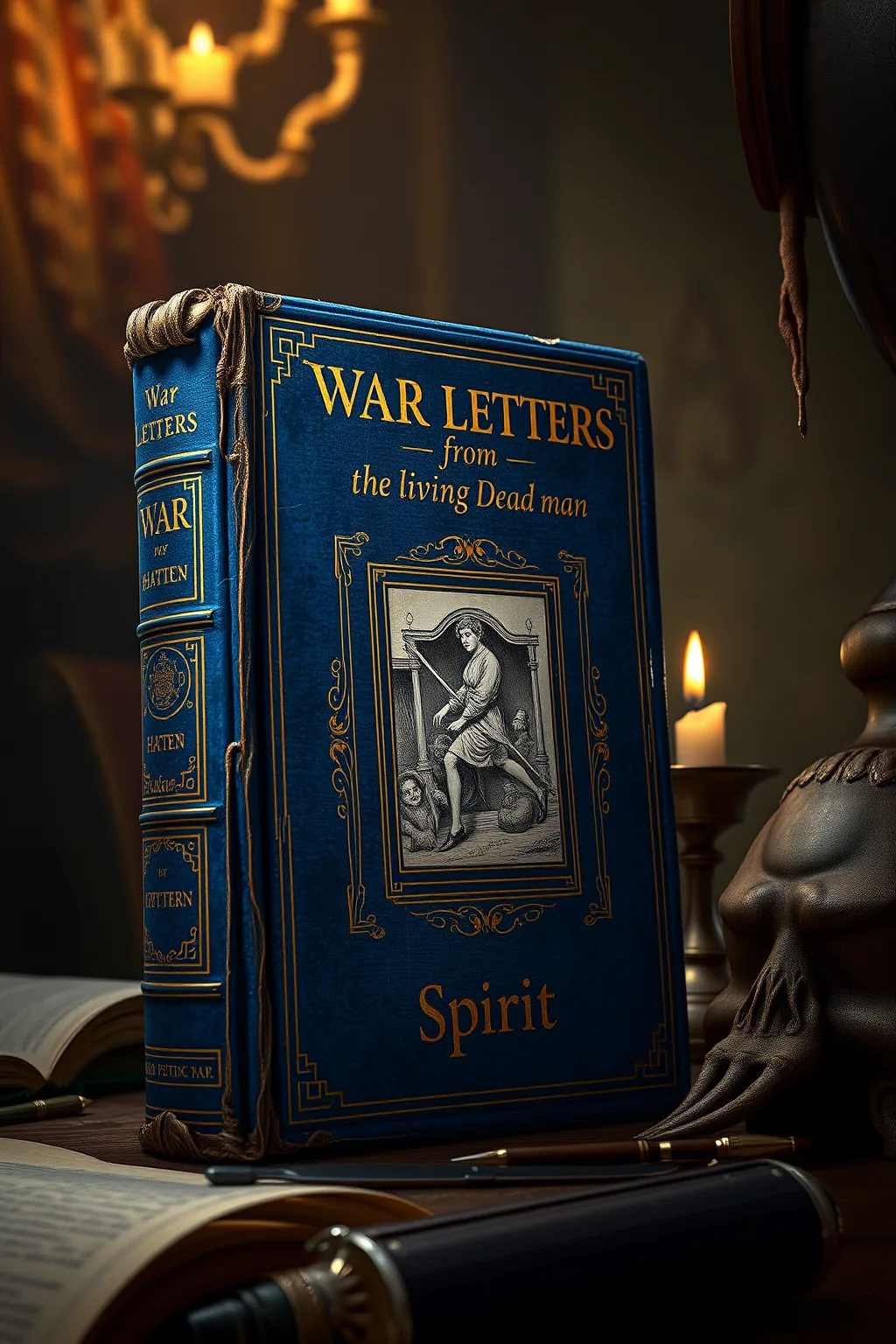
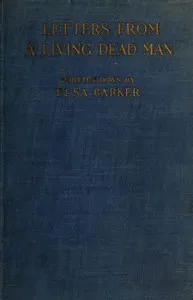
War letters from the living dead man
 68
68

War letters from the living dead man



Alaric Kestrel, Metaphysical Studies Reviewer: "War Letters from the Living Dead Man" is a remarkable testament to the enduring power of the human spirit, even in the face of profound trauma and physical demise. Hatch's work transcends typical séance transcripts, offering a cohesive narrative of spiritual transition and ongoing existence. The book's strength lies in its raw authenticity and the profound philosophical insights delivered through the "living dead man's" perspective. It challenges conventional notions of warfare and afterlife, presenting a compelling case for the continuity of consciousness. This is essential reading for serious students of Spiritualism, comparative religion, and the perennial philosophy, offering a unique lens through which to view the soul's journey.
📝 Description
68
David Patterson Hatch transcribed war letters from a soldier who died in the Great War.
Published in 1918, 'War Letters from the Living Dead Man' presents communications received by David Patterson Hatch from a soldier deceased in the Great War. These messages detail the soldier's experiences and thoughts after crossing over, suggesting that consciousness and the connections formed in life continue beyond physical death. Hatch acted as a medium, recording these communications that touch upon spiritual understanding, reflections on existence, and the persistence of love and duty.
The book suggests that the struggles and bonds of mortal conflict extend into the afterlife. It aims to shed light on the survival of the soul, the unity of all beings, and the potential for spiritual growth after physical life concludes. This volume is intended for those interested in metaphysical subjects and the mysteries surrounding life and death.
This work fits within the early 20th-century spiritualist movement, which saw a surge of interest in communicating with the deceased following the immense loss of life in World War I. Mediumship and the recording of spirit messages were common practices, aiming to provide evidence of an afterlife and offer solace to the bereaved. The book's focus on a soldier's perspective and the continuation of earthly concerns like duty and love aligns with spiritualist attempts to bridge the gap between the material and spiritual worlds, often framed within a developing understanding of consciousness beyond the physical body.
✍️ Author
Hatch, David Patterson (Spirit)
Fallingwater is a house museum in Stewart Township in the Laurel Highlands of southwestern Pennsylvania, United States. Designed by the architect Frank Lloyd Wright, it is built partly over a waterfall on the Bear Run stream.
💡 Why Read This Book?
This compelling work offers an intimate, spiritual perspective on the Great War, revealing how consciousness persists and evolves beyond death. It's ideal for seekers of afterlife truths, scholars of Spiritualism, and anyone grappling with the profound questions of existence, loss, and the enduring nature of the soul. Discover hidden knowledge and gain solace from this unique communion.
⭐ Reader Reviews
Honest opinions from readers who have explored this book.
❓ Frequently Asked Questions
What is the primary nature of the "War Letters"?
The "War Letters" are spirit communications channeled by David Patterson Hatch, purportedly from a soldier who died in World War I. They detail his experiences and perceptions in the afterlife.
Is this book a historical account of WWI?
While it originates from the WWI era, its focus is not on military strategy or battlefield events. Instead, it explores the spiritual aftermath and the soldier's existence beyond physical death.
What is the author's role in the book?
David Patterson Hatch acts as the medium or conduit through which the spirit communications are received and transcribed. He facilitates the dialogue between the living and the departed soldier.
Who is the intended audience for this book?
The book is intended for individuals interested in Spiritualism, the afterlife, mediumship, and the philosophical implications of life beyond death, particularly those seeking solace or deeper understanding.
Does the book offer evidence of life after death?
The book presents itself as anecdotal evidence and spiritual testimony. Readers are invited to interpret the messages and discern their own truths regarding the continuity of consciousness.
🔮 Key Themes & Symbolism
The Transcendent Nature of Consciousness
This volume studies the profound idea that human consciousness is not extinguished by physical death but rather undergoes a transformation. The "living dead man's" letters illustrate a continued existence, offering a unique perspective on the soul's journey through the afterlife. It suggests that the essence of a person, their memories, emotions, and even their sense of purpose, can persist and evolve, challenging materialistic views of existence and opening pathways to understanding spiritual continuity.
Spiritual Traces of Earthly Conflict
The Great War, a cataclysmic event on Earth, leaves indelible spiritual imprints. This book explores how the intense energies and profound experiences of war permeate the ethereal realms, affecting those who fought and fell. It examines the spiritual repercussions of conflict, the nature of spiritual healing, and the possibility of finding peace and understanding even after experiencing the horrors of earthly battle. The messages offer a unique insight into the soul's processing of trauma and its journey towards resolution beyond mortal limitations.
Mediumship and Interdimensional Communication
Fundamentally, , "War Letters from the Living Dead Man" is a proof of the power and potential of mediumship. David Patterson Hatch's role as a conduit is central, highlighting the delicate art of bridging the gap between the material and spiritual worlds. The book showcases how dedicated individuals can facilitate communication, bringing forth wisdom and comfort from those on the other side. It underscores the idea that the veil between dimensions is permeable and that spiritual dialogue is not only possible but can be profoundly informative.
💬 Memorable Quotes
Direct passages from the work, attributed to the author.
“Duty does not cease with the breath.”
— This highlights the enduring sense of responsibility and purpose that can continue into the afterlife, implying that our commitments transcend physical existence.
“Love is the only currency that holds true value beyond the veil.”
— This emphasizes the eternal power and importance of love as a spiritual force that connects souls and persists through all dimensions of existence.
“We are all but students in the eternal university of the soul.”
— This profound statement frames life and afterlife as continuous learning experiences, emphasizing spiritual growth and the ongoing acquisition of wisdom across all planes of being.
“The silence after the guns is where the real war begins.”
— This poignant observation points to the inner spiritual journey and the confrontation with oneself and existential truths that commence once the external conflicts of life have ceased.
💡 Key Ideas
Editorial paraphrase of the work's core concepts — not direct quotes.
The trenches of the spirit are deeper than any dug on Earth.
This quote suggests that the internal struggles and spiritual growth experienced after death can be more profound and challenging than physical battles fought during life.
🌙 Esoteric Significance
Tradition
This work aligns closely with the Western Esoteric tradition of Spiritualism and Mediumship, which gained significant traction in the 19th and early 20th centuries. It draws upon the belief in the survival of the soul after death and the capacity for direct communication with discarnate entities, often facilitated by a sensitive medium. The book can also be seen as touching upon Neoplatonic ideas of the soul's journey and the hierarchical nature of spiritual realms, albeit through the specific lens of post-war spiritual experiences.
Symbolism
The "living dead man" himself is a powerful symbol, representing the paradox of existence beyond physical death – a being alive in spirit but "dead" to the material world. The letters themselves act as symbolic bridges, carrying messages of wisdom and connection across the dimensional divide. The recurring themes of duty, love, and struggle symbolize the enduring human spirit and its capacity for growth, even in the most challenging of circumstances, both mortal and immortal.
Modern Relevance
In an age still grappling with loss, conflict, and existential questions, the themes of "War Letters from the Living Dead Man" remain profoundly relevant. It offers a spiritual perspective that can provide comfort and hope to those grieving, and a philosophical framework for understanding consciousness beyond the physical. For contemporary practitioners of esoteric arts, it serves as a historical case study in mediumship and a reminder of the enduring human desire to connect with the eternal mysteries of life and death.
👥 Who Should Read This Book
This book is a treasure for a diverse audience. **Beginners** in esoteric studies will find an accessible yet profound introduction to Spiritualism and the concept of afterlife communication. **Scholars** of religious history, psychology, and parapsychology will appreciate its historical context and unique anecdotal evidence. **Seekers** of spiritual truth and comfort, particularly those who have experienced loss or are contemplating mortality, will find solace and new perspectives. **Practitioners** of mediumship or those interested in the mechanics of spirit communication will discover valuable insights into the art of channeling and interdimensional dialogue.
📜 Historical Context
Published in the aftermath of the Great War, a conflict that shattered societal norms and exposed the brutal realities of mechanized warfare, this book emerged during a period of intense spiritual seeking. The widespread loss of life and the profound trauma of WWI spurred a surge of interest in Spiritualism, séances, and the possibility of communication with the departed. Many sought solace and answers in the belief that loved ones were not truly gone but had transitioned to another realm. This era saw a flourishing of spirit communication literature, and "War Letters from the Living Dead Man" sits as a significant, albeit lesser-known, contribution to this movement, reflecting the collective yearning to comprehend death and the afterlife in the shadow of unprecedented devastation.
📔 Journal Prompts
Reflect on the concept of 'duty' extending beyond physical life. How does this resonate with your own sense of responsibility?
Consider the soldier's perspective on the "trenches of the spirit." What inner battles do you imagine transcend physical existence?
If you could communicate with a departed loved one, what message of enduring love or wisdom would you seek to convey or receive?
Explore the symbolism of a "living dead man." What does this paradox reveal about the nature of consciousness and existence?
How does the idea of "eternal university of the soul" influence your perception of life's challenges and learning opportunities?
🗂️ Glossary
Spirit Communication
The practice or belief in receiving messages or information from discarnate entities, often through a human medium.
Mediumship
The practice of acting as an intermediary or conduit between the physical world and the spirit world, facilitating communication.
Discarnate Entity
A being or consciousness that exists without a physical body, having passed from the material plane.
Ethereal Plains
Non-physical realms or dimensions believed to be inhabited by spirits and souls after death.
Spiritualism
A religious movement based on the belief that the spirits of the dead can be communicated with and can influence the living.
This book appears in 2 collections
🔮 Readers Also Liked
Browse all →


![Secret Enemies of True Republicanism: Most important developments regarding the inner life of man and the spirit world, in order to abolish revolutions and wars and to establish permanent peace on earth, also: the plan for redemption of nations from monarchical and other oppresive [sic] speculations and for the introduction of the promised new era of harmony, truth and righteousness on the whole globe](/img/thumb/secret-enemies-of-true-republicanism-most-important-developments-regarding-the-inner-life-of-man-and-the-spirit-world-in-order-to-abolish-revolutions-and-wars-and-to-establish-permanent-peace-on-earth.webp)
More by Hatch, David Patterson (Spirit)
All books →
From the “Spiritualism” Collection
View all →




More Free Spiritualism & Afterlife Books
View all →