What are Past Lives?
The concept of past lives posits that an individual's consciousness or soul has existed in previous physical bodies and will continue to exist after the current body's death. This belief is central to many religions and spiritual traditions, often linked to the principles of karma, reincarnation, and spiritual evolution. It suggests that experiences, lessons, and unresolved issues from prior existences can influence the present life, shaping personality, relationships, and life circumstances.
Best Books for Complete Beginners
For those new to the subject, starting with foundational texts is essential. E. D. Walker's "Reincarnation: A Study of Forgotten Truth" offers a comprehensive overview of the historical and philosophical underpinnings of reincarnation, making complex ideas accessible. Théophile Pascal's "Reincarnation: A Study in Human Evolution" provides an early, systematic examination of the subject from a spiritual perspective. "The Aquarian Gospel of Jesus the Christ" by Levi presents a unique perspective on Jesus's life, including his own past life experiences and teachings on reincarnation and spiritual development.
Intermediate Reading
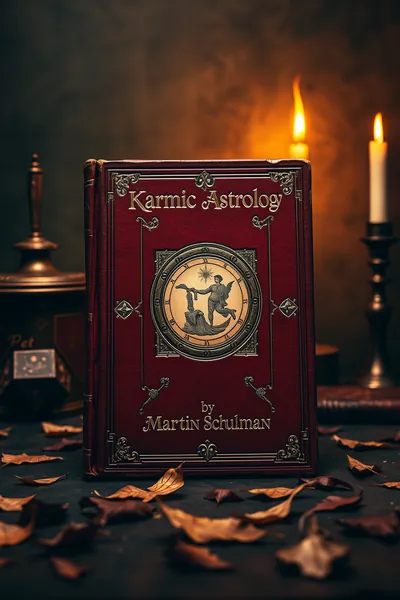
Moving beyond introductory concepts, intermediate texts delve deeper into specific aspects and applications. Martin Schulman's "Karmic Astrology" (1975) connects astrological principles to past life influences and karmic patterns, offering a framework for personal analysis. Frank Homer and Harriette Augusta Curtiss's "The Key of Destiny" (1928) explores spiritual laws and their connection to destiny, including reincarnation. "Personal Survival" by the same authors (1946) addresses the continuation of consciousness beyond physical death, relevant to past life continuity.
Classical / Advanced Texts
Advanced study involves engaging with primary sources and more complex esoteric frameworks. Algernon Blackwood's "Four Weird Tales" often touches upon themes of recurring existences and spiritual echoes, presented through fiction. Ralph Shirley's "Occultists & Mystics of All Ages" provides biographical sketches of figures who explored these concepts, offering historical context. Alexandra David Neel's "Magic & Mystery In Tibet" details Tibetan Buddhist views on reincarnation and consciousness, a rich source of advanced philosophical and practical teachings.
Reading Order — Step by Step
Begin with E. D. Walker's "Reincarnation: A Study of Forgotten Truth" for a broad historical and philosophical introduction. Follow with Théophile Pascal's "Reincarnation: A Study in Human Evolution" to understand its evolutionary implications. In Month 2, explore Levi's "The Aquarian Gospel of Jesus the Christ" for a spiritual interpretation. Then, engage with Frank Homer and Harriette Augusta Curtiss's "The Key of Destiny" (1928) to grasp esoteric principles. Month 3 can be dedicated to Martin Schulman's "Karmic Astrology" (1975) for practical application through astrology, or Alexandra David Neel's "Magic & Mystery In Tibet" for advanced philosophical depth.
Frequently Asked Questions
Which past lives book should I read first?
For beginners, start with E. D. Walker's "Reincarnation: A Study of Forgotten Truth." It provides a solid historical and philosophical overview, making the complex topic of past lives accessible.
How do past lives relate to karma?
Karma is the principle that actions have consequences, often extending across lifetimes. Belief in past lives suggests that karmic debts and merits from previous existences shape current life circumstances and future rebirths.
Can I access my own past life memories?
Some believe past life memories can be accessed through techniques like past life regression, meditation, or spontaneous recall. Books like "Personal Survival" by Curtiss explore the continuity of consciousness that might hold such memories.
Are there fictional accounts of past lives?
Yes, fiction often explores past life themes. Algernon Blackwood's "Four Weird Tales" and Fergus Hume's "A Son of Perdition" are examples of narratives that touch upon reincarnation and recurring existences.
What is the difference between reincarnation and transmigration of souls?
Reincarnation typically refers to the soul being reborn into a new human body, often with a focus on spiritual growth. Transmigration can be a broader term, sometimes including the soul inhabiting animal or other forms, as discussed in some philosophical texts.
How does astrology connect to past lives?
Astrologers like Martin Schulman in "Karmic Astrology" use birth charts to interpret past life influences, karmic patterns, and destiny. Planetary positions and aspects are seen as indicators of lessons carried over from previous existences.
Where can I find early studies on reincarnation?
Early systematic studies can be found in Théophile Pascal's "Reincarnation: A Study in Human Evolution" and E. D. Walker's "Reincarnation: A Study of Forgotten Truth," both foundational texts in the field.