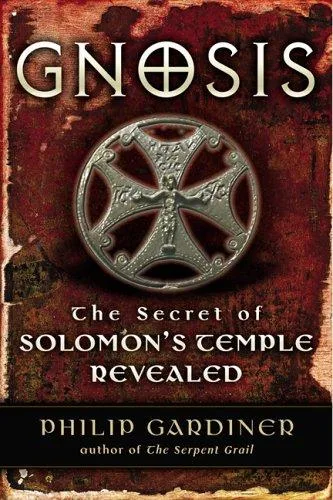
Gnosis
 71
71

Gnosis
Philip Gardiner’s Gnosis presents a focused exploration of a complex and often misunderstood subject. The strength of the work lies in its rigorous attempt to disentangle historical Gnosticism from later appropriations and popular mythologies. Gardiner meticulously details the intellectual lineage and philosophical arguments that characterize various Gnostic schools, particularly in his analysis of the Valentinian system. However, the book's academic rigor can also be its limitation; it is dense and assumes a familiarity with ancient philosophy and theological debates, making it less accessible for the casual reader. A particularly insightful section details the concept of the Archons and their role as intermediaries or obstacles in the soul's ascent. While it offers a valuable scholarly perspective, it rarely ventures into the experiential or practical dimensions that many modern readers associate with Gnosis. Ultimately, Gardiner’s Gnosis serves as a solid academic resource for understanding the historical philosophical dimensions of the movement.
📝 Description
71
Philip Gardiner's 2009 book, Gnosis, examines divine knowledge across cultures.
Philip Gardiner's Gnosis, published in 2009, is a scholarly study of esoteric traditions focused on divine knowledge. The book treats Gnosticism not as a single doctrine but as a continuous thread of thought and practice found in various cultures and historical eras. Gardiner investigates the historical foundations and philosophical ideas of Gnostic thought, tracing its influence and forms.
This work is for serious students of comparative religion, Western esotericism, and ancient philosophy. Readers who want a detailed analysis of Gnosticism's historical setting and philosophical arguments, rather than a devotional guide, will find it useful. It suits those who value in-depth historical research and intellectual examination of complex metaphysical systems. Gardiner situates Gnosticism within the wider context of ancient Mediterranean thought, noting its complex links to early Christianity and other mystery traditions. The book appeared during a time of renewed interest in Gnostic texts, spurred by discoveries like the Nag Hammadi library.
Gnosis fits within the study of Western esotericism, specifically the complex history of Gnostic movements. These movements, present from antiquity, often developed alongside or in reaction to early Christianity. Gardiner's work places these ideas within a broad spectrum of ancient Mediterranean thought, acknowledging their connections to various mystery traditions and their philosophical underpinnings. The book acknowledges the significant impact of textual discoveries on scholarly understanding of Gnosticism.
💡 Why Read This Book?
• Gain a structured understanding of Gnostic cosmology, including the role of the Demiurge and the concept of Aeons, as presented in Gardiner's detailed historical analysis. • Explore the philosophical arguments surrounding the divine spark within humanity, a central tenet Gardiner examines through the lens of early Gnostic texts. • Grasp the historical reception and academic debate surrounding Gnosticism, particularly Gardiner's contextualization of the movement alongside early Christianity and other Hellenistic philosophies.
⭐ Reader Reviews
Honest opinions from readers who have explored this book.
❓ Frequently Asked Questions
When was Philip Gardiner's Gnosis first published?
Philip Gardiner's Gnosis was first published in 2009, a period marked by significant academic interest in Gnostic texts and their historical context.
What is the central theme of Gardiner's Gnosis?
The central theme is the exploration of divine knowledge (gnosis) as a concept and practice across various historical and philosophical traditions, with a focus on its roots and intellectual arguments.
Does the book cover the Nag Hammadi library?
While not exclusively focused on the Nag Hammadi library, Gardiner's work situates Gnosticism within the broader historical context that includes the discoveries and subsequent scholarly analysis of these important texts.
Who are considered key figures in Gnostic studies that Gardiner might reference?
Scholars like Elaine Pagels and Bart Ehrman are prominent figures in Gnostic studies, and Gardiner's work engages with the academic discourse that they and others contribute to.
What is the Demiurge in Gnostic thought as discussed by Gardiner?
Gardiner explains the Demiurge as a lesser, often flawed creator deity in Gnostic cosmology, distinct from the supreme, unknowable God, responsible for the material world.
Is Gnosis suitable for beginners in esoteric studies?
The book is more suited for those with a background in philosophy or religious studies due to its academic approach and dense analysis of complex metaphysical concepts.
🔮 Key Themes & Symbolism
The Divine Spark
Gardiner examines the Gnostic concept of the divine spark, an inherent fragment of the supreme deity trapped within the material human form. This theme explores the inherent divinity within individuals and the potential for awakening through knowledge. The work looks at how various Gnostic schools understood this inner light as the key to salvation, a luminous essence yearning to return to its divine source, often obscured by the material world and the machims of the Demiurge.
Cosmological Dualism
A core aspect of Gnosis explored is its often dualistic worldview, positing a fundamental separation between the spiritual, perfect realm and the material, imperfect world. Gardiner details how this framework explains the perceived fallen state of humanity and the cosmos, identifying the material creation as the work of a lesser, ignorant deity, the Demiurge. This perspective contrasts sharply with creation narratives in other religious traditions, highlighting a unique metaphysical outlook.
The Role of the Demiurge
The book critically analyzes the figure of the Demiurge, a recurring entity in Gnostic cosmology. Gardiner presents the Demiurge not as an embodiment of pure evil, but often as a flawed, ignorant creator who fashioned the material universe, unaware of the higher spiritual reality. Understanding the Demiurge is crucial for comprehending the Gnostic view of the material world as a prison or illusion from which the soul must escape.
Salvation Through Knowledge
Central to Gnosis is the idea that salvation is achieved not through faith or ritual alone, but through direct experiential knowledge (gnosis) of the divine. Gardiner elucidates how this knowledge serves to liberate the divine spark from its material confinement. The pursuit of gnosis is depicted as an arduous but ultimately rewarding path of self-discovery and spiritual awakening, leading to reunification with the ultimate Godhead.
💬 Memorable Quotes
Direct passages from the work, attributed to the author.
“The material world is a flawed imitation of the true spiritual reality.”
— This statement captures a foundational Gnostic belief, suggesting that the physical universe we perceive is not the ultimate truth but a lesser, distorted reflection of a higher, perfect divine realm.
“The Archons act as guardians or impediments to the soul's ascent.”
— This interpretation points to the Gnostic cosmology where cosmic powers, often identified as Archons, can obstruct the soul's journey back to the divine source, making spiritual knowledge essential for overcoming these barriers.
“Orthodox traditions often misunderstood or suppressed Gnostic teachings.”
— This reflects the historical tension between Gnosticism and early Christianity, suggesting that established religious authorities may have actively opposed or misinterpreted Gnostic ideas due to their radical implications.
“Gnosis is the knowledge that liberates.”
— This concise summary emphasizes the salvific power of direct, experiential knowledge in Gnosticism. It is not mere intellectual understanding, but a transformative awareness that frees the spirit.
💡 Key Ideas
Editorial paraphrase of the work's core concepts — not direct quotes.
Salvation lies in recognizing the divine spark within.
This paraphrased concept highlights the Gnostic emphasis on internal realization. True liberation comes from understanding one's own inherent divine nature, rather than external doctrines or saviors.
🌙 Esoteric Significance
Tradition
Gardiner's work engages with the Gnostic tradition, a diverse set of religious and philosophical movements primarily flourishing in the 1st to 4th centuries CE. While often discussed in relation to early Christianity, Gnosticism represents a distinct esoteric lineage characterized by its emphasis on personal spiritual knowledge (gnosis) as the means of salvation. Gardiner's analysis places Gnosticism within the broader Hellenistic milieu, acknowledging influences from Platonism, Zoroastrianism, and Jewish mysticism, while highlighting its unique cosmological and soteriological frameworks.
Symbolism
Key symbols explored in Gnosis include the 'divine spark' (pneuma), representing the fragment of the supreme God trapped within the material human being, and the 'Demiurge,' often depicted as a flawed creator of the imperfect material world. The concept of 'Aeons' also features prominently, representing divine emanations or powers within the Pleroma (the fullness of God), from which the material creation inadvertently arose, symbolizing the complex hierarchy of spiritual realms.
Modern Relevance
Contemporary esoteric practitioners and comparative religion scholars continue to draw on Gnostic concepts, particularly the idea of the inner divine spark and the critique of materialist or authoritarian systems. Modern movements influenced by Gnosticism often focus on individual liberation, the pursuit of subjective truth, and the re-evaluation of creation narratives. Thinkers exploring consciousness studies and radical spirituality may find Gardiner's work a valuable reference for understanding the historical roots of these ideas.
👥 Who Should Read This Book
• Students of comparative religion and ancient philosophy seeking a rigorous historical analysis of Gnostic thought and its origins. • Esoteric practitioners interested in understanding the theoretical underpinnings of Gnostic cosmology and its key concepts like the Demiurge and divine spark. • Academics researching the intellectual currents of the Hellenistic period and the complex relationship between early Christianity and other spiritual movements.
📜 Historical Context
Philip Gardiner's Gnosis was published in 2009, a period where scholarly interest in Gnostic texts, spurred by discoveries like the Nag Hammadi library in 1945, continued to flourish. The book entered a discourse populated by academics such as Elaine Pagels, whose works explored the social and historical contexts of early Gnosticism, and scholars debating the precise relationship between Gnostic sects and nascent Christianity. Gardiner's work operates within this intellectual milieu, seeking to clarify the philosophical underpinnings of Gnosticism and differentiate it from later esoteric interpretations. The reception of Gnostic ideas has historically been complex, often positioned in opposition to Pauline Christianity, and Gardiner's analysis engages with this long-standing theological and philosophical debate, situating Gnosticism as a significant, albeit often marginalized, intellectual current of the ancient Mediterranean world.
📔 Journal Prompts
Reflect on the Gnostic concept of the Demiurge and its implications for understanding material reality.
How does the idea of the 'divine spark' within humanity align with or challenge your personal beliefs?
Consider the role of 'gnosis' as presented in the text; what might this experiential knowledge entail?
Analyze the symbolic meaning of 'Aeons' within the Gnostic cosmological framework.
What parallels, if any, can be drawn between the Archons' role and modern societal structures?
🗂️ Glossary
Gnosis
In Gnosticism, gnosis refers to salvific knowledge, often experiential and direct, that leads to liberation from the material world and reunification with the divine.
Demiurge
A figure in Gnostic cosmology, often considered a lesser creator deity responsible for the material world, typically portrayed as ignorant or flawed, distinct from the supreme God.
Divine Spark (Pneuma)
The Gnostic concept of an essential, divine element or fragment of the supreme God residing within the human soul, which is trapped in the material realm.
Aeons
Emanations or divine beings that exist within the Pleroma, the divine fullness or field of the supreme God, in Gnostic cosmology.
Archons
In some Gnostic systems, these are cosmic rulers or intermediaries who govern the material world and can act as impediments to the soul's ascent.
Pleroma
The totality of divine powers and emanations in Gnostic cosmology, representing the supreme God's perfect spiritual realm.
Soteriology
The branch of theology concerned with the means of salvation; in Gnosticism, salvation is typically achieved through gnosis.
🔮 Readers Also Liked
Browse all →








More by Philip Gardiner
All books →


More Free Sacred Texts & Gnosticism Books
View all →