Vedanta
 83
83

Vedanta
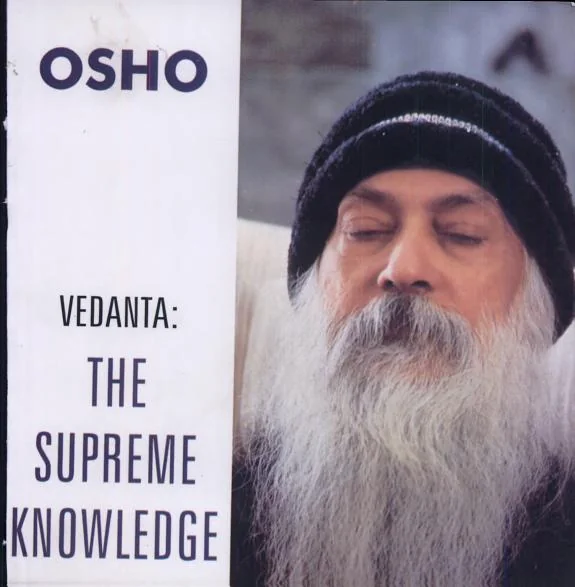
Osho's "Vedanta" is less a systematic exposition and more a series of lightning strikes aimed at the reader's complacency. He bypasses the scholarly apparatus often associated with Vedanta, opting instead for direct, confrontational interpretations. The strength lies in his ability to shock the reader out of conventional thought patterns, particularly evident when he discusses the concept of Maya, not as a cosmic trick, but as the mind's habitual projection. However, the work suffers from a degree of repetition, a common issue in transcribed lectures, where points are hammered home perhaps more than necessary for the discerning reader. A passage concerning the nature of the witness, the pure observer, offers a rare moment of quiet illumination amidst the usual rhetorical storm.
Ultimately, this is Osho's Vedanta, a personalized and often iconoclastic reinterpretation for the modern seeker.
📝 Description
83
Osho's 2007 book Vedanta presents his interpretations of Hindu philosophy's core tenets.
Vedanta is a collection of talks Osho gave on the foundational philosophy of Hinduism. He addresses key concepts like Brahman, Atman, Maya, Karma, and Moksha. Osho's method often involved challenging listeners' assumptions, aiming for direct experience over intellectual assent. He frequently used stories and questions to clarify abstract ideas.
The book is for those interested in Vedanta but prefer a less traditional, more contemporary perspective. It suits readers open to unconventional interpretations of ancient thought, particularly students of Eastern spirituality. Osho, also known as Bhagwan Shree Rajneesh, taught for decades, often reinterpreting Eastern traditions for a global audience, a stance that sometimes drew both strong support and criticism.
This work places Osho's later life teachings within the long history of Vedanta, a system over two thousand years old. His approach distinguished itself from more orthodox views, reflecting a movement to adapt ancient Eastern philosophies for modern, Western, and global audiences.
Vedanta, a system originating in ancient India, forms a cornerstone of Hindu philosophy. It stems from the Upanishads, texts that explore the nature of reality, consciousness, and the self. Osho's engagement with Vedanta places his teachings within a lineage that has spanned millennia, seeking to understand the ultimate nature of existence through contemplation and inquiry. His interpretations, while rooted in these ancient ideas, often reflect a modern, experiential approach to spiritual realization.
💡 Why Read This Book?
• Gain a non-dogmatic understanding of Brahman, the ultimate reality, through Osho's direct, experiential approach rather than abstract philosophical debate, as presented in his 2007 discourses. • Challenge your perception of Maya (illusion) by examining Osho's interpretation of it as a psychological construct of the mind, distinct from traditional metaphysical explanations. • Explore the concept of Atman (the self) through Osho's unique lens, which encourages questioning the ego-identity and seeking the pure witness, a core theme in his later works.
⭐ Reader Reviews
Honest opinions from readers who have explored this book.
❓ Frequently Asked Questions
When was Osho's book 'Vedanta' first published?
Osho's "Vedanta" was first published in 2007, compiling discourses he delivered over his career, offering a modern perspective on ancient Indian philosophy.
What is the primary philosophical tradition discussed in Osho's 'Vedanta'?
The book primarily discusses the philosophical and spiritual tenets of Vedanta, a major school of Hindu philosophy with roots stretching back over two millennia.
Is Osho's 'Vedanta' suitable for beginners to Eastern philosophy?
Yes, it can be, but with a caveat. Osho's style is provocative and non-traditional, making it accessible for those open to challenging conventional interpretations, rather than for those seeking a purely academic or orthodox introduction.
What does Osho mean by 'Maya' in his 'Vedanta' discourses?
In Osho's "Vedanta," Maya is often presented not just as cosmic illusion, but as the mind's habitual pattern of creating a separate self and world, a psychological veil.
Does 'Vedanta' by Osho cover concepts like Karma and Moksha?
Indeed, Osho's "Vedanta" discourses engage with fundamental concepts such as Karma, the law of cause and effect, and Moksha, the ultimate liberation from the cycle of rebirth.
What distinguishes Osho's approach to Vedanta from traditional scholarship?
Osho's approach prioritizes direct, experiential realization over intellectual mastery, often employing paradox and challenge to break down ingrained assumptions about the self and reality.
🔮 Key Themes & Symbolism
The Nature of Reality (Brahman)
The work systematically deconstructs the illusion of a separate self, directing the reader towards the Vedantic concept of Brahman – the singular, all-encompassing reality. Osho challenges the mind's tendency to perceive duality, emphasizing that the universe and the individual consciousness are not fundamentally distinct. He uses parables and direct questioning to illustrate that true understanding comes not from intellectual assent but from a lived recognition of this non-dual truth, urging a shift from knowing *about* Brahman to *being* Brahman.
Illusion as Perception (Maya)
Osho reframes Maya, often translated as illusion, not as a supernatural veil but as a psychological phenomenon rooted in the ego's need for separation. He posits that our ordinary perception is inherently limited, creating a world of 'I' and 'other,' subject and object. The discourses encourage a rigorous examination of these perceptual filters, suggesting that liberation involves seeing through this self-created illusion to the underlying unity, moving beyond the mind's habitual interpretations.
The Witness Consciousness
A central theme is the exploration of the 'witness' – the pure consciousness that observes thoughts, emotions, and experiences without identification. Osho differentiates this silent, unchanging awareness from the fluctuating contents of the mind. He argues that recognizing oneself as the witness is the key to transcending suffering and the limitations of the ego. This concept is presented as the gateway to experiencing the Atman, the true self, which is identical to Brahman.
Liberation Beyond Concepts (Moksha)
Moksha, or liberation, is presented not as a future reward or a state to be attained, but as an immediate possibility accessible through a radical shift in consciousness. Osho critiques conceptual approaches to liberation, arguing they merely create new illusions. True freedom, he suggests, lies in recognizing the already-present, unconditioned nature of awareness, free from the constructs of time, desire, and the fear of death, achieved by ceasing to identify with the transient self.
💬 Memorable Quotes
Direct passages from the work, attributed to the author.
“The moment you become aware of yourself as a watcher, the ego disappears.”
— This statement highlights Osho's emphasis on the power of detached observation. By focusing on the act of witnessing rather than the content of experience, one can disidentify from the ego, the source of perceived separation and suffering.
“The world is not other than your mind; it is a projection.”
— This concept, central to Osho's interpretation of Maya, suggests that our perceived reality is a construct of our own consciousness. The external world is seen as a reflection or manifestation of our internal mental landscape.
“The moment you are totally aware, you are free.”
— This captures the essence of Osho's teachings on freedom. Awareness, in its purest form, is presented as the ultimate liberator, dissolving the bonds of conditioning, fear, and the illusion of limitation.
💡 Key Ideas
Editorial paraphrase of the work's core concepts — not direct quotes.
Truth is not a thing to be found, it is a thing to be lived.
This paraphrase captures Osho's experiential approach. He argues against the intellectual pursuit of truth as an objective entity, advocating instead for its embodiment through direct living and experiencing.
Enlightenment is not an achievement, it is a realization of what already is.
This quote refutes the idea of enlightenment as a goal to be reached through effort. Instead, Osho presents it as the simple recognition of the inherent, ever-present nature of being, obscured by ignorance and identification with the false self.
🌙 Esoteric Significance
Tradition
Osho's work on Vedanta engages with the Advaita Vedanta tradition, a prominent non-dualistic school within Hinduism. While drawing heavily from its core tenets like Brahman and Atman, Osho significantly departs from its traditional, often monastic, emphasis. He reinterprets these ancient concepts through a modern psychological and existential lens, stripping away ritualistic accretions and orthodox interpretations to emphasize direct, personal realization and a critique of societal conditioning, aligning more with modern spiritual psychotherapy than classical Vedanta.
Symbolism
Within Osho's Vedanta discourses, the concept of the 'witness' functions symbolically, representing pure consciousness detached from the phenomenal world. The 'ego,' conversely, symbolizes the illusory self, the constructed personality that creates a sense of separation. The recurring motif of 'death' is often used not literally, but symbolically for the dissolution of the ego and the false self, paving the way for the realization of the true, eternal nature of Atman.
Modern Relevance
Osho's reinterpretation of Vedanta continues to influence contemporary spirituality and self-help movements. Thinkers and practitioners focused on mindfulness, non-duality, and consciousness studies often reference his direct approach. His emphasis on psychological liberation from societal conditioning speaks to modern therapeutic modalities and personal development programs seeking to foster authenticity and inner peace, bridging ancient philosophy with contemporary psychological needs.
👥 Who Should Read This Book
['• Students of comparative religion and philosophy looking for an unconventional, challenging perspective on Vedanta that moves beyond academic or orthodox interpretations.', '• Individuals interested in spiritual psychology and the nature of consciousness who seek to understand the self through direct inquiry rather than dogma.', '• Seekers of spiritual growth who appreciate a direct, provocative teaching style that aims to dismantle ingrained assumptions and foster experiential understanding.']
📜 Historical Context
Osho (Bhagwan Shree Rajneesh) rose to prominence in India during the mid-to-late 20th century, a period marked by significant global interest in Eastern spirituality, partly fueled by figures like Swami Vivekananda in the late 19th century and later the Theosophical Society. His teachings on Vedanta, a foundational school of Hindu philosophy established centuries prior with texts like the Upanishads, emerged in a landscape where traditional interpretations coexisted with modern, often Western-influenced, spiritual movements. Osho's unique selling point was his radical, confrontational style, which often challenged orthodox interpretations and attracted a large following seeking direct experience over ritual or dogma. While contemporaries like Maharishi Mahesh Yogi offered more structured approaches to meditation, Osho's method was characterized by its psychological depth and provocative questioning. His prolific output, including these Vedanta discourses, was often delivered in the form of extemporaneous talks, later transcribed and published, making his work widely accessible but also subject to criticism regarding its fidelity to purely scholastic traditions.
📔 Journal Prompts
The ego's insistence on separation: how does this manifest in daily interactions?
Witnessing thoughts: what arises when observing mental chatter without judgment?
The nature of Brahman: reflect on experiences of unity or interconnectedness.
Maya as psychological projection: identify one instance where your perception created your reality.
The concept of Moksha: what does freedom truly mean beyond societal definitions?
🗂️ Glossary
Brahman
In Vedanta, the ultimate, unchanging reality that is the source and substance of all existence. Osho emphasizes its non-dual nature, meaning it is without attributes or distinctions and is identical to the individual self (Atman).
Atman
The true self, the soul, or the inner essence of an individual. In Advaita Vedanta, Atman is considered identical to Brahman, the universal consciousness.
Maya
Often translated as illusion, Maya refers to the power or principle that conceals the true nature of reality and creates the appearance of a diverse, material world. Osho often interprets it psychologically as the mind's projection.
Witness
The pure consciousness that observes thoughts, feelings, and sensations without identifying with them. Osho promotes cultivating awareness of the witness as a path to liberation from the ego.
Ego
The sense of a separate, individual self, often constructed from personal history, beliefs, and social conditioning. Osho views the ego as the primary obstacle to realizing one's true nature.
Moksha
Liberation or release from the cycle of birth, death, and rebirth (samsara). In Osho's context, it signifies freedom from the illusion of the ego and the realization of non-dual consciousness.
Discourses
Talks or lectures given by a spiritual teacher, typically on philosophical or religious topics. Osho's books are largely compilations of such discourses, reflecting his spontaneous insights.
This book appears in 1 collection
🔮 Readers Also Liked
Browse all →









From the “Vedanta” Collection
View all →



More Free Occult Philosophy Books
View all →