Kitty in the Underworld
 84
84

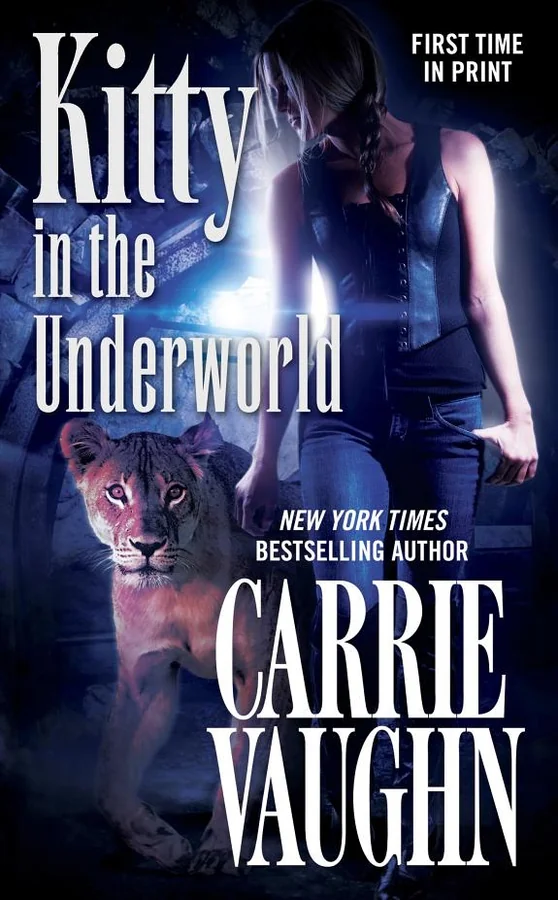
Kitty in the Underworld
Carrie Vaughn’s ‘Kitty in the Underworld’ offers a familiar, yet compelling, continuation of her werewolf protagonist’s saga. The novel succeeds by grounding its fantastical elements in Kitty’s relatable internal struggles, particularly her resistance to certain supernatural roles thrust upon her. A specific strength lies in the depiction of the underworld's inhabitants, who are rendered with a surprising degree of nuanced characterization rather than mere monstrous archetypes. However, the pacing occasionally falters, with certain plot threads feeling less urgent than others. The confrontation with the enigmatic figure known as the 'Master of the Dead' is a high point, showcasing Vaughn’s ability to blend mythological gravitas with personal stakes. While not a standalone entry, it provides a satisfying chapter for devoted readers.
📝 Description
84
Carrie Vaughn's 2013 novel, Kitty in the Underworld, places its werewolf protagonist in a literal afterlife.
Kitty in the Underworld, published in 2013, continues Carrie Vaughn's series about a werewolf radio host, Kitty Norville. In this installment, Kitty finds herself confronting supernatural realms and entities that lie beyond the ordinary world. The narrative follows her as she deals with the complexities and dangers inherent in these otherworldly encounters.
This book is best suited for readers already familiar with Kitty's story, as it builds directly on established character development and ongoing plotlines. Those who appreciate urban fantasy featuring protagonists who often grapple with their circumstances will find Kitty's reluctant heroics engaging. The novel also appeals to readers interested in how mythological underworlds can be integrated into modern settings, blending personal struggles with supernatural adventure.
Kitty in the Underworld situates itself within the urban fantasy tradition, which often reinterprets mythological structures for contemporary audiences. The novel engages with concepts of the underworld, not as a simple afterlife, but as a complex, rule-bound society. This approach echoes traditions that view the spirit world or other dimensions as having their own distinct ecologies and social orders, accessible through various means, often involving protagonists who bridge the mundane and the mystical.
💡 Why Read This Book?
• Gain insight into the nuanced portrayal of mythological underworlds, as seen in the distinct societal structures presented in 'Kitty in the Underworld,' offering a fresh perspective beyond common gothic interpretations. • Experience the internal conflict of a protagonist grappling with imposed supernatural responsibilities, a core element explored through Kitty's personal journey and her werewolf identity. • Understand how ancient mythic realms can be integrated into contemporary settings, a technique demonstrated throughout the series, providing a unique take on the urban fantasy genre.
⭐ Reader Reviews
Honest opinions from readers who have explored this book.
❓ Frequently Asked Questions
What is the primary conflict in Kitty in the Underworld?
The primary conflict involves Kitty's forced involvement with the underworld and its rulers, challenging her desire for a normal life and forcing her to confront ancient powers and responsibilities she would rather avoid.
Who is the author of Kitty in the Underworld?
Kitty in the Underworld was written by Carrie Vaughn, a "New York Times" bestselling author known for her "Kitty Norville" series.
When was Kitty in the Underworld first published?
The novel Kitty in the Underworld was first published on July 30, 2013.
Is Kitty in the Underworld a standalone novel?
No, Kitty in the Underworld is part of a series, specifically the 'Kitty Norville' series by Carrie Vaughn, and is best appreciated by readers familiar with the preceding installments.
What genre does Kitty in the Underworld belong to?
Kitty in the Underworld falls into the urban fantasy genre, blending supernatural elements with contemporary settings and character-driven narratives.
What are some key themes explored in Kitty in the Underworld?
Key themes include identity, the nature of power, the burdens of responsibility, and the intersection of mythological realms with modern life.
🔮 Key Themes & Symbolism
Identity and Transformation
The novel persistently examines Kitty's evolving identity, particularly her werewolf nature and her reluctant embrace of supernatural authority. This theme is central as she navigates the underworld, forcing her to reconcile her human desires with the primal instincts and ancient roles associated with her lineage and the mythic realms she encounters. Her struggle is not just with external forces but with her own self-perception and capacity for power.
The Nature of Underworlds
Vaughn presents the underworld not as a monolithic hellscape but as a complex, populated territory with its own hierarchies and politics. This exploration moves beyond simple depictions of Hades or the Greek underworld, offering a nuanced view of death realms as functional societies. Kitty's interactions with its denizens reveal diverse perspectives on life, death, and power, challenging conventional mythological interpretations.
Responsibility and Reluctance
A significant arc involves Kitty's ongoing struggle with the responsibilities thrust upon her. As a werewolf and now a figure connected to the underworld, she is often compelled to act in ways that conflict with her personal wishes. This theme highlights the burden of power and leadership, questioning the nature of destiny versus free will when one is entangled in ancient supernatural affairs.
Mythic Integration
The book excels at tying established mythological concepts into a modern narrative. The underworld, its rulers, and its inhabitants are presented as integral parts of a living, breathing supernatural world coexisting with the human one. This integration allows for a fresh perspective on ancient lore, making it relevant and dynamic for contemporary readers interested in the persistence of myth.
💬 Memorable Quotes
Direct passages from the work, attributed to the author.
“The underworld wasn't a place you escaped from, but a place you learned to live within.”
— This interpretation highlights the novel's central premise: that confronting and understanding supernatural realms, even those associated with death, is more about adaptation and integration than simple avoidance or defeat.
“She carried the weight of the night, not as a burden, but as a cloak.”
— This captures Kitty's evolving relationship with her werewolf nature and supernatural entanglements. It suggests a growing acceptance and mastery, where the 'darkness' she embodies becomes a source of strength and identity rather than fear or shame.
“Even in the land of the dead, politics were still a messy business.”
— This observation underscores the novel's sophisticated portrayal of the underworld as a functioning society with its own power struggles and intrigue. It suggests that supernatural realms are not exempt from the complexities of governance and social dynamics found in the human world.
“Her howl wasn't just a sound; it was a claim.”
— This highlights the symbolic power attributed to Kitty's werewolf abilities. Her howl transcends mere vocalization, representing assertion, territory, and a fundamental aspect of her identity within the supernatural landscape she inhabits.
💡 Key Ideas
Editorial paraphrase of the work's core concepts — not direct quotes.
Ancient powers had rules, and Kitty was learning them the hard way.
This paraphrase emphasizes the novel's exploration of established supernatural laws and traditions. It points to Kitty's often difficult and trial-by-error process of understanding and reading through the complex, often dangerous, social and magical structures of the mythic world.
🌙 Esoteric Significance
Tradition
While not explicitly aligned with a single esoteric tradition like Hermeticism or Gnosticism, 'Kitty in the Underworld' draws heavily on archetypal mythologies concerning death and the afterlife. It engages with universal concepts of descent narratives, akin to Orpheus or Inanna's journey, but grounds them in a contemporary urban fantasy framework. The work can be seen as a modern exploration of chthonic deities and underworld symbolism, filtered through a character-focused lens rather than strict adherence to a specific occult doctrine.
Symbolism
The novel prominently features the 'underworld' itself as a potent symbol, representing not just death but also the subconscious, hidden domains of power, and societal structures beyond mortal ken. Kitty's werewolf nature symbolizes primal instinct, untamed power, and a connection to the wild, often at odds with civilized order. The concept of 'claiming territory' through a howl or other actions represents assertion of self and dominion within these supernatural landscapes.
Modern Relevance
Contemporary authors and practitioners in urban fantasy and paranormal romance continue to explore themes of identity, power, and the integration of mythic elements into modern life, echoing Vaughn's successful approach. The novel's depiction of the underworld as a complex, populated realm with its own rules is relevant to modern interpretations of mythology that seek to deconstruct simplistic notions of good and evil, instead focusing on nuanced societal structures within supernatural settings.
👥 Who Should Read This Book
• Fans of the 'Kitty Norville' series: Readers invested in Kitty's ongoing narrative and her relationships will find this installment essential for continuing her supernatural adventures. • Urban fantasy enthusiasts: Those who appreciate stories blending supernatural elements with contemporary settings and strong character development will enjoy the novel's unique take on mythic realms. • Explorers of mythological descent narratives: Readers interested in modern reinterpretations of classic underworld journeys and their symbolic meanings will find ample material for contemplation.
📜 Historical Context
Published in 2013, 'Kitty in the Underworld' arrived during a robust period for urban fantasy, a genre that had gained significant traction since the early 2000s. Authors like Charlaine Harris (with her 'Southern Vampire Mysteries,' begun in 2001) and Jim Butcher ('The Dresden Files,' begun in 2000) had established a strong market for supernatural narratives set in contemporary America. Carrie Vaughn’s own 'Kitty Norville' series, which began in 2008, distinguished itself by centering on a werewolf radio host, offering a unique perspective on the genre’s tropes. This installment, 'Kitty in the Underworld,' engages with classic mythological concepts, particularly those concerning death realms, placing them within a modern, character-driven context. The work emerged at a time when readers were increasingly receptive to complex mythologies being reinterpreted and integrated into familiar settings, a trend that also saw interest in re-examinations of Gnostic or Hermetic ideas in popular culture, though Vaughn’s approach remained firmly rooted in accessible fantasy.
📔 Journal Prompts
The underworld's societal structures and your place within them.
Kitty's struggle with imposed supernatural responsibilities.
The symbolic meaning of the werewolf's howl in your own life.
Navigating power dynamics in realms beyond the mundane.
Reflecting on the integration of primal instincts with civil order.
🗂️ Glossary
Underworld
In the context of 'Kitty in the Underworld,' this refers to a complex, populated area of the dead or supernatural entities, possessing its own society, rules, and power structures, distinct from traditional hell or Hades concepts.
Werewolf
A supernatural being capable of assuming the form of a wolf or a wolf-like creature. In the novel, this identity is central to the protagonist Kitty's character arc, influencing her powers, instincts, and social standing.
Primal Instincts
Basic, inherent drives and behaviors associated with survival and reproduction, often seen as untamed or wild. These are a key aspect of Kitty's werewolf nature that she must contend with.
Mythic Realms
Fictional or conceptual dimensions heavily influenced by mythology and folklore, often coexisting with or intersecting the human world. These realms have their own inhabitants, laws, and histories.
Chthonic
Relating to the deities, spirits, and forces associated with the earth and the underworld in ancient mythology. The novel explores themes and beings that align with this concept.
Descent Narrative
A story archetype where a protagonist journeys into the underworld or a similar subterranean realm, often for knowledge, rescue, or to confront a powerful entity. Kitty's journey aligns with this structure.
Supernatural Authority
Power or rule derived from non-natural or magical sources. Kitty often finds herself dealing with or being subjected to various forms of supernatural authority.
This book appears in 1 collection
🔮 Readers Also Liked
Browse all →









From the “Shapeshifting” Collection
View all →




More Free Occult Philosophy Books
View all →